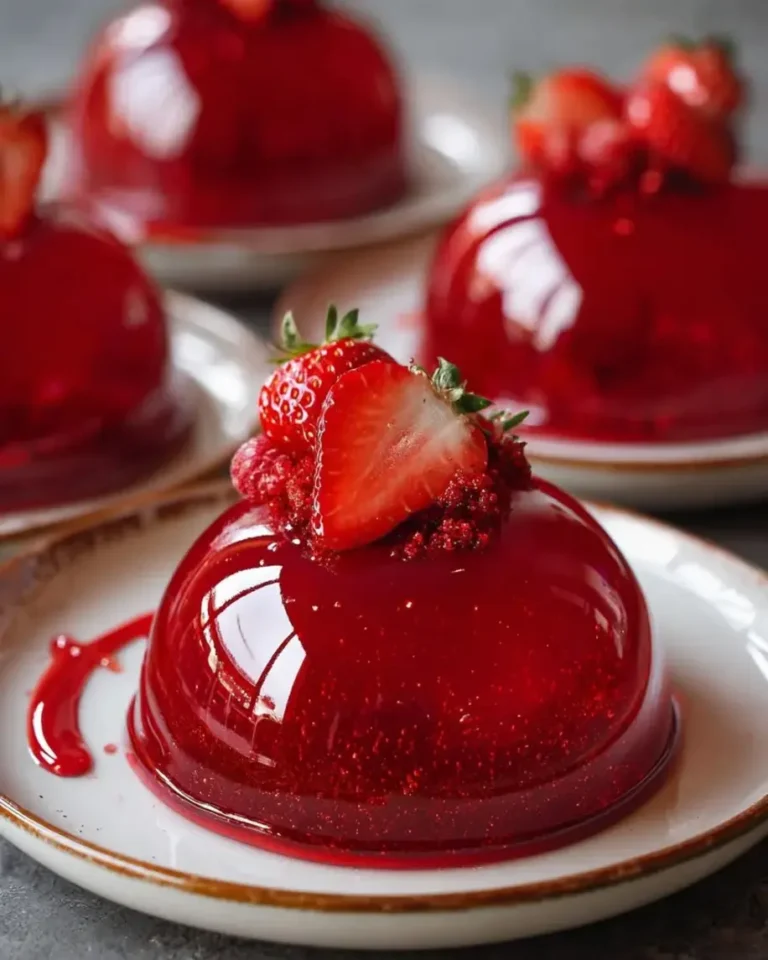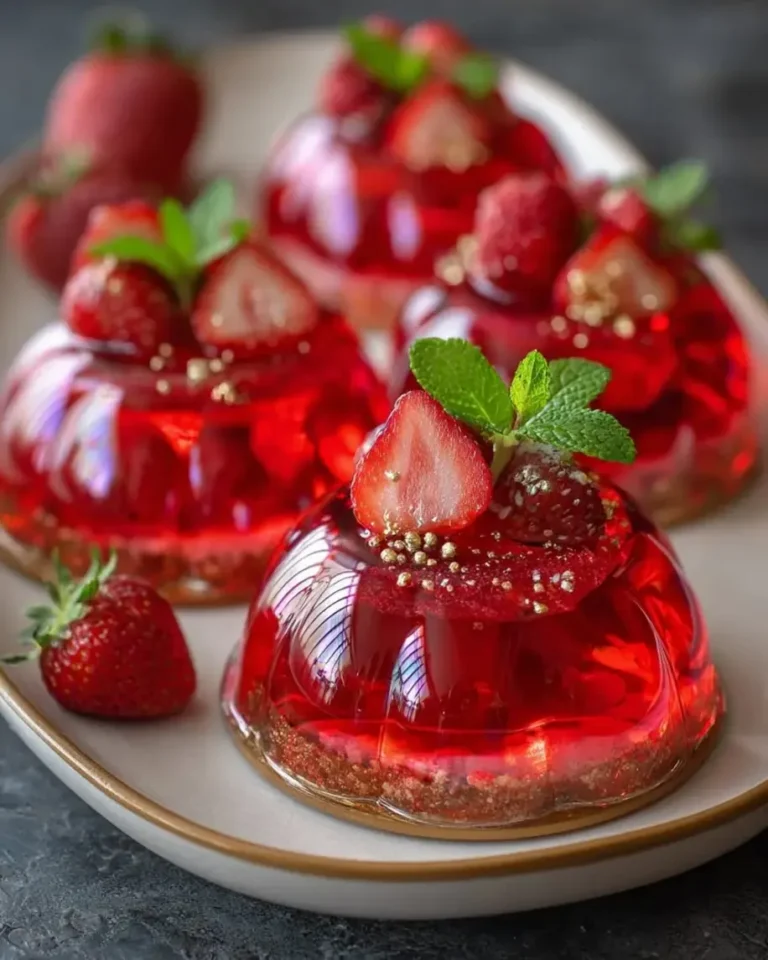
Citrus Burst Diamond Cheesecake Domes with Mirror Glaze
“`html
Table of Contents
Citrus Burst Diamond Cheesecake Domes with Crystal Mirror Glaze – A Stunning Citrus Mirror Glaze Cheesecake Domes Recipe
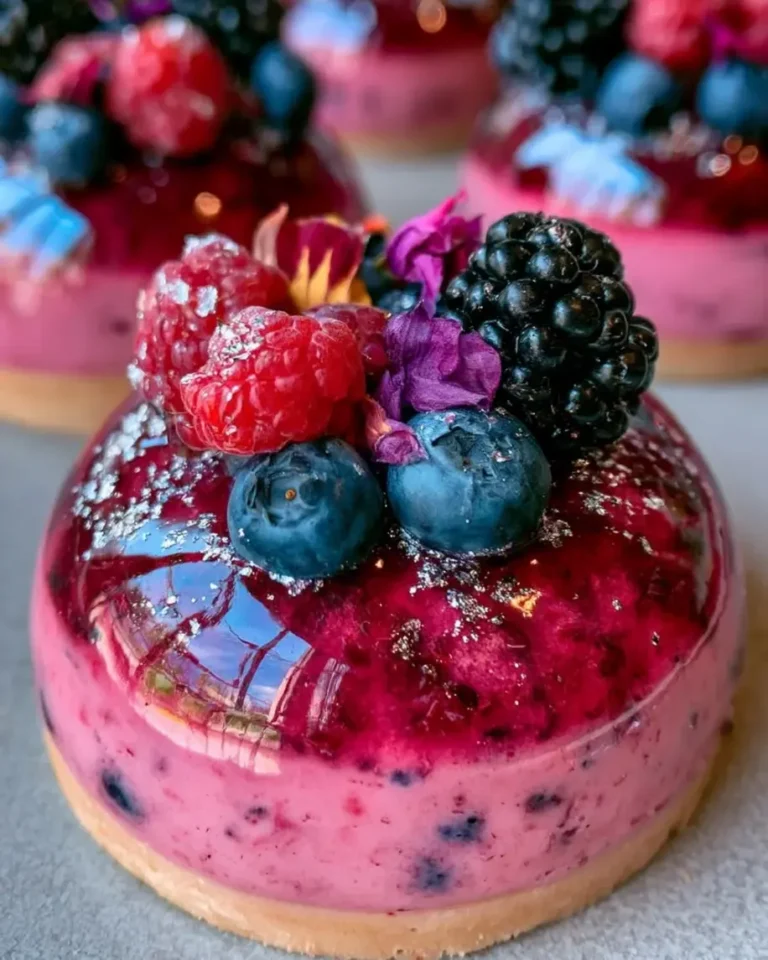
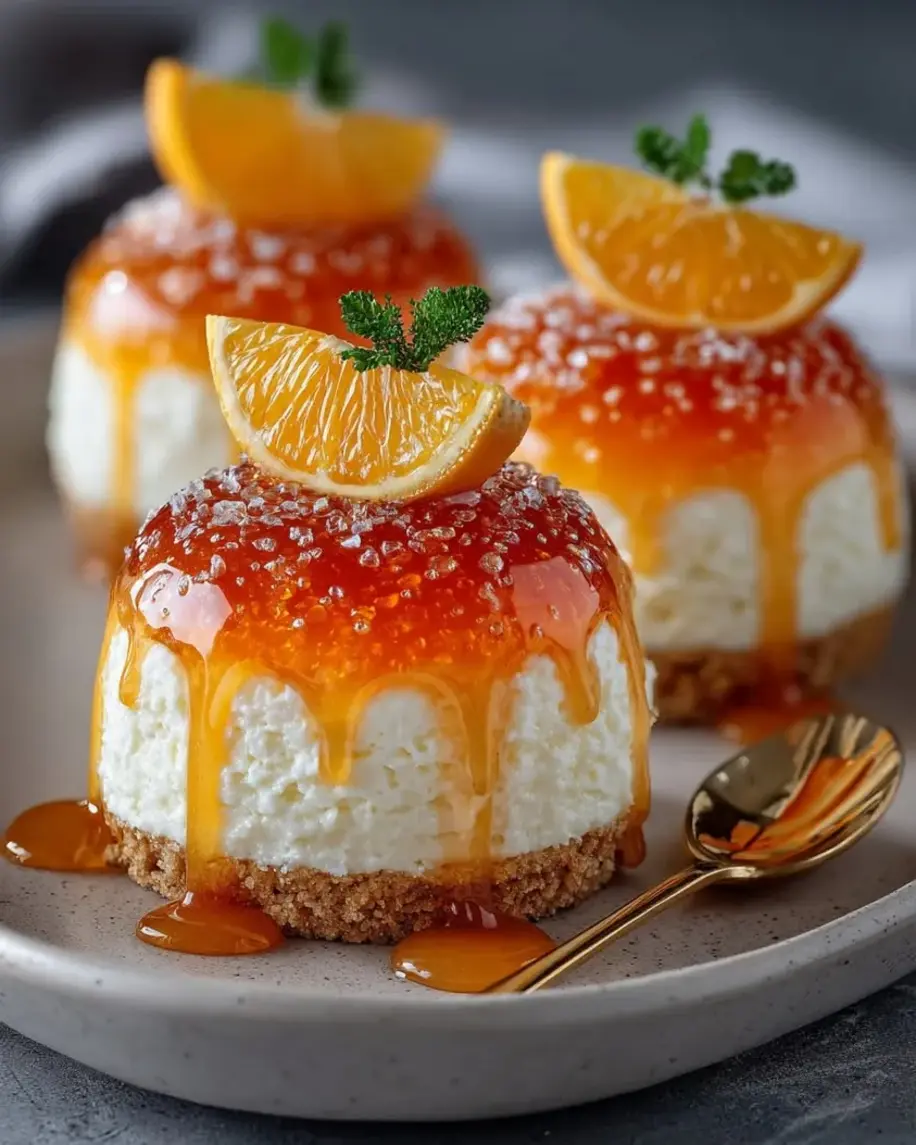
Growing up in Morocco, my mother’s kitchen was always filled with the scent of citrus — oranges, lemons, and grapefruits piled high in woven baskets, waiting to be turned into tagines, salads, and syrups. Years later, during my pastry training in Paris, I learned the precision of French mirror glazes and the artistry of molded desserts. This Citrus Burst Diamond Cheesecake Domes with Crystal Mirror Glaze recipe brings those two worlds together: the bright, sun-drenched flavors of North African citrus and the sleek, polished technique of a Parisian pâtissier. Every dome is a little jewel — a diamond-shaped cheesecake with a hidden citrus jelly core, cloaked in a shimmering crystal mirror glaze that catches the light like cut glass. This is the citrus mirror glaze cheesecake domes recipe I wish I’d had when I first started experimenting with gelatin mirror glazes.
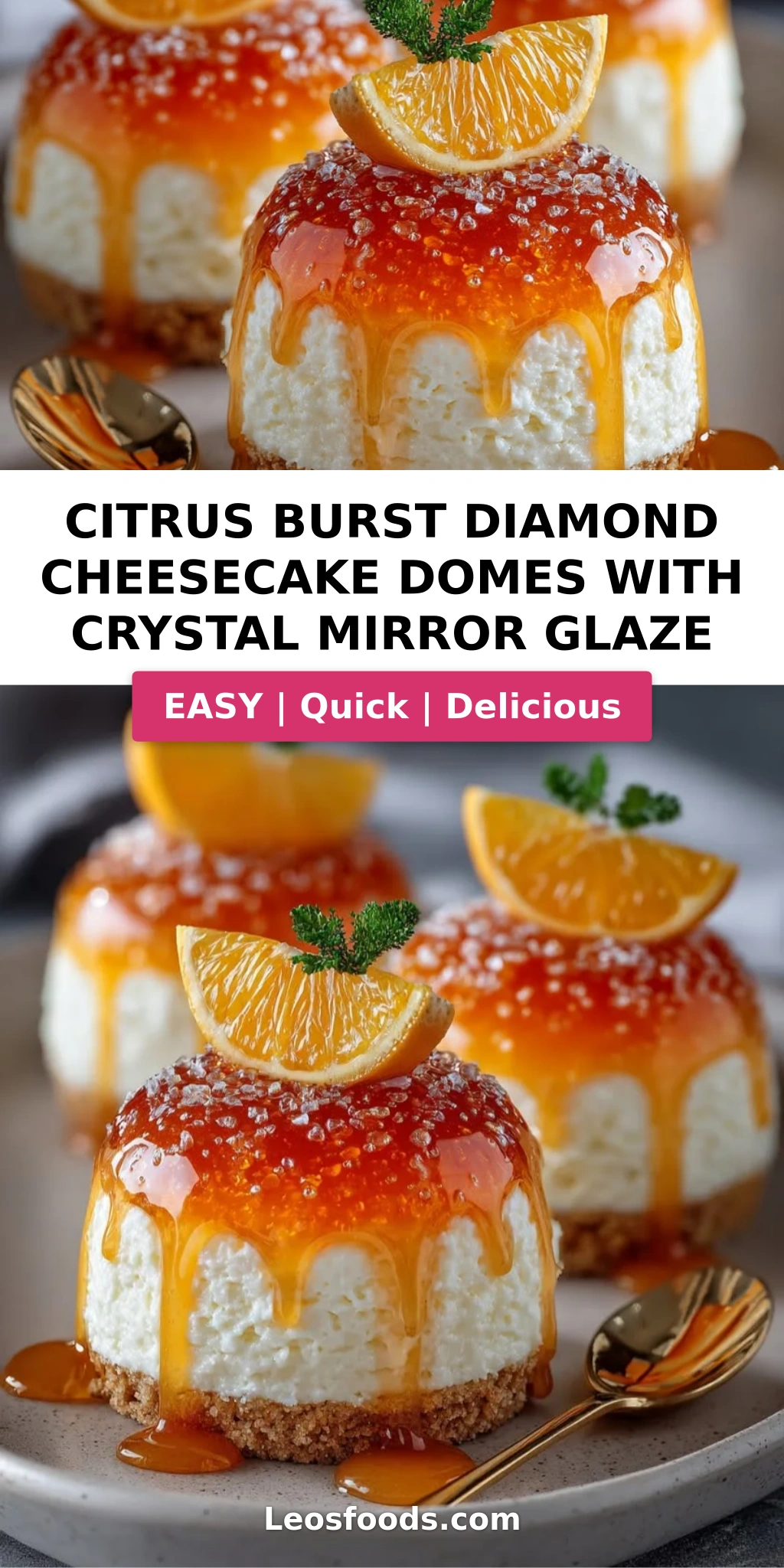
Imagine cracking through that mirror-bright glaze with your spoon — it gives way to a silky, creamy cheesecake filling, and then you hit the surprise center: a burst of tangy orange-grapefruit jelly that tastes like sunshine concentrated into a single bite. The glaze itself is almost translucent, with a glass-like finish that makes these domes look like edible gemstones. I’ve infused the cheesecake with both lemon and orange zest, plus a touch of vanilla, to create a layered citrus experience that’s neither too sweet nor too tart. The texture is luxuriously smooth, thanks to a carefully balanced gelatin mirror glaze technique I honed in Paris. Every element — from the jelly core to the glaze — relies on properly bloomed gelatin, and I’ll show you exactly how to get it right.
What sets my version apart is the triple-citrus approach and the diamond mold shaping, which gives these domes their distinctive faceted look. I’m also sharing my foolproof method for the crystal mirror glaze recipe — the same technique I use for special occasions at my NYC supper club. One common mistake I see home cooks make is overheating the glaze, which kills the shine; I’ll show you the exact temperature (90°F) and consistency to aim for. Whether you’re making these for a birthday, a bridal shower, or just because you want to impress yourself, this citrus cheesecake dessert delivers on both flavor and spectacle. As I always say in my NYC kitchen: if you’re going to make a dessert, make it unforgettable.
Why This Citrus Mirror Glaze Cheesecake Domes Recipe Is the Best
The flavor secret here is the triple-citrus punch — lemon, orange, and grapefruit — each bringing its own personality. Lemon adds brightness and acidity, orange brings sweetness and depth, and grapefruit contributes a subtle bitterness that keeps the dessert from feeling one-dimensional. I learned this balancing act from my mother, who would layer citrus fruits in her Moroccan salads to create complexity. In this citrus cheesecake dessert, the citrus jelly core acts as a flavor bomb that cuts through the richness of the cream cheese, making each bite feel fresh and exciting.
The texture is where French training really shines. The cheesecake filling is whipped to soft peaks before folding, which gives it an airy, mousse-like consistency that contrasts beautifully with the firm jelly center. The crystal mirror glaze recipe I use is based on the classic French glaçage miroir — it requires precise temperature control and properly bloomed gelatin. When done right, the glaze sets to a smooth, reflective finish that doesn’t crack or wrinkle. I’ve tested this recipe multiple times to ensure the gelatin ratios are perfect for home cooks using standard US ingredients.
And here’s the best part: despite its fancy appearance, this recipe is surprisingly approachable. The steps are clearly broken down, and I’ve included visual cues for every stage — from blooming gelatin to testing glaze temperature. Even if you’ve never worked with a gelatin mirror glaze before, my detailed instructions and pro tips will guide you through. The diamond cheesecake mold does the heavy lifting for the shape, and the glaze covers any imperfections. I’ve made this recipe with my weekend cooking class students in NYC, and they’re always amazed at how professional the results look on the first try.
Citrus Mirror Glaze Cheesecake Domes Ingredients
I source my citrus from the Union Square Greenmarket in NYC — the Meyer lemons from Bodhi Farm and the honeybells from Briermere Farms are my favorites. But any good-quality supermarket citrus will work beautifully. When I’m back in Morocco visiting family, I use the fragrant Beldi lemons from the souk; the flavor is slightly different but equally lovely. For the gelatin, I always use Knox powdered gelatin (the orange box) — it’s reliable, widely available, and gives consistent results. Here’s everything you’ll need:
Ingredients List
- For the Citrus Cheesecake Filling:
- 8 oz cream cheese, softened
- 1/2 cup granulated sugar
- 1 cup heavy cream
- 1 tbsp lemon juice
- 1 tbsp orange juice
- 1 tsp lemon zest
- 1 tsp orange zest
- 1 tsp vanilla extract
- 2 tsp powdered gelatin
- 3 tbsp cold water
- For the Citrus Jelly Core:
- 1/2 cup orange juice
- 1/4 cup grapefruit juice
- 2 tbsp granulated sugar
- 1 tsp powdered gelatin
- 1 tbsp cold water
- For the Crystal Mirror Glaze:
- 1 cup granulated sugar
- 1/2 cup water
- 1/2 cup sweetened condensed milk
- 1 cup white chocolate, finely chopped
- 1 tbsp powdered gelatin
- 3 tbsp cold water
- 1 tsp clear vanilla extract
- For Garnish (optional):
- Candied citrus peel
- Edible silver flakes
- Micro mint leaves
Ingredient Spotlight
Gelatin is the backbone of both the jelly core and the mirror glaze. It must be bloomed in cold water (never warm) for exactly 5 minutes — this step ensures even hydration and smooth dissolution. I use Knox gelatin because it’s widely available in US grocery stores and has a consistent bloom strength of 225 bloom. If you use sheet gelatin, you’ll need to convert: 1 tsp powdered gelatin equals about 1 sheet (gold strength). The key is to never let gelatin boil — it will lose its setting power and create a rubbery texture.
White chocolate gives the mirror glaze its signature crystal-clear appearance and silky mouthfeel. I prefer Ghirardelli or Callebaut white chocolate — they melt smoothly and don’t contain fillers that can cause the glaze to seize. Avoid white chocolate chips, which often contain stabilizers that prevent smooth melting. Chop the chocolate finely so it melts evenly into the warm glaze mixture. The cocoa butter in the chocolate also helps the glaze set with a brilliant shine.
Citrus juices should be fresh-squeezed for the best flavor — bottled juice lacks the brightness and acidity that makes this dessert sing. For the jelly core, I use a mix of orange and grapefruit juice because grapefruit adds a subtle tangy bitterness that balances the sweetness of the glaze and cheesecake. When selecting citrus at the store, look for fruits that feel heavy for their size (more juice) and have smooth, brightly colored skin. Meyer lemons are sweeter and less acidic — if you use them, reduce the sugar slightly.
| Original Ingredient | Best Substitution | Flavor / Texture Impact |
|---|---|---|
| Powdered gelatin | Sheet gelatin (gold strength), 1 sheet per tsp | Slightly clearer set; same setting power |
| White chocolate | White chocolate bars (not chips) | Smoother glaze, better shine |
| Grapefruit juice | Lemon juice + pinch of sugar | More tart, less complex |
| Heavy cream | Full-fat coconut cream (chilled) | Slightly coconut flavor; dairy-free option |
| Cream cheese | Mascarpone + 2 tbsp plain yogurt | Richer, less tangy; softer set |
How to Make Citrus Burst Diamond Cheesecake Domes — Step-by-Step
I’m going to walk you through every step of this crystal mirror glaze recipe, from blooming gelatin to unmolding those gorgeous domes. Trust the process — and don’t skip the freezing times, because they’re essential for the glaze to set properly.
Step 1: Make the Citrus Jelly Core
Bloom the 1 tsp gelatin for the jelly core in 1 tbsp cold water. Let it sit for 5 minutes until it looks like wrinkled, translucent sheets. Meanwhile, heat 1/2 cup orange juice, 1/4 cup grapefruit juice, and 2 tbsp sugar in a small saucepan over medium heat until warm (about 110°F) — don’t boil. Remove from heat and stir in the bloomed gelatin until fully dissolved. Pour the mixture into small silicone hemisphere molds or an ice cube tray. Freeze for at least 2 hours, until completely solid.
💡 Stella’s Pro Tip: Use a squeeze bottle to fill the jelly molds — it minimizes bubbles and makes for a cleaner core. If you don’t have small silicone molds, freeze the jelly in a thin layer in a shallow dish and cut it into small cubes once firm.
Step 2: Make the Cheesecake Filling
Bloom 2 tsp gelatin in 3 tbsp cold water for 5 minutes. In a large bowl, beat 8 oz softened cream cheese with 1/2 cup sugar, 1 tbsp lemon juice, 1 tbsp orange juice, 1 tsp lemon zest, 1 tsp orange zest, and 1 tsp vanilla extract until smooth and creamy — about 2 minutes with an electric mixer. In a small saucepan, warm 1/4 cup of the heavy cream until steaming (not boiling), then dissolve the bloomed gelatin into it. Stir this gelatin mixture into the cream cheese base. Whip the remaining 3/4 cup heavy cream to soft peaks — when you lift the whisk, the cream should gently fold over itself, not stand up stiff. Fold the whipped cream into the cheesecake base in thirds, using a gentle hand to keep it airy.
⚠️ Common Mistake to Avoid: Over-whipping the cream will make the filling grainy and stiff. Stop as soon as you see soft, droopy peaks — the filling should be light and mousse-like, not buttery.
Step 3: Assemble the Domes
Spoon the cheesecake filling into a piping bag fitted with a large round tip (or use a zip-top bag with the corner snipped). Pipe the filling into diamond dome molds, filling each cavity halfway. Press a frozen citrus jelly core into the center of each mold — it should sit slightly below the surface. Pipe the remaining filling over the jelly core, filling the mold completely. Use a small offset spatula to scrape the tops flat and clean. Freeze for at least 6 hours, or preferably overnight, until the domes are rock-solid.
💡 Stella’s Pro Tip: Lightly spray the diamond dome molds with non-stick cooking spray before piping — this ensures the frozen domes release cleanly without breaking. If you don’t have diamond molds, use any dome-shaped silicone mold; the glaze will still look spectacular.
Step 4: Make the Crystal Mirror Glaze
Bloom 1 tbsp gelatin in 3 tbsp cold water for 5 minutes. In a medium saucepan, combine 1 cup sugar, 1/2 cup water, and 1/2 cup sweetened condensed milk. Heat over medium heat, stirring gently, until the mixture is steaming and the sugar has dissolved — about 3-4 minutes. Do not let it boil. Remove from heat, add the bloomed gelatin and 1 cup finely chopped white chocolate, and stir until smooth. Add 1 tsp clear vanilla extract and use an immersion blender (or regular blender) to blend the glaze until completely smooth and glossy. Let the glaze cool to 90°F (32°C) — this is critical. Use an instant-read thermometer to check.
⚠️ Common Mistake to Avoid: If the glaze is too hot (above 95°F), it will melt the frozen cheesecake domes and create a messy, drippy finish. If it’s too cold (below 85°F), it will set too quickly and won’t self-level. 90°F is the sweet spot for a perfect mirror finish.
Step 5: Glaze the Domes
Unmold the frozen cheesecake domes and place them on a wire rack set over a baking sheet (to catch drips). Working quickly, pour the cooled mirror glaze evenly over each dome, starting from the top and letting it cascade down the sides. Use a small spatula to gently push the glaze over any bare spots, but don’t overwork it — the beauty of a mirror glaze is in its smooth, self-leveling finish. Refrigerate the glazed domes for at least 30 minutes to set the glaze. The glaze should be firm to the touch but still give slightly when pressed.
💡 Stella’s Pro Tip: If you notice air bubbles in the glaze, pass it through a fine-mesh sieve before pouring. For an extra-clear finish, tap the wire rack gently against the baking sheet to release any trapped bubbles after glazing.
Step 6: Garnish and Serve
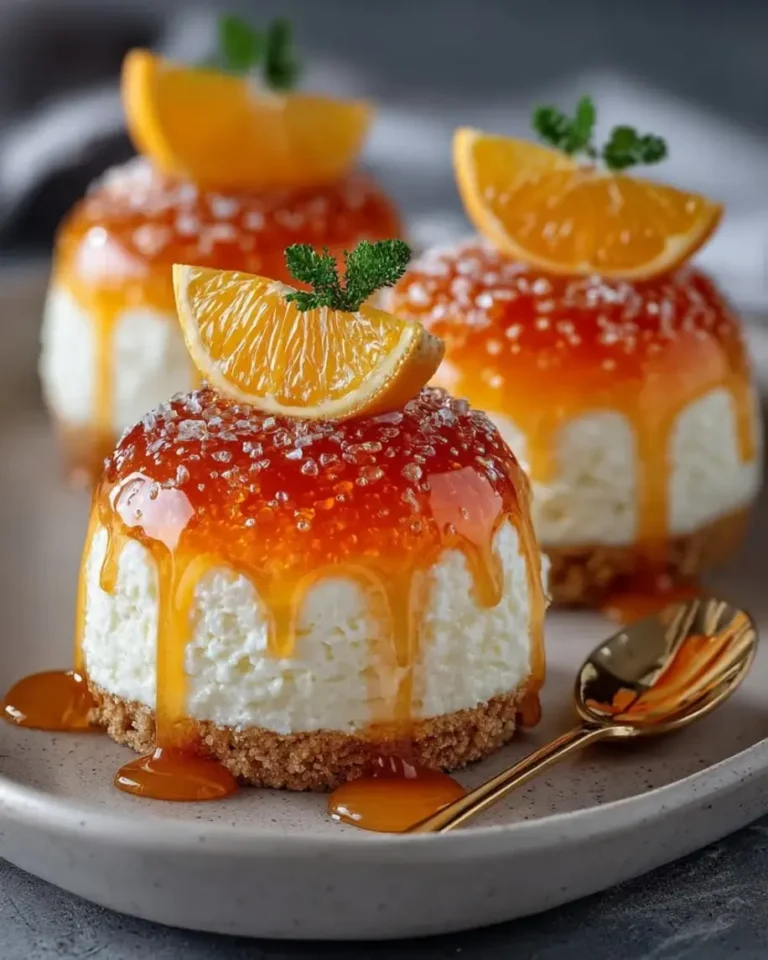
Once the glaze is set, transfer the domes to serving plates. Garnish with candied citrus peel, edible silver flakes, and micro mint leaves — the silver flakes catch the light and make the domes look extra jewel-like. Let the domes sit at room temperature for 5-7 minutes before serving to soften slightly. Serve with a small spoon and watch your guests’ faces light up when they see the glossy finish and hidden jelly center.
| Step | Action | Duration | Key Visual Cue |
|---|---|---|---|
| 1 | Bloom gelatin for jelly | 5 minutes | Gelatin looks wrinkled and translucent |
| 2 | Heat juice and sugar | 2-3 minutes | Steaming, not boiling |
| 3 | Freeze jelly cores | 2 hours | Firm and solid to the touch |
| 4 | Bloom gelatin for filling | 5 minutes | Same wrinkled appearance |
| 5 | Beat cream cheese base | 2 minutes | Smooth, no lumps |
| 6 | Whip cream to soft peaks | 2-3 minutes | Cream gently folds over when whisk lifted |
| 7 | Assemble and freeze domes | 6+ hours | Rock solid, no give when pressed |
| 8 | Bloom gelatin for glaze | 5 minutes | Same wrinkled appearance |
| 9 | Heat sugar mixture | 3-4 minutes | Steaming, sugar dissolved |
| 10 | Cool glaze to 90°F | 10-15 minutes | Thermometer reads 90°F |
| 11 | Glaze domes | 2-3 minutes | Smooth, even coverage |
| 12 | Refrigerate to set glaze | 30 minutes | Glaze firm but slightly springy |
Serving & Presentation
These Citrus Burst Diamond Cheesecake Domes are showstoppers on any dessert table. I love serving them on minimalist white plates — the bright, glossy glaze pops against the white ceramic. For a touch of drama, place each dome on a small pool of citrus coulis (simply blend fresh orange juice with a little sugar and a drop of vanilla). The candied citrus peel adds a lovely chewy contrast, and the edible silver flakes make the domes sparkle like diamonds. If you’re serving these at a dinner party, arrange them on a marble board with fresh mint sprigs and sliced kumquats for a gorgeous grazing-style dessert presentation.
In my NYC kitchen, I often serve these with a side of lightly whipped cream sweetened with a touch of honey — it mellows the citrus intensity and adds a cozy note. For a Moroccan-inspired twist, sprinkle a tiny pinch of ground cinnamon or cardamom over the cream. The combination of the cool, creamy cheesecake and the bright, zesty jelly core is pure magic. I first served these at a friend’s engagement party in Brooklyn, and people literally gasped when they cut into the domes and saw the jelly center. These are the kind of desserts that make you feel like a pastry chef, even if you’re just a passionate home cook.
Let the domes sit at room temperature for about 5 minutes before serving — this softens the glaze just enough to make it spoonable without losing its shine. Pair them with a crisp, dry sparkling wine or a floral herbal tea like chamomile or jasmine. The citrus notes in the dessert echo beautifully in a glass of Prosecco or a cold-pressed orange-bergamot juice. For a non-alcoholic option, I love serving these with sparkling water infused with fresh mint and a splash of pomegranate juice — the deep red color contrasts stunningly with the golden citrus glazed domes.
| Pairing Type | Suggestions | Why It Works |
|---|---|---|
| Side Dish | Lightly whipped cream, citrus coulis, fresh berries | Adds creaminess and freshness |
| Sauce / Dip | Honey-sweetened cream, passion fruit coulis | Balances acidity with sweetness |
| Beverage | Prosecco, jasmine tea, sparkling mint water | Citrus and floral notes complement |
| Garnish | Candied citrus peel, silver flakes, micro mint | Adds visual sparkle and texture contrast |
Make-Ahead, Storage & Reheating
This recipe is a dream for busy home cooks because almost every component can be prepared in advance. In my NYC schedule, I often make the jelly cores and cheesecake filling on a Sunday, assemble and freeze the domes, then glaze them the day before serving. The key is to keep the domes frozen until you’re ready to glaze — they need to be rock-solid so the glaze sets smoothly without melting the cheesecake. Here’s my complete storage guide:
| Method | Container | Duration | Reheating Tip |
|---|---|---|---|
| Refrigerator | Airtight container, single layer | 3-4 days | Serve chilled; no reheating needed |
| Freezer | Wrap each dome in plastic wrap, then foil | Up to 2 months | Thaw in refrigerator overnight |
| Make-Ahead | Freeze unglazed domes up to 2 weeks | Glaze day before serving | Glaze directly from frozen; refrigerate after glazing |
If you’re storing glazed domes in the refrigerator, place them in a single layer in an airtight container — don’t stack them or the glaze may stick. The glaze will stay shiny and smooth for 2-3 days. For longer storage, freeze the unglazed domes and glaze them fresh the day before you plan to serve. I do this all the time for holiday parties — I freeze a batch in late November, then glaze them throughout December for different events. The quality is just as good as fresh.
One more thing: if your glazed domes develop condensation after being in the fridge, gently blot them with a paper towel before serving. Condensation can dull the shine, but blotting restores the mirror finish. If you’re transporting these to a party, keep them chilled in a cooler and bring the garnish separately — add the silver flakes and mint just before serving for the freshest look.
Variations & Easy Swaps
One of the things I love most about this recipe is how adaptable it is. Over the years, I’ve played with different citrus combinations, alternative glazes, and even dairy-free versions for my NYC clients with dietary restrictions. Here are three of my favorite variations — each one is tested and delicious in its own way.
| Variation | Key Change | Best For | Difficulty Impact |
|---|---|---|---|
| Moroccan Spiced Citrus | Add cinnamon, ginger, and orange flower water | Fall & winter holidays | Same difficulty |
| Dairy-Free / Vegan | Coconut cream, vegan cream cheese, agar-agar | Dairy-free diets | More advanced |
| Berry Citrus Fusion | Replace grapefruit with raspberry purée | Spring & summer entertaining | Same difficulty |
Moroccan Spiced Citrus Variation
This variation is a nod to my heritage — add 1/4 tsp ground cinnamon and 1/4 tsp ground ginger to the cheesecake filling, and replace 1 tbsp of the orange juice in the jelly core with 1 tbsp orange flower water. The warm spices complement the citrus beautifully, and the floral note from the orange flower water adds an exotic layer that reminds me of my mother’s kitchen in Marrakech. Garnish with candied orange peel dusted with cinnamon sugar for an extra touch of Moroccan flair. This version is especially lovely during the holiday season — it pairs wonderfully with spiced tea or mulled wine.
Dairy-Free / Vegan Variation
For a dairy-free version, replace the cream cheese with a high-quality vegan cream cheese (I like Violife or Kite Hill), and swap the heavy cream for full-fat coconut cream (chilled overnight and whipped to soft peaks). Use agar-agar instead of gelatin — 1 tsp agar-agar powder replaces 2 tsp gelatin in the cheesecake filling, and 1/2 tsp replaces 1 tsp gelatin in the jelly core. For the mirror glaze, use a vegan white chocolate brand like iChoc or homemade cacao butter + sugar + vanilla. Note that agar-agar sets faster and at a higher temperature than gelatin, so work quickly when folding it into the filling. The texture will be slightly less creamy but still very luxurious.
Berry Citrus Fusion Variation
In late spring, when berries are at their peak at the NYC farmers markets, I love swapping the grapefruit juice in the jelly core for an equal amount of fresh raspberry purée (strained to remove seeds). The raspberry adds a gorgeous deep pink color and a sweet-tart flavor that pairs beautifully with orange and lemon. You can also add a few fresh raspberries to the center of each jelly core before freezing for a fun surprise. Garnish with fresh raspberries, edible rose petals, and a drizzle of white chocolate. This version is stunning for bridal showers, baby showers, or any spring celebration.
Share Your Version!
I absolutely love hearing how my recipes come to life in your kitchen. If you make these Citrus Burst Diamond Cheesecake Domes with Crystal Mirror Glaze, please leave a star rating and a comment below — let me know which variation you tried, or if you came up with your own twist! Did you use a different citrus combination? Try a different glaze color? I’d love to hear about it. Your feedback helps me create better recipes for this community, and it might inspire someone else to try something new.
Tag me in your photos on Instagram or Pinterest @leosfoods — I always share my favorites in my stories. And if you have a question about a specific step, don’t hesitate to ask in the comments. I reply to every single one personally. This recipe has a special place in my heart because it represents everything I love about cooking: the blending of cultures, the precision of technique, and the joy of sharing something beautiful with the people you love. From my NYC kitchen to yours — I hope this recipe brings as much warmth to your table as it does to mine. — Stella 🧡
Love This Recipe? Save It to Pinterest!
If you enjoyed this Citrus Burst Diamond Cheesecake Domes with Crystal Mirror Glaze recipe, don’t let it get lost in your browser tabs! 😄 Pin it now so you can find it again anytime — and explore hundreds more tried-and-tested recipes waiting for you on my Pinterest boards.
👉 Follow Stella on Pinterest @stellarecipeblog
📌 Pin this recipe · 🔁 Re-pin your favorites · 💬 Tag me when you make it — I love seeing your creations!
Have You Made This Recipe?
I’d love to see your creation! Share a photo on Instagram and tag @leosfoods, or leave a comment below to tell me how it turned out. Did you try one of the variations? What citrus combination did you use? Your feedback helps me and other readers — and I personally read every single comment. 🧡
📸 Tag @leosfoods
💬 Leave a comment
How do you achieve the diamond shape for cheesecake domes without a special mold?
If you don’t have a diamond-shaped silicone mold, you can still create faceted domes using a few clever techniques. One method is to use a standard hemisphere silicone mold and, after glazing, press the domes gently into a small dish lined with finely crushed graham crackers or toasted coconut — the crumbs create a textured, faceted look. Another option is to freeze the cheesecake filling in a small paper cup or muffin tin liner, then use a sharp knife to carefully carve flat facets into the frozen dome before glazing. The glaze will smooth over the cut surfaces, creating a convincing diamond effect. For the most precise results, I recommend investing in a diamond dome mold — they’re available online and reusable for many other desserts.
What is the best citrus fruit combination for a balanced flavor in the cheesecake?
For the most balanced and vibrant citrus flavor, I recommend using a combination of lemon, orange, and grapefruit. Lemon provides bright acidity and a clean finish, orange adds sweetness and a familiar citrus note, and grapefruit contributes a subtle bitterness that prevents the dessert from tasting one-dimensional or overly sweet. The lemon and orange go into both the cheesecake filling and the jelly core, while the grapefruit is featured mainly in the jelly core for a pleasant tangy surprise. If grapefruit isn’t your favorite, you can replace it with Meyer lemon for a sweeter, less acidic option, or with tangerine for a milder flavor. I’ve tested this combination extensively in my NYC kitchen, and it consistently delivers the most complex and satisfying citrus profile.
Can I make the crystal mirror glaze without gelatin for a vegetarian version?
Yes, you can make a vegetarian version of the crystal mirror glaze by replacing gelatin with agar-agar, a plant-based setting agent derived from seaweed. Use 2 tsp agar-agar powder for every 1 tbsp gelatin called for in the recipe. The process is different: agar-agar must be brought to a full boil (212°F) for 2-3 minutes to activate its setting properties, whereas gelatin is simply bloomed in cold water and dissolved in warm liquid. The texture of an agar-agar mirror glaze is firmer and less elastic than a gelatin-based glaze, so it may crack more easily when cut. It also sets at a higher temperature (around 100-110°F), so you’ll need to work more quickly when glazing. For the best results with agar-agar, make sure to blend the glaze thoroughly with an immersion blender to ensure a smooth, lump-free consistency.
How far in advance can I prepare the Citrus Burst Diamond Cheesecake Domes before serving?
This recipe is perfect for advance preparation. You can prepare the citrus jelly cores and the cheesecake filling up to 3 days ahead — store the jelly cores frozen and the cheesecake filling in the refrigerator. Assemble the domes and freeze them solid (at least 6 hours) up to 2 weeks before serving. The glaze can be made up to 1 week ahead and stored in an airtight container in the refrigerator — gently reheat it to 90°F before glazing. I recommend glazing the domes the day before you plan to serve them, then refrigerating overnight. This allows the glaze to set fully and the flavors to meld. On the day of serving, just add the garnish and let the domes sit at room temperature for 5-7 minutes. This make-ahead schedule is exactly what I use for my holiday parties in NYC, and it makes entertaining so much less stressful.
Why did my mirror glaze turn out cloudy instead of clear?
A cloudy mirror glaze is usually caused by one of three issues: overheating the glaze, insufficient blending, or using low-quality white chocolate. When the sugar mixture is heated too high or too quickly, the sugar can crystallize and create a cloudy appearance. Always heat gently and use a thermometer to stay below 200°F. If the glaze isn’t blended thoroughly with an immersion blender, air bubbles and unincorporated fat can scatter light and make the glaze look murky. Blend for a full 30-45 seconds until completely smooth and glossy. Finally, the quality of white chocolate matters greatly — avoid white chocolate chips or candy melts, which contain stabilizers that can dull the finish. Use a high-quality white chocolate bar (I recommend Ghirardelli or Callebaut) for the clearest, most brilliant mirror finish.
Can I use regular cheesecake instead of the no-bake version for these domes?
While you can technically use a baked cheesecake filling, I strongly recommend sticking with the no-bake, gelatin-set version for these domes. Baked cheesecake has a denser, firmer texture that doesn’t pipe as smoothly into the molds and can create air pockets around the jelly core. The no-bake version is lighter, creamier, and more mousse-like, which allows the frozen jelly core to sit perfectly in the center without sinking or shifting. Additionally, the no-bake filling freezes solidly — essential for the glazing process — whereas baked cheesecake can become icy and grainy when frozen. If you prefer a baked cheesecake flavor, you can bake a standard cheesecake, chill it thoroughly, and cut it into diamond shapes with a sharp knife — then glaze those instead. But for the dome shape and the hidden jelly core, the no-bake method is truly the best choice.
How do I prevent the mirror glaze from cracking when I cut the domes?
To prevent the mirror glaze from cracking when cutting, make sure the domes are properly chilled but not frozen solid when you serve them. The glaze should be firm but still slightly pliable — if it’s too cold and hard, it will shatter like glass. Let the domes sit at room temperature for 5-7 minutes before cutting, which softens the glaze just enough. Use a sharp, thin-bladed knife and warm it under hot water (then dry it) before each cut — the warm knife glides through the glaze without cracking it. For the cleanest cut, press the knife straight down rather than sawing back and forth. If you’re serving these at a party and want perfect slices, you can cut the domes in advance and garnish each half individually — the cut surfaces will still look beautiful and the jelly center will be visible.
What’s the best way to store leftover glazed domes without ruining the shine?
To store leftover glazed domes without dulling the shine, place them in a single layer in an airtight container with a sheet of parchment paper between each dome — don’t let them touch each other. Refrigerate for up to 3-4 days. The glaze may develop slight condensation after being in the fridge, which can dull the shine. To fix this, let the domes sit at room temperature for 10 minutes, then gently blot the surface with a paper towel — this restores most of the mirror finish. If you’re storing them for longer, it’s better to freeze the unglazed domes and glaze them fresh when you’re ready to serve. The glaze itself doesn’t freeze well and can become weepy when thawed. For best results, plan to serve glazed domes within 2 days of glazing — they’re at their peak of flavor and appearance during that window.
“`
Print
Citrus Burst Diamond Cheesecake Domes with Crystal Mirror Glaze
Citrus Burst Diamond Cheesecake Domes with Crystal Mirror Glaze
- Yield: 8 1x
Ingredients
- For the Citrus Cheesecake Filling:
- 8 oz cream cheese, softened
- 1/2 cup granulated sugar
- 1 cup heavy cream
- 1 tbsp lemon juice
- 1 tbsp orange juice
- 1 tsp lemon zest
- 1 tsp orange zest
- 1 tsp vanilla extract
- 2 tsp powdered gelatin
- 3 tbsp cold water
- For the Citrus Jelly Core:
- 1/2 cup orange juice
- 1/4 cup grapefruit juice
- 2 tbsp granulated sugar
- 1 tsp powdered gelatin
- 1 tbsp cold water
- For the Crystal Mirror Glaze:
- 1 cup granulated sugar
- 1/2 cup water
- 1/2 cup sweetened condensed milk
- 1 cup white chocolate, finely chopped
- 1 tbsp powdered gelatin
- 3 tbsp cold water
- 1 tsp clear vanilla extract
- For Garnish (optional):
- Candied citrus peel
- Edible silver flakes
- Micro mint leaves
Instructions
- 1. Bloom the gelatin for the citrus jelly core in cold water for 5 minutes.
- 2. Heat the orange juice, grapefruit juice, and sugar until warm.
- 3. Stir in the bloomed gelatin until dissolved.
- 4. Pour into small silicone inserts and freeze until firm.
- 5. Bloom the gelatin for the cheesecake filling in cold water for 5 minutes.
- 6. Beat cream cheese, sugar, lemon juice, orange juice, zests, and vanilla until smooth.
- 7. Warm a small portion of the cream and dissolve the gelatin, then mix into the cheesecake base.
- 8. Whip the remaining cream to soft peaks and fold into the mixture.
- 9. Fill diamond dome molds halfway with cheesecake filling.
- 10. Place a frozen citrus jelly core in the center of each mold and cover with remaining filling.
- 11. Freeze for at least 6 hours or until completely solid.
- 12. Bloom the gelatin for the glaze in cold water.
- 13. Heat sugar, water, and condensed milk until steaming.
- 14. Remove from heat and stir in the gelatin and white chocolate until smooth.
- 15. Add vanilla extract and blend until glossy.
- 16. Cool the glaze to about 90°F (32°C).
- 17. Unmold the frozen domes and place on a wire rack.
- 18. Pour the crystal mirror glaze evenly over each dome.
- 19. Refrigerate for 30 minutes before serving.
- 20. Garnish with candied citrus peel, silver flakes, and micro mint.
Nutrition
- Calories: 335
- Sugar: 32 g
- Fat: 18 g
- Carbohydrates: 37 g
- Protein: 4 g
Tried This Recipe? Leave a Comment!
Did you make this recipe? I’d love to hear how it turned out! Please leave a comment and a rating below. Your feedback helps other home cooks and supports cheerychop.com!
For more delicious inspiration, follow me on Pinterest!