Irresistible Dark Ale Braised Lamb with Treacle Glaze
“`html
Table of Contents
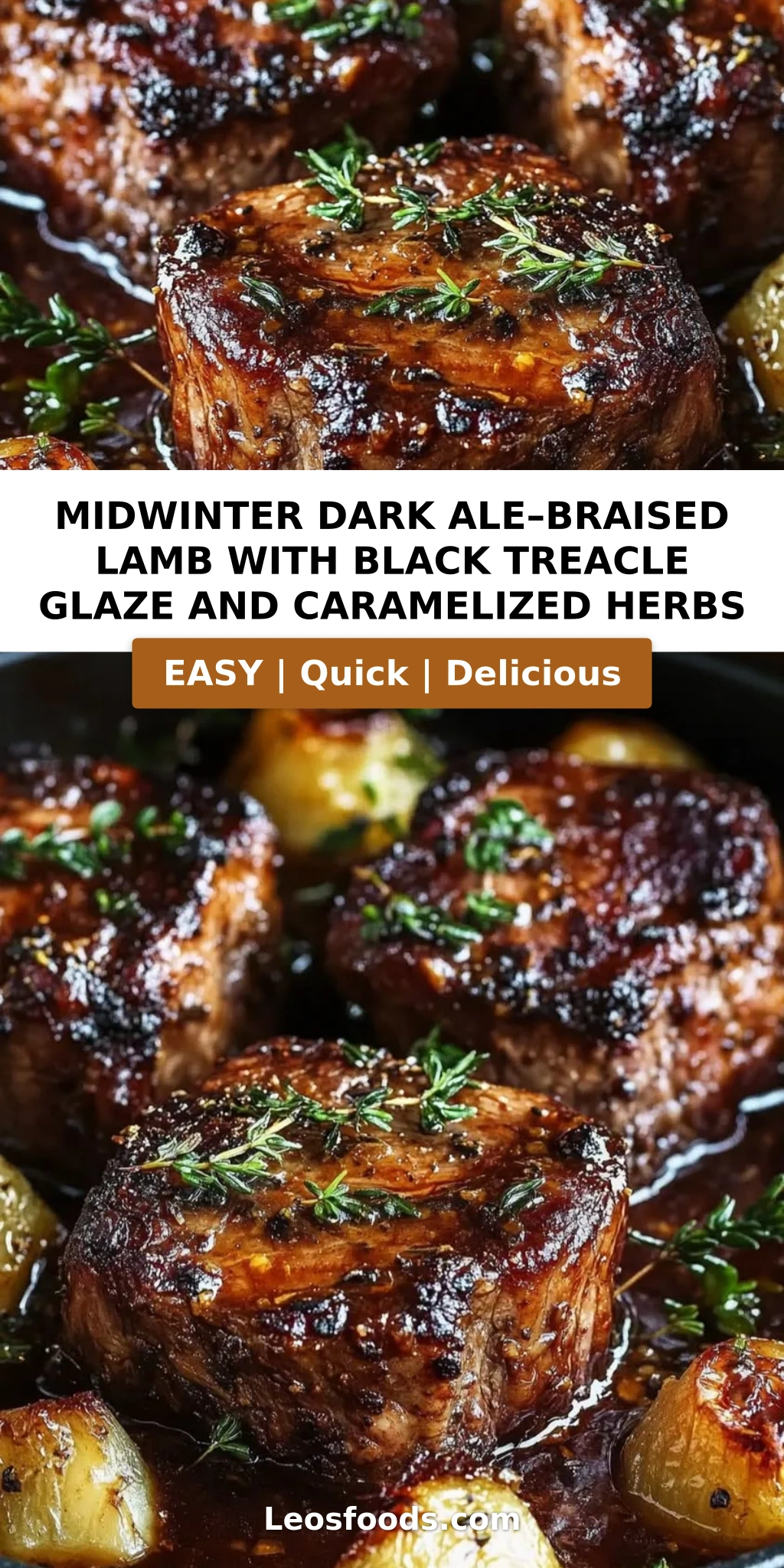
Midwinter Dark Ale–Braised Lamb with Black Treacle Glaze and Caramelized Herbs – A Slow-Braised Showstopper
I still remember the first time I tasted dark ale braised lamb — it was a frosty January evening in Paris, during my years at culinary school. My chef de cuisine, a gruff but brilliant Breton, had been slow-braising lamb shoulders all afternoon in a rich stout from a brewery in Brittany. The kitchen smelled of roasted malt, caramelizing onions, and something deeply savory that I couldn’t quite name. When he lifted the lid, the meat was so tender it barely held its shape, and the sauce had turned into this glossy, almost-black elixir. He finished it with a drizzle of dark honey and a scattering of fresh thyme. That moment changed how I thought about braised meat forever. This Midwinter Dark Ale–Braised Lamb with Black Treacle Glaze and Caramelized Herbs is my love letter to that dish — reimagined with the bold, mineral sweetness of black treacle and a technique I’ve honed over twenty years in professional kitchens.
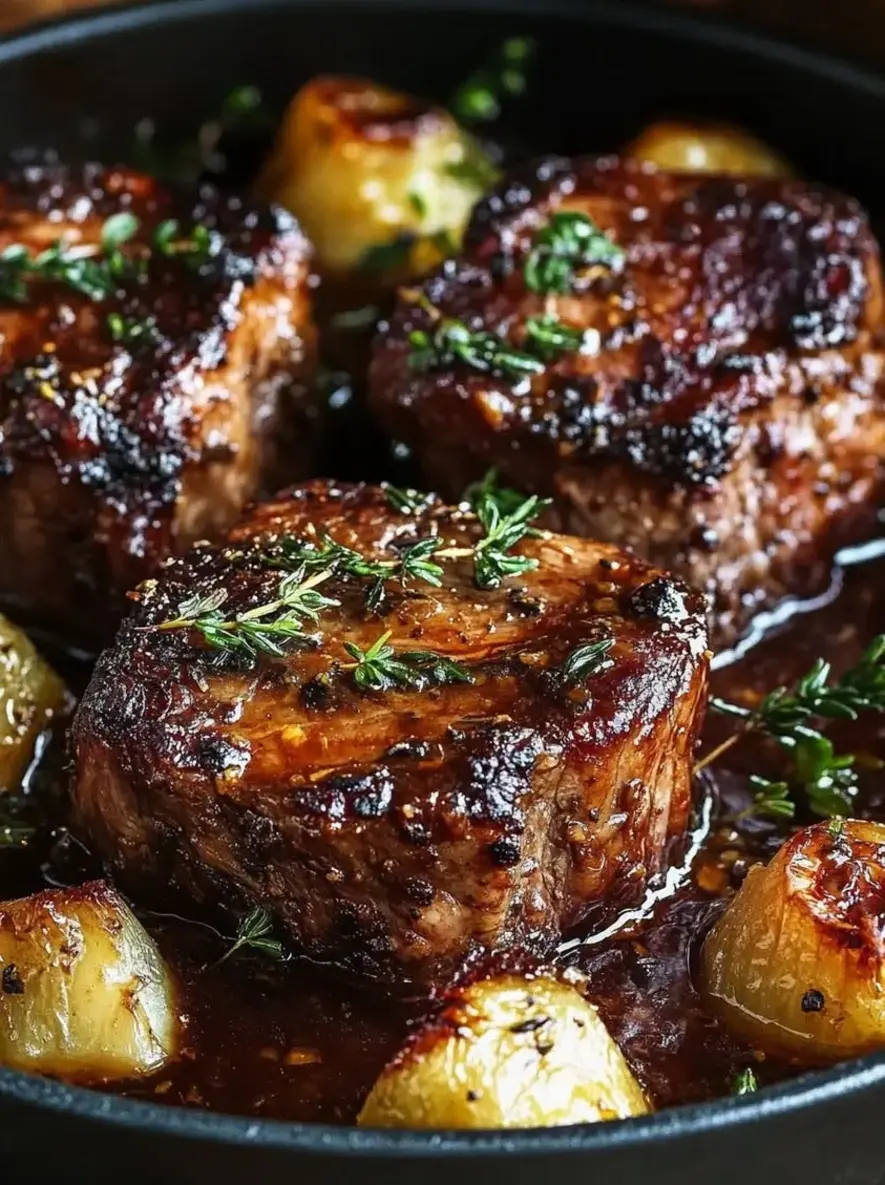
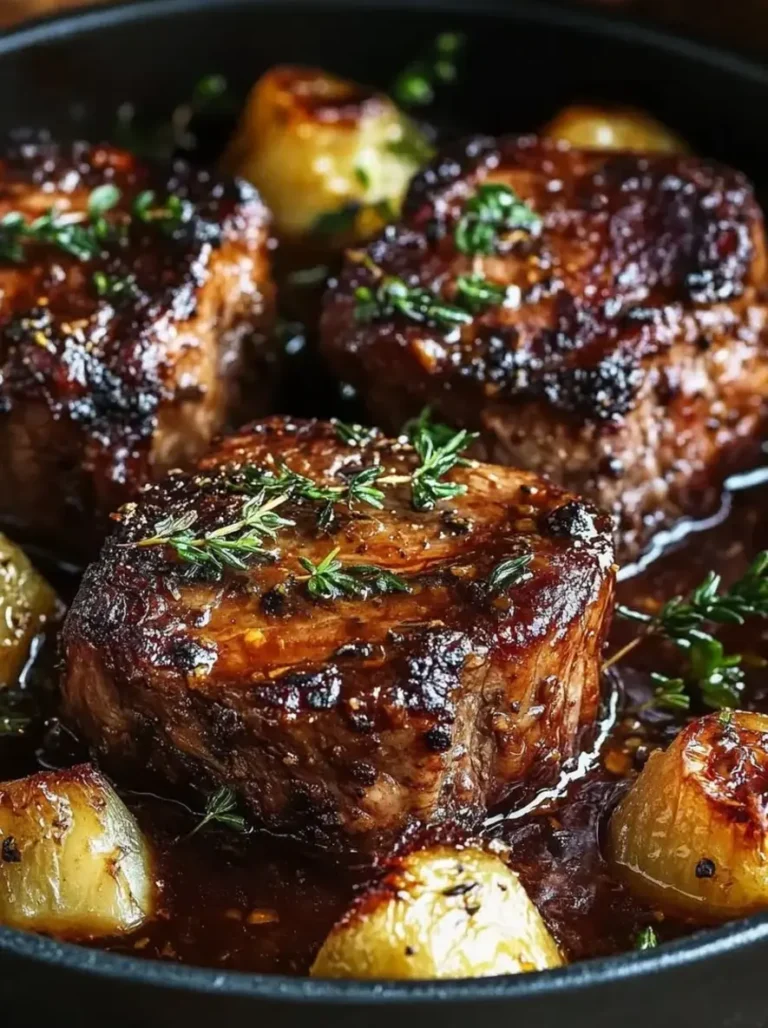
The flavor here is nothing short of majestic. The lamb shoulder braises low and slow in a bath of dark ale, stock, and aromatics until it surrenders into silky, pull-apart tenderness. The black treacle glaze — sticky, slightly bitter, and deeply caramelized — gets brushed on in the final stages, creating a lacquered crust that shatters gently as you cut into it. And then there are the caramelized herbs: rosemary, thyme, and parsley that I fry briefly in butter until they crisp up and turn into something between a seasoning and a garnish. They add pops of herbal fragrance and texture that cut through the richness. Every bite is a study in contrasts — tender and crisp, sweet and bitter, earthy and bright. It’s the kind of dish that quiets a dinner table, because everyone is too busy eating to talk.
What sets this version apart is my Moroccan-French approach to layering flavor. Growing up in Morocco, my mother taught me to braise meat with patience and a heavy hand with aromatics — onions, garlic, and roots cooked until they almost melt into the sauce. In Paris, I learned how to build a braising liquid with acidity, malt, and stock in precise ratios, and how to finish with a glaze that balances sweetness with a hit of vinegar. This recipe combines the best of both worlds. I’ll walk you through every step, including the one mistake most home cooks make when braising lamb (hint: it involves rushing the sear), and I’ll share my tested substitution for black treacle in case you can’t find it at your local market. By the end, you’ll have a dark ale braised lamb that tastes like it simmered for two days — but only took an afternoon of your time.
Why This Dark Ale Braised Lamb Recipe Is the Best
The Flavor Secret. Most slow braised lamb shoulder recipes rely on red wine or stock alone. I use dark ale — a robust stout or porter — as the primary braising liquid. The roasted malt notes in the beer amplify the lamb’s natural gaminess in the most beautiful way, while the black treacle glaze adds a layer of bittersweet molasses complexity. This isn’t just a braised lamb; it’s a dark ale braised lamb that tastes like midwinter in a bowl. I learned this layering technique from a pastry chef in Paris who glazed everything from duck to apples with reduced syrups, and I’ve adapted it here to create a savory-sweet finish that’s utterly addictive.
Perfected Texture. The key to fall-apart lamb shoulder is time and temperature — but also the right cut and preparation. I insist on bone-in lamb shoulder whenever possible, because the bone adds collagen and flavor to the braising liquid. I sear the meat until it’s deeply browned on all sides, not just lightly colored. That brown crust is where the flavor lives. Then I braise at 300°F for a full three hours, checking for doneness by feel: the meat should yield to a fork with zero resistance. The black treacle glaze is brushed on in the final 15 minutes under the broiler, so it caramelizes without burning. The result is lamb that’s fork-tender on the inside with a sticky, candied crust on the outside.
Foolproof & Fast. Despite its impressive presentation, this recipe is surprisingly approachable for home cooks. You don’t need a slow cooker or any special equipment — just a heavy Dutch oven or braiser with a tight-fitting lid. The steps are straightforward: sear, sauté, deglaze, braise, glaze, and rest. I’ve included visual cues for every stage (the color of the meat, the consistency of the sauce, the sound of the sizzle) so you’ll know exactly what to look for. Even if you’ve never braised a lamb shoulder before, you’ll walk away with a dish that tastes like a chef made it. And if you have any questions, I’m just a comment away.
Dark Ale Braised Lamb Ingredients
I source my lamb shoulder from the farmers market in Union Square, where the pasture-raised meat has a deeper, cleaner flavor. The dark ale I use is a local Brooklyn stout — malty, roasty, with just a hint of chocolate. And the black treacle? I find it at specialty British shops or order it online. But I’ll give you a rock-solid substitution below. Here’s your complete shopping list:
Ingredients List
- 4 lbs (1.8 kg) lamb shoulder, bone-in (or boneless, see note)
- 2 tablespoons olive oil
- 2 teaspoons sea salt
- 1 teaspoon black pepper
- 2 large onions, sliced into half-moons
- 4 cloves garlic, minced
- 2 carrots, diced into ½-inch pieces
- 2 celery stalks, diced into ½-inch pieces
- 1½ cups dark ale (stout or porter)
- 1 cup beef or chicken stock, low-sodium
- 2 bay leaves
- 3 sprigs fresh rosemary
- 4 sprigs fresh thyme
- ¼ cup black treacle (or substitution, see table below)
- 2 tablespoons apple cider vinegar
- 1 tablespoon Dijon mustard
- ¼ teaspoon cayenne pepper (optional, for heat)
- ¼ cup fresh parsley, chopped
- 2 tablespoons fresh rosemary, chopped
- 2 tablespoons fresh thyme leaves
- 2 tablespoons unsalted butter
- Flaky sea salt, for finishing
Ingredient Spotlight
Lamb Shoulder: This is the MVP of slow braised lamb shoulder recipes. It’s marbled with fat and connective tissue that break down during long cooking, yielding meat that’s juicy and tender. Look for a piece with even fat distribution and a pink-red color. Bone-in adds more flavor to the braising liquid, but boneless works beautifully too — just reduce cooking time by about 30 minutes.
Dark Ale: A stout or porter with roasted malt flavors is ideal. I use a Brooklyn-brewed chocolate stout, but Guinness, Murphy’s, or any dry Irish stout works perfectly. Avoid hoppy IPAs or bitter pale ales — they can turn the sauce acrid. The dark ale should taste malty, slightly sweet, and smooth when you sip it.
Black Treacle: This British ingredient is essentially a darker, more complex version of molasses — less sweet, with notes of burnt sugar, licorice, and coffee. You can substitute with half molasses and half dark corn syrup, or use dark brown sugar mixed with a splash of balsamic vinegar. The flavor won’t be identical, but the glaze will still be deliciously sticky and caramelized.
| Original Ingredient | Best Substitution | Flavor / Texture Impact |
|---|---|---|
| Black treacle | 1/4 cup molasses + 2 tbsp dark corn syrup | Slightly sweeter, less bitter complexity; glaze remains sticky and glossy. |
| Dark ale (stout) | 1½ cups beef stock + 1 tsp molasses | Loses roasted malt depth; still savory but less complex. Add 1 tsp cocoa powder for bitterness. |
| Fresh rosemary | 1½ tsp dried rosemary, crushed | Less vibrant in caramelized herb garnish; fine in braise. Reduce by half. |
| Lamb shoulder (bone-in) | 3½ lbs boneless lamb shoulder | Slightly less rich braising liquid; reduce cooking time by 30 mins. |
How to Make Midwinter Dark Ale–Braised Lamb — Step-by-Step
This dark ale braised lamb recipe breaks down into six easy steps. I’ve included a pro tip and a common mistake at every stage so you can cook with confidence. Trust your senses — the smell, the sound, the look — and you’ll nail it.
Step 1: Prepare and Sear the Lamb
Pat the lamb shoulder dry with paper towels — moisture is the enemy of browning. Season all over with the sea salt and black pepper, rubbing it into every crevice. Heat the olive oil in a large Dutch oven over medium-high heat until it shimmers. Place the lamb shoulder in the pot and sear without moving it for 4–5 minutes per side, until a deep mahogany crust forms. Use tongs to hold the meat on its edges to brown the sides. Total searing time: about 20 minutes. The crust is where the deep, savory flavor comes from.
💡 Stella’s Pro Tip: Don’t crowd the pot. If your Dutch oven isn’t wide enough, sear the lamb in two batches by cutting the shoulder into two large pieces. Overcrowding causes steaming, not browning.
Step 2: Sauté the Aromatics
Remove the seared lamb to a plate. Reduce the heat to medium and add the sliced onions, carrots, and celery to the pot. Sauté for 6–8 minutes, scraping up any browned bits from the bottom of the pot with a wooden spoon. The onions should turn translucent and start to caramelize at the edges. Add the minced garlic and cook for 1 more minute until fragrant.
⚠️ Common Mistake to Avoid: Don’t let the garlic burn. Garlic turns bitter if it browns too much. Stir constantly during that final minute and add the liquid immediately after.
Step 3: Deglaze and Build the Braising Liquid
Pour the dark ale into the pot, using your wooden spoon to scrape up every last brown bit from the bottom — that’s pure flavor. Let the beer bubble and reduce for 2 minutes, stirring occasionally. Add the beef stock, bay leaves, rosemary sprigs, and thyme sprigs. Nestle the lamb shoulder back into the pot, along with any accumulated juices. The liquid should come about halfway up the sides of the meat. If not, add a splash more stock or water.
💡 Stella’s Pro Tip: For an even deeper flavor, toast the bay leaves and herb sprigs in the pot for 30 seconds before adding the liquid. This releases their essential oils and adds a layer of aromatic intensity.
Step 4: Braise Low and Slow
Bring the braising liquid to a gentle simmer, then cover the pot with a tight-fitting lid. Transfer to a preheated oven at 300°F. Braise for 2½ to 3 hours, checking once after 2 hours to see if the liquid has reduced too much. The lamb is ready when it’s fork-tender — the meat should pull apart with virtually no resistance. If you’re using boneless lamb, start checking at 2 hours.
⚠️ Common Mistake to Avoid: Lifting the lid too often during braising releases steam and heat, which extends cooking time. Resist the urge to peek. Trust the oven.
Step 5: Shred and Glaze
Carefully remove the lamb from the pot and transfer to a cutting board. Let it rest for 10 minutes. Meanwhile, strain the braising liquid into a saucepan, discarding the vegetables and herb sprigs (or reserve the carrots for serving — I love them mashed into the sauce). Skim off any excess fat from the surface. Whisk in the black treacle, apple cider vinegar, Dijon mustard, and cayenne (if using). Bring the glaze to a boil, then reduce to a simmer for 8–10 minutes, until it thickens to a syrupy consistency. Shred the lamb into large chunks, discarding any bones. Brush the glaze generously over the shredded meat.
💡 Stella’s Pro Tip: For an extra-sticky, caramelized crust, place the glazed lamb under the broiler for 2–3 minutes before serving. Watch it closely — treacle burns fast.
Step 6: Caramelize the Herbs
In a small skillet, melt the butter over medium heat until it foams. Add the chopped rosemary, thyme, and parsley. Cook for 1–2 minutes, stirring constantly, until the herbs turn fragrant and the edges start to crisp. The butter will brown slightly, adding a nutty note. Remove from heat immediately, as the herbs can burn in seconds. Scatter the caramelized herbs over the glazed lamb, along with a sprinkle of flaky sea salt.
⚠️ Common Mistake to Avoid: Overcooking the herbs. Once the butter stops foaming and the herbs look darker in color, pull them off the heat. Burnt herbs taste bitter and will overpower the dish.
| Step | Action | Duration | Key Visual Cue |
|---|---|---|---|
| 1 | Sear lamb | 20 mins | Deep mahogany crust, not just golden |
| 2 | Sauté aromatics | 6–8 mins | Onions translucent, edges golden |
| 3 | Deglaze with ale | 2 mins | Liquid reduces slightly, smells toasty |
| 4 | Braise in oven | 2½–3 hrs | Fork-tender meat, sauce reduced by half |
| 5 | Glaze and shred | 15 mins | Glaze is syrupy, coats the back of a spoon |
| 6 | Caramelize herbs | 1–2 mins | Herbs fragrant, edges crisp, butter foamy |
Serving & Presentation
This dark ale braised lamb is a showstopper on any midwinter table. I like to serve it on a large warmed platter, piled high with the shredded lamb and drizzled with any remaining glaze from the pot. The caramelized herbs go on top as a final flourish — they look like tiny emerald confetti and smell incredible. I always add a pinch of flaky sea salt right before serving to wake up all the flavors.
For sides, think about what can soak up that glorious braising liquid. My go-to is a mound of creamy parsnip and potato mash (the sweetness of parsnip plays beautifully with the treacle), or a bed of soft polenta enriched with Parmesan. A simple roasted carrot salad with cumin and yogurt adds brightness and acidity. In true NYC fashion, I sometimes serve it over thick slices of toasted sourdough to catch every drop of sauce — a tip I picked up from a downtown gastropub.
| Pairing Type | Suggestions | Why It Works |
|---|---|---|
| Side Dish | Creamy parsnip-potato mash, soft polenta, toasted sourdough | Starchy sides absorb the rich, malty braising liquid |
| Sauce / Dip | Extra glaze, harissa yogurt, fresh horseradish cream | Acidity and heat cut through the lamb’s richness |
| Beverage | Same dark ale (stout or porter), full-bodied red wine (Syrah, Malbec) | Echoes the roasted malt notes; tannins complement the meat |
| Garnish | Caramelized herbs, flaky sea salt, lemon zest | Freshness and texture to balance the deep, sticky glaze |
Make-Ahead, Storage & Reheating
This slow braised lamb shoulder is one of the best make-ahead dishes in my repertoire. In fact, I often make it a day ahead of serving — the flavors meld and deepen overnight in the fridge, making the lamb even more delicious. Here’s how I store and reheat it during my busy NYC weeks.
| Method | Container | Duration | Reheating Tip |
|---|---|---|---|
| Refrigerator | Airtight container, lamb submerged in braising liquid | Up to 5 days | Reheat gently in a covered pot at 325°F for 15–20 mins |
| Freezer | Freezer-safe bag or container, remove as much air as possible | Up to 3 months | Thaw overnight in fridge, then reheat in a covered Dutch oven at 300°F for 25–30 mins |
| Make-Ahead | Whole braised lamb (unshredded) in the pot, covered | Up to 2 days in advance | Shred and glaze just before serving; reheat lamb whole in the braising liquid |
For best results, I always reheat the lamb in its braising liquid — never in the microwave, which can toughen the meat. If the liquid has thickened too much after refrigeration, add a splash of stock or water to loosen it. The glaze should be applied fresh after reheating, not before storing, so the caramelized crust stays crisp. And the caramelized herbs? Make them fresh right before serving — they take only 2 minutes and make the dish feel newly made.
Variations & Easy Swaps
This dark ale braised lamb recipe is endlessly adaptable. Here are three of my favorite variations, each with a different flavor profile. Whether you’re craving Moroccan warmth, a gluten-free option, or a smoky kick, there’s a version here for you.
| Variation | Key Change | Best For | Difficulty Impact |
|---|---|---|---|
| Moroccan Spice Twist | Add ras el hanout, saffron, preserved lemon; swap treacle for honey | Aromatic, North African flavor lovers | Same difficulty |
| Gluten-Free Option | Use gluten-free dark ale (or cider + stock); verify treacle is GF | Gluten-sensitive guests | Same difficulty |
| Smoky Chipotle Twist | Add 2 chipotles in adobo to the braise; replace treacle with 2 tbsp honey | Smoky heat, Southwestern-style | Same difficulty |
Variation 1: Moroccan Spice Twist
This one takes me straight back to my mother’s kitchen in Fes. Add 1 tablespoon of ras el hanout and a pinch of saffron threads to the braising liquid along with the stock. Swap the black treacle for 3 tablespoons of honey, and add 2 tablespoons of preserved lemon peel (rinsed and chopped) to the pot during the last 30 minutes of braising. The result is a dark ale braised lamb that’s floral, warm, and slightly tangy — absolutely magical with couscous and roasted almonds.
Variation 2: Gluten-Free Option
To make this recipe gluten-free, use a certified gluten-free dark ale (several excellent options exist, like Ghostfish or Glutenberg) or replace the ale with 1½ cups of unsweetened apple cider mixed with ½ cup of beef stock. The flavor shifts slightly — less malty, more fruity — but still pairs beautifully with lamb. Most black treacle brands are naturally gluten-free, but double-check the label. The caramelized herbs remain unchanged. Serve with roasted potatoes or a gluten-free grain like sorghum.
Variation 3: Smoky Chipotle Twist
This is my NYC-meets-Southwest fusion. Add 2 chipotle peppers in adobo sauce (minced) to the sautéing aromatics, along with 1 teaspoon of smoked paprika. Swap the black treacle for 2 tablespoons of honey and finish with a squeeze of lime juice instead of vinegar. The chipotle adds a smoky, earthy heat that complements the dark ale beautifully. Serve with warm corn tortillas, pickled red onions, and crema — it makes an incredible taco night.
What is the best cut of lamb to use for dark ale braising to keep it tender?
For the most tender dark ale braised lamb, lamb shoulder is hands-down the best cut. It has enough marbling and connective tissue to break down during long, slow cooking, resulting in meat that’s incredibly juicy and pull-apart tender. Bone-in lamb shoulder adds extra flavor to the braising liquid, but boneless works beautifully too — just reduce the cooking time by about 30 minutes. Avoid lean cuts like leg of lamb or loin, which can dry out during braising. If lamb shoulder isn’t available, lamb shanks are an excellent alternative — they have even more collagen and become luxuriously tender.
Can I substitute black treacle with molasses or dark brown sugar in the glaze?
Yes, absolutely. Black treacle is essentially a darker, more complex version of molasses — it has a slightly bitter, smoky edge with notes of licorice and burnt sugar. If you can’t find it, your best substitution is a combination of ¼ cup of molasses plus 2 tablespoons of dark corn syrup. This replicates the sweetness and viscosity fairly closely. Dark brown sugar works in a pinch: use ¼ cup packed dark brown sugar dissolved in 2 tablespoons of hot water, plus a splash of balsamic vinegar for acidity. The flavor won’t be quite as deep, but the glaze will still be sticky, glossy, and delicious. Just don’t use light molasses or light brown sugar — they’re too sweet and lack the complexity needed to balance the dark ale and lamb.
How long should I braise lamb in dark ale for the most flavorful result?
For the deepest flavor and most tender texture, braise lamb shoulder in dark ale for 2½ to 3 hours at 300°F. This extended cooking time allows the collagen in the meat to break down into gelatin, which creates that silky, luxurious mouthfeel and enriches the braising liquid. The dark ale also needs time to mellow — its roasted malt flavors become sweeter and more rounded as it reduces. I recommend checking the meat at 2 hours by inserting a fork: if it goes in with almost no resistance, it’s ready. If not, continue braising in 20-minute increments. For boneless lamb shoulder, start checking at 2 hours. Remember, the longer the braise (within reason), the more concentrated and flavorful the sauce becomes.
What herbs work best for caramelizing alongside a dark ale braised lamb dish?
For the caramelized herb garnish in this dark ale braised lamb recipe, I use a combination of fresh rosemary, fresh thyme, and fresh parsley. Rosemary brings piney, resinous notes that stand up to the rich lamb and dark ale. Thyme adds an earthy, slightly floral undertone. Parsley contributes freshness and a mild herbaceousness that balances the sweetness of the black treacle glaze. I fry them briefly in butter until the edges crisp — this softens their texture and concentrates their flavor without making them bitter. Other herbs that work well: sage (adds a savory, peppery note), oregano (more pungent, use sparingly), or tarragon (licorice-like, pair with the treacle’s complexity). Avoid delicate herbs like basil or cilantro, which wilt too quickly and don’t hold up to heat.
Can I use a slow cooker for this dark ale braised lamb recipe?
Yes, a slow cooker works well for this recipe. After searing the lamb and sautéing the aromatics on the stovetop, transfer everything to the slow cooker with the dark ale, stock, and herbs. Cook on low for 8–10 hours or on high for 5–6 hours. The main difference is that the liquid won’t reduce as much in a slow cooker, so you’ll need to transfer the braising liquid to a saucepan and simmer it on the stovetop for 10–15 minutes to thicken it before making the glaze. Also, you won’t be able to broil the glazed lamb in a slow cooker insert, so transfer the shredded meat to a sheet pan, brush with glaze, and broil for 2–3 minutes. The caramelized herbs should still be made fresh on the stovetop.
What type of dark ale works best for braising lamb?
For the best dark ale braised lamb, choose a stout or porter with pronounced roasted malt flavors. Dry Irish stouts like Guinness or Murphy’s are excellent choices — they have a clean bitterness that balances the richness of the lamb. Chocolate stouts add a subtle cocoa note that complements the black treacle glaze beautifully. Oatmeal stouts bring a creamier body to the braising liquid. What to avoid: heavily hopped beers (like IPAs or pale ales), which can turn bitter and sharp during long cooking; fruity or sour ales, which clash with the lamb’s savory character; and light beers, which lack the body and flavor depth needed for braising. If you’re unsure, choose a dark ale that you enjoy drinking on its own — that flavor will concentrate in the sauce.
Can I make the black treacle glaze ahead of time?
Absolutely, and I often do. The black treacle glaze can be made up to 5 days in advance and stored in an airtight container in the refrigerator. Simply prepare the glaze as directed — whisk together the strained braising liquid, black treacle, apple cider vinegar, Dijon mustard, and cayenne — then simmer until thickened and syrupy. Let it cool completely before refrigerating. When you’re ready to serve, reheat the glaze gently on the stovetop or in the microwave, adding a splash of water or stock if it has thickened too much during storage. Brush it onto the shredded lamb just before serving, and broil if you want that sticky, caramelized crust. The caramelized herbs, however, should always be made fresh — they take only 2 minutes and lose their crispness when stored.
What sides pair best with dark ale braised lamb?
Dark ale braised lamb pairs beautifully with sides that can soak up the rich, malty braising liquid. Creamy mashed potatoes or parsnip-potato mash are classic choices — their starchiness balances the meaty richness. Soft polenta with Parmesan is another favorite, especially if you want a silky, luxurious base. For something lighter, roasted root vegetables (carrots, parsnips, turnips) tossed in honey and cumin complement the sweetness of the black treacle glaze. A bright, acidic salad — like shaved fennel with lemon and parsley — cuts through the richness. Toasted sourdough or crusty bread is essential for sopping up every last drop of sauce. And if you’re serving this for a special occasion, individual Yorkshire puddings are a showstopping side that nobody will forget.
Share Your Version!
I absolutely love hearing how this dark ale braised lamb turns out in your kitchen. Did you stick with the black treacle glaze, or try one of the variations? Did you serve it over creamy mash or alongside something unexpected? Drop a star rating and a comment below — your feedback helps me create better recipes for you. And if you share a photo on social media, tag @leosfoods so I can see your beautiful creation. I personally read every comment and answer every question, so don’t be shy — ask away!
From my NYC kitchen to yours — I hope this recipe brings as much warmth to your table as it does to mine. — Stella 🧡
Made this recipe? I’d love to see it! 🌟
Snap a photo and tag @leosfoods on Instagram or Pinterest — your re-creation might be featured in my next roundup!
Love This Recipe? Save It to Pinterest!
If you enjoyed this Midwinter Dark Ale–Braised Lamb with Black Treacle Glaze and Caramelized Herbs recipe, don’t let it get lost in your browser tabs! 😄 Pin it now so you can find it again anytime — and explore hundreds more tried-and-tested recipes waiting for you on my Pinterest boards.
👉 Follow Stella on Pinterest @stellarecipeblog
📌 Pin this recipe · 🔁 Re-pin your favorites · 💬 Tag me when you make it — I love seeing your creations!
“`
Print
Midwinter Dark Ale–Braised Lamb with Black Treacle Glaze and Caramelized Herbs
Ingredients
- 4 lbs (1.8 kg) lamb shoulder, bone-in or boneless
- 2 tablespoons olive oil
- 2 teaspoons sea salt
- 1 teaspoon black pepper
- 2 large onions, sliced
- 4 cloves garlic, minced
- 2 carrots, diced
- 2 celery stalks, diced
Instructions
Tried This Recipe? Leave a Comment!
Did you make this recipe? I’d love to hear how it turned out! Please leave a comment and a rating below. Your feedback helps other home cooks and supports cheerychop.com!
For more delicious inspiration, follow me on Pinterest!