Hearty Irish Lamb Stew with Stout and Root Vegetables
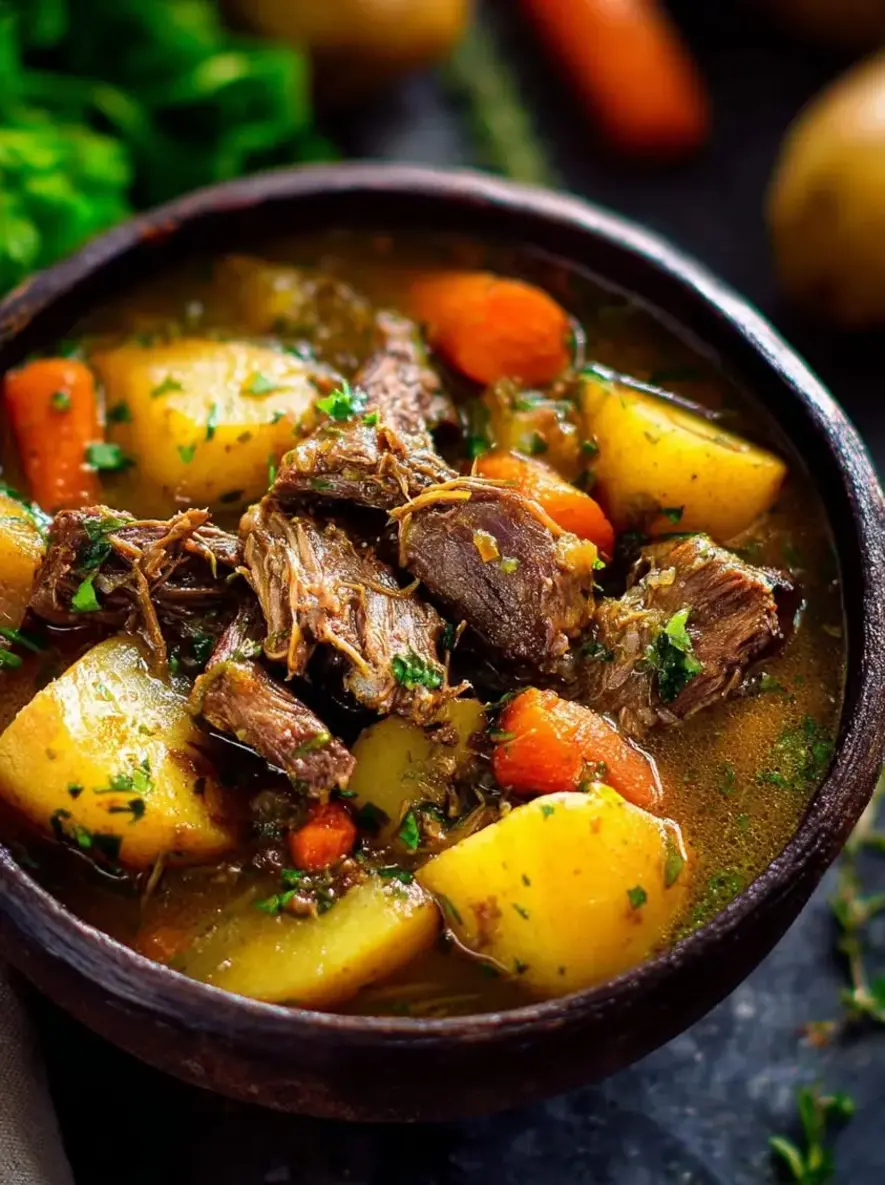
Table of Contents
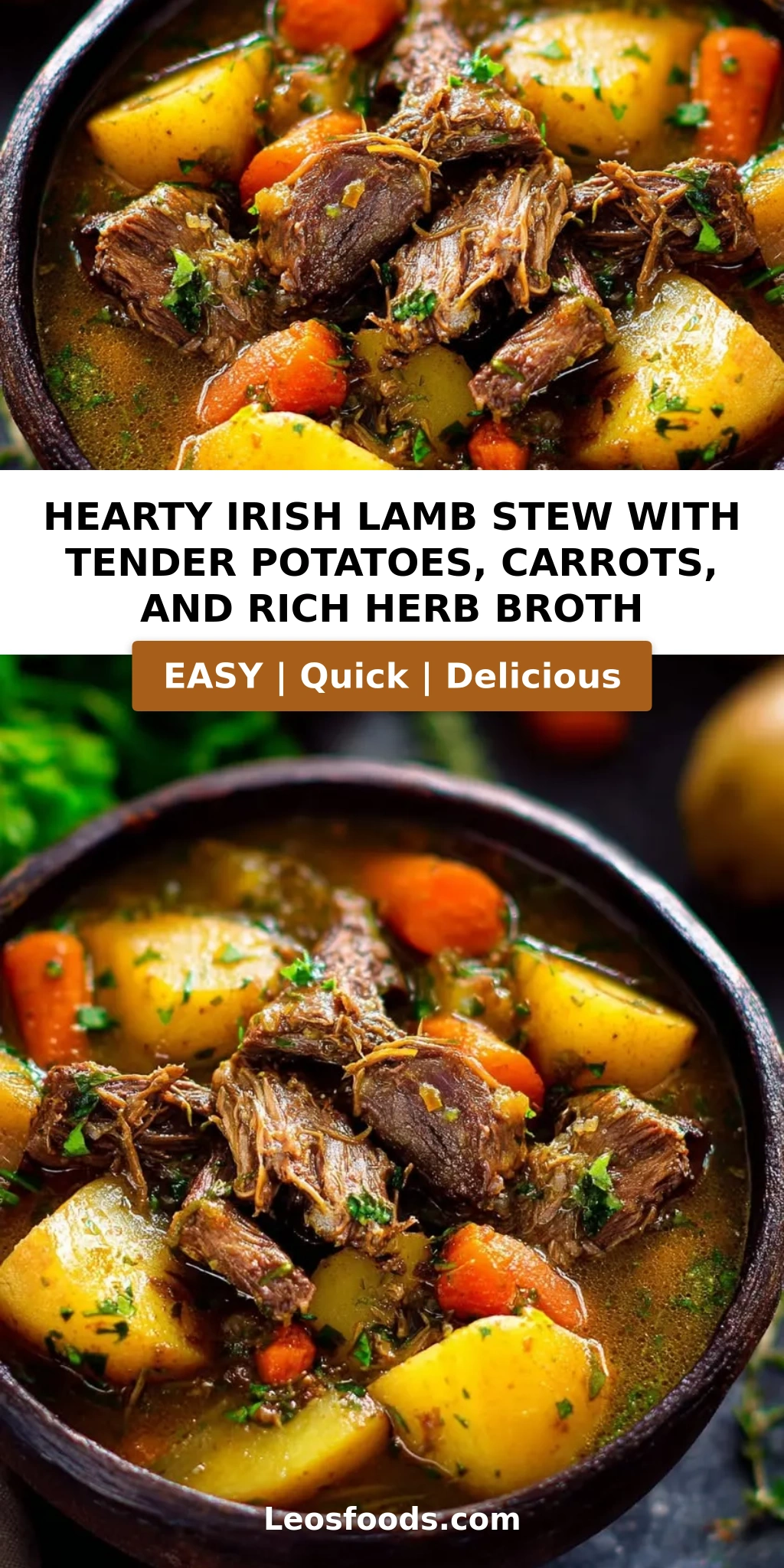
Hearty Irish Lamb Stew with Tender Potatoes, Carrots, and Rich Herb Broth – A Stout-Infused Classic with Chef-Worthy Depth
There are some recipes that just feel like a hug in a bowl, and this Hearty Irish Lamb Stew is exactly that. Growing up in Morocco, I watched my mother make slow-simmered tagines with lamb, root vegetables, and warm spices — and that same patient, low-and-slow approach is what makes a truly unforgettable Irish lamb stew recipe. Now, living in New York City, I crave that kind of comfort on cold, gray afternoons. This recipe is my homage to the traditional Irish stew, but with a few chef-level techniques I picked up in Paris: proper browning, deglazing with stout, and building layers of flavor that make the broth sing.
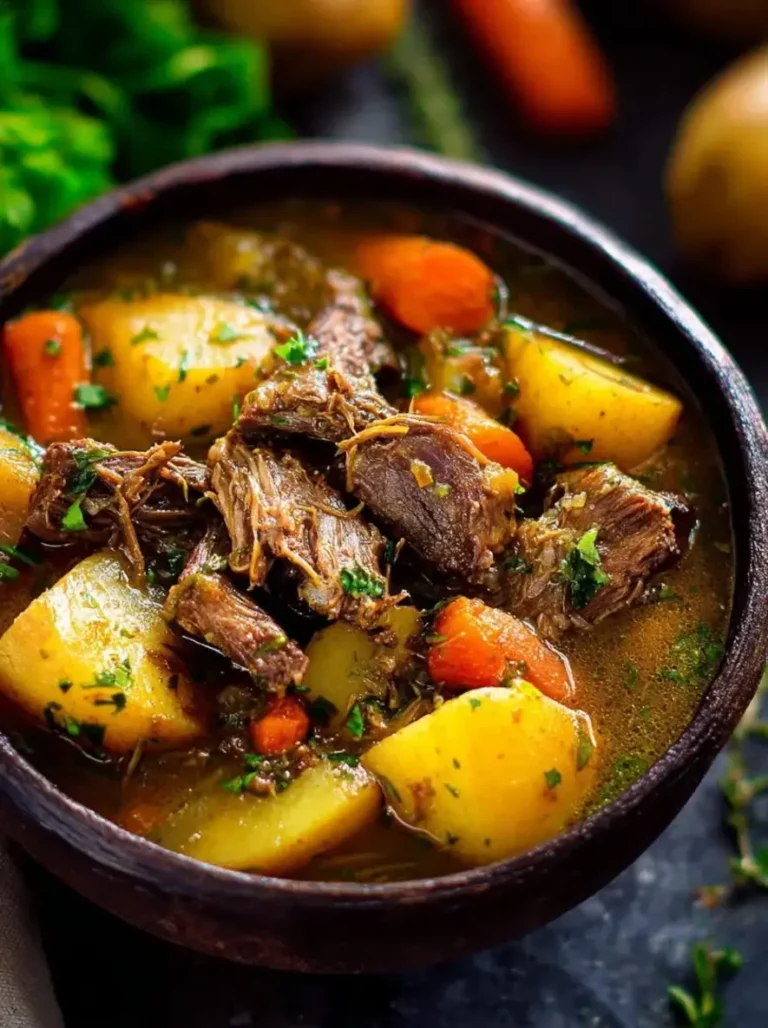
Imagine this: tender, fork-friendly chunks of lamb shoulder nestled next to buttery Yukon Gold potatoes and sweet carrot slices, all swimming in a rich, herb-flecked broth that’s got just a whisper of roasted malt from the stout beer. The aroma that fills your kitchen is pure magic — earthy, savory, and deeply comforting. Each spoonful delivers a little bit of everything: the soft sweetness of the carrots, the creamy potato that breaks apart on your tongue, and the lamb so tender it practically melts. It’s the kind of stew that makes you close your eyes and take a second to just savor.
What sets this lamb stew with stout apart is the way I build the foundation. Instead of just dumping everything in a pot, I take the time to brown the lamb in batches, caramelize the onions, and deglaze with a splash of stout beer to lift all those browned bits from the bottom of the pot. That single step — straight out of my French training — adds a depth and complexity that you simply can’t get any other way. One common mistake I see home cooks make is skipping the browning or overcrowding the pan. Trust me, the extra few minutes make all the difference. From my NYC kitchen to yours, I’m sharing every detail so you can nail this hearty lamb stew on your first try.
Why This Irish Lamb Stew Recipe Is the Best
The Flavor Secret: My secret weapon here is a classic French mirepoix technique combined with a Moroccan touch — I caramelize the onions until they’re golden brown before adding the garlic, which brings out a natural sweetness that balances the savory lamb. Then I deglaze with stout beer, which adds a subtle roasted bitterness that cuts through the richness of the meat. The herb broth, built with beef broth and a bouquet garni of thyme, bay, and rosemary, ties everything together into a deeply aromatic, layered stew that tastes like it’s been simmering all day — because it has.
Perfected Texture: The key to perfect texture in a traditional Irish stew is the way you handle the potatoes. I use Yukon Golds because they hold their shape during the long simmer but still get creamy on the inside. For the lamb, I cut it into 1½-inch pieces so they brown well without drying out, and I simmer them just long enough to become fork-tender without falling apart. The carrots are sliced on a bias for a more elegant look and even cooking. Every single bite is designed to give you that perfect balance of tender meat, soft vegetables, and rich broth.
Foolproof & Fast: Despite the deep, complex flavor, this recipe is surprisingly straightforward. You don’t need any special equipment — just a heavy-bottomed pot or Dutch oven. The hands-on time is only about 20–25 minutes, and then the oven or stovetop does the rest of the work. I’ve tested this on busy weeknights and lazy Sundays alike, and it comes out perfect every time. Even beginner cooks can pull this off with confidence, because I walk you through every step, complete with visual cues and pro tips.
Irish Lamb Stew Recipe Ingredients
I pick up my lamb shoulder from the meat counter at the Union Square farmers market — the guys there know me by name now. The Yukon Golds I grab from a little stand run by a family from upstate New York. There’s something about knowing where your ingredients come from that makes the cooking feel more intentional. You can find everything you need at any good grocery store or butcher shop. Here’s what you’ll need for this hearty lamb stew.
Ingredients List
- 2 lbs lamb shoulder, cut into bite-sized pieces (about 1½-inch chunks)
- 2 tablespoons olive oil
- 1 large onion, diced
- 3 cloves garlic, minced
- 4 large carrots, sliced (about 1 cup)
- 1½ lbs Yukon Gold potatoes, peeled and cubed (about 2 cups)
- 4 cups beef broth (preferably low-sodium)
- 1 cup stout beer (optional, but recommended)
- 2 tablespoons tomato paste
- 1 teaspoon dried thyme (or 2 sprigs fresh)
- 1 bay leaf
- Salt and black pepper to taste
- Fresh parsley (for garnish)
Ingredient Spotlight
Lamb Shoulder: This is the absolute best cut for stewing. It has enough marbling to stay moist and tender during the long simmer, and the connective tissue breaks down into gelatin that enriches the broth beautifully. Look for pieces with some fat marbling — avoid lean cuts like leg or loin, which will dry out and turn tough. If your butcher doesn’t have lamb shoulder, lamb neck or boneless chuck from the shoulder area works beautifully. At Whole Foods or your local butcher, ask for “stewing lamb” from the shoulder.
Yukon Gold Potatoes: These are my gold standard for stew. They’re naturally buttery, hold their shape better than russets, and get perfectly creamy inside without disintegrating. If you can’t find Yukon Golds, try red potatoes or white potatoes — just avoid russets, which will fall apart and make the broth too starchy. For a lower-carb option, try parsnips or turnips, which hold up well and add a lovely earthy sweetness.
Stout Beer: The stout adds an incredible depth of flavor — roasted malt, coffee, and dark chocolate notes that complement the lamb beautifully. I use Guinness Draught for its smooth, balanced character. If you don’t want to use beer, substitute with an extra cup of beef broth plus 1 tablespoon of balsamic vinegar for acidity and depth. The alcohol cooks off completely, so it’s safe for all ages.
Beef Broth: A good-quality beef broth forms the backbone of the stew. I prefer low-sodium so I can control the salt level. Better Than Bouillon roasted beef base dissolved in water is my go-to for consistent, rich flavor. Avoid boxed broths that are too thin — they’ll leave your stew tasting watery. If you’re using homemade, make sure it’s well-seasoned and concentrated.
| Original Ingredient | Best Substitution | Flavor / Texture Impact |
|---|---|---|
| Lamb Shoulder | Beef chuck | Richer, less gamey; still tender |
| Yukon Gold Potatoes | Red potatoes or parsnips | Similar hold; parsnips add sweetness |
| Stout Beer | Beef broth + 1 tbsp balsamic | Less depth, but still flavorful |
| Beef Broth | Chicken broth + 1 tsp soy sauce | Lighter but still savory |
| Tomato Paste | 1 tbsp tomato sauce + pinch sugar | Less concentrated, milder acidity |
How to Make Hearty Irish Lamb Stew — Step-by-Step
You’ve got your ingredients prepped and your pot ready — let’s make this traditional Irish stew come to life. I’ll walk you through each step with the exact timing and visual cues so you know exactly what to look for.
Step 1: Brown the Lamb
Heat 1 tablespoon of olive oil in a large Dutch oven or heavy-bottomed pot over medium-high heat until it shimmers. Pat the lamb pieces dry with paper towels (this is crucial for browning) and season generously with salt and pepper. Working in batches to avoid overcrowding — you want about 4-5 pieces at a time — sear the lamb for 3-4 minutes per side until deep golden brown. Transfer the browned lamb to a plate and repeat with the remaining pieces. This step builds the foundational flavor for your hearty lamb stew.
💡 Stella’s Pro Tip: Don’t rush the browning. If you overcrowd the pot, the lamb will steam instead of sear, and you’ll lose all that beautiful crust and flavor. Take your time — it’s worth every minute.
Step 2: Sauté the Aromatics
Reduce the heat to medium. Add the remaining 1 tablespoon of olive oil to the pot along with the diced onion. Cook, stirring occasionally, for 5-6 minutes until the onion is soft and translucent. Add the minced garlic and cook for exactly 1 minute — just until fragrant, not browned. This is where the French technique comes in: you want the onions to be soft but not caramelized, because they’ll continue cooking in the broth.
⚠️ Common Mistake to Avoid: Burning the garlic. Garlic cooks very quickly and turns bitter if it scorches. Add it only after the onions are soft, and stir constantly for just 60 seconds before moving to the next step.
Step 3: Deglaze with Stout
Stir in the tomato paste and cook for 1 minute, stirring constantly — this intensifies its flavor. Pour in the stout beer (or extra broth if skipping the alcohol) and use a wooden spoon to scrape up all the browned bits from the bottom of the pot. That’s pure flavor gold, right there. Let the liquid bubble and reduce slightly, about 2-3 minutes, until it looks like a thick, dark sauce.
💡 Stella’s Pro Tip: When deglazing, use a wooden spoon or a flat-edged spatula to really get every last bit of fond (the browned bits) off the bottom. Those bits are packed with umami and will make your broth incredibly rich.
Step 4: Simmer the Stew
Return the browned lamb to the pot, along with any accumulated juices. Pour in the beef broth, then add the sliced carrots, cubed potatoes, dried thyme, and bay leaf. Bring everything to a boil, then reduce the heat to low, cover the pot, and let it simmer gently for 1½ to 2 hours. The liquid should be at a gentle bubble — not a rolling boil. Check occasionally to make sure the liquid level is just covering the ingredients; add a splash of water or broth if needed.
⚠️ Common Mistake to Avoid: Simmering too vigorously. A hard boil will make the potatoes break down into mush and the meat may become tough and stringy. Keep it at a gentle simmer — you want small, lazy bubbles breaking the surface.
Step 5: Season and Serve
After 1½ hours, test the lamb with a fork — it should pull apart easily. Taste the broth and adjust salt and pepper as needed. Remove the bay leaf. For a thicker broth, mash a few potato cubes against the side of the pot with the back of a spoon and stir them in. Ladle the stew into warm bowls, garnish with fresh parsley, and serve immediately with crusty bread or soda bread on the side.
💡 Stella’s Pro Tip: Let the stew rest off the heat for 10 minutes before serving. This allows the flavors to settle and the broth to thicken slightly. Patience pays off — I promise you’ll taste the difference.
| Step | Action | Duration | Key Visual Cue |
|---|---|---|---|
| 1 | Brown lamb in batches | 6-8 min per batch | Deep golden brown crust |
| 2 | Sauté onion and garlic | 6-7 minutes | Onion translucent, garlic fragrant |
| 3 | Deglaze with stout | 3-4 minutes | Dark, bubbling sauce |
| 4 | Simmer all ingredients | 1½-2 hours | Gentle bubbles, meat fork-tender |
| 5 | Season and serve | 5 minutes | Broth thickened, flavors melded |
Serving & Presentation
For me, serving this Irish stew with potatoes and carrots is all about creating a moment of warmth. I ladle it into wide, shallow bowls so the broth can pool around the meat and vegetables. A generous sprinkle of fresh parsley adds a pop of color and freshness. My favorite pairing is a thick slice of soda bread slathered with Irish butter — it’s perfect for sopping up every last drop of that rich, stout-infused broth. In the winter, I serve it with a side of roasted Brussels sprouts or a simple green salad with a sharp vinaigrette to cut through the richness.
If you’re feeling a little fancy — and why not? — drizzle a swirl of heavy cream or crème fraîche over the top just before serving. It adds a beautiful silkiness and a touch of elegance. I learned that little trick from a chef in Paris who used it in his braised lamb dishes. And don’t forget the crusty bread — it’s non-negotiable in my kitchen. A dark, malty stout or a rich red wine like a Malbec or Zinfandel pairs beautifully with the depth of the stew.
| Pairing Type | Suggestions | Why It Works |
|---|---|---|
| Side Dish | Irish soda bread, crusty sourdough, roasted Brussels sprouts | Bread soaks up broth; sprouts add bitter contrast |
| Sauce / Garnish | Fresh parsley, crème fraîche, chopped chives | Adds freshness and creaminess |
| Beverage | Guinness stout, Malbec, Zinfandel | Dark beer and bold wine echo the stew’s depth |
| Garnish | Fresh thyme sprigs, parsley, green onions | Fresh herbs brighten the rich flavors |
Make-Ahead, Storage & Reheating
As I mentioned earlier, this hearty lamb stew is one of those dishes that genuinely tastes better the next day. When I’m meal-prepping for my busy NYC week, I always make a double batch. The flavors continue to meld and deepen overnight as the starches from the potatoes thicken the broth naturally. Here’s how I store and reheat it to keep every bit of that slow-cooked goodness intact.
| Method | Container | Duration | Reheating Tip |
|---|---|---|---|
| Refrigerator | Airtight container | Up to 4 days | Reheat gently on stovetop over medium-low heat, adding a splash of broth if needed |
| Freezer | Freezer-safe container or zip-top bag | Up to 3 months | Thaw overnight in fridge, then reheat slowly on stovetop. Avoid microwave — it can make potatoes grainy |
| Make-Ahead | Pot or Dutch oven, cooled | Up to 2 days in advance | Cook fully, cool, and refrigerate. Reheat before serving — flavor will be even better |
When reheating, I always do it the old-fashioned way — on the stovetop in a heavy pot over medium-low heat, stirring occasionally. The microwave works in a pinch, but it tends to make the potatoes slightly grainy and the lamb less tender. If the stew has thickened too much after refrigeration (which it will, thanks to the potatoes), just add a splash of beef broth or water to thin it back to your desired consistency. Taste and adjust salt and pepper before serving — refrigeration can dull the seasoning slightly.
One last tip from my personal experience: if you’re freezing the stew, consider undercooking the potatoes by about 10 minutes during the initial simmer. They’ll finish cooking during reheating and stay firmer and more appealing. I learned this trick during my Paris training when we would prep braises and stews for service days in advance.
Variations & Easy Swaps
| Variation | Key Change | Best For | Difficulty Impact |
|---|---|---|---|
| Moroccan-Spiced | Add 1 tsp cumin, ½ tsp cinnamon, ¼ tsp turmeric | Warm, aromatic twist | Easy |
| Gluten-Free / Dairy-Free | Use all beef broth (no stout), ensure broth is GF-certified | Dietary restrictions | Easy |
| Root Vegetable Swap | Replace half potatoes with parsnips, turnips, or celery root | Lower-carb, more earthy | Easy |
Moroccan-Spiced Variation
This one is close to my heart. Growing up in Morocco, my mother would make a lamb tagine with cumin, cinnamon, and ginger that filled our home with the most incredible aroma. For this variation, add 1 teaspoon of ground cumin, ½ teaspoon of cinnamon, and ¼ teaspoon of turmeric along with the tomato paste in step 3. The warm spices complement the lamb beautifully without overpowering it. Swap the stout for all beef broth to let the spices shine. Finish with a sprinkle of fresh cilantro and a handful of golden raisins for a sweet-savory contrast that’s pure North African magic.
Gluten-Free / Dairy-Free Variation
This one is wonderfully straightforward. Since the base recipe is already dairy-free, the only concern is the stout beer, which contains gluten. Simply replace the stout with an equal amount of beef broth (or a gluten-free beer if you can find one). Make sure your beef broth is certified gluten-free — most major brands are, but it’s always worth checking the label. The stew will be slightly less complex without the beer, but you can compensate by adding 1 teaspoon of balsamic vinegar and an extra ½ teaspoon of dried thyme to boost depth. I’ve tested this version multiple times for friends with celiac disease, and it’s always a hit.
Root Vegetable Swap Variation
When I’m browsing the Union Square farmers market in late fall, I can’t resist the rainbow of root vegetables. For this variation, replace half of the Yukon Golds with an equal weight of peeled and cubed parsnips, turnips, or celery root. Each brings a distinct personality: parsnips add a sweet, almost nutty note; turnips offer a mild peppery bite; and celery root contributes an earthy, celery-like flavor that’s divine with lamb. Because these vegetables have different starch contents, keep an eye on the simmering time — they may cook slightly faster than potatoes. This is my go-to when I want a lighter, more vegetable-forward stew that still feels deeply satisfying.
What is the best cut of lamb to use for a hearty Irish stew?
The absolute best cut is lamb shoulder. It has the ideal balance of fat and connective tissue that breaks down during the long simmer, making the meat incredibly tender and enriching the broth with natural gelatin. I recommend boneless lamb shoulder cut into 1½-inch pieces. Lamb neck or breast also work well. Avoid lean cuts like leg or loin — they’ll dry out and become tough before the vegetables are done. If your butcher offers “stewing lamb,” ask which cut it’s from and opt for shoulder if possible.
Can I make Irish lamb stew ahead of time and reheat it?
Absolutely — and I actually recommend it! This stew tastes even better the next day because the flavors have time to meld and deepen. You can cook it fully, let it cool to room temperature, and refrigerate in an airtight container for up to 4 days. To reheat, warm it gently on the stovetop over medium-low heat, adding a splash of broth or water if it’s too thick. The stew also freezes beautifully for up to 3 months. Just thaw overnight in the refrigerator before reheating. Avoid the microwave if possible — it can make the potatoes grainy and the lamb less tender.
What can I substitute for potatoes in an Irish lamb stew?
If you’re looking to reduce carbs or simply change things up, several vegetables work beautifully as potato substitutes. Parsnips are my top choice — they hold their shape well and add a natural sweetness that complements the lamb. Turnips offer a mild, peppery flavor and firm texture, while celery root brings an earthy, celery-like note. I recommend using one or a mix of these to replace half or all of the potatoes. Keep in mind that these vegetables cook slightly faster than potatoes, so check for tenderness after about 1 hour of simmering. For a heartier option, try rutabaga or even cauliflower florets added in the last 30 minutes of cooking.
How do I thicken the broth in an Irish lamb stew without using flour?
The easiest and most traditional method is to mash some of the cooked potatoes against the side of the pot with a wooden spoon and stir them into the broth. The starches release naturally and thicken the liquid without any need for flour or cornstarch. This is actually the method I recommend in my recipe — it’s how my mother thickened her tagines in Morocco, and it works perfectly here. Another option is to purée a cup of the cooked vegetables (carrots and potatoes) with a little broth in a blender and stir it back into the pot. If you need even more thickness, let the stew simmer uncovered for the last 20 minutes to allow some liquid to evaporate and concentrate.
Should I brown the lamb before adding it to the stew?
Yes, absolutely — don’t skip this step. Browning the lamb is what builds the deep, savory foundation of the stew. When you sear the meat at high heat, you create a rich brown crust through the Maillard reaction, which adds layers of flavor that you simply cannot get from boiling or simmering alone. Make sure to pat the lamb pieces dry before seasoning them, and work in batches to avoid overcrowding the pot. If you crowd the pan, the meat will steam instead of sear, and you’ll lose that beautiful crust. Each batch takes about 6-8 minutes total. It’s a small investment of time for a huge payoff in flavor.
What type of potatoes are best for Irish stew?
Yukon Gold potatoes are my top recommendation for Irish stew. They have a naturally buttery flavor and a waxy-firm texture that holds up beautifully during the long simmer. They get creamy on the inside without falling apart, which is exactly what you want. Red potatoes or white potatoes are excellent alternatives. Avoid russet potatoes — they’re too starchy and will break down into mushy pieces, making your broth cloudy and thick. If you’re shopping at a grocery store, look for Yukon Golds labeled as “all-purpose” or “waxy” potatoes. The key is selecting a variety that holds its shape while still absorbing the broth.
Can I use beer in Irish lamb stew?
Yes, and I highly recommend it! A stout or dark beer adds incredible depth, with notes of roasted malt, coffee, and dark chocolate that complement the rich lamb beautifully. Guinness Draught is the classic choice for an Irish stew. The alcohol cooks off completely during the simmering process, so it’s safe for all ages. If you prefer not to use beer, simply substitute with an equal amount of beef broth plus a splash of balsamic vinegar to mimic the acidity and complexity. The stew will still be delicious, but the beer does add a unique character that I personally love. Use a stout you enjoy drinking — the quality matters.
How long does it take to cook Irish lamb stew?
Total cooking time is about 1½ to 2 hours of simmering, plus about 20 minutes of prep time. So from start to finish, you’re looking at roughly 2 hours and 20 minutes. The key is to simmer gently over low heat — not a rolling boil — so the lamb becomes fork-tender and the vegetables cook through without breaking apart. If you’re using an older or tougher cut of lamb, you may need the full 2 hours. I recommend checking the lamb at 1 hour and 15 minutes, and then every 10 minutes after, until it pulls apart easily with a fork. Patience is the most important ingredient here.
Love This Recipe? Save It to Pinterest!
If you enjoyed this Hearty Irish Lamb Stew recipe, don’t let it get lost in your browser tabs! 😄 Pin it now so you can find it again anytime — and explore hundreds more tried-and-tested recipes waiting for you on my Pinterest boards.
👉 Follow Stella on Pinterest @stellarecipeblog
📌 Pin this recipe · 🔁 Re-pin your favorites · 💬 Tag me when you make it — I love seeing your creations!
Share Your Version!
I’d love to hear how this Hearty Irish Lamb Stew turns out in your kitchen! Did you use the stout? Try the Moroccan-spiced variation? Let me know in the comments below — your feedback helps the whole community.
⭐ Leave a star rating and share your experience. Tag me on Instagram or Pinterest @stellarecipeblog — I can’t wait to see your beautiful bowls of stew! And if you have a question about any step, just ask. From my NYC kitchen to yours — I hope this recipe brings as much warmth to your table as it does to mine. — Stella 🧡
Hearty Irish Lamb Stew with Tender Potatoes, Carrots, and Rich Herb Broth
A traditional Irish lamb stew featuring tender lamb shoulder, Yukon Gold potatoes, carrots, and a rich herb broth, slow-cooked to perfection.
- Total Time: 2 hours 20 minutes
- Yield: 6 1x
Ingredients
- 2 lbs lamb shoulder, cut into bite-sized pieces
- 2 tablespoons olive oil
- 1 large onion, diced
- 3 cloves garlic, minced
- 4 large carrots, sliced
- 1 1/2 lbs Yukon Gold potatoes, peeled and cubed
- 4 cups beef broth
- 1 cup stout beer (optional)
- 2 tablespoons tomato paste
Instructions
- 1. Heat olive oil in a large pot over medium heat. Brown the lamb pieces in batches until golden on all sides. Remove and set aside.
- 2. In the same pot, add diced onion and cook until soft, about 5 minutes. Add minced garlic and cook for 1 more minute.
- 3. Stir in tomato paste and cook for 1 minute, then pour in stout beer (if using) and deglaze the pot, scraping up browned bits.
- 4. Return lamb to the pot. Add beef broth, sliced carrots, and cubed potatoes. Bring to a boil.
- 5. Reduce heat to low, cover, and simmer for 1.5 to 2 hours, until lamb is tender and vegetables are cooked through.
- 6. Season with salt and pepper to taste. Serve hot, garnished with fresh herbs if desired.
Notes
This stew tastes even better the next day. For a thicker broth, mash some of the potatoes against the side of the pot before serving.
- Prep Time: 20 minutes
- Cook Time: 2 hours
- Method: Main Course
- Cuisine: Irish
Nutrition
- Calories: 450 kcal
- Sugar: 8 g
- Fat: 20 g
- Carbohydrates: 35 g
- Protein: 30 g
Tried This Recipe? Leave a Comment!
Did you make this recipe? I’d love to hear how it turned out! Please leave a comment and a rating below. Your feedback helps other home cooks and supports cheerychop.com!
For more delicious inspiration, follow me on Pinterest!