Slow-Braised Keto Lamb Shanks in Fiery Madras Curry
“`html
Table of Contents
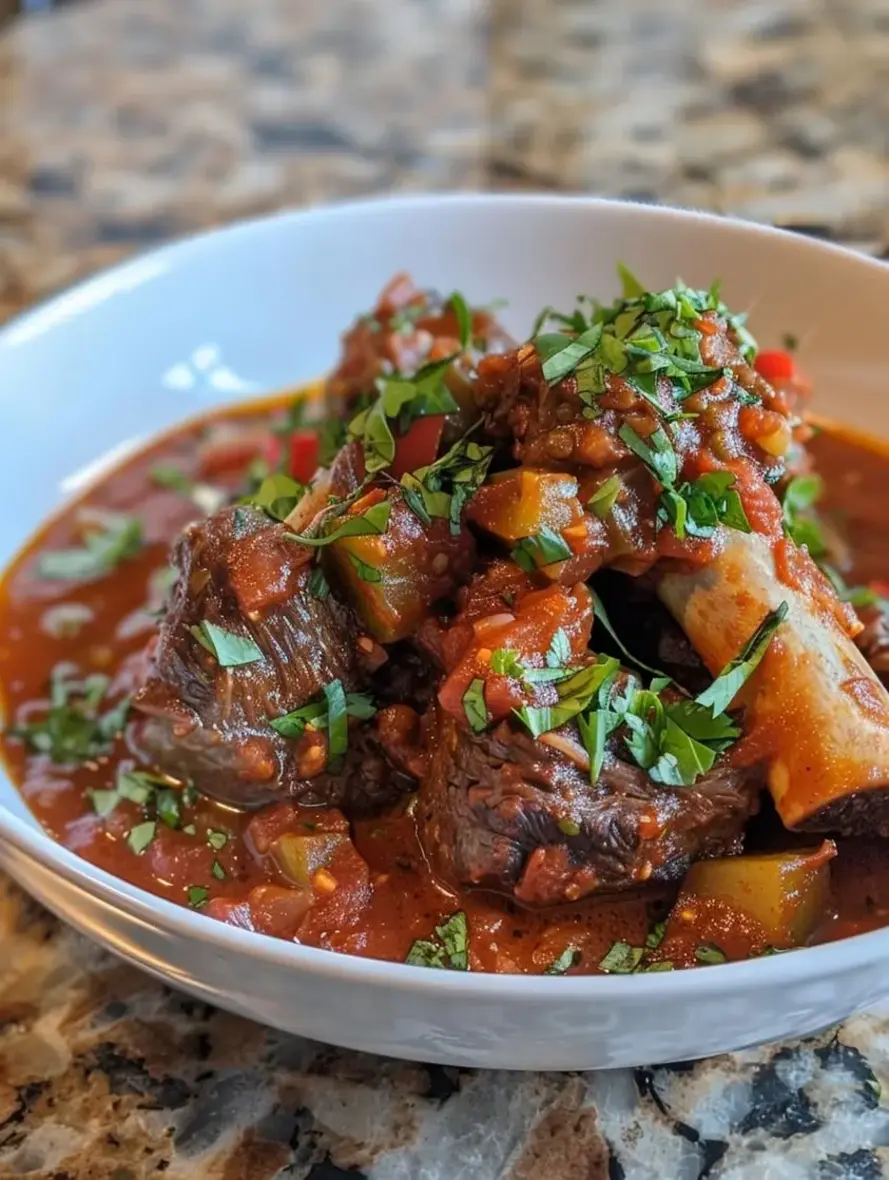
Slow-Braised Keto Lamb Shanks in Fiery Coconut Madras Curry Sauce – Tender, Spiced, and Keto-Perfect
I still remember the first time I made these keto lamb shanks in my tiny New York City apartment kitchen. It was a gray, drizzly Sunday—the kind that makes you crave something deeply warming and deeply spiced. I had just come back from the Union Square farmers market with a bag of fragrant Madras curry powder from a stall run by a woman who grew up in Chennai. That afternoon, as the lamb shanks braised low and slow in a fiery coconut sauce, my whole building filled with the smell of toasted cumin, turmeric, and ginger. My neighbor from two floors down actually knocked on my door to ask what I was cooking. That’s the power of a truly good slow-braised keto lamb shank recipe—it stops people in their tracks.
The magic of this dish is in the contrast. The lamb shanks become impossibly tender—so tender you can pull the meat apart with a fork—while the sauce stays bold, spicy, and lusciously creamy from full-fat coconut milk. The Madras curry powder brings heat, but it’s a rounded heat, tempered by the sweetness of the coconut and the subtle tang of apple cider vinegar. Every bite is a little journey: first the warmth of the spices, then the richness of the broth, then the deep, savory satisfaction of the lamb. It’s the kind of meal that makes you close your eyes at the table and just breathe.
I’ve made this recipe dozens of times, both in my own kitchen and in cooking classes here in NYC, and I’ve refined it to be as foolproof as possible. The secret lies in two things: searing the lamb shanks until they’re deeply browned (that’s the French technique I learned in Paris), and allowing the spices to bloom in the pan before adding the liquid—a trick I picked up from my mother’s cooking in Morocco. Whether you’re new to keto or a seasoned low-carb cook, this slow-braised keto lamb shanks recipe delivers restaurant-quality flavor with minimal hands-on effort. Let me walk you through it, step by step.
Why This Slow-Braised Keto Lamb Shanks Recipe Is the Best
The Flavor Secret — Most lamb shank recipes rely on sugar-laden marinades or flour-based thickeners to build body and sweetness. Not this one. I use a technique I learned at Le Cordon Bleu in Paris: browning the meat deeply to create a natural, savory crust, then building the sauce around the caramelized bits stuck to the pot. The Madras curry powder, tomato paste, and coconut milk do the rest, creating a sauce that’s rich, layered, and entirely keto-friendly. There’s no need for sugar when you have the natural sweetness of perfectly cooked onions and coconut milk.
Perfected Texture — Getting lamb shanks to that fall-apart-tender state takes more than just time—it takes the right temperature and liquid ratio. After testing this recipe at 300°F, 325°F, and 350°F, I found that 325°F is the sweet spot. At this temperature, the collagen in the lamb shanks breaks down slowly, resulting in meat that’s moist and silky, not dry or stringy. The sauce also reduces to exactly the right consistency—coating the back of a spoon without being too thick or too thin.
Foolproof & Fast — Despite the three-hour cook time, the hands-on work is only about 20 minutes. Once the pot goes into the oven, you can walk away. No stirring, no babysitting. It’s the perfect Sunday dinner recipe for busy keto cooks who want a showstopping meal without spending the whole day in the kitchen.
Keto Lamb Shanks Ingredients
When I make this slow-braised keto lamb shanks recipe, I source my ingredients from a mix of places: the lamb shanks from a butcher in Chelsea Market, the spices from a little Indian grocery on Lexington Avenue, and the coconut milk from my go-to big-box store. Each ingredient plays a specific role in building the dish’s deep, complex flavor. Here’s everything you’ll need.
Ingredients List
- 4 lamb shanks (about 1 lb each)
- 2 tablespoons olive oil
- 1 medium onion, finely diced
- 4 cloves garlic, minced
- 1 tablespoon fresh ginger, grated
- 2 tablespoons Madras curry powder
- 1 teaspoon ground cumin
- 1 teaspoon smoked paprika
- 1/2 teaspoon turmeric
- 1 tablespoon tomato paste
- 1 can (13.5 oz) full-fat coconut milk
- 1 cup beef broth (or bone broth)
- 1 tablespoon apple cider vinegar
- Salt and pepper to taste
- Fresh cilantro for garnish
Ingredient Spotlight
Lamb Shanks — Lamb shanks are the star of this dish. Look for shanks that are meaty with a good amount of marbling. The bone-in cut is essential—the bone adds flavor and helps keep the meat moist during the long braise. If you can, ask your butcher for shanks that are roughly equal in size so they cook evenly. I usually buy mine from Belmont Meats in the Bronx—they always have beautifully cut, grass-fed lamb.
Madras Curry Powder — This is not your average curry powder. Madras curry powder is hotter and more aromatic, with a distinct heat from red chili and a deep earthiness from coriander and cumin. I recommend buying a good-quality brand like Rani or MDH. If you can’t find Madras curry powder, you can substitute regular curry powder and add an extra pinch of cayenne—but the flavor won’t be quite the same.
Full-Fat Coconut Milk — For keto, you want the full-fat version—not light coconut milk. The fat helps create a luscious, creamy sauce that clings to the lamb. I always shake the can well before opening to ensure the cream and liquid are properly combined. One of my favorite brands is Chaokoh for its rich, thick consistency.
Tomato Paste — Even though tomatoes are limited on keto, a single tablespoon of tomato paste adds a deep umami note without adding many carbs. I like to buy it in a tube—like Amore—so I can squeeze out just what I need and keep the rest in the fridge for later.
| Original Ingredient | Best Substitution | Flavor / Texture Impact |
|---|---|---|
| Lamb shanks | Beef short ribs or oxtail | Richer, beefier flavor; slightly less tender but still excellent |
| Madras curry powder | Regular curry powder + 1/4 tsp cayenne | Less complex, but still warm and spicy; slightly milder heat |
| Onion (medium) | 2 shallots or 1/2 cup chopped celery + 1 leek (white part) | Milder, slightly sweeter base; lower net carb count |
| Coconut milk (full-fat) | 1/2 cup heavy cream + 3/4 cup unsweetened almond milk | Less rich, thinner sauce; still keto-friendly but no coconut flavor |
| Beef broth | Chicken bone broth or water + 1 tsp beef bouillon | Good substitute; slightly less depth but still savory |
How to Make Slow-Braised Keto Lamb Shanks — Step-by-Step
Trust me when I say this: if you can brown meat and open a can of coconut milk, you can make this dish. Each step is straightforward, and I’ve included my best pro tips and common mistakes so you can nail it on the first try.
Step 1: Sear the Lamb Shanks
Preheat your oven to 325°F (163°C). Pat the lamb shanks dry with paper towels—moisture is the enemy of browning. Season them generously on all sides with salt and pepper. In a large Dutch oven or oven-safe pot, heat the olive oil over medium-high heat until it shimmers. Place the lamb shanks in the pot, being careful not to crowd them (you may need to work in two batches). Sear for 3-4 minutes per side, until a deep, dark crust forms. Remove the shanks to a plate and set aside.
⚠️ Common Mistake to Avoid: Don’t rush the sear. If the lamb shanks aren’t deeply browned, you’ll miss out on the rich, savory flavor that comes from the Maillard reaction. The crust should be a deep mahogany brown, not just pale golden.
Step 2: Sauté the Aromatics
Reduce the heat to medium and add the diced onion to the same pot. Cook, stirring occasionally, for about 3 minutes until softened and translucent. Add the minced garlic and grated ginger, and cook for 1 minute more until fragrant. The steam from the onions will help lift some of the browned bits from the bottom of the pot—that’s good, it’s flavor.
💡 Stella’s Pro Tip: If the garlic and ginger start to stick, add a splash of water instead of more oil. It deglazes the pan naturally and keeps the dish from getting greasy.
Step 3: Bloom the Spices
Stir in the Madras curry powder, ground cumin, smoked paprika, and turmeric. Cook for 1 minute, stirring constantly. This is called “blooming”—toasting the spices in fat unlocks their essential oils and makes them more aromatic and flavorful. The kitchen will smell incredible at this point.
⚠️ Common Mistake to Avoid: Don’t let the spices burn. Keep them moving in the pan, and if they start to darken too quickly, remove the pot from the heat briefly. Burnt spices taste bitter and acrid.
Step 4: Build the Sauce
Add the tomato paste and cook for 1 minute, stirring constantly. The tomato paste will darken slightly and become more savory. Pour in the coconut milk, beef broth, and apple cider vinegar. Stir everything together, scraping up any browned bits from the bottom of the pot—that’s pure flavor. Bring the sauce to a gentle simmer.
💡 Stella’s Pro Tip: The apple cider vinegar might seem like a small amount, but it’s crucial. It adds brightness that balances the richness of the coconut milk and the heat of the Madras curry. Don’t skip it.
Step 5: Braise Low and Slow
Return the lamb shanks to the pot, nestling them into the sauce. They should be mostly submerged—if they’re not, add a little more broth or water. Bring the liquid back to a simmer, then cover the pot tightly with a lid. Transfer to the preheated oven and braise for 2.5 to 3 hours, until the meat is tender and falling off the bone. Check at the 2-hour mark: the meat should be starting to pull away from the bone. If it’s still firm, give it the full 3 hours.
⚠️ Common Mistake to Avoid: Peeking too often! Every time you open the oven door, heat escapes and the cooking time extends. Trust the process—resist the urge to check more than once or twice.
Step 6: Rest and Garnish
Remove the pot from the oven and let it rest, uncovered, for 10 minutes. This allows the meat to relax and the sauce to settle. If you want an even thicker sauce, carefully remove the lamb shanks to a platter, set the pot on the stovetop over medium heat, and simmer the sauce for 5-7 minutes until it reduces to your desired consistency. Spoon the sauce over the lamb shanks, garnish with fresh cilantro, and serve.
💡 Stella’s Pro Tip: For the most beautiful presentation, use a spoon to skim off any excess fat from the surface of the sauce before serving. The sauce should be glossy and rich, not greasy.
| Step | Action | Duration | Key Visual Cue |
|---|---|---|---|
| 1 | Sear lamb shanks | 3-4 min per side | Deep mahogany crust |
| 2 | Sauté aromatics | 4 min | Onions translucent, garlic fragrant |
| 3 | Bloom spices | 1 min | Spices fragrant, darkened slightly |
| 4 | Build sauce | 2-3 min | Sauce bubbling, bits lifted from pot |
| 5 | Braise in oven | 2.5-3 hrs | Meat pulling away from bone |
| 6 | Rest and garnish | 10 min | Sauce slightly thickened, meat tender |
Serving & Presentation
These slow-braised keto lamb shanks are a showstopper on their own, but the right pairings can elevate the meal from excellent to unforgettable. I like to serve each shank in a shallow bowl, generously spooned with the fiery coconut Madras sauce, and topped with a scattering of fresh cilantro. In my NYC kitchen, I often serve this with a side of cauliflower rice tossed with a little lime zest and salt—it soaks up the sauce beautifully without adding carbs.
For a truly memorable presentation, place each lamb shank on a bed of sautéed spinach or wilted kale. The bitterness of the greens cuts through the richness of the sauce perfectly. I also love to add a dollop of full-fat Greek yogurt or a spoonful of coconut yogurt on the side—the coolness balances the heat of the Madras curry. If you’re not strictly keto, a piece of warm naan or roti is divine for sopping up every last drop of sauce.
This dish always reminds me of the Friday night dinners I used to cook in my little Paris apartment—long, slow, and full of flavor. Whether you’re serving it for a special occasion or a cozy weeknight meal, these lamb shanks make the table feel like a celebration. I recommend pouring yourself a glass of full-bodied red wine or a tall glass of iced tea with mint.
| Pairing Type | Suggestions | Why It Works |
|---|---|---|
| Side Dish | Cauliflower rice, sautéed spinach, roasted broccoli | Absorbs sauce; keto-friendly; adds freshness |
| Sauce / Dip | Full-fat Greek yogurt, coconut yogurt, tahini drizzle | Cool, creamy contrast to spicy curry sauce |
| Beverage | Full-bodied red wine (Syrah), iced mint tea, sparkling water with lime | Wine complements richness; tea cleanses the palate |
| Garnish | Fresh cilantro, lime wedges, toasted coconut flakes, sliced red chili | Adds brightness, texture, and visual appeal |
Make-Ahead, Storage & Reheating
One of the best things about this slow-braised keto lamb shanks recipe is that it tastes even better the next day—the flavors meld and deepen overnight. I often make a double batch on Sunday so I have easy, luxurious meals ready to go during my busy NYC workweek. Here’s how to store and reheat it properly so every bite is as good as the first.
| Method | Container | Duration | Reheating Tip |
|---|---|---|---|
| Refrigerator | Airtight container | Up to 4 days | Reheat in a covered pot over low heat, adding a splash of broth if needed |
| Freezer | Freezer-safe container or heavy-duty zip bag | Up to 3 months | Thaw overnight in fridge; reheat gently in a covered pot at 325°F for 30 min |
| Make-Ahead | In the Dutch oven, cooled | Up to 2 days in advance | Reheat covered at 325°F for 25-30 min; finish with fresh cilantro |
My favorite way to reheat these lamb shanks is in the oven, just like I cooked them. Preheat to 325°F, place the shanks and sauce in a covered Dutch oven, and warm for 25-30 minutes until heated through. The low, gentle heat keeps the meat tender and the sauce from breaking. If you’re reheating just one serving, a covered skillet on the stovetop over low heat works beautifully—just add a splash of broth or water to keep things saucy.
One thing I always tell my readers: don’t microwave these lamb shanks if you can help it. The high heat can make the meat tough and the sauce separate. Trust me, the extra few minutes of stovetop or oven reheating are worth it—the texture stays silky and the flavors stay vibrant.
Variations & Easy Swaps
Over the years, I’ve played with this recipe in countless ways—sometimes inspired by a new spice I found at the market, sometimes by a reader’s suggestion. Here are three of my favorite variations, each tested and tweaked to perfection.
| Variation | Key Change | Best For | Difficulty Impact |
|---|---|---|---|
| Moroccan-Inspired | Add 1 tsp ras el hanout, 1/2 tsp cinnamon, 1/4 cup chopped dried apricots (omit for strict keto) | Lovers of North African flavors | Easy |
| Dairy-Free / Coconut Cream | Replace beef broth with chicken broth; add 2 tbsp coconut cream at the end | Extra creamy, dairy-free diet | Easy |
| Mellow Heat | Reduce Madras curry to 1 tbsp; add 1 tsp sweet paprika and 1/2 tsp garam masala | Families with kids or low-heat preference | Easy |
Moroccan-Inspired Variation
This variation is a nod to my Moroccan roots. My mother would often add a pinch of cinnamon and a touch of sweetness to her lamb tagines. For this version, add 1 teaspoon of ras el hanout (a North African spice blend) along with the Madras curry powder, plus 1/2 teaspoon of ground cinnamon. If you’re not strictly keto, a handful of chopped dried apricots added during the last 30 minutes of braising adds a lovely sweetness that balances the heat. For a keto-friendly version, skip the apricots and add a pinch of granulated monk fruit sweetener instead. Serve with a sprinkle of toasted sesame seeds and fresh mint.
Dairy-Free / Coconut Cream Variation
If you want an extra-luxurious sauce, swap the beef broth for chicken broth and stir in 2 tablespoons of coconut cream just before serving. This gives the sauce an even silkier texture without any dairy. I tested this variation during a cooking class in Brooklyn, and it was unanimously loved. The coconut cream adds a subtle sweetness that rounds out the spice of the Madras curry. It’s also a great option if you’re cooking for someone with a dairy sensitivity—the dish is already dairy-free as written, but this version takes it over the top.
Mellow Heat Variation
Not everyone loves a spicy kick, and that’s okay. For this milder version, reduce the Madras curry powder to 1 tablespoon and add 1 teaspoon of sweet paprika and 1/2 teaspoon of garam masala. The garam masala adds warmth and depth without the heat. I also recommend using a mild curry powder instead of Madras if you can find one. The sauce will still be incredibly flavorful—just gentler on the palate. This variation is perfect for kids or anyone who prefers a more approachable spice level.
How do I make lamb shanks tender for keto without flour or sugar-based marinades?
The key to tender lamb shanks on a keto diet is a long, slow braise at a low temperature—around 325°F. The collagen in the meat breaks down naturally over 2.5 to 3 hours, resulting in fall-apart tenderness without any flour or sugar. You can also marinate the lamb shanks overnight in a mixture of olive oil, apple cider vinegar, garlic, and spices to further tenderize them. The acid in the vinegar gently breaks down the muscle fibers while adding flavor. Another tip: sear the shanks deeply before braising. The caramelized crust adds incredible flavor and the Maillard reaction creates natural richness that mimics the depth you’d normally get from sugar-based marinades.
What is the best low-carb substitute for onions and tomatoes in a coconut madras curry sauce?
If you’re looking to reduce carbs further, you can replace the onion with a combination of chopped celery and leek (white part only)—both are lower in net carbs and provide a similar aromatic base. Use about 1/2 cup of each. For the tomato paste, you can substitute 1 tablespoon of pumpkin puree or 1 teaspoon of tamarind paste mixed with a pinch of paprika. Pumpkin puree adds a similar color and slight sweetness, while tamarind brings tanginess. Another option is to use a teaspoon of tomato powder (available in some spice shops) reconstituted with a little water. Each substitution will slightly change the flavor profile, but the Madras curry and coconut milk are strong enough to carry the dish beautifully.
Can I slow-braise keto lamb shanks in an Instant Pot instead of the oven or stovetop?
Absolutely, and it’s a great time-saver. To make this recipe in an Instant Pot, use the sauté function to sear the lamb shanks and cook the aromatics and spices. Then add the coconut milk, broth, vinegar, and tomato paste. Pressure cook on high for 45 minutes, followed by a natural release of 15-20 minutes. The meat will be incredibly tender, though the sauce may be thinner than the oven version—simply use the sauté function again to reduce it for 5-8 minutes after cooking. One note: the Instant Pot won’t give you the same deep, caramelized flavor as oven braising, but it’s a fantastic option for busy weeknights. I’ve made it this way many times when I’m short on time.
What keto-friendly sides go well with fiery coconut madras lamb shanks?
There are so many delicious keto-friendly sides that pair beautifully with this dish. My top recommendation is cauliflower rice—plain or lightly sautéed with a little ghee and lime zest—because it soaks up the sauce perfectly without adding carbs. Sautéed spinach or wilted kale with garlic and olive oil is another excellent choice; the slight bitterness of the greens balances the rich, spicy sauce. For something more substantial, try roasted broccoli or cauliflower florets tossed in olive oil and smoked paprika. I also love a simple side of avocado slices drizzled with lime juice and flaky sea salt—the creaminess of the avocado complements the heat of the Madras curry beautifully.
Can I use boneless lamb in this recipe instead of lamb shanks?
Yes, you can use boneless lamb shoulder or lamb leg, but the cooking time will be shorter. Boneless cuts typically cook faster because the bone isn’t there to slow down the heat transfer. I recommend checking for tenderness at around 1.5 to 2 hours. The flavor will still be excellent, but the bone adds depth to the sauce and helps keep the meat moist during the long braise. If using boneless meat, cut it into large chunks (about 3 inches) and sear them well on all sides. You may also want to add an extra 1/2 cup of broth to keep the sauce from reducing too quickly.
How many net carbs are in one serving of these keto lamb shanks?
One serving of these slow-braised keto lamb shanks (one shank with sauce, excluding garnish) contains approximately 6 grams of net carbs. The total carbohydrate count is about 9 grams, with 3 grams of fiber, giving you 6 grams of net carbs per serving. The carbs come primarily from the onion, tomato paste, and the natural sugars in the coconut milk. This makes the dish perfectly keto-friendly, especially if you’re following a standard 20-50 gram net carb daily limit. For an even lower carb count, you can substitute the onion with celery and leek as suggested in the FAQ above.
Can I make this recipe in a slow cooker (Crockpot)?
Yes, a slow cooker works wonderfully for this recipe. First, sear the lamb shanks in a skillet on the stovetop, then transfer them to the slow cooker. In the same skillet, sauté the onion, garlic, ginger, and spices, then deglaze with a splash of broth. Pour the entire mixture over the lamb shanks, add the coconut milk, broth, vinegar, and tomato paste, and stir gently. Cook on low for 7-8 hours or on high for 4-5 hours, until the meat is tender. The slow cooker won’t reduce the sauce as much as the oven method, so you may want to transfer the sauce to a saucepan and simmer for 10 minutes after cooking to thicken it.
What can I use instead of Madras curry powder to make this less spicy?
If you want a milder dish, you can substitute the Madras curry powder with a mild curry powder, using the same amount (2 tablespoons). Madras curry is known for its heat, while mild curry powder is more aromatic and gentle. I also recommend adding 1 teaspoon of sweet paprika and 1/2 teaspoon of garam masala to compensate for the lost depth. Another option is to use a blend of ground coriander (1 tbsp), cumin (1 tsp), turmeric (1/2 tsp), and a pinch of cardamom. This homemade blend will give you a warm, fragrant sauce without the heat. Taste and adjust as you go—you can always add more spice, but you can’t take it away.
Is it necessary to sear the lamb shanks before braising, or can I skip this step?
I strongly recommend searing the lamb shanks before braising for the best flavor. Searing creates a deep, caramelized crust through the Maillard reaction, which adds layers of savory, meaty flavor that you simply cannot get from braising alone. The browned bits left in the pot also form the foundation of the sauce—they dissolve into the liquid as it cooks, infusing it with richness. If you’re truly short on time, you can skip the sear, but the final dish will be noticeably less complex. Even a quick 2-minute sear per side makes a big difference. Think of it as the most important 10 minutes you’ll spend on this recipe.
How do I know when the lamb shanks are done braising?
The best way to tell if lamb shanks are done is by visual and tactile cues. After about 2.5 hours at 325°F, the meat should be pulling away from the bone and the bone should be easy to wiggle. You can also test by inserting a fork into the thickest part of the meat—if it goes in with no resistance and the meat starts to separate, it’s done. Another good sign: when you gently shake the pot, the meat should jiggle slightly on the bone. If the meat still feels firm and doesn’t move easily on the bone, give it another 20-30 minutes. Every piece of meat is slightly different, so trust your senses over the timer.
Share Your Version!
I truly believe this slow-braised keto lamb shanks recipe is one of those dishes that brings people together—whether it’s a quiet dinner at home or a lively table full of friends. I’d love to see how it turns out in your kitchen! Leave a star rating and a comment below to let me know how it went. Did you try one of the variations? Discover a new spice blend? I read every comment and answer as many as I can.
And if you share a photo on Instagram or Pinterest, be sure to tag @leosfoods and use the hashtag #LeosFoods so I can see your creation. One of my favorite things is hearing from readers who made this recipe for a special occasion—a birthday dinner, a holiday meal, or just a cozy Sunday night. Tell me: what’s the occasion you’re cooking these lamb shanks for? From my NYC kitchen to yours — I hope this recipe brings as much warmth to your table as it does to mine. — Stella 🧡
Love This Recipe? Save It to Pinterest!
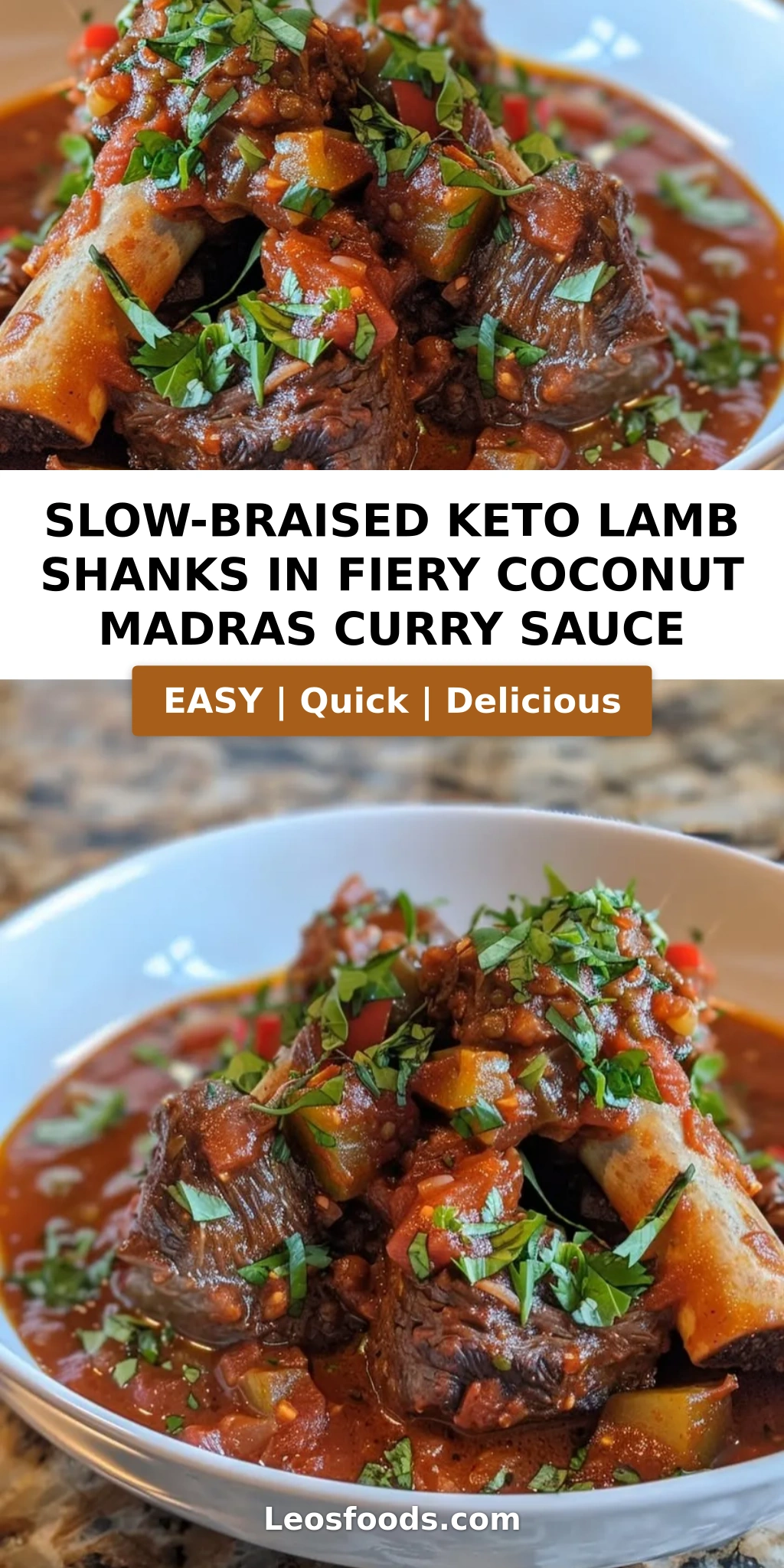
If you enjoyed this Slow-Braised Keto Lamb Shanks in Fiery Coconut Madras Curry Sauce recipe, don’t let it get lost in your browser tabs! 😄 Pin it now so you can find it again anytime — and explore hundreds more tried-and-tested recipes waiting for you on my Pinterest boards.
👉 Follow Stella on Pinterest @stellarecipeblog
📌 Pin this recipe · 🔁 Re-pin your favorites · 💬 Tag me when you make it — I love seeing your creations!
💬 What’s the occasion you’re cooking these lamb shanks for? Leave a comment below — I’d love to know! And don’t forget to pin this recipe for later. 🧡
“`
Print
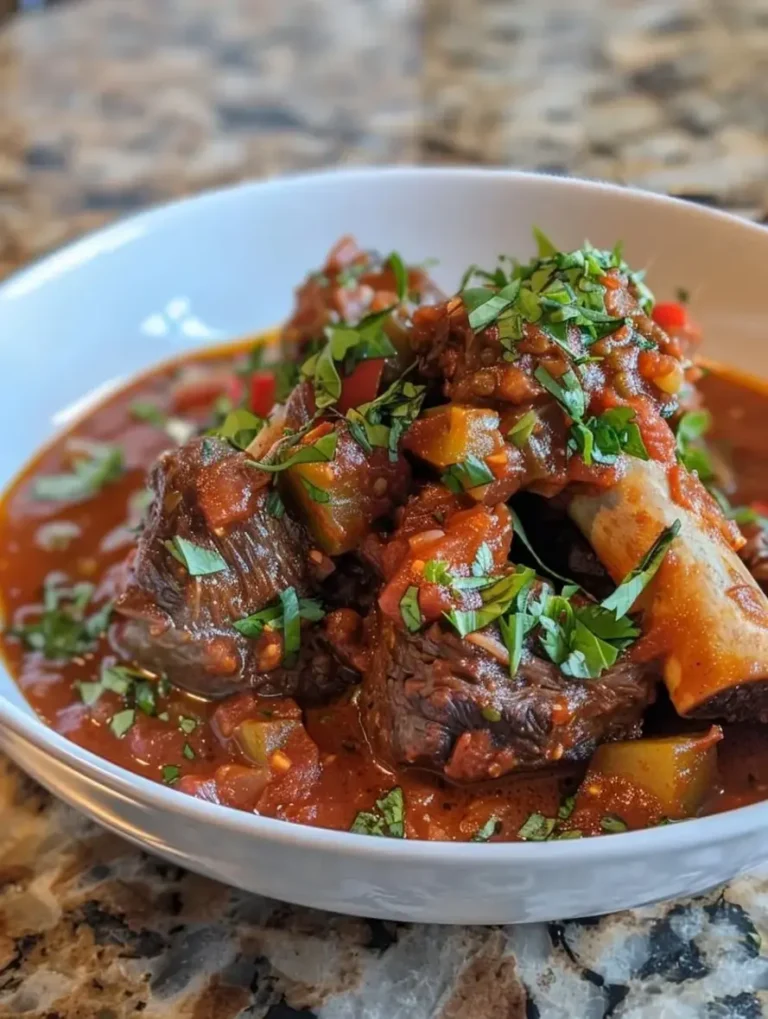
Slow-Braised Keto Lamb Shanks in Fiery Coconut Madras Curry Sauce
Tender slow-braised lamb shanks in a rich, spicy coconut Madras curry sauce, perfect for a keto diet.
- Total Time: 3 hours 20 minutes
- Yield: 4 1x
Ingredients
- 4 lamb shanks
- 2 tablespoons olive oil
- 1 medium onion, finely diced
- 4 cloves garlic, minced
- 1 tablespoon fresh ginger, grated
- 2 tablespoons Madras curry powder
- 1 teaspoon ground cumin
- 1 teaspoon smoked paprika
- 1/2 teaspoon turmeric
- 1 tablespoon tomato paste
- 1 can (13.5 oz) full-fat coconut milk
- 1 cup beef broth (or bone broth)
- 1 tablespoon apple cider vinegar
- Salt and pepper to taste
- Fresh cilantro for garnish
Instructions
- Preheat oven to 325°F (163°C).
- Season lamb shanks generously with salt and pepper.
- In a large Dutch oven or oven-safe pot, heat olive oil over medium-high heat. Sear lamb shanks until browned on all sides, about 3-4 minutes per side. Remove and set aside.
- In the same pot, add onion and cook until softened, about 3 minutes. Add garlic and ginger, cook for 1 minute until fragrant.
- Stir in Madras curry powder, cumin, smoked paprika, and turmeric. Cook for 1 minute.
- Add tomato paste and cook for 1 minute, stirring constantly.
- Pour in coconut milk, beef broth, and apple cider vinegar. Stir to combine, scraping up any browned bits from the bottom of the pot.
- Return lamb shanks to the pot, ensuring they are mostly submerged in the liquid. Bring to a simmer.
- Cover the pot and transfer to the preheated oven. Braise for 2.5 to 3 hours, until the meat is tender and falling off the bone.
- Remove from oven and let rest for 10 minutes. Garnish with fresh cilantro before serving.
Notes
For an even thicker sauce, remove the lamb shanks after braising and simmer the sauce on the stovetop until reduced to desired consistency. This dish is keto-friendly with about 6g net carbs per serving (excluding garnish).
- Prep Time: 20 minutes
- Cook Time: 3 hours
- Method: Main Course
- Cuisine: Indian
Nutrition
- Calories: 620 kcal
- Sugar: 3 g
- Fat: 45 g
- Carbohydrates: 9 g
- Protein: 42 g
Tried This Recipe? Leave a Comment!
Did you make this recipe? I’d love to hear how it turned out! Please leave a comment and a rating below. Your feedback helps other home cooks and supports cheerychop.com!
For more delicious inspiration, follow me on Pinterest!