Lemon Vanilla Diamond Jewels Mirror Glaze Dessert
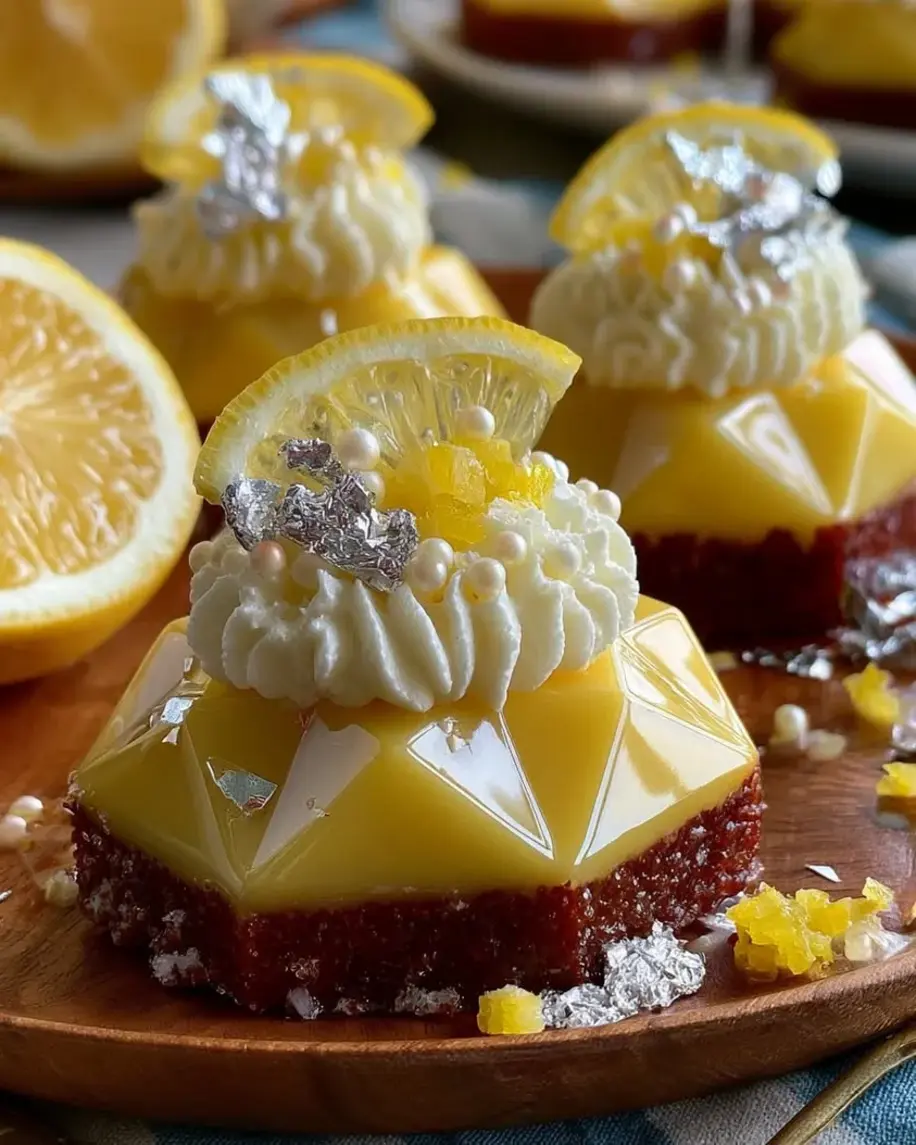
Table of Contents
Lemon Vanilla Diamond Jewels – Elegant Mirror Glaze Dessert
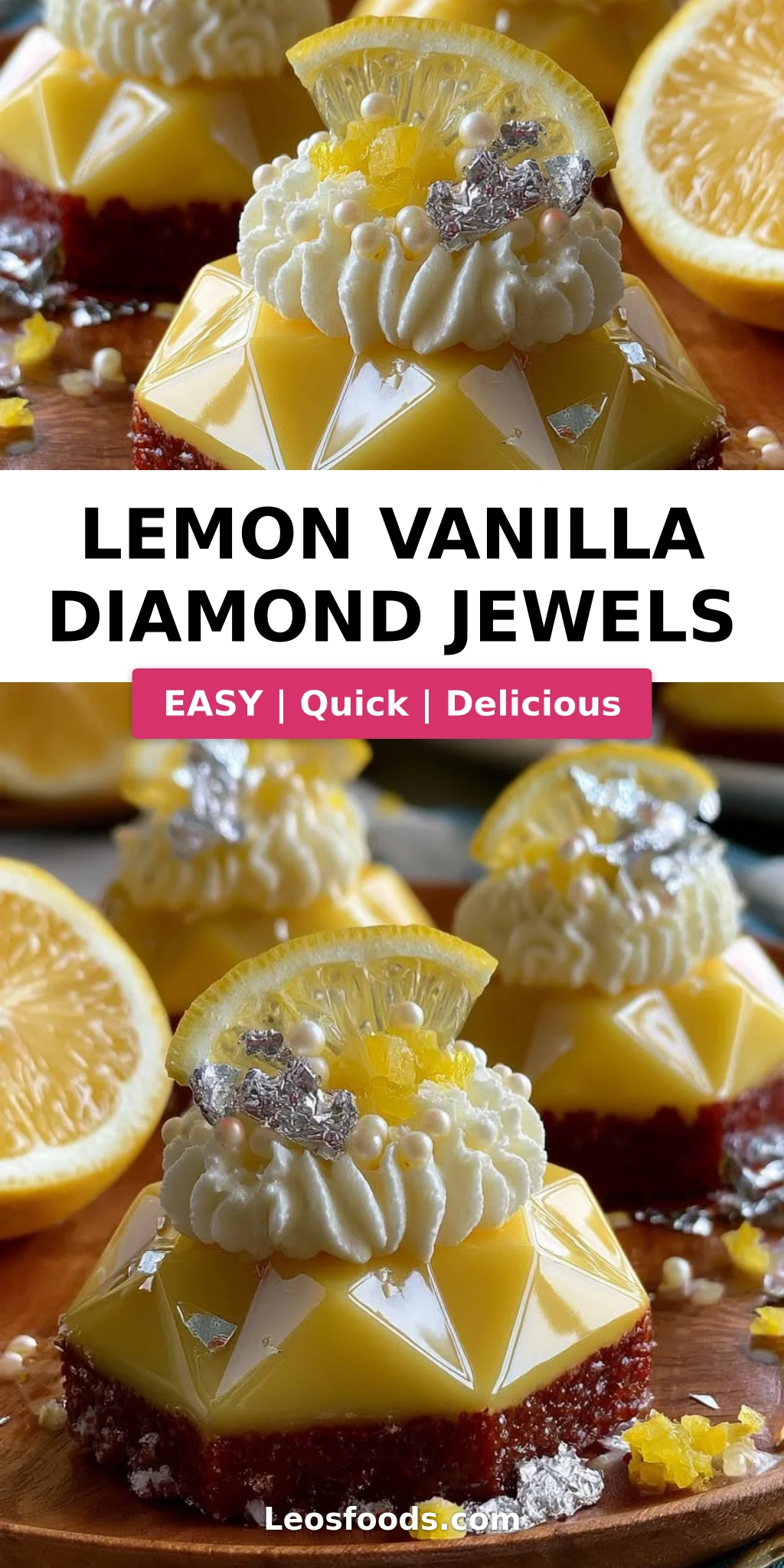
I still remember the first time I made a mirror glaze dessert during my pastry training in Paris — it was a crystal-clear lemon mirror cake that glittered under the soft lights of the pâtisserie kitchen. That day, I knew I had to create a version that felt both luxurious and deeply personal. These Lemon Vanilla Diamond Jewels are exactly that: a tangy lemon vanilla shell cradling a creamy mascarpone center, all draped in a shimmering crystal mirror glaze that catches the light like a gemstone. This lemon vanilla diamond jewels recipe is my love letter to that Parisian memory, reimagined with a touch of Moroccan warmth and New York elegance.
The first bite is pure magic — the mirror glaze cracks gently under your spoon, giving way to a bright, citrusy shell that melts into a silky, cloud-like vanilla cream center. The lemon curd brings a sunny tartness that cuts through the richness of the mascarpone, while the vanilla bean paste adds warm, floral notes that linger. Each jewel is finished with candied lemon peel, white chocolate shards, and edible silver flakes, creating a dessert that looks like it belongs in a museum display case — but tastes like home. The crystal mirror glaze is the showstopper: smooth, glossy, and almost too beautiful to eat.
What sets my lemon vanilla diamond jewels recipe apart is the technique I learned in Paris — using gelatin to create that perfectly smooth, bouncy shell — paired with the bright, unfussy flavors I grew up with in Morocco. I use a simple mascarpone cream center instead of a complicated mousse, which means you get a wonderfully light texture without any fussy egg-based custards. One pro tip: make sure your gelatin is fully bloomed and dissolved before mixing it into the warm lemon curd to avoid any lumps. The most common mistake home bakers make is rushing the chilling time — these jewels need at least 4 hours in the freezer to set properly before glazing. Trust me, the patience pays off with the most stunning mirror glaze you’ve ever created.
Why This Lemon Vanilla Diamond Jewels Recipe Is the Best
The secret to the incredible flavor of these lemon vanilla diamond jewels lies in the combination of high-quality lemon curd and vanilla bean paste. I use a store-bought lemon curd from a brand I trust (like Bonne Maman or a good自家制 version from a local NYC farmers market) and boost it with fresh lemon juice and vanilla bean paste. The vanilla bean paste provides those tiny, aromatic seeds that burst with flavor in every bite, while the fresh lemon juice keeps the curd bright and prevents it from tasting overly sweet. This is a trick I picked up in Paris — always finish a citrus dessert with a squeeze of fresh juice just before setting to keep the flavor alive and vibrant.
Texture is everything in this lemon vanilla diamond jewels recipe, and I’ve perfected it through years of testing. The shell needs to be firm enough to hold its shape when unmolded but still soft and silky when you bite into it. The key is using the right ratio of gelatin to liquid — too much and the shell becomes rubbery, too little and it won’t set properly. I use a precise 2 teaspoons of gelatin powder to 1½ cups of lemon curd mixture, which gives a delicate, melt-in-your-mouth texture that holds its diamond shape beautifully. The mascarpone center is whipped just until light and fluffy — over-whipping can make it grainy, so stop as soon as it forms soft peaks.
This recipe is designed to be foolproof even for beginners who have never worked with mirror glaze before. The step-by-step instructions break down each stage — from blooming gelatin to glazing the frozen jewels — so you never feel lost. The crystal mirror glaze itself is surprisingly simple: white chocolate, sweetened condensed milk, gelatin, and a touch of lemon juice create a glossy, pourable coating that sets to a brilliant shine. If you can stir and pour, you can make this glaze. Plus, the entire dessert can be made up to 3 days in advance and stored in the freezer, making it ideal for entertaining. Serve these at your next dinner party, and your guests will think you spent days in the kitchen.
Lemon Vanilla Diamond Jewels Recipe Ingredients
When I shop for these ingredients in New York, I head straight to the Union Square Greenmarket for fresh lemons and to a specialty baking shop in Chelsea for the white chocolate and pearl luster dust. You can find everything you need at any well-stocked grocery store — just make sure your gelatin is fresh, your mascarpone is at room temperature for smooth whipping, and your white chocolate is high-quality (I prefer Valrhona or Guittard for the smoothest melt). The first time I made these in my tiny Manhattan apartment, I used a budget white chocolate and the glaze seized — a hard lesson learned. Now I always splurge on the good stuff for the mirror glaze. Here is the complete list of what you will need.
Ingredients List
- For the Lemon Vanilla Diamond Shells:
- 1½ cups lemon curd
- ½ cup heavy cream
- ⅓ cup granulated sugar
- 1 tsp vanilla bean paste
- 2 tsp gelatin powder
- 2 tbsp cold water (for blooming)
- 1 tbsp fresh lemon juice
- Pinch of salt
- For the Vanilla Cream Center:
- 1 cup mascarpone cheese
- ½ cup heavy whipping cream
- 3 tbsp powdered sugar
- 1 tsp vanilla extract
- For the Crystal Mirror Glaze:
- 1 cup white chocolate, finely chopped
- ½ cup sweetened condensed milk
- ¼ cup water
- 1 tbsp gelatin powder
- 3 tbsp cold water (for blooming)
- 1 tbsp fresh lemon juice
- ½ tsp edible pearl luster dust
- Yellow food coloring, as needed
- For Garnish (optional):
- 1 tbsp candied lemon peel, finely chopped
- 1 tbsp white chocolate shards
- Edible silver flakes
Ingredient Spotlight
Lemon Curd: This is the backbone of the shell, so use a brand with a bright, tangy flavor and smooth texture. I love Bonne Maman or a自家制 version from a local bakery. Avoid overly sweet brands, as the added sugar in the recipe can tip the balance. If you want to make your own lemon curd, use 4 egg yolks, ½ cup sugar, ⅓ cup lemon juice, and 4 tbsp butter — cook over low heat until thickened.
Vanilla Bean Paste: This is my secret weapon. The tiny seeds add visual appeal and a deeper, more complex vanilla flavor than extract. Look for a brand that lists vanilla beans as the first ingredient — Nielsen-Massey is excellent. If you only have vanilla extract, use 1½ teaspoons and expect a slightly less intense flavor but a still-delicious result.
White Chocolate for Glaze: The quality of the white chocolate directly affects the shine and texture of the mirror glaze. Use a couverture or high-quality white chocolate with at least 30% cocoa butter. Chopping it finely ensures it melts evenly when you pour the hot condensed milk mixture over it. Callebaut or Valrhona are my top choices — they melt like a dream and set to a flawless gloss.
Edible Pearl Luster Dust: This gives the glaze its signature diamond-like shimmer. You can find it at baking supply stores or online. Use a tiny amount — ½ teaspoon is plenty — and whisk it into the warm glaze until fully dissolved. For a more dramatic sparkle, add a pinch of edible glitter on top after glazing. Avoid using too much, as it can make the glaze grainy.
| Original Ingredient | Best Substitution | Flavor / Texture Impact |
|---|---|---|
| Lemon Curd | Lime curd or store-bought lemon pie filling | Slightly less tangy; pie filling is thicker so reduce gelatin by ¼ tsp |
| Vanilla Bean Paste | 1½ tsp vanilla extract or seeds from 1 vanilla bean | Less intense vanilla flavor; no visible seeds but still delicious |
| Mascarpone Cheese | Cream cheese + 2 tbsp heavy cream (blended until smooth) | Slightly tangier and denser; whip well to aerate |
| White Chocolate | High-quality white chocolate chips (e.g., Guittard) | Slightly less smooth melt but still glossy; avoid low-fat chips |
| Edible Pearl Luster Dust | Edible glitter or a pinch of mica powder (food-grade) | Similar shimmer; use sparingly to avoid graininess |
How to Make Lemon Vanilla Diamond Jewels — Step-by-Step
Follow these steps carefully, and you will be rewarded with stunning, professional-quality lemon vanilla diamond jewels that look like they came from a high-end pâtisserie. I have broken down every stage with visual cues and pro tips so you can nail the technique on your first try.
Step 1: Bloom the Gelatin
In a small bowl, sprinkle 2 teaspoons of gelatin powder over 2 tablespoons of cold water. Stir gently — do not whisk — and let it sit for 5 minutes until the gelatin absorbs the water and forms a firm, jiggly mass. This is called blooming and it ensures the gelatin dissolves evenly into the warm liquid without clumping. If the gelatin is not fully bloomed (if there are dry patches), let it sit for another 2 minutes. Use cold water, never warm, or the gelatin will dissolve prematurely and lose its setting power.
💡 Stella’s Pro Tip: Always bloom gelatin in a separate bowl before adding it to any hot mixture. If you skip this step, the gelatin may form lumps that are impossible to smooth out. I once did this in a hurry during a cooking demo, and the shell had unsightly specks — learn from my mistake!
Step 2: Heat the Lemon Mixture
In a medium saucepan over low heat, combine 1½ cups lemon curd, ½ cup heavy cream, ⅓ cup granulated sugar, 1 teaspoon vanilla bean paste, 1 tablespoon fresh lemon juice, and a pinch of salt. Stir gently with a silicone spatula until the mixture is warm and smooth — about 3 to 4 minutes. Do not let it boil, as boiling can cause the curd to separate. Remove from heat and immediately stir in the bloomed gelatin until fully dissolved. The mixture should be fluid and glossy, with no visible streaks of gelatin.
⚠️ Common Mistake to Avoid: Adding the gelatin to a mixture that is too hot (above 180°F) can weaken its setting power, resulting in a shell that is too soft. Keep the heat low and remove the pan from the stove as soon as the mixture is warm to the touch.
Step 3: Coat the Molds
Pour a thin layer of the lemon vanilla mixture into diamond-shaped silicone molds — about ⅛ inch thick. Use a small offset spatula or the back of a spoon to spread the mixture evenly up the sides of each cavity, ensuring full coverage. Place the molds on a baking sheet and refrigerate for 15 to 20 minutes, until the mixture is partially set — firm enough that it doesn’t run when you tilt the mold but still slightly tacky to the touch. This thin shell will become the outer casing for the creamy center.
💡 Stella’s Pro Tip: If the mixture starts to set before you have coated all the molds, warm it gently over low heat for a few seconds, stirring constantly. Do not microwave it — the uneven heat can activate the gelatin too quickly.
Step 4: Make the Vanilla Cream Center
In a large mixing bowl, combine 1 cup mascarpone cheese (softened), ½ cup heavy whipping cream, 3 tablespoons powdered sugar, and 1 teaspoon vanilla extract. Using a hand mixer or a stand mixer with the whisk attachment, whip on medium speed until light, fluffy, and smooth — about 2 to 3 minutes. Stop as soon as the mixture forms soft peaks; over-whipping can cause the mascarpone to break and become grainy. The cream should hold its shape when you lift the whisk but still look silky and soft.
⚠️ Common Mistake to Avoid: If your mascarpone is cold from the fridge, it will seize when whipped. Let it sit at room temperature for 20 minutes before whipping. I keep mine on the counter while I bloom the gelatin — it’s the perfect timing.
Step 5: Assemble and Freeze
Fill each chilled mold with the vanilla cream center, leaving a small border (about ⅛ inch) around the edges to allow room for the top layer. Gently tap the molds on the counter to level the cream. Spoon the remaining lemon vanilla mixture over the cream to cover it completely, smoothing the tops with an offset spatula. Freeze the molds on a baking sheet for at least 4 hours — or overnight — until the jewels are completely firm. This is critical for unmolding and glazing.
💡 Stella’s Pro Tip: To ensure clean edges on your diamonds, freeze the molds on a perfectly level surface. I use a small spirit level on my freezer shelf — obsessive, I know, but it makes a difference in the final presentation.
Step 6: Prepare the Crystal Mirror Glaze
Bloom 1 tablespoon of gelatin powder in 3 tablespoons of cold water for 5 minutes. In a small saucepan, heat ½ cup sweetened condensed milk and ¼ cup water over medium heat until steaming — do not boil. Remove from heat and stir in the bloomed gelatin until fully dissolved. Pour this hot mixture over 1 cup of finely chopped white chocolate in a heatproof bowl. Let it sit for 1 minute, then whisk gently until the chocolate is completely melted and the glaze is smooth and glossy. Add 1 tablespoon fresh lemon juice, ½ teaspoon edible pearl luster dust, and yellow food coloring one drop at a time until you achieve a pale, sparkling crystal color. Allow the glaze to cool to about 90°F — it should be slightly thickened but still pourable, like warm honey.
⚠️ Common Mistake to Avoid: If the glaze is too thick when you pour it, it will create thick, uneven layers. If it is too thin, it will slide off the frozen jewels. Test the consistency by drizzling a small amount over the back of a spoon — it should coat the spoon evenly and set within 10 seconds in the freezer.
Step 7: Glaze and Garnish
Unmold the frozen diamond jewels by gently flexing the silicone molds. Place each jewel on a wire rack set over a baking sheet to catch the drips. Pour the cooled crystal mirror glaze evenly over each jewel, starting at the center and working outward, allowing the excess to drip away. Let the glaze set for 2 to 3 minutes at room temperature — the jewels will develop a brilliant, mirror-like shine. Carefully transfer them to serving plates using a thin offset spatula. Finish with candied lemon peel, white chocolate shards, and edible silver flakes. Serve immediately while still cold.
💡 Stella’s Pro Tip: Work quickly when glazing — the frozen jewels will start to soften and sweat as they warm up, and a warm surface can cause the glaze to slide off. If your kitchen is warm, work in batches and keep the remaining jewels in the freezer until you are ready to glaze them.
| Step | Action | Duration | Key Visual Cue |
|---|---|---|---|
| 1 | Bloom gelatin for shell | 5 mins | Firm, jiggly mass |
| 2 | Heat lemon mixture | 3–4 mins | Warm, smooth, no lumps |
| 3 | Coat molds | 15–20 mins chill | Partially set, tacky |
| 4 | Whip vanilla cream | 2–3 mins | Soft peaks, fluffy |
| 5 | Assemble and freeze | 4+ hrs | Completely firm |
| 6 | Prepare mirror glaze | 10 mins | Smooth, glossy, 90°F |
| 7 | Glaze and garnish | 2–3 mins | Mirror shine, set |
Serving & Presentation
These lemon vanilla diamond jewels are designed to be the centerpiece of any elegant occasion. I love serving them on a simple white platter to let the shimmering mirror glaze take center stage. Place each jewel on a small dessert plate with a dollop of lightly sweetened whipped cream or a drizzle of extra lemon curd for contrast. The candied lemon peel adds a beautiful pop of color and a chewy texture that complements the smooth glaze. For a truly stunning presentation, arrange the jewels on a bed of edible flowers—pansies and violets work beautifully—and sprinkle a few edible silver flakes over the top just before serving.
In my NYC kitchen, I often serve these after a rich dinner, like a Moroccan lamb tagine or a classic roast chicken, because the bright lemon and vanilla flavors cleanse the palate and leave guests feeling satisfied but not weighed down. They also pair wonderfully with a glass of chilled Moscato d’Asti or a sparkling lemonade for a non-alcoholic option. If you are serving a crowd, you can present the jewels on a tiered cake stand for a dramatic, jewel-box effect. My mother used to arrange Moroccan sweets on a silver tray for special occasions, and I love channeling that tradition with these modern diamond jewels.
| Pairing Type | Suggestions | Why It Works |
|---|---|---|
| Side Dish | Lightly sweetened whipped cream, fresh berries, lemon curd drizzle | Adds creamy contrast and bright fruit notes that echo the citrus |
| Sauce / Dip | Raspberry coulis, salted caramel, extra mirror glaze | Raspberry adds tartness; caramel adds richness; extra glaze adds drama |
| Beverage | Moscato d’Asti, sparkling lemonade, jasmine green tea | Light, fruity drinks complement the lemon; tea adds floral harmony |
| Garnish | Candied lemon peel, white chocolate shards, edible silver flakes, fresh mint | Adds texture, color, and a touch of elegance that matches the mirror glaze |
Make-Ahead, Storage & Reheating
One of the things I love most about this lemon vanilla diamond jewels recipe is how well it fits into a busy schedule. In my NYC life, I often prepare the jewels fully through Step 8 up to 3 days before serving and keep them frozen in an airtight container. The mirror glaze can be made up to 1 day in advance and stored in the refrigerator — just reheat it gently to 90°F before using. This make-ahead flexibility means I can focus on other dishes on the day of my dinner party without stressing over the dessert.
| Method | Container | Duration | Reheating Tip |
|---|---|---|---|
| Refrigerator | Airtight container, single layer | Up to 3 days | Serve chilled; no reheating needed |
| Freezer | Airtight container, layers separated by parchment | Up to 1 month | Thaw in refrigerator 2 hours before serving; do not microwave |
| Make-Ahead | Silicone molds (unmolded after freezing) | Up to 3 days before serving | Keep frozen until ready to glaze; glaze and serve immediately |
For reheating leftover mirror glaze, place the container in a warm water bath (about 110°F) and stir gently until it becomes pourable again. Do not microwave the glaze, as it can seize the chocolate and ruin the shine. If you have already glazed the jewels and have leftovers, store them in the refrigerator in an airtight container for up to 2 days — the glaze will stay glossy but may soften slightly. They are still delicious, just a bit less dramatic than fresh-glazed jewels. I never freeze already-glazed jewels because the condensation upon thawing can make the glaze sticky and less brilliant.
Variations & Easy Swaps
| Variation | Key Change | Best For | Difficulty Impact |
|---|---|---|---|
| Citrus Swap | Replace lemon curd with lime or orange curd | Bright, tropical flair | Same — no change |
| Dairy-Free Version | Use coconut cream in shell and center, dairy-free white chocolate | Vegan or lactose-intolerant guests | Medium — coconut flavor is prominent |
| Berry Swirl | Add a swirl of raspberry puree to the vanilla cream center | Fruity, colorful variation | Easy — adds visual appeal |
Citrus Swap
For a bright, tropical twist, replace the lemon curd with an equal amount of lime curd or orange curd. The technique remains exactly the same, but the flavor profile shifts dramatically — lime brings a sharper, more aromatic tang, while orange offers a sweeter, more mellow citrus note. I love using lime when I want a zesty, Caribbean-inspired dessert, and orange when I want something that feels warmer and more approachable. If you use orange curd, consider reducing the sugar by 2 tablespoons to balance the sweetness. This variation is perfect for summer parties or holiday brunches where you want a pop of color and a different citrus character.
Dairy-Free Version
To make these lemon vanilla diamond jewels dairy-free, substitute the heavy cream and mascarpone with full-fat coconut cream (chilled, solid part only) and use a dairy-free white chocolate for the glaze (look for brands like Hu or Pascha). The coconut cream adds a subtle tropical flavor that pairs beautifully with lemon and vanilla, though it does change the overall taste slightly. Whip the coconut cream just as you would the mascarpone — it will be less stable than dairy cream but still delicious. The mirror glaze will still shine beautifully with dairy-free white chocolate; just make sure it is finely chopped to ensure smooth melting. This version works wonderfully for guests with lactose intolerance or dairy allergies.
Berry Swirl
For a stunning visual and fruity burst, swirl 3 to 4 tablespoons of raspberry puree (made by blending fresh or frozen raspberries and straining out the seeds) into the vanilla cream center before freezing. Use a toothpick or a skewer to create gentle swirls — do not overmix, or the colors will muddy. The tartness of the raspberries cuts through the richness of the mascarpone and adds a beautiful pink ribbon that contrasts with the yellow lemon shell and the clear mirror glaze. I sometimes add a few drops of pink food coloring to the puree for an extra-vibrant swirl. This is one of my favorite variations to make in the summer when raspberries are at their peak at the NYC farmers market.
What is the best way to get a lemon vanilla flavor into diamond jewels?
The best way to infuse a bright, authentic lemon vanilla flavor into diamond jewels is to use a combination of high-quality lemon curd and vanilla bean paste. Start with a good store-bought lemon curd — I recommend Bonne Maman or a自家制 version from a local bakery — then boost it with fresh lemon juice and vanilla bean paste. The fresh lemon juice adds a lively, tangy brightness that bottled lemon juice simply cannot replicate, while the vanilla bean paste provides those tiny aromatic seeds that release their flavor gradually as you eat. For the shell, heat the lemon curd with heavy cream, sugar, vanilla bean paste, and a pinch of salt until warm, then stir in bloomed gelatin. This creates a smooth, flavorful base that carries the lemon and vanilla notes beautifully. The vanilla cream center, made with mascarpone, heavy cream, powdered sugar, and vanilla extract, provides a second layer of vanilla richness that contrasts perfectly with the tangy shell.
Can I substitute the lemon with another citrus fruit in lemon vanilla diamond jewels?
Absolutely — this recipe is very forgiving when it comes to citrus substitutions. You can replace the lemon curd with an equal amount of lime curd or orange curd for a completely different flavor profile. Lime curd will give the jewels a sharper, more aromatic tang that works wonderfully with the vanilla cream center, especially in summer. Orange curd creates a sweeter, milder citrus flavor that feels warmer and more approachable — perfect for holiday gatherings. If you use orange curd, consider reducing the granulated sugar by 2 tablespoons since orange curd is naturally sweeter than lemon. For a truly unique twist, try grapefruit curd, but be aware that grapefruit has a more bitter edge that may require an extra tablespoon of sugar. The technique for making the shell and glaze remains exactly the same regardless of which citrus curd you choose.
How long do lemon vanilla diamond jewels need to chill before serving?
Lemon vanilla diamond jewels need a minimum of 4 hours in the freezer to become completely firm before glazing, but I highly recommend freezing them overnight for the best results. The jewels must be frozen solid — not just chilled — because the mirror glaze is poured over the frozen surface and needs a cold base to set properly without sliding off. If the jewels are not frozen through, the glaze will warm them too quickly, resulting in a dull, uneven coating. After glazing, the jewels should be served immediately while still cold, or they can be kept in the refrigerator for up to 2 hours before serving. If you need to prepare them further in advance, freeze the unglazed jewels for up to 1 month, then glaze them just before serving. The total chilling time from start to finish is about 4 to 6 hours for a standard batch.
What is the ideal texture for lemon vanilla diamond jewels after baking?
Since lemon vanilla diamond jewels are not baked — they are set with gelatin and frozen — the ideal texture is best described as a firm, silky mousse that melts effortlessly on the tongue. The lemon vanilla shell should be smooth, slightly bouncy, and firm enough to hold its diamond shape when unmolded, but it should not be rubbery. The vanilla cream center should be light, fluffy, and cloud-like, offering a creamy contrast to the tangy shell. When you bite into a properly made jewel, the mirror glaze should crack gently under your spoon, giving way to the soft, silky interior. The overall texture should feel luxurious and delicate — not dense or heavy. If the texture is too soft, it likely needs more gelatin or more freezing time. If it is too firm or rubbery, you may have used too much gelatin or let the mixture boil. The perfect texture is achieved with the exact gelatin ratios and freezing times specified in the recipe.
Can I make lemon vanilla diamond jewels without a silicone mold?
Yes, you can make these jewels without a traditional diamond-shaped silicone mold, but you will need a flexible mold of some kind to unmold the frozen jewels cleanly. Silicone molds are ideal because they are flexible and non-stick, allowing you to release the jewels easily without damaging their shape. If you do not have diamond molds, you can use any small silicone mold with a decorative shape — hearts, flowers, or simple rounds all work beautifully. Alternatively, you can line a small loaf pan with plastic wrap, pour the shell mixture in a thin layer, freeze it, then fill it with the cream center and top layer, and cut it into diamond shapes after freezing. This method is less precise but still produces delicious jewels. I have even used small silicone ice cube trays in a pinch — just make sure they are food-grade silicone and have a fun shape.
Why did my mirror glaze turn out cloudy or dull?
A cloudy or dull mirror glaze is usually the result of one of three common issues. First, the glaze may have been too hot when poured over the frozen jewels — the ideal temperature is around 90°F, or about the temperature of warm honey. If the glaze is too hot, it will melt the surface of the frozen jewel, causing the glaze to absorb moisture and turn cloudy. Second, the white chocolate may have seized if it came into contact with even a drop of water — make sure all your bowls and utensils are completely dry. Third, the gelatin may not have been fully bloomed or dissolved, leaving tiny particles that scatter light and dull the shine. To fix a cloudy glaze, you can gently reheat it to 90°F and strain it through a fine-mesh sieve before pouring. Always test the glaze on a small frozen surface before glazing all the jewels to check for clarity and shine.
Can I use lemon extract instead of fresh lemon juice in this recipe?
I strongly recommend using fresh lemon juice rather than lemon extract for the best flavor and texture in this lemon vanilla diamond jewels recipe. Fresh lemon juice provides a bright, natural acidity that helps balance the sweetness of the white chocolate and the richness of the mascarpone. It also contains natural pectin and acids that interact with the gelatin to create a stable, smooth set. Lemon extract, on the other hand, is alcohol-based and can introduce a harsh, artificial-tasting note that overpowers the delicate vanilla. If you absolutely cannot find fresh lemons, use bottled lemon juice (not from concentrate) as a last resort — but reduce the amount by 1 teaspoon and add an extra teaspoon of fresh lemon zest if possible. The difference in flavor is noticeable, and fresh lemon truly makes the jewels sparkle.
How do I prevent the mirror glaze from cracking after it sets?
Mirror glaze cracking is typically caused by applying the glaze to jewels that are too cold or too warm, or by pouring the glaze too thickly. To prevent cracking, make sure your frozen jewels are at a consistent temperature — straight from the freezer, not partially thawed. The glaze itself should be at 90°F and poured in one smooth, even motion over the center of each jewel, allowing it to flow naturally over the edges. If you pour the glaze too slowly or in multiple layers, it can set unevenly and crack as the jewel warms up. Another cause of cracking is using too much gelatin in the glaze — stick to the 1 tablespoon per 1 cup of white chocolate ratio specified in the recipe. Finally, avoid refrigerating the glazed jewels immediately after glazing; let them set at room temperature for 2 to 3 minutes, then transfer to the refrigerator if needed. The gentle temperature transition helps prevent thermal shock.
Can I add food coloring to the mirror glaze for a different color?
Yes, you can absolutely customize the color of the mirror glaze to suit your occasion or theme. The recipe calls for yellow food coloring to create a pale, sparkling crystal hue that complements the lemon flavor, but you can use any gel or powder food coloring to achieve a different shade. For a pastel pink, use a tiny drop of pink gel; for a bold blue, use blue coloring; for a natural look, omit the coloring entirely for a milky white glaze. I recommend using gel or powder food coloring rather than liquid drops, as liquid can thin the glaze and affect its shine. Add the coloring one drop at a time and stir well after each addition — the glaze should be pale and translucent, not opaque, to maintain its mirror-like quality. For holidays, try red and green swirls for Christmas or orange for Halloween. The edible pearl luster dust will add shimmer to any color you choose.
What is the best way to store leftover lemon vanilla diamond jewels?
Leftover lemon vanilla diamond jewels should be stored in the refrigerator in an airtight container for up to 3 days. Place them in a single layer on a plate or tray, cover with plastic wrap, and then seal the container to prevent the jewels from absorbing any odors from other foods in the fridge. If you have already glazed the jewels, the mirror glaze will remain glossy for about 24 hours but may start to soften and lose its brilliant shine after that. For longer storage, freeze the unglazed jewels (before Step 9) in an airtight container with parchment paper between layers for up to 1 month. When you are ready to serve them, glaze the frozen jewels directly from the freezer — do not thaw them first. Already-glazed jewels should not be frozen because the condensation upon thawing will make the glaze tacky and dull. I always recommend glazing only what you plan to serve within a day for the most stunning presentation.
Share Your Version!
I would love to see how your Lemon Vanilla Diamond Jewels turn out! Did you try a citrus swap, add a berry swirl, or stick with the classic lemon vanilla flavor? Drop a star rating and a comment below — your feedback helps other home bakers decide if this recipe is right for them. If you share a photo on Instagram or Pinterest, tag me @leosfoods so I can feature your creations in my stories. I read every single comment and love hearing about your kitchen adventures, whether you are a seasoned pastry chef or a beginner tackling your first mirror glaze dessert.
One question I always ask my readers: What is your favorite special-occasion dessert flavor combination? I am already dreaming up new variations for these diamond jewels — perhaps a passion fruit and white chocolate version or a rosewater and pistachio twist inspired by my Moroccan roots. Your suggestions often become my next recipe, so do not be shy. From my NYC kitchen to yours — I hope this recipe brings as much warmth to your table as it does to mine. — Stella 🧡
Love This Recipe? Save It to Pinterest!
If you enjoyed this Lemon Vanilla Diamond Jewels recipe, don’t let it get lost in your browser tabs! 😄 Pin it now so you can find it again anytime — and explore hundreds more tried-and-tested recipes waiting for you on my Pinterest boards.
👉 Follow Stella on Pinterest @stellarecipeblog
📌 Pin this recipe · 🔁 Re-pin your favorites · 💬 Tag me when you make it — I love seeing your creations!
💎 Made this recipe? I’d love to hear from you! Leave a ⭐⭐⭐⭐⭐ rating & comment below — tell me one thing you’d pair these Diamond Jewels with.
Lemon Vanilla Diamond Jewels
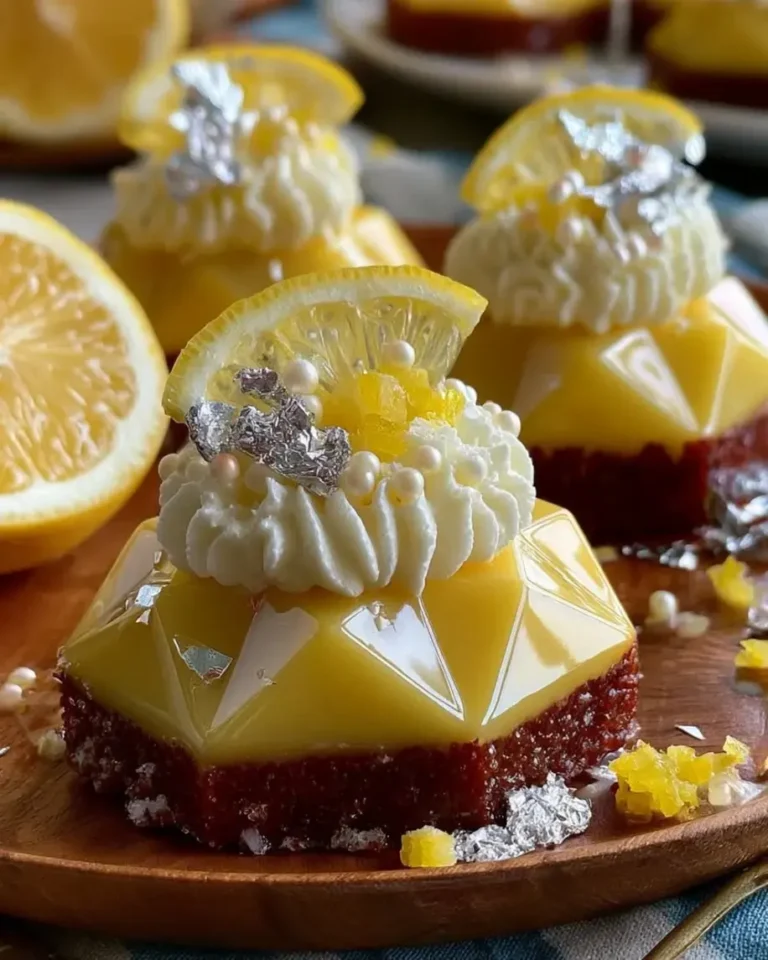
These stunning Lemon Vanilla Diamond Jewels feature a tangy lemon vanilla shell, a creamy mascarpone center, and a shimmering crystal mirror glaze. Perfect for elegant occasions.
- Yield: 6 1x
Ingredients
- For the Lemon Vanilla Diamond Shells:
- 1 1/2 cups lemon curd
- 1/2 cup heavy cream
- 1/3 cup granulated sugar
- 1 tsp vanilla bean paste
- 2 tsp gelatin powder
- 2 tbsp cold water
- 1 tbsp fresh lemon juice
- Pinch of salt
- For the Vanilla Cream Center:
- 1 cup mascarpone cheese
- 1/2 cup heavy whipping cream
- 3 tbsp powdered sugar
- 1 tsp vanilla extract
- For the Crystal Mirror Glaze:
- 1 cup white chocolate, finely chopped
- 1/2 cup sweetened condensed milk
- 1/4 cup water
- 1 tbsp gelatin powder
- 3 tbsp cold water
- 1 tbsp fresh lemon juice
- 1/2 tsp edible pearl luster dust
- Yellow food coloring, as needed
- For Garnish (optional):
- 1 tbsp candied lemon peel, finely chopped
- 1 tbsp white chocolate shards
- Edible silver flakes
Instructions
- 1. Bloom gelatin in cold water for 5 minutes.
- 2. Heat lemon curd, heavy cream, sugar, vanilla bean paste, lemon juice, and salt until warm and smooth.
- 3. Remove from heat and stir in the bloomed gelatin until fully dissolved.
- 4. Pour a thin layer of the lemon vanilla mixture into diamond-shaped silicone molds, coating the sides evenly. Chill until partially set.
- 5. Whip mascarpone, heavy cream, powdered sugar, and vanilla extract until light and fluffy.
- 6. Fill each mold with the vanilla cream center, leaving a small border around the edges.
- 7. Cover with the remaining lemon vanilla mixture and smooth the tops.
- 8. Freeze for at least 4 hours until completely firm.
- 9. For the crystal mirror glaze, bloom gelatin in cold water for 5 minutes.
- 10. Heat sweetened condensed milk and water until steaming. Remove from heat and stir in gelatin until dissolved.
- 11. Pour over white chocolate and whisk until smooth and glossy.
- 12. Add lemon juice, pearl luster dust, and yellow food coloring until a sparkling crystal finish is achieved.
- 13. Allow glaze to cool until slightly thickened but still pourable.
- 14. Unmold the frozen diamond jewels and place on a wire rack.
- 15. Pour the crystal mirror glaze evenly over each jewel, allowing excess glaze to drip away.
- 16. Let the coating set before transferring to serving plates.
- 17. Finish with candied lemon peel, white chocolate shards, and edible silver flakes.
- 18. Serve chilled.
Nutrition
- Calories: 420
- Sugar: 34g
- Fat: 28g
- Carbohydrates: 38g
- Protein: 5g
Tried This Recipe? Leave a Comment!
Did you make this recipe? I’d love to hear how it turned out! Please leave a comment and a rating below. Your feedback helps other home cooks and supports cheerychop.com!
For more delicious inspiration, follow me on Pinterest!