Beautiful Sunset Mango Vanilla Jewel Hearts Recipe
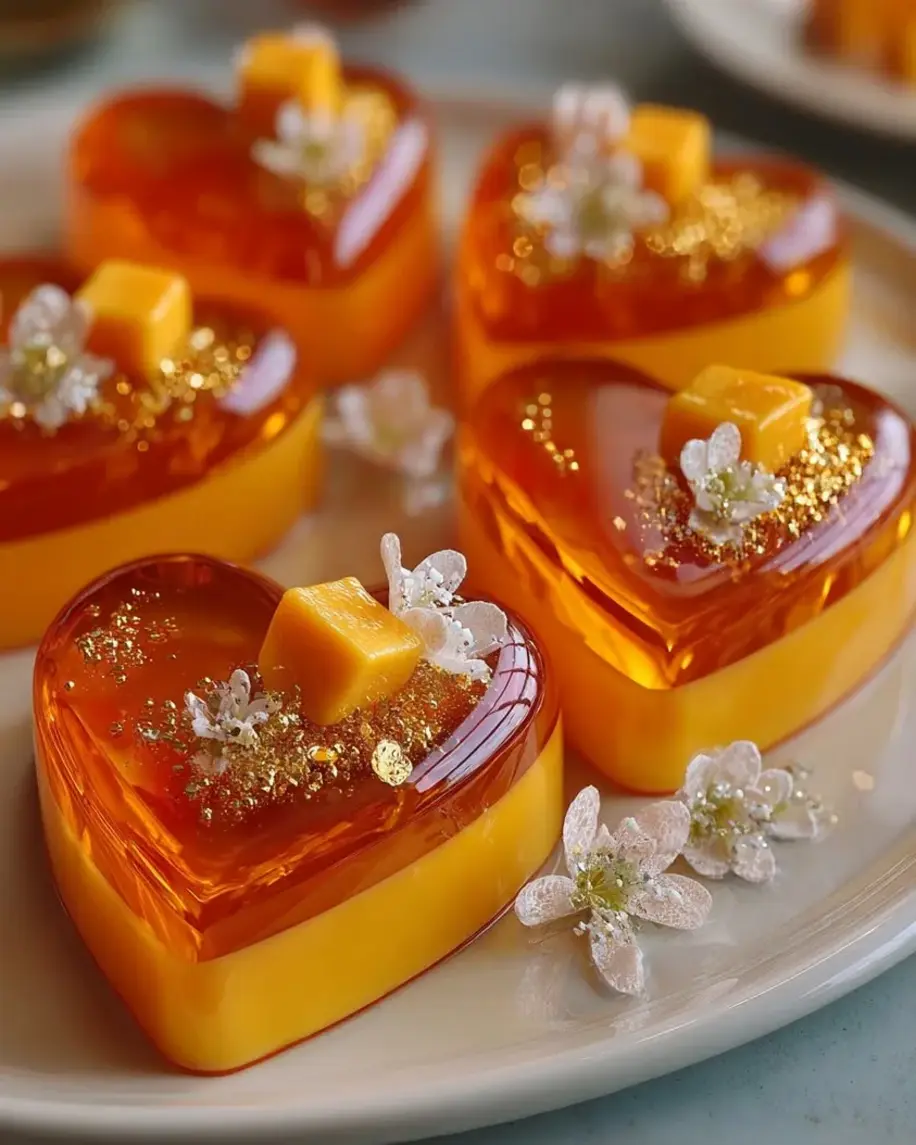
Table of Contents
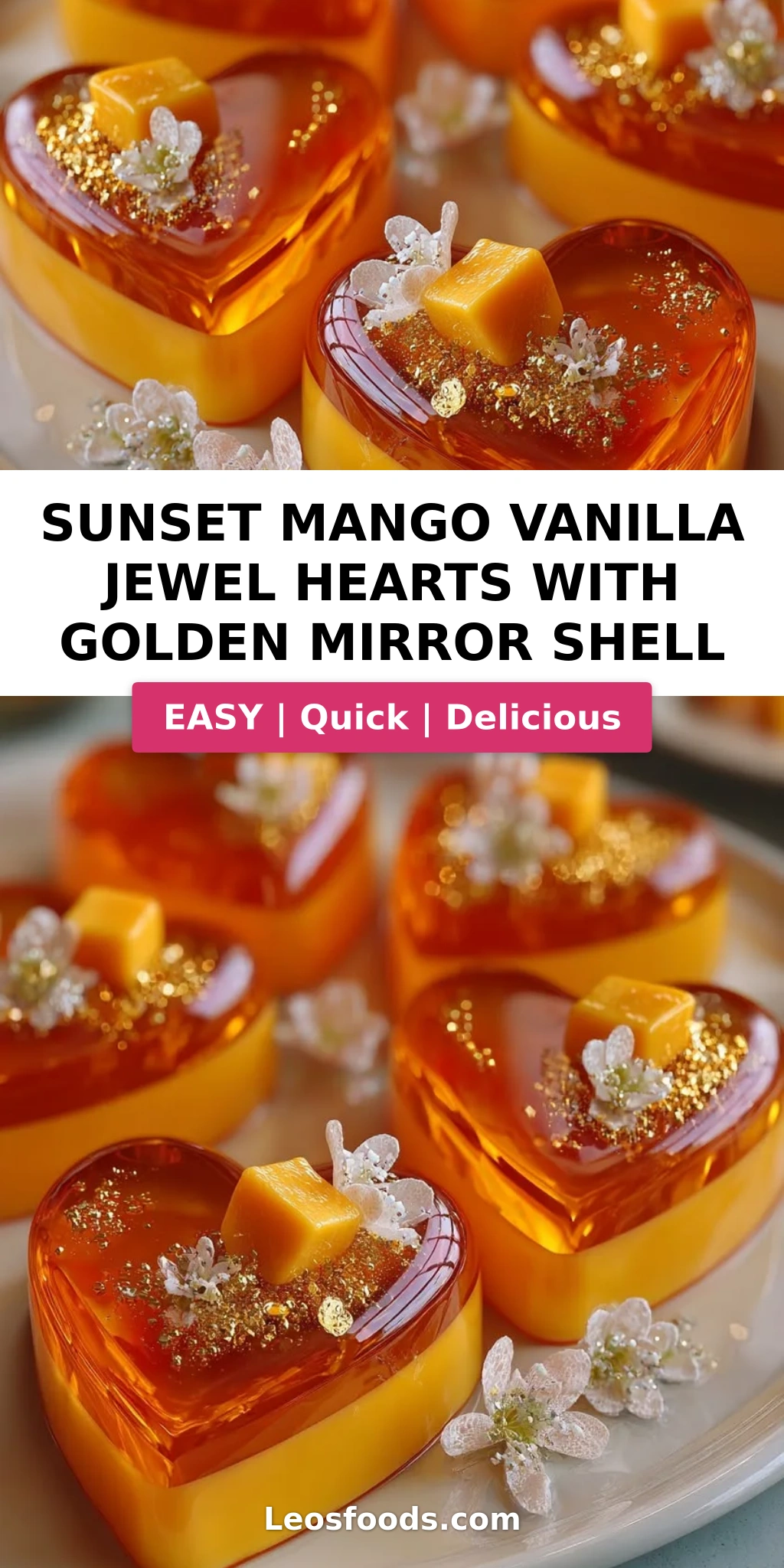
Sunset Mango Vanilla Jewel Hearts with Golden Mirror Shell – A Dazzling Agar-Agar Dessert That Tastes Like Sunshine
I still remember the first time I made these Sunset Mango Vanilla Jewel Hearts with Golden Mirror Shell — it was for a dear friend’s bridal shower in my tiny NYC walk-up kitchen, and the moment I unmolded those shimmering, translucent hearts, the whole room gasped. Growing up in Morocco, my mother would make fresh fruit jellies scented with orange blossom water for Ramadan, setting them in vintage copper molds she brought from the medina. Years later, at Le Cordon Bleu in Paris, I learned the French technique for creating mirror-glazed entremets — that flawless, glass-like shine that makes a dessert look like a jewel. This mango vanilla jewel hearts recipe is where my two worlds collide: the bright, sun-drenched flavors of North Africa and the polished precision of Parisian pastry. Every bite is a little taste of golden hour.
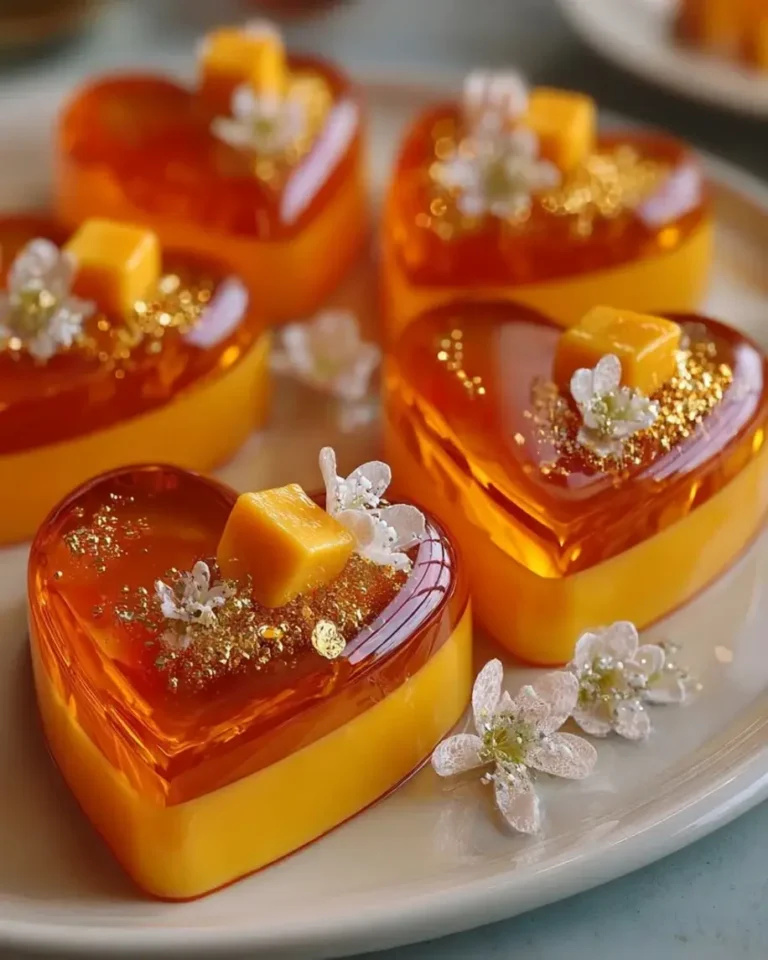
The texture of these jewel hearts is what truly sets them apart — the agar-agar creates a clean, tender bite that holds its shape beautifully without any gelatin, so the mango puree stays crystal clear and tastes intensely fresh. The vanilla cloud center is impossibly light and creamy, almost like a whisper of cheesecake filling, balanced by the natural sweetness of the mango. And then comes the golden mirror shell — a thin, glossy glaze made from mango preserves and honey that catches the light like liquid amber. It’s the kind of dessert that makes you slow down and savor every single layer. I love serving these after a long summer dinner, when the sun is still hanging low and the air smells like warm fruit.
What I love most about this golden mirror shell dessert is that it looks incredibly fancy but is actually built on a few smart, approachable techniques. I’ve tested this recipe more times than I can count to make sure the agar-agar sets perfectly (no graininess, no weeping) and that the mirror glaze stays glossy without becoming sticky. In this post, I’ll walk you through every step with the precision I learned in Paris — plus a Stella’s Pro Tip for getting that mirror shine every time. I’ll also share one common mistake to avoid when working with agar-agar, because I’ve made it myself and I want you to skip straight to perfection. Whether you’re making this for a special celebration or just because you deserve something beautiful, these sunset mango jelly hearts will make you feel like a pastry chef in your own kitchen.
Why This Sunset Mango Vanilla Jewel Hearts Recipe Is the Best
The Flavor Secret
The magic behind this fancy mango dessert recipe lies in how I layer the mango flavor. Instead of using just mango puree, I combine it with mango nectar — which adds a deeper, more rounded fruitiness and a touch of natural sweetness. The lime juice brightens everything without making it sour, and the vanilla bean paste in the cloud center brings a warm, floral note that pairs beautifully with the mango. Growing up in Morocco, we always added a pinch of salt to fruit dishes to make the sweetness sing, and that’s exactly what I do here. It’s a small detail, but it makes a world of difference.
Perfected Texture
Getting the texture right with agar-agar took me several rounds of testing in my NYC kitchen. Too much agar and the jelly becomes rubbery; too little and it won’t hold the filling. I landed on exactly 2½ teaspoons for this quantity — enough to create a firm yet tender gel that slices cleanly and melts gently on the tongue. The vanilla cloud center is whipped to soft peaks so it stays airy and light, creating a beautiful contrast with the firm mango jelly. And the golden mirror shell is thin enough to coat without overpowering, with just enough viscosity to stay put once brushed on.
Foolproof & Fast
This mango agar-agar dessert might look like something from a fancy pastry shop, but the process is surprisingly straightforward. The agar-agar mixture comes together in about 10 minutes on the stove, and the setting happens in the refrigerator while you prepare the other components. I’ve designed the steps so you can work in parallel — make the filling while the first layer sets, prepare the glaze while the hearts finish setting. Even if you’ve never worked with agar-agar before, the visual cues I provide (look for the gentle simmer, the slight thickening, the crystal-clear set) will guide you to success on your first try.
Mango Vanilla Jewel Hearts Recipe Ingredients
I source my mangoes from the Union Square Greenmarket in summer and rely on high-quality frozen puree during the colder months. The key is finding mangoes that are deeply ripe — almost overripe — because that’s when they have the most intense flavor and natural sweetness. In my mother’s kitchen in Morocco, we would use the local wild mangoes that were small but explosively flavorful. Here in NYC, I look for Ataúlfo or Champagne mangoes for their creamy, fiberless texture.
Ingredients List
For the Sunset Mango Jewel Hearts:
- 2 cups mango puree, strained
- 1 cup mango nectar
- 1½ cups water
- ¾ cup sugar
- 2½ tsp agar-agar powder
- 1 tbsp lime juice
- ¼ tsp salt
For the Vanilla Cloud Center:
- 8 oz mascarpone cheese
- ½ cup heavy whipping cream
- ¼ cup powdered sugar
- 1 tsp vanilla bean paste
- 1 tbsp sweetened condensed milk
For the Golden Mirror Shell:
- ¼ cup mango preserves
- 2 tbsp honey
- 1 tbsp water
- 1 tsp lime juice
For Garnish (optional):
- Fresh mango cubes
- White chocolate curls
- Edible gold dust
Ingredient Spotlight
Mango Puree: This is the backbone of the entire dessert. Use ripe, fragrant mangoes — Ataúlfo or Kent varieties work beautifully. Strain the puree through a fine-mesh sieve to remove any fibrous bits for a silky-smooth result. Substitution: High-quality frozen mango puree (like Goya or Boiron) works perfectly year-round. Thaw and strain before using.
Agar-Agar Powder: This plant-based gelling agent is what gives the jewel hearts their clean, firm texture without any gelatin. It’s made from seaweed and sets at room temperature, though I recommend refrigerating for speed. Substitution: Agar-agar flakes can be used (use 3 tbsp flakes for 2½ tsp powder), but the texture will be slightly softer. Do not substitute with gelatin — the ratios and setting properties are completely different.
Mascarpone Cheese: This Italian cream cheese adds richness and body to the vanilla cloud center without making it heavy. Look for fresh mascarpone in the dairy section — it should be thick, spreadable, and slightly sweet. Substitution: Full-fat cream cheese softened and blended with 2 tbsp heavy cream works, though the flavor will be tangier and less delicate.
Vanilla Bean Paste: The little specks of vanilla bean in the paste make the cloud center look beautiful and taste deeply floral. Substitution: Pure vanilla extract (1½ tsp) or the seeds scraped from 1 vanilla bean. Avoid imitation vanilla — it will taste flat against the bright mango.
Mango Preserves: For the golden mirror shell, use a high-quality preserve with visible fruit pieces. The preserves provide both flavor and natural pectin for body. Substitution: Apricot preserves mixed with a drop of mango extract, or a homemade quick mango jam.
| Original Ingredient | Best Substitution | Flavor / Texture Impact |
|---|---|---|
| Mango puree (fresh) | Frozen mango puree, thawed | Nearly identical if ripe; strain well |
| Agar-agar powder | Agar-agar flakes (3 tbsp) | Slightly softer set; dissolve thoroughly |
| Mascarpone cheese | Cream cheese + 2 tbsp heavy cream | Tangier flavor; slightly less creamy |
| Vanilla bean paste | Pure vanilla extract (1½ tsp) | No vanilla flecks; flavor still good |
| Mango preserves | Apricot preserves + mango extract | Less mango intensity; still glossy |
How to Make Sunset Mango Vanilla Jewel Hearts — Step-by-Step
This process is easier than it looks — I promise. Work through each step with confidence, and you’ll be rewarded with the most stunning little desserts. Let’s get started.
Step 1: Prepare the Mango Jewel Base
In a medium saucepan, combine 2 cups strained mango puree, 1 cup mango nectar, 1½ cups water, ¾ cup sugar, 2½ tsp agar-agar powder, 1 tbsp lime juice, and ¼ tsp salt. Whisk everything together until the agar-agar powder is fully dissolved — no lumps. Place the saucepan over medium heat and stir constantly with a silicone spatula. Bring the mixture to a gentle simmer (small bubbles around the edge), then let it bubble lightly for 2 minutes. The agar-agar needs to reach a full boil to activate properly. You’ll notice the liquid thickening slightly as it heats.
💡 Stella’s Pro Tip: Don’t walk away from the saucepan! Agar-agar can scorch quickly if left unattended. Stir in a figure-eight pattern to keep the mixture moving and prevent any powder from settling on the bottom.
Step 2: Partial Set in Molds
Remove the saucepan from the heat and let the mixture cool for about 2 minutes — just enough so it’s no longer steaming aggressively but still warm and pourable. Carefully pour the mango mixture into heart-shaped silicone molds, filling each cavity only halfway. Tap the molds gently on the counter to release any air bubbles. Place the molds in the refrigerator and chill for 20–25 minutes, until the mixture is partially set — it should feel firm to the touch but still slightly tacky on the surface, like a just-set jelly.
⚠️ Common Mistake to Avoid: Don’t let the first layer set completely before adding the filling. If the surface becomes fully firm and dry, the second layer won’t bond properly and the hearts will separate when unmolded. The surface should still feel slightly soft and sticky.
Step 3: Make the Vanilla Cloud Center
While the first layer sets, make the filling. In a large mixing bowl, combine 8 oz mascarpone cheese, ½ cup heavy whipping cream, ¼ cup powdered sugar, 1 tsp vanilla bean paste, and 1 tbsp sweetened condensed milk. Using a hand mixer or a stand mixer with the whisk attachment, whip on medium-low speed until the mixture starts to come together, then increase to medium-high and whip until soft peaks form — about 2–3 minutes. The filling should be light, fluffy, and pillowy, like a cloud. Transfer the filling to a piping bag fitted with a ½-inch round tip.
💡 Stella’s Pro Tip: Keep the mascarpone and heavy cream very cold — straight from the fridge. If they’re too warm, the mixture can curdle or become grainy. If you over-whip and it starts to look curdled, stop immediately and fold in 1 tablespoon of cold cream by hand to bring it back.
Step 4: Assemble the Jewel Hearts
Remove the partially set molds from the refrigerator. Pipe a small mound of the vanilla cloud filling into the center of each heart, leaving about a ¼-inch border around the edges — the filling should not touch the sides of the mold. Gently press the filling down slightly with the back of a spoon so it’s level. Reheat the remaining mango mixture briefly (about 30 seconds in the microwave or on the stovetop) until it’s warm and pourable again but not hot. Carefully spoon or pour the remaining mango mixture over the filling, completely covering it and filling the mold to the top. Tap again to release bubbles. Return to the refrigerator and chill for at least 2½ hours, or until fully set and crystal clear.
⚠️ Common Mistake to Avoid: If the mango mixture has cooled and thickened too much while waiting, it won’t flow evenly around the filling and can leave gaps. Reheat it just enough to restore a fluid, pourable consistency — warm to the touch but not hot enough to melt the filling.
Step 5: Unmold and Glaze
Once fully set, carefully unmold the jewel hearts. Gently flex the silicone molds at the base to release the seal, then press up from the bottom to pop each heart out. Place them on a chilled serving platter or a wire rack set over a baking sheet. In a small saucepan, combine ¼ cup mango preserves, 2 tbsp honey, 1 tbsp water, and 1 tsp lime juice. Warm over low heat, stirring constantly, until smooth and glossy — about 2 minutes. Remove from the heat and let cool for 3–5 minutes; the glaze should still be fluid but no longer hot. Using a small pastry brush, brush or drizzle the golden mirror glaze over each heart in thin, even layers. The glaze should create a radiant, sunset-like shine. Let the glaze set at room temperature for 10 minutes.
💡 Stella’s Pro Tip: For an extra-intense mirror effect, apply two thin coats of glaze instead of one thick coat. Let the first coat set for 5 minutes, then brush on the second. This builds depth and makes the hearts look like polished amber gemstones.
Step 6: Garnish and Serve
Garnish each heart with a small mound of fresh mango cubes, a few white chocolate curls, and a delicate dusting of edible gold dust. (If you don’t have gold dust, a tiny pinch of turmeric mixed with a pinch of sugar makes a beautiful golden sparkle.) Serve the hearts thoroughly chilled — they should be firm but tender to the bite, with the cool, creamy center melting against the bright, fruity jelly.
⚠️ Common Mistake to Avoid: Don’t add the garnish too far in advance. Fresh mango cubes release moisture, and white chocolate curls can soften in the refrigerator. Garnish just before serving for the best texture and appearance.
| Step | Action | Duration | Key Visual Cue |
|---|---|---|---|
| 1 | Prepare mango base | 8–10 min | Gentle simmer, slightly thickened |
| 2 | Partial set in molds | 20–25 min | Firm surface, slightly tacky |
| 3 | Make vanilla cloud center | 3–4 min | Soft peaks, pillowy texture |
| 4 | Assemble hearts | 5 min + 2½ hr set | Crystal clear, no cloudiness |
| 5 | Unmold and glaze | 10 min + 10 min set | Glossy, mirror-like shine |
| 6 | Garnish and serve | 5 min | Bright color, golden sparkle |
Serving & Presentation
These jewel hearts are showstoppers on any table. I love serving them on a large white platter — the contrast of the golden hearts against the bright white makes them look like edible gemstones. For a Moroccan-inspired presentation, arrange them on a brass or copper tray with fresh mint sprigs and a dusting of edible gold dust. The warm metallic tones echo the golden mirror shell and create a stunning visual for parties, bridal showers, or Valentine’s Day.
Each heart is a single-serving portion, so I recommend placing them individually on small dessert plates or in mini porcelain cups if you want to control the plating. A small quenelle of coconut sorbet or a drizzle of passionfruit coulis on the side adds an extra layer of tropical flavor. In my NYC dinner parties, I often serve these with a glass of chilled sparkling wine or a fragrant jasmine tea — the floral notes in the tea mirror the vanilla in the cloud center beautifully.
💡 Stella’s Pro Tip: For a truly dramatic presentation, set the hearts on individual spoons or small wooden skewers as a passed dessert at a cocktail party. The jelly is firm enough to hold its shape at room temperature for up to 30 minutes, so guests can enjoy them standing up.
| Pairing Type | Suggestions | Why It Works |
|---|---|---|
| Side Dish | Coconut sorbet, fresh berries, mint | Adds coolness and contrast |
| Sauce / Dip | Passionfruit coulis, honey lime drizzle | Bright acidity balances sweetness |
| Beverage | Sparkling wine, jasmine iced tea, lychee spritz | Floral notes enhance the vanilla |
| Garnish | Edible gold dust, white chocolate curls, mint | Elevates visual appeal beautifully |
Make-Ahead, Storage & Reheating
One of the best things about this recipe is how beautifully it works for make-ahead entertaining. In my busy NYC schedule, I often prepare these two days before a dinner party — the hearts actually improve as they sit, with the flavors melding together. Here’s everything you need to know about prepping, storing, and serving them at their best.
| Method | Container | Duration | Reheating Tip |
|---|---|---|---|
| Refrigerator | Airtight container, single layer | 3–4 days | Serve straight from fridge; no reheating needed |
| Freezer | Flash freeze on tray, then bag | 1 month | Thaw overnight in fridge; glaze may lose some shine |
| Make-Ahead | In molds (un-glazed) | Up to 2 days | Glaze up to 4 hours before serving |
For the best results, I recommend making the hearts through Step 4 (fully set in molds) up to two days ahead. Keep them in the molds, covered tightly with plastic wrap, in the refrigerator. On the day of serving, unmold and glaze them — the glaze is best applied within 4 hours of serving to maintain that brilliant mirror shine. If you’re freezing them, note that the texture remains excellent but the glaze can lose some of its glass-like clarity upon thawing. I suggest freezing un-glazed hearts and making fresh glaze on serving day.
💡 Stella’s Pro Tip: If you’re making these for a party, set a timer 4 hours before guests arrive to unmold and glaze. That gives the glaze plenty of time to set at room temperature while you focus on other dishes. The hearts look and taste their absolute best within that window.
Variations & Easy Swaps
This recipe is wonderfully versatile — I’ve adapted it for everything from Ramadan gatherings in my mother’s kitchen to summer birthdays in NYC. Here are three of my favorite variations that keep the heart shape but explore new flavor territories.
| Variation | Key Change | Best For | Difficulty Impact |
|---|---|---|---|
| Tropical Passionfruit Twist | Replace ½ cup mango puree with passionfruit pulp | Summer parties, tropical themes | Same — easy swap |
| Dairy-Free Coconut Version | Replace mascarpone with coconut cream | Dairy-free guests, vegan option | Slightly harder — adjust sweetness |
| Rose Raspberry Variation | Add 1 tsp rose water; layer raspberry puree | Romantic occasions, Valentine’s Day | Same — extra flavoring only |
Tropical Passionfruit Twist
Replace ½ cup of the mango puree with fresh passionfruit pulp (strained to remove some seeds if you prefer). The passionfruit adds a bright, tart note that cuts through the sweetness and gives the hearts a more complex, sunrise-like color gradient. This version reminds me of the passionfruit lassis we used to drink from street carts in Marrakech — refreshing and deeply aromatic. The rest of the recipe stays exactly the same, so it’s an effortless way to change the flavor profile completely.
Dairy-Free Coconut Version
For a dairy-free version that’s still incredibly creamy, replace the mascarpone with full-fat coconut cream (the thick layer from a can of chilled coconut milk). Whip it with ¼ cup powdered sugar and 1 tsp vanilla bean paste — omit the heavy cream and condensed milk. The result is a lighter, coconut-infused cloud center that pairs beautifully with the mango. I tested this version during a weeknight dinner for a friend with dairy sensitivities, and she said it was even better than the original. The coconut adds a subtle tropical note that echoes the mango without overpowering it.
Rose Raspberry Variation
Add 1 teaspoon of rose water to the mango mixture just before pouring. For the filling, swirl in 2 tablespoons of raspberry puree into the vanilla cloud center before piping — don’t fully mix it; leave ribbons of raspberry for a marbled effect. This combination is incredibly romantic, with the floral rose notes playing off the tart raspberries. I created this version for a Valentine’s Day dinner at my NYC apartment, and it was an instant hit. Garnish with fresh raspberries and a sprinkle of crushed rose petals for an extra layer of beauty.
Can I use frozen mango instead of fresh for the Sunset Mango Vanilla Jewel Hearts?
Absolutely — frozen mango works wonderfully here, and I actually use it often during the winter months when fresh mangoes aren’t at their peak here in NYC. Choose frozen mango chunks without added sugar, thaw them completely at room temperature or overnight in the refrigerator, and then puree them in a blender until smooth. The key is to strain the puree through a fine-mesh sieve after blending, because frozen mango can sometimes have more fibrous texture than fresh. Frozen mango is typically picked and flash-frozen at peak ripeness, so the flavor can be even more consistent than store-bought fresh mango. Just make sure to measure the puree after straining, and you’ll get the same beautiful, clear result.
How do you make the golden mirror shell for the Sunset Mango Vanilla Jewel Hearts?
The golden mirror shell is surprisingly simple to make — it’s a warm glaze made from mango preserves, honey, water, and a squeeze of fresh lime juice. Start by combining ¼ cup of mango preserves, 2 tablespoons of honey, 1 tablespoon of water, and 1 teaspoon of lime juice in a small saucepan. Warm everything over low heat while stirring continuously with a silicone spatula until the preserves have fully melted and the mixture is smooth and glossy — this takes about 2 minutes. Remove from the heat and let it cool for 3 to 5 minutes until it’s warm but not hot. Then use a small pastry brush to brush thin, even layers over each chilled heart. The glaze should be fluid enough to self-level but thick enough to stay put. For the most radiant shine, apply two thin coats, letting the first set for 5 minutes before adding the second.
How far in advance can I prepare the Sunset Mango Vanilla Jewel Hearts?
You can prepare these stunning hearts up to two days in advance, which makes them an entertainer’s dream for dinner parties and celebrations. I recommend making the hearts through Step 4 — fully set in their silicone molds — and keeping them covered with plastic wrap in the refrigerator. The un-glazed hearts will stay perfectly fresh and crystal-clear for 48 hours. On the day you plan to serve them, simply unmold, brush on the golden mirror glaze, and garnish. The glaze is best applied within 4 hours of serving to maintain that brilliant, glass-like shine. If you need to prep even further ahead, you can freeze the un-glazed hearts for up to one month; thaw them overnight in the refrigerator and make a fresh batch of glaze on serving day.
What can I use as a substitute for vanilla in the Sunset Mango Vanilla Jewel Hearts?
If you don’t have vanilla bean paste or vanilla extract on hand, there are several beautiful alternatives that work wonderfully in this recipe. For a floral twist, use ½ teaspoon of rose water or orange blossom water — both are classic in North African desserts and pair beautifully with mango. For a warm, aromatic note, you can substitute with ¼ teaspoon of almond extract, though be careful not to overdo it as almond extract is very potent. Another lovely option is to scrape the seeds from half of a fresh vanilla bean if you have one. If you’re simply out of vanilla altogether, the mascarpone and condensed milk still create a delicious, creamy filling — the vanilla adds warmth but the dessert is still gorgeous without it. My mother often made fruit jellies without any vanilla at all, letting the fruit speak for itself.
Why did my agar-agar mixture turn cloudy or grainy?
Cloudy or grainy agar-agar is usually the result of one of two things. First, the powder might not have been fully dissolved before heating — always whisk it into the cold liquid mixture thoroughly, making sure there are no visible specks floating around before you turn on the heat. Second, if the mixture wasn’t brought to a full boil, the agar-agar won’t activate properly and can set with a cloudy, uneven texture. Bring it to a gentle but definite simmer — small bubbles across the entire surface — and let it bubble for a full 2 minutes while stirring constantly. If you’re still seeing graininess, your agar-agar powder might be old or expired; I recommend buying from a trusted brand and storing it in a cool, dry place. Straining the warm mixture through a fine-mesh sieve before pouring into molds can also help eliminate any undissolved particles.
Can I use gelatin instead of agar-agar for this recipe?
I do not recommend substituting gelatin for agar-agar in this specific recipe, and here’s why. Agar-agar sets at room temperature and remains firm and stable even in warm conditions, which is essential for the layered assembly — you need the first layer to set quickly and hold the filling without melting. Gelatin, on the other hand, requires refrigeration to set and can soften or melt if the second layer is even slightly warm. The textures are also completely different: agar-agar creates a clean, tender, almost crisp bite, while gelatin produces a softer, more wobbling, bouncy texture that won’t give you that “jewel” effect. If you absolutely must use gelatin, you would need to significantly adjust the ratios and technique, but the results will not be the same. Agar-agar is widely available at Asian grocery stores, health food stores, and online.
How do I unmold the hearts without breaking them?
Unmolding these hearts is actually quite easy thanks to the flexible silicone molds, but there’s a gentle technique that ensures perfect results every time. First, make sure the hearts are fully set — at least 2½ hours in the refrigerator, or overnight for the most stability. Gently flex the base of each individual mold cavity, pressing upward from the bottom to break the seal. The heart should release with a soft pop. If it sticks, run a thin spatula or your fingertip very gently around the edge of the mold to loosen it, then press up again. Avoid pulling from the top of the heart, as that can cause tearing. I recommend unmolding directly onto a chilled serving platter or a wire rack if you’re about to glaze. If the hearts seem too soft to unmold cleanly, return them to the refrigerator for another 30 minutes — they firm up more with time.
Can I make this recipe without a piping bag for the filling?
Yes, absolutely — you don’t need a fancy piping bag to make these beautiful hearts. If you don’t have a piping bag, simply spoon the vanilla cloud center into a sturdy zip-top plastic bag, snip off a small corner (about ½ inch), and pipe the filling directly into the molds. Alternatively, you can use a small spoon to carefully place a mound of filling in the center of each partially set heart, then gently press it level with the back of the spoon. The key is to avoid letting the filling touch the sides of the mold, because the second layer of mango mixture needs to flow around and completely encase the filling. A piping bag or zip-top bag gives you more control, but with a steady hand and a small spoon, you can achieve lovely results. I’ve done both methods many times in my NYC kitchen.
What type of silicone mold is best for this recipe?
For this recipe, I recommend using heart-shaped silicone molds with individual cavities — the kind that are about 2½ to 3 inches across at the widest point and hold roughly ¼ to ⅓ cup of liquid each. Silicone is absolutely essential because the hearts need to flex out of the mold without breaking; rigid plastic or metal molds will not work. Look for molds that have a smooth interior surface so the hearts unmold with a perfect, glassy finish. I’ve had excellent results with brands like Silikomart and OXO, which are widely available at kitchen supply stores and online. If you don’t have heart-shaped molds, you can use any small individual silicone mold shape — circles, diamonds, or even rectangular bars work beautifully. The heart shape is what makes them especially lovely for romantic occasions, but the recipe is forgiving and works with any mold you have.
Can I reduce the sugar in this recipe?
Yes, you can reduce the sugar, but I recommend doing so thoughtfully and not by more than about 20 percent. The ¾ cup of sugar in the mango base serves two purposes: it sweetens the jelly, but it also helps the agar-agar create a tender, pleasant texture. Sugar interacts with the gelling process — too little sugar and the jelly can become tough or brittle. I’ve tested this recipe with ½ cup of sugar (a 33 percent reduction) and found the texture slightly firmer and less tender, though still acceptable. For the vanilla cloud center, the powdered sugar and condensed milk both contribute sweetness, so you could reduce the powdered sugar by 1 tablespoon without a major texture change. My recommendation: if you prefer less sweetness, start by reducing the sugar in the mango base to ⅔ cup and keep the filling as written. Taste the mango mixture before adding the agar-agar — it should taste pleasantly sweet but not cloying, with the natural mango flavor shining through.
Share Your Version!
I absolutely love seeing how this recipe turns out in your kitchens — it’s one of those desserts that feels like a little piece of edible art, and every version has its own personality. Did you make the Tropical Passionfruit Twist? Did your mirror shell come out extra glossy? Did you serve these at a special celebration? Leave a star rating and a comment below to let me know how it went — your feedback helps other home cooks trust the recipe and gives me so much joy as a creator.
If you share a photo on Instagram or Pinterest, please tag me @leosfoods so I can see your gorgeous creations. I try to repost as many as I can, and there’s nothing that makes me happier than seeing these jewel hearts lighting up someone else’s table. And tell me in the comments: what flavor combination would you love to see me turn into a jewel heart next? I’m thinking maybe a lychee-rose version for spring… let me know what you think!
From my NYC kitchen to yours — I hope this recipe brings as much warmth to your table as it does to mine. — Stella 🧡
Love This Recipe? Save It to Pinterest!
If you enjoyed this Sunset Mango Vanilla Jewel Hearts with Golden Mirror Shell recipe, don’t let it get lost in your browser tabs! 😄 Pin it now so you can find it again anytime — and explore hundreds more tried-and-tested recipes waiting for you on my Pinterest boards.
👉 Follow Stella on Pinterest @stellarecipeblog
📌 Pin this recipe · 🔁 Re-pin your favorites · 💬 Tag me when you make it — I love seeing your creations!
💬 Share Your Thoughts!
Have you made these Sunset Mango Vanilla Jewel Hearts? Drop a comment with your star rating — I read every single one and I’m here to help if you have questions!
⬇️ Scroll down to rate and comment ⬇️
Sunset Mango Vanilla Jewel Hearts with Golden Mirror Shell
- Yield: 6 1x
Ingredients
- For the Sunset Mango Jewel Hearts:
- 2 cups mango puree, strained
- 1 cup mango nectar
- 1 1/2 cups water
- 3/4 cup sugar
- 2 1/2 tsp agar-agar powder
- 1 tbsp lime juice
- 1/4 tsp salt
- For the Vanilla Cloud Center:
- 8 oz mascarpone cheese
- 1/2 cup heavy whipping cream
- 1/4 cup powdered sugar
- 1 tsp vanilla bean paste
- 1 tbsp sweetened condensed milk
- For the Golden Mirror Shell:
- 1/4 cup mango preserves
- 2 tbsp honey
- 1 tbsp water
- 1 tsp lime juice
- For Garnish (optional):
- Fresh mango cubes
- White chocolate curls
- Edible gold dust
Instructions
- Combine mango puree, mango nectar, water, sugar, agar-agar powder, lime juice, and salt in a saucepan. Heat while stirring until fully dissolved and bring to a gentle simmer.
- Pour the mixture into heart-shaped silicone molds, filling each cavity halfway. Refrigerate until partially set.
- Whip mascarpone cheese, heavy whipping cream, powdered sugar, vanilla bean paste, and sweetened condensed milk until smooth and fluffy. Transfer to a piping bag.
- Pipe a small mound of vanilla cloud filling into the center of each partially set heart. Cover with the remaining mango mixture and refrigerate until fully set and crystal clear.
- Carefully unmold the jewel hearts onto a chilled serving platter.
- Warm mango preserves, honey, water, and lime juice until smooth and glossy. Allow to cool slightly while remaining pourable.
- Brush or drizzle the golden mirror glaze over each heart to create a radiant sunset-like shine.
- Garnish with fresh mango cubes, white chocolate curls, and a delicate dusting of edible gold dust. Serve thoroughly chilled.
Nutrition
- Calories: 285
- Sugar: 31g
- Fat: 15g
- Carbohydrates: 36g
- Protein: 3g
Tried This Recipe? Leave a Comment!
Did you make this recipe? I’d love to hear how it turned out! Please leave a comment and a rating below. Your feedback helps other home cooks and supports cheerychop.com!
For more delicious inspiration, follow me on Pinterest!