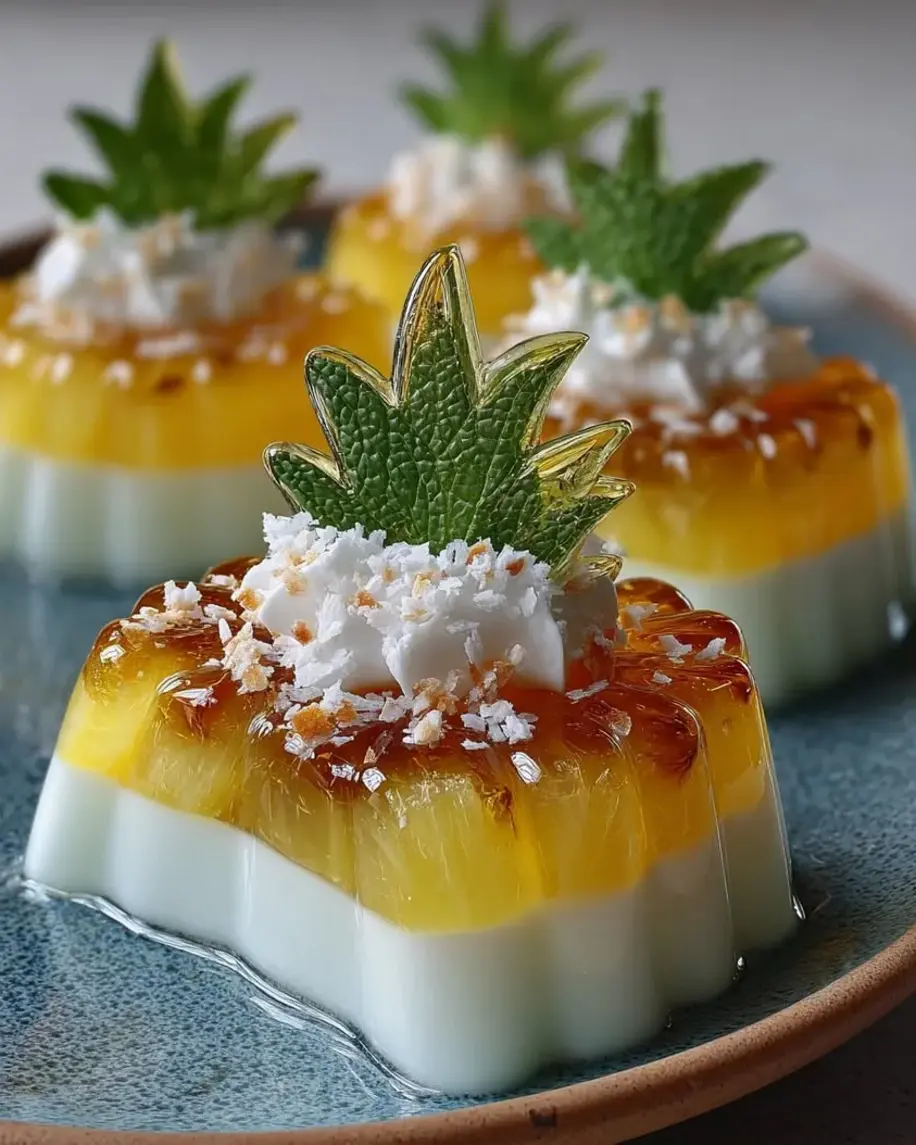
Pineapple Coconut Glass Palms – Stunning Tropical Dessert
“`html
Table of Contents
Pineapple Coconut Glass Palms with Tropical Cream Filling – A Stunning Agar-Agar Dessert
I still remember the first time I saw a glass palm – it was in a tiny patisserie window near the Marché des Enfants Rouges in Paris. My pastry chef instructor had taken our class there to study modernist techniques. The translucent, jewel-like palm fronds caught the afternoon light, and I immediately thought of the bright, sunny flavors of my childhood in Morocco – especially the pineapple and coconut we’d have during summer visits to Essaouira. This Pineapple Coconut Glass Palms recipe is my love letter to those two worlds: the technical beauty of French gelée work and the sunny, tropical soul of North African fruit desserts.
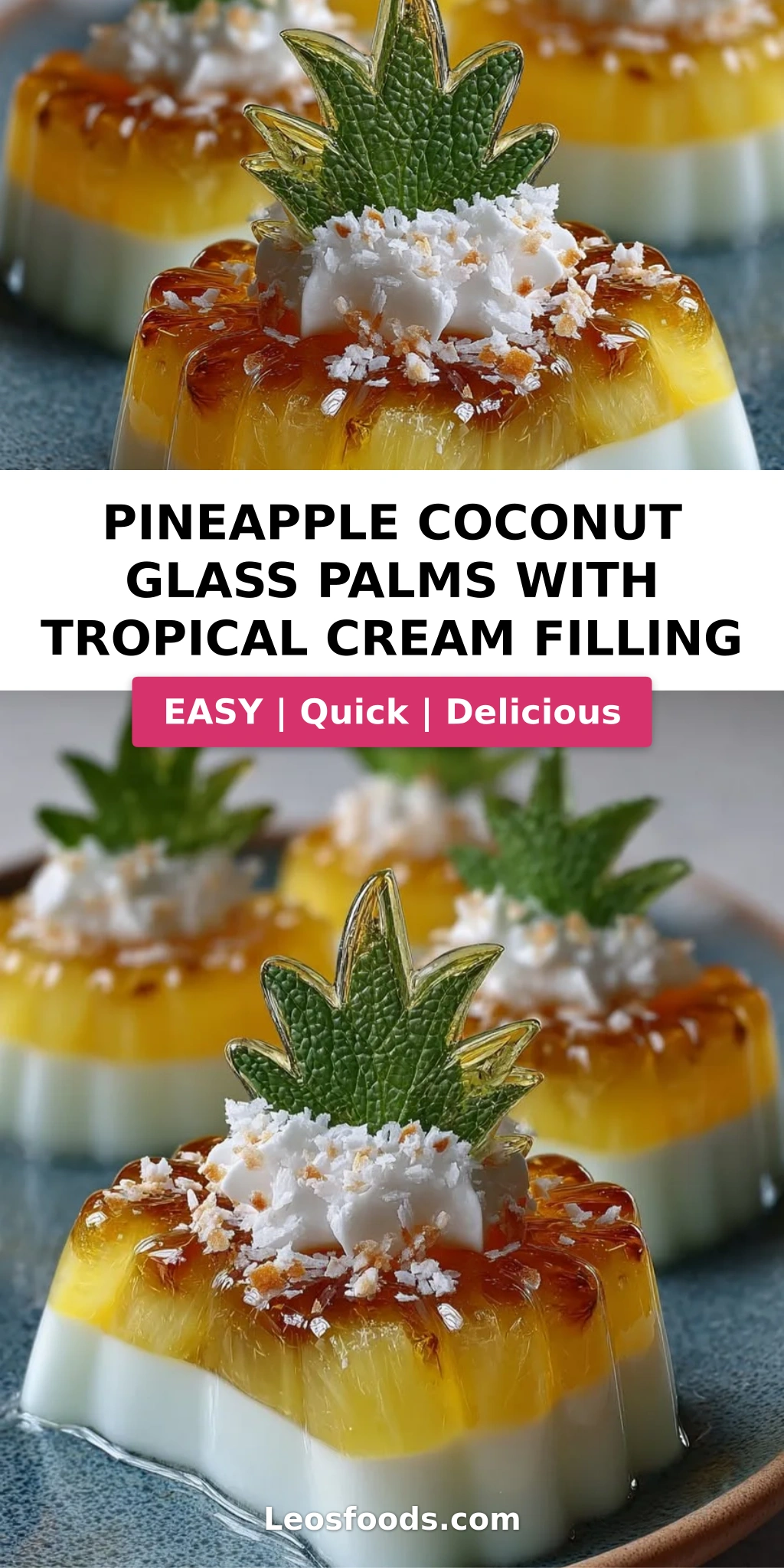
These aren’t your everyday palmiers. The base is a crystal-clear agar-agar jelly infused with pineapple juice and coconut water – no animal gelatin, so it’s naturally vegan-friendly (except for the mascarpone filling, but you can easily swap that – see variations!). When you bite through the delicate, glass-like shell, you hit a cloud of mascarpone-coconut cream with real pineapple puree. The aroma alone – sweet pineapple, creamy coconut, a whisper of lime – will transport you to a breezy beachside café. And the visual? Glossy, golden, with tiny bubbles from the coconut water catching the light like sea foam.
What makes my version stand out is the dual-texture trick I learned in Paris: a firm, sliceable jelly that still has a delicate snap, paired with a rich, tangy cream filling that stays velvety even after days in the fridge. I’ve tested this with dozens of agar-agar ratios to get that perfect “glass” clarity without the seaweed taste. One common mistake is boiling the agar too long – it can become cloudy and lose its gelling power. My pro tip? Once it simmers, give it exactly one minute then take it off the heat. Trust me – this tropical cream dessert will be the showstopper at your next dinner party.
Why This Pineapple Coconut Glass Palms Recipe Is the Best
The Flavor Secret – The secret is in the coconut water. Not coconut milk – coconut water. It’s much lighter, and when combined with pineapple juice and a touch of lime, it lets the tropical fruit flavor shine without overwhelming the delicate jelly. I source my young coconuts from the Union Square Greenmarket, but any pure, unflavored coconut water (no added sugar!) works beautifully. The mascarpone filling gets a boost from coconut cream – not the light stuff, but the thick, creamy layer from a can of full-fat coconut milk. This gives the cream a lush, indulgent mouthfeel that balances the bright jelly.
Perfected Texture – The key is the agar-agar ratio and the way you incorporate it. Agar-agar needs to be dissolved at a high enough temperature (around 200°F) and then cooled completely to set. I use 2 ½ teaspoons of agar-agar powder per 5 cups of liquid – that’s the sweet spot for a firm yet tender gel. Let the mixture simmer for exactly one minute after the sugar dissolves, then pour immediately into your silicone molds. Don’t let it cool in the pot, or it will start setting in there and you’ll get lumpy palms. Another crucial step: once the jellies are fully set (about 4–6 hours in the fridge), dip the molds in warm water for 10 seconds before unmolding – the palms slide out like glass gems.
Foolproof & Fast – Despite the fancy look, this recipe is surprisingly easy. The active prep time is only 25 minutes – the rest is fridge time. Silicone palm molds do all the shaping for you; no rolling, no fussing. And because agar-agar sets at room temperature too, you can even prepare the jelly layer a day ahead and fill just before serving. I’ve made these for a 30-person event at my NYC cooking studio, and they held up perfectly on a buffet table for three hours. Beginners love them because they look incredibly impressive with almost zero piping skills needed.
Pineapple Coconut Glass Palms Ingredients
Every Saturday, I walk through the Union Square Greenmarket looking for the ripest pineapples and the freshest young coconuts. The fragrance of a perfect pineapple – that deep, golden sweetness – tells me it’s ready. For the cream filling, I get my mascarpone from a little Italian cheese shop in Eataly. But don’t worry, your local supermarket will have everything you need. These ingredients are amazingly simple for the wow factor they deliver.
Ingredients List
- For the Pineapple Coconut Glass Palms:
- 2 cups pineapple juice (fresh or 100% juice, no added sugar)
- 1 cup coconut water (unsweetened)
- 2 cups water
- 3/4 cup sugar
- 2 1/2 tsp agar-agar powder
- 1 tbsp fresh lime juice
- 1/4 tsp salt
- For the Tropical Cream Filling:
- 8 oz mascarpone cheese, softened
- 1/2 cup coconut cream (the thick top part from a can of full-fat coconut milk)
- 1/4 cup powdered sugar
- 1 tsp vanilla extract
- 1 tbsp pineapple puree (blend fresh pineapple until smooth)
- For the Pineapple Glaze:
- 1/4 cup pineapple preserves
- 1 tbsp honey
- 1 tsp lime juice
- For Garnish (optional):
- Small pineapple cubes
- Toasted coconut flakes
- Fresh mint leaves
Ingredient Spotlight
Agar-agar – This seaweed-derived gelling agent is the secret to the “glass” effect. It’s much more forgiving than gelatin (no need to bloom, sets at room temperature) but it must be fully dissolved. Look for it in the baking aisle, Asian grocery stores, or online. The texture is firmer than gelatin, perfect for palm shapes that hold their form. Substitution: Gelatin can be used (1 tbsp gelatin dissolved in 3 tbsp cold water, then added to the warm liquid), but the texture will be softer and less translucent – and it won’t be vegan.
Mascarpone – This Italian cream cheese is richer and silkier than American cream cheese. It gives the filling a luxurious, melt-in-your-mouth quality. If you can’t find mascarpone, substitute with full-fat cream cheese (softened) plus 2 tablespoons of heavy cream to lighten it.
Coconut cream – Not to be confused with cream of coconut (which is sweetened). For this recipe, use the thick, white layer that rises to the top of a can of full-fat coconut milk. If you only have coconut milk, refrigerate the can overnight, then scoop off the solid part. The cream adds richness and a subtle coconut flavor that pairs perfectly with the pineapple.
Pineapple juice – Use fresh-squeezed for the best flavor – about 2 large pineapples will give you 2 cups. If using bottled, look for 100% pineapple juice with no added sugar or citric acid. The natural sweetness of the juice is what sets this dessert apart from overly sweet store-bought versions.
| Original Ingredient | Best Substitution | Flavor / Texture Impact |
|---|---|---|
| Agar-agar powder | Unflavored gelatin (1 tbsp gelatin + 3 tbsp water) | Softer, less clear; not vegan |
| Mascarpone | Full-fat cream cheese + 2 tbsp heavy cream | Slightly tangier, still creamy |
| Coconut cream | Full-fat coconut milk (chilled, scoop top layer) | Same if using the solid part; more liquid if unseparated |
| Pineapple juice | Mango juice or passion fruit juice | Different tropical flavor; same acidity works well |
How to Make Pineapple Coconut Glass Palms – Step-by-Step
Don’t be intimidated by the term “glass palms” – I promise you, it’s a straightforward process. The silicone molds do most of the heavy lifting. Just follow each step, and you’ll have a tray of gorgeous, translucent palms ready to fill and glaze.
Step 1: Prepare the Jelly Base
In a medium saucepan, combine 2 cups pineapple juice, 1 cup coconut water, 2 cups water, ¾ cup sugar, 2 ½ teaspoons agar-agar powder, 1 tablespoon lime juice, and ¼ teaspoon salt. Whisk thoroughly to dissolve the agar – it tends to clump if you just drop it in. Place the pan over medium-high heat and bring to a gentle simmer, whisking frequently. Once it starts simmering, let it bubble for exactly 1 minute. The liquid should be clear and free of any undissolved grains.
⚠️ Common Mistake to Avoid: Boiling too long. Agar-agar starts to lose gelling power after 2–3 minutes of boiling. Keep a timer handy and take it off the heat the moment 60 seconds are up. Also, don’t let the mixture boil vigorously – a gentle simmer is all you need.
Step 2: Pour into Molds
Carefully pour the hot liquid into a large measuring cup with a spout – this makes pouring into the molds much easier and reduces spillage. Place your silicone palm molds on a rimmed baking sheet (for stability). Pour the liquid into each palm cavity until it’s just full to the top. If you have any leftover, you can pour it into a small dish to make a tester square. Gently tap the baking sheet on the counter to release any air bubbles. Transfer the baking sheet to the refrigerator and let the palms set for at least 4–6 hours, or overnight for best results.
💡 Stella’s Pro Tip: For crystal-clear palms, strain the liquid through a fine-mesh sieve before pouring. This removes any stray undissolved agar granules or lime pulp that could cloud the glass.
Step 3: Make the Cream Filling
While the palms set, prepare the filling. In a large mixing bowl, combine 8 oz softened mascarpone, ½ cup coconut cream, ¼ cup powdered sugar, 1 teaspoon vanilla extract, and 1 tablespoon pineapple puree. Using an electric hand mixer (or a stand mixer with paddle attachment), whip on medium speed until smooth, light, and fluffy – about 2 minutes. Don’t overmix or the mascarpone can become grainy. Cover the bowl with plastic wrap and refrigerate for at least 30 minutes. This firms it up, making it easier to pipe later.
⚠️ Common Mistake to Avoid: Using cold mascarpone straight from the fridge. It will seize up and you’ll get lumps. Let it sit at room temperature for 30 minutes before whipping.
Step 4: Unmold and Create Cavities
Once the palm jellies are fully set (they should pull away from the mold easily and feel firm to the touch), fill a small bowl with warm tap water. Dip the bottom of each mold into the warm water for 10–15 seconds – this loosens the jelly without melting it. Gently peel the silicone away from the jelly; it should release cleanly. Place each glass palm on a clean work surface. Using a small melon baller or the back of a ½ teaspoon measure, carefully scoop out a cavity in the center of each palm, about ½ inch deep and ½ inch wide. Don’t go all the way through; leave a bottom layer of jelly intact.
💡 Stella’s Pro Tip: If the cavity edges look rough, use a small offset spatula or a paring knife to gently smooth them. Also save the jelly scraps – you can eat them as a chef’s treat!
Step 5: Fill with Cream
Transfer the chilled mascarpone filling to a piping bag fitted with a small star tip (or a plastic zip-top bag with the corner snipped off). Pipe the cream into each cavity, mounding it slightly above the surface. Use the back of a small spoon or a palette knife to smooth the top flush with the palm surface. If any cream gets on the outside of the palm, wipe gently with a damp paper towel – you want the clear jelly edges to remain pristine.
⚠️ Common Mistake to Avoid: Overfilling the cavity. The cream will spread when you glaze. Fill just to the brim, then level off. A little overflow is fine, but too much will hide the beautiful jelly.
Step 6: Make the Glaze
In a small saucepan, combine ¼ cup pineapple preserves, 1 tablespoon honey, and 1 teaspoon lime juice. Warm over low heat, stirring constantly, until the preserves melt and the mixture is smooth and glossy – about 2 minutes. Remove from heat and let cool for 5 minutes. The glaze should be warm but not hot – if it’s too hot, it will melt the cream filling. Brush a thin layer of glaze over each filled palm using a pastry brush. The glaze will give the palms a beautiful, sparkling finish like dewdrops on a tropical leaf.
💡 Stella’s Pro Tip: For an extra glossy shine, add 1 teaspoon of water to the glaze after removing from heat. This thins it slightly for easier brushing. If the glaze cools and thickens, reheat gently.
Step 7: Garnish and Chill
While the glaze is still tacky, sprinkle each palm with toasted coconut flakes (toast ½ cup coconut flakes in a dry skillet over medium heat for 3–4 minutes until golden and fragrant). Top each with a small pineapple cube and a tiny fresh mint leaf if desired. Transfer the finished palms to a parchment-lined baking sheet and refrigerate for at least 30 minutes before serving. This sets the glaze and firms the filling. Serve thoroughly chilled – they taste best cold, like a tropical fruit gelato.
| Step | Action | Duration | Key Visual Cue |
|---|---|---|---|
| 1 | Prepare jelly base | 5 min | Liquid becomes clear, sugar dissolved |
| 2 | Pour into molds | 5 min | Each cavity filled to top |
| 3 | Make cream filling | 5 min | Fluffy, smooth, no lumps |
| 4 | Unmold & cavity | 10 min | Smooth, clear palms with ½” hole |
| 5 | Fill with cream | 5 min | Cream flush with surface |
| 6 | Glaze & garnish | 10 min | Glossy shine, toppings in place |
| 7 | Chill before serving | 30 min+ | Glaze set, filling firm |
Serving & Presentation
These Pineapple Coconut Glass Palms are meant to be a conversation piece. Arrange them on a white platter or a mirrored tray to really show off their transparency. I like to echo the tropical theme: scatter a few extra toasted coconut flakes and tiny mint leaves around the plate as if they’ve blown in from a beach. For a party, you can place each palm in a small paper bonbon cup – that way guests can pick them up easily without smudging the glaze.
They pair beautifully with a light, floral dessert wine like Muscat de Beaumes-de-Venise or a cold glass of coconut water with a splash of rum for an adult twist. For a non-alcoholic option, serve with sparkling water and a lime wedge. Because of their delicate nature, I recommend serving them chilled, directly from the refrigerator, and eating them within two hours of plating – they can weep a little if left out too long in a warm room.
During my summer cooking classes at the Institute of Culinary Education in NYC, I always serve these with a side of fresh tropical fruit salad (mango, kiwi, papaya) to complete the island vibe. My students from around the world always light up when they see the finished dish – it’s that kind of recipe.
| Pairing Type | Suggestions | Why It Works |
|---|---|---|
| Side Dish | Tropical fruit salad, grilled pineapple slices | Reinforces the island theme; adds freshness |
| Sauce / Dip | Passion fruit coulis, lime-rum caramel sauce | Adds tangy or boozy contrast to sweet jelly |
| Beverage | Muscat dessert wine, coconut mojito mocktail | Enhances tropical notes without overwhelming |
| Garnish | Passion fruit seeds, edible orchid petals, toasted sesame | Adds texture and visual drama |
Make-Ahead, Storage & Reheating
Living in New York City, I know the value of making dessert ahead. These glass palms are actually better when made in stages. You can prepare and set the jelly palms up to 2 days in advance – keep them in their molds, tightly covered with plastic wrap, in the refrigerator. The cream filling can be made a day ahead and stored in a piping bag or airtight container. Only fill and glaze the palms on the day you plan to serve them, because the cream can soften the jelly edges if left too long.
| Method | Container | Duration | Reheating Tip |
|---|---|---|---|
| Refrigerator (filled) | Airtight container, single layer | Up to 24 hours | Serve directly from fridge; no reheating needed |
| Refrigerator (unfilled palms) | In molds, covered with plastic | Up to 3 days | Dip molds in warm water to unmold as usual |
| Freezer (whole, filled) | Individually wrapped, then freezer bag | Up to 1 month | Thaw in refrigerator 4 hours; glaze may lose shine – rebrush with fresh glaze |
If you freeze the assembled palms, I recommend brushing a fresh layer of glaze after thawing to restore the glossy finish. The agar-agar jelly itself freezes well – it’s the cream that can sometimes separate. But I’ve tested it, and as long as you thaw slowly in the fridge, it holds up remarkably well. For the creamiest texture, never microwave these – just let them come back to temperature gently in the fridge overnight.
Variations & Easy Swaps
One of my favorite things about this recipe is how adaptable it is. Whether you need a dairy-free version, want to play with different tropical flavors, or just feel like making a bigger batch for a crowd, these variations have you covered.
| Variation | Key Change | Best For | Difficulty Impact |
|---|---|---|---|
| Vegan & Dairy-Free | Replace mascarpone with coconut cream + cashew cream | Dairy-free, vegan, lighter | Medium – needs cashew soak |
| Mango Passion Twist | Substitute pineapple juice with mango juice; passion fruit pulp in filling | Brighter flavor, colorful party platter | Easy – same method |
| Layer Cake Style | Set jelly in a flat pan, cut into squares, tube filling into indentation | No molds needed, easier shaping | Medium – careful cutting |
Vegan & Dairy-Free Variation
For a fully plant-based version, replace the mascarpone with a combination of ½ cup coconut cream (the thick part from a can of full-fat coconut milk) and ½ cup raw cashew cream (1 cup soaked cashews blended with 3 tbsp water and 1 tbsp lime juice). Whip together with ¼ cup powdered sugar and 1 tsp vanilla. The result is incredibly creamy, tangy, and completely dairy-free. The agar-agar jelly is already vegan, so this is a great option for those with dairy sensitivities. I serve this version at my cooking classes during Veganuary and everyone raves about it.
Mango Passion Twist
Use mango juice instead of pineapple juice in the jelly (still add the lime juice for balance). For the filling, fold in 2 tablespoons of passion fruit pulp (seeds and all) into the mascarpone base. The passion fruit adds a tangy pop that cuts through the sweetness. This variation is a favorite in my summer classes – it looks stunning when you reveal the yellow gel with the black passion fruit seeds suspended in the creamy white center.
Layer Cake Style (No Molds)
Don’t have palm-shaped molds? No problem. Pour the jelly mixture into an 8×8-inch baking dish lined with plastic wrap (helps for lifting). Let set, then cut into 2-inch squares. Use a small round cookie cutter or the end of a piping tip to make a shallow indent in the center of each square. Fill with cream and glaze. You get a lovely modern twist on a classic jelly dessert – and it’s easier to transport for potlucks. I often do this when I’m bringing dessert to a friend’s place in Brooklyn.
What is a good substitute for glass noodles in pineapple coconut glass palms?
There are actually no glass noodles in this recipe – the “glass” refers to the clear, translucent jelly formed by the agar-agar. If you were looking for a noodle-like texture, you could use thin strips of fruit leather or dehydrated pineapple slices. But if you really want noodles, try using very thin strips of the agar-agar jelly itself: simply pour the jelly mixture into a flat pan, let set, then cut into long, thin ribbons. Serve the cream filling on top like a sauce. That’s a whole new dessert!
How do you make the tropical cream filling for this recipe thick and creamy?
The key to a thick, luscious filling is using room-temperature mascarpone and full-fat coconut cream. Whip them together gently – just until smooth and fluffy. Overwhipping can break the mascarpone and make the filling runny. Also, chill the filling for at least 30 minutes before piping; this firms it up and makes it easier to work with. If the filling is still too soft after chilling, fold in 1–2 tablespoons of sifted powdered sugar, which acts as a stabilizer.
Can I use canned coconut milk instead of fresh for the filling in pineapple coconut glass palms?
Absolutely – and it’s actually what I recommend! Use a full-fat canned coconut milk (unsweetened). Refrigerate the can overnight, then open it and scoop off the thick, solid coconut cream that has separated and risen to the top. That’s your coconut cream. The watery liquid underneath can be used in smoothies or curries. The canned version is more consistent than fresh coconut milk and gives a richer, creamier result. Just avoid “light” coconut milk – it won’t have enough fat to stabilize the filling.
How far in advance can I assemble pineapple coconut glass palms with tropical cream filling?
You can fully assemble and glaze the palms up to 24 hours in advance. Store them in an airtight container in the refrigerator, layering them with parchment paper if you need to stack them. After about 36 hours, the cream filling may start to soften the jelly edges and the glaze can become cloudy. For best presentation, I recommend assembling them no more than 12 hours before serving – that ensures the glass palms stay crisp and the glaze is glossy.
Can I use gelatin instead of agar-agar for the glass palms?
Yes, you can substitute gelatin, but the results will be different. Use 1 tablespoon of unflavored gelatin powder dissolved in 3 tablespoons of cold water (let bloom for 5 minutes), then add it to the warm pineapple mixture after removing from heat. The texture will be softer and more bouncy – more like a traditional Jell-O – and the clarity will be slightly lower. Also, gelatin is not vegan. If you do use gelatin, reduce the setting time to about 2 hours.
Why did my agar-agar palms not set properly?
The most common reason is not dissolving the agar-agar fully. Make sure you whisk the powder into cold liquid first, then bring to a simmer while stirring continuously. Let it simmer for exactly one minute – not less, not more. Another issue could be adding acidic ingredients like lime juice or pineapple juice that are too acidic – agar-agar requires a certain pH to set properly. The lime juice in this recipe is balanced by the sugar and salt. If your palm mixture didn’t set, you can reheat it, add ½ teaspoon more agar-agar, dissolve thoroughly, and re-pour.
Can I use fresh pineapple in the jelly instead of juice?
Fresh pineapple contains an enzyme called bromelain that breaks down gelatin – and even though agar-agar is not affected by bromelain, fresh pineapple pulp can still make the jelly cloudy and slightly grainy. For the clearest glass effect, stick to 100% pure pineapple juice (freshly squeezed and strained, or store-bought). If you want to add real fruit pieces, you can place them in the mold before pouring the hot liquid – they’ll be suspended in the jelly.
What other tropical flavors can I use in the cream filling?
The possibilities are endless! Try folding in mashed ripe banana, passion fruit pulp, or a splash of coconut rum for an adult twist. For a mango filling, replace the pineapple puree with mango puree and add a pinch of cardamom. For a more exotic flavor, fold in 1 tablespoon of soursop puree (available frozen in many Latin markets). Just make sure any fruit puree is strained to remove fibers, and adjust the powdered sugar amount – the filling should be thick enough to hold its shape when piped.
Can I make these without palm-shaped silicone molds?
Yes! Use any small silicone mold – mini star, flower, seashell, or even a simple rectangle. If you don’t have silicone molds, you can pour the jelly into a rimmed baking sheet (about ¼-inch thick), let set, then cut out shapes with cookie cutters. Use a small melon baller to make the cavity in the center. The presentation will be different but equally delicious. You can also use ice cube trays for small, bite-sized “glass gems”.
How do I store leftover Pineapple Coconut Glass Palms?
Store any leftovers in an airtight container in the refrigerator for up to 2 days. Place them in a single layer, not overlapping, to prevent the creamy filling from smudging the clear jelly. The glaze may become slightly tacky after a day, but the flavor remains excellent. To restore some gloss, you can brush a very thin layer of simple syrup or warmed pineapple preserves over them just before serving. Do not freeze filled palms for more than a few weeks – the cream can separate upon thawing.
Share Your Version!
I’d love to see how your Pineapple Coconut Glass Palms turn out! Did you use the classic version or try one of the variations? Did you create a stunning tropical platter for a party? Snap a photo and share it on Instagram or Pinterest – tag @leosfoods so I can see your beautiful creations. And if you have any questions about the recipe, drop them in the comments below. I read every single one and answer personally. Your feedback helps me improve and inspires new recipes!
From my NYC kitchen to yours — I hope this recipe brings as much warmth to your table as it does to mine. — Stella 🧡
Love This Recipe? Save It to Pinterest!
If you enjoyed this Pineapple Coconut Glass Palms recipe, don’t let it get lost in your browser tabs! 😄 Pin it now so you can find it again anytime — and explore hundreds more tried-and-tested recipes waiting for you on my Pinterest boards.
👉 Follow Stella on Pinterest @stellarecipeblog
📌 Pin this recipe · 🔁 Re-pin your favorites · 💬 Tag me when you make it — I love seeing your creations!
⭐ Loved this recipe? Rate it below and leave a comment!
What’s your favorite tropical dessert? I’d love to hear your twist on these glass palms – share your ideas in the comments!
“`
Print
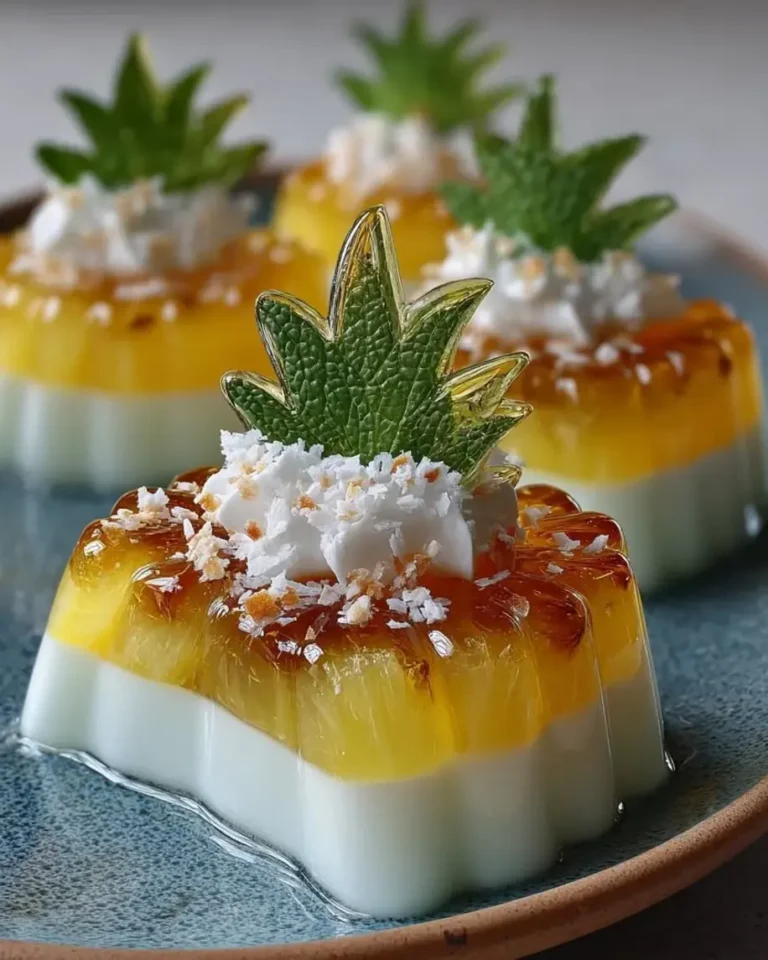
Pineapple Coconut Glass Palms with Tropical Cream Filling
- Yield: 6 1x
Ingredients
- For the Pineapple Coconut Glass Palms:
- 2 cups pineapple juice
- 1 cup coconut water
- 2 cups water
- 3/4 cup sugar
- 2 1/2 tsp agar-agar powder
- 1 tbsp lime juice
- 1/4 tsp salt
- For the Tropical Cream Filling:
- 8 oz mascarpone cheese
- 1/2 cup coconut cream
- 1/4 cup powdered sugar
- 1 tsp vanilla extract
- 1 tbsp pineapple puree
- For the Pineapple Glaze:
- 1/4 cup pineapple preserves
- 1 tbsp honey
- 1 tsp lime juice
- For Garnish (optional):
- Small pineapple cubes
- Toasted coconut flakes
- Fresh mint leaves
Instructions
- Combine pineapple juice, coconut water, water, sugar, agar-agar powder, lime juice, and salt in a saucepan. Heat while stirring until fully dissolved and bring to a gentle simmer.
- Pour the mixture into palm-shaped silicone molds and refrigerate until fully set and translucent.
- Whip mascarpone cheese, coconut cream, powdered sugar, vanilla extract, and pineapple puree until smooth, light, and fluffy. Chill until ready to use.
- Carefully unmold the glass palms and create a small cavity in the center of each piece.
- Pipe the tropical cream filling into the center, creating a rich and creamy core.
- Warm pineapple preserves, honey, and lime juice until smooth and glossy. Allow to cool slightly.
- Brush or drizzle the glaze over the glass palms for a sparkling tropical finish.
- Garnish with pineapple cubes, toasted coconut flakes, and fresh mint leaves. Serve thoroughly chilled.
Nutrition
- Calories: 270
- Sugar: 30g
- Fat: 14g
- Carbohydrates: 35g
- Protein: 3g
Tried This Recipe? Leave a Comment!
Did you make this recipe? I’d love to hear how it turned out! Please leave a comment and a rating below. Your feedback helps other home cooks and supports cheerychop.com!
For more delicious inspiration, follow me on Pinterest!