Fall-Apart Red Wine Braised Lamb Shanks with Parsnip Mash
“`html
Table of Contents
Australian Red Wine Braised Lamb Shanks with Parsnip Mash – A Fall-Apart Winter Dinner
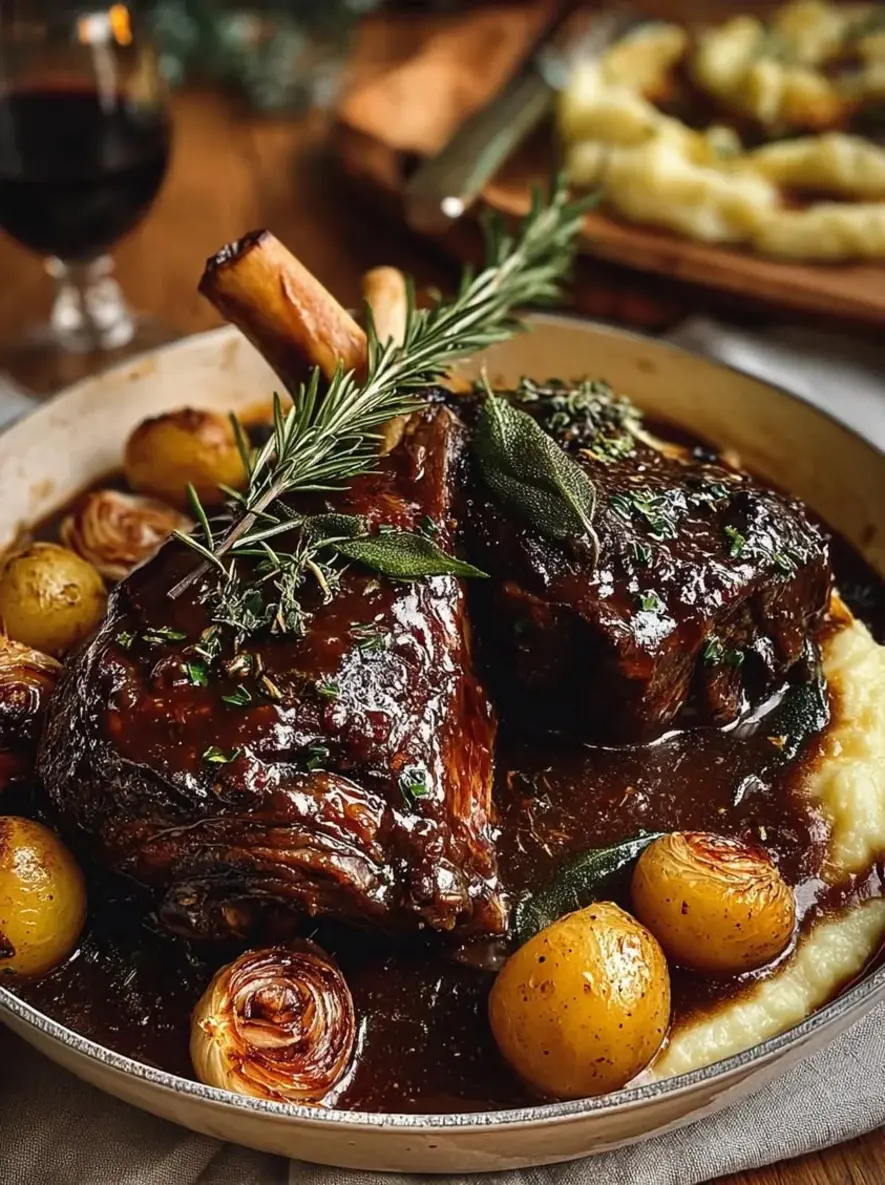
I still remember the first time I made these red wine braised lamb shanks for a chilly Sunday supper in my little NYC apartment. The scent of slow-braising lamb, Australian Shiraz, and native pepperberry filled every corner — and my husband walked in saying, “This smells like a fancy restaurant in Melbourne!” That’s the magic of this dish. These red wine braised lamb shanks are deeply tender, rich with umami, and finished with a creamy parsnip mash that adds a subtle sweetness. The native pepperberry — a spice I fell in love with during my travels Down Under — gives everything a warm, slightly fruity kick that black pepper just can’t match. This is an Australian lamb shanks recipe that feels both rustic and elegant.
Imagine pulling a heavy Dutch oven from the oven, lifting the lid, and seeing lamb shanks so tender they practically fall off the bone. The braising liquid has transformed into a glossy, wine-dark sauce with hints of rosemary, thyme, and tomato. The parsnip mash is silky, buttery, and whisper-sweet — a beautiful contrast to the savory lamb. Every spoonful delivers layers of flavor: the bold wine, the earthy vegetables, the aromatic herbs, and that subtle pop of pepperberry. It’s the kind of meal that makes you slow down and savor each bite. One of my testers said it reminded her of a French daube, but with a distinctly Australian accent.
Being a professionally trained cook from the French culinary tradition, I’ve braised my share of meats. What sets this version apart is the combination of technique and a few unexpected ingredients. I sear the shanks properly (that’s non-negotiable), build the braising liquid with care, and let the oven do the rest. The parsnip mash is inspired by the root-vegetable purées we made in Paris — but I’ve simplified it for home cooks. My goal with this easy lamb shanks dinner is to give you a restaurant-quality result with straightforward steps. No complicated techniques, just honest cooking. And trust me: your kitchen is about to smell incredible.
Why This Red Wine Braised Lamb Shanks Recipe Is the Best
The Flavor Secret. The unique angle here is the Australian native pepperberry, which I source from a specialty spice shop near Union Square. It has a fruity, slightly piney heat that elevates the entire dish. Combined with a full-bodied Australian red wine — think Shiraz or Cabernet Sauvignon — the braising liquid becomes layers of complexity. My mother in Morocco always taught me that a slow-cooked dish is only as good as the love you put into building the flavors. This recipe honors that philosophy.
Perfected Texture. Braising at 325°F for 2 to 2½ hours gives the collagen in the lamb shanks time to break down into velvety richness, while the meat stays moist and fork-tender. The parsnip mash is whipped with butter and cream until it’s luxuriously smooth — a technique I refined during my pastry training in Paris. The contrast between the tender lamb and the creamy mash is pure comfort.
Foolproof & Fast to Prep. Despite the long cook time, the active prep is only about 20 minutes. Sear, sauté, deglaze, and into the oven it goes. This is the perfect weekend meal that fills your home with aroma while you relax. Even if you’re new to braising, the method is forgiving. The recipe includes clear visual cues so you know exactly when each step is done.
Red Wine Braised Lamb Shanks Ingredients
I buy my lamb shanks from the butcher at the Union Square Greenmarket — they pasture-raise their lambs, and the flavor is unmatched. The parsnips I grab from any good grocery store; look for firm, medium-sized ones without blemishes. The pepperberry I order online from a Melbourne-based spice company, but I’ll give you a perfect substitute if you can’t find it.
Ingredients List
For the Lamb Shanks:
- 4 lamb shanks
- 2 tablespoons olive oil
- 1 large onion, diced
- 2 carrots, diced
- 2 celery stalks, diced
- 6 garlic cloves, crushed
- 2 cups dry red wine (Australian Shiraz or Cabernet Sauvignon recommended)
- 2 cups beef stock
- 2 tablespoons tomato paste
- 2 sprigs fresh rosemary
- 4 sprigs fresh thyme
- 2 bay leaves
- 1 teaspoon native Australian pepperberry (or cracked black pepper)
- Salt to taste
For the Parsnip Mash:
- 1½ lbs parsnips, peeled and chopped
- 2 tablespoons butter
- ¼ cup heavy cream
- Salt and white pepper to taste
Ingredient Spotlight
Native Australian Pepperberry: This spice is the fruit of the Tasmannia lanceolata plant. It has a warm, fruity heat with notes of juniper and a hint of sweetness. I use it whole or coarsely ground. If you can’t find it, substitute with 1 teaspoon of cracked black pepper plus a pinch of allspice — it won’t be exactly the same, but it will still be delicious.
Lamb Shanks: Look for shanks that are meaty and have a good amount of marbling. The bone should be intact — it adds flavor to the braising liquid. In US grocery stores, lamb shanks are often sold individually or in packs of two. You want about 12–14 oz each for the perfect serving size.
Australian Red Wine: A full-bodied Shiraz is my top choice. It has enough tannin and fruit to stand up to the rich lamb. If you don’t have an Australian wine, a California Zinfandel or a Rhône-style blend work beautifully. Avoid wines that are too oaky or jammy — you want structure, not sweetness.
Parsnips: Look for parsnips that are firm, creamy-white, and not too large (large ones can be woody). The sweetness of parsnips mellows when cooked, making them a perfect partner for the bold lamb. If parsnips aren’t in season, you can swap in celeriac, turnips, or even cauliflower for a different but still delicious mash.
| Original Ingredient | Best Substitution | Flavor / Texture Impact |
|---|---|---|
| Native Australian pepperberry | Cracked black pepper + pinch allspice | Less fruity, more straightforward heat |
| Australian Shiraz | California Zinfandel or Rhône blend | Slightly different fruit profile, still full-bodied |
| Parsnips | Celeriac or cauliflower | Milder sweetness; less creamy if cauliflower (add more butter) |
| Beef stock | Lamb or chicken stock | Lamb stock enriches the flavor; chicken is lighter |
How to Make Red Wine Braised Lamb Shanks — Step-by-Step
Trust me, the steps are simple. I’ll walk you through each one with visual cues and pro tips so your lamb turns out perfect every time.
Step 1: Preheat and Sear the Lamb Shanks
Preheat your oven to 325°F (160°C). Season the lamb shanks generously with salt and pepper. Heat the olive oil in a large Dutch oven over medium-high heat until shimmering. Sear the shanks on all sides until deeply browned, about 3–4 minutes per side. Work in batches if needed — don’t crowd the pot. Remove the shanks and set aside on a plate.
💡 Stella’s Pro Tip: Pat the lamb shanks dry with paper towels before seasoning. Moisture is the enemy of a good sear. A deep brown crust = big flavor in the final sauce.
Step 2: Sauté the Vegetables
In the same pot, add the diced onion, carrots, and celery. Reduce heat to medium and sauté for 5 minutes, stirring occasionally, until the vegetables have softened and the onion is translucent. Add the crushed garlic and cook for 1 minute more, until fragrant.
⚠️ Common Mistake to Avoid: Don’t rush the vegetables. If they brown too quickly, reduce the heat. You want them tender, not burnt. Burnt vegetables will make the braising liquid bitter.
Step 3: Deglaze with Red Wine
Pour in the 2 cups of red wine, scraping up any browned bits from the bottom of the pot with a wooden spoon. This is where so much flavor lives! Bring the wine to a simmer and let it cook for 2–3 minutes, reducing slightly and allowing the alcohol to cook off.
💡 Stella’s Pro Tip: Use a wine you’d happily drink. The flavor concentrates during braising, so a good-quality wine makes a noticeable difference. I often use a bottle of Penfolds or a Barossa Valley Shiraz.
Step 4: Build the Braising Liquid
Stir in the tomato paste, beef stock, rosemary, thyme, bay leaves, and pepperberry (or cracked black pepper). Nestle the lamb shanks back into the pot, arranging them so they’re partially submerged in the liquid. Bring the liquid to a gentle simmer.
⚠️ Common Mistake to Avoid: Don’t boil the liquid — a gentle simmer is what you want. Boiling can make the lamb tough and the sauce muddy. Small bubbles rising to the surface is the perfect pace.
Step 5: Braise in the Oven
Cover the Dutch oven with its lid and transfer to the preheated oven. Braise for 2 to 2½ hours, until the lamb is fork-tender and practically falling off the bone. Check at the 2-hour mark — the meat should pull away easily with a fork. If not, give it another 20–30 minutes.
💡 Stella’s Pro Tip: For an even richer sauce, remove the lid for the last 30 minutes of braising. This allows the liquid to reduce and concentrate, giving you a deeper color and more intense flavor.
Step 6: Cook the Parsnips
While the lamb braises, place the chopped parsnips in a large pot and cover with salted water. Bring to a boil and cook until very tender, about 15–20 minutes. A knife should slide through easily with no resistance. Drain well in a colander.
⚠️ Common Mistake to Avoid: Don’t undercook the parsnips. Lumpy mash is not what we’re after. Test with a knife — if it meets any resistance, cook 3–5 minutes more. For the silkiest texture, you can also steam the parsnips instead of boiling.
Step 7: Make the Parsnip Mash
Return the drained parsnips to the pot. Add the butter and heavy cream. Mash with a potato masher or pass through a ricer for an extra-smooth texture. Season with salt and white pepper to taste. Keep warm over very low heat, stirring occasionally, until ready to serve.
💡 Stella’s Pro Tip: For the smoothest mash, use a food mill or ricer. If you’re using a masher, press firmly and fold in the butter and cream gradually. Taste and adjust salt — parsnips love salt, but white pepper adds a gentle heat without visible specks.
Step 8: Serve
Remove the lamb shanks from the oven. Discard the herb sprigs and bay leaves. Taste the braising liquid and adjust seasoning if needed. Spoon a generous portion of parsnip mash onto each plate or bowl, top with a lamb shank, and ladle the braising liquid over the top. Garnish with fresh herbs if desired.
⚠️ Common Mistake to Avoid: Don’t skip skimming the fat from the braising liquid if it looks greasy. Use a spoon to skim off the excess fat, or use a gravy separator. You want the sauce to be rich, not oily.
| Step | Action | Duration | Key Visual Cue |
|---|---|---|---|
| 1 | Sear lamb shanks | 12–16 min total | Deep amber-brown crust |
| 2 | Sauté vegetables | 5 min | Onion translucent, carrots softened |
| 3 | Deglaze with wine | 2–3 min | Brown bits dissolved, liquid slightly reduced |
| 4 | Build braising liquid | 3 min | Liquid simmering gently |
| 5 | Braise in oven | 2–2½ hrs | Meat fork-tender, pulling from bone |
| 6 | Cook parsnips | 15–20 min | Knife slides through easily |
| 7 | Mash parsnips | 5 min | Smooth, creamy, no lumps |
| 8 | Serve | 5 min | Lamb on mash, sauce spooned over |
Serving & Presentation
Plating these red wine braised lamb shanks is a moment to enjoy. Spoon a generous bed of parsnip mash onto each plate — use a wide, shallow bowl if you have one, as it holds the sauce beautifully. Place a lamb shank in the center, leaning slightly against the mash. Ladle the braising liquid over and around the meat, letting it pool at the base. The sauce is rich and glossy, so a little goes a long way.
For garnish, I love a sprinkle of fresh parsley or thyme leaves, and sometimes a few whole pepperberries if I’m feeling fancy. A pinch of flaky sea salt just before serving adds a lovely crunch. In my NYC kitchen, I often serve this with a side of roasted green beans or a simple arugula salad with lemon vinaigrette — the peppery greens cut through the richness beautifully.
This dish reminds me of the slow-cooked tagines my mother would make in Morocco, but with a French-trained finesse and an Australian twist. It’s the kind of meal that deserves a good bottle of red on the table and great company around it. Perfect for a Sunday supper, a holiday gathering, or any night when you need a hug in a bowl.
| Pairing Type | Suggestions | Why It Works |
|---|---|---|
| Side Dish | Roasted green beans, arugula salad, crusty bread | Brightness and crunch balance the rich lamb and mash |
| Sauce / Dip | Extra braising liquid, mint-yogurt sauce | Braising liquid is essential; mint cuts the richness |
| Beverage | Australian Shiraz, Grenache, dark beer | Full-bodied red matches the bold lamb flavors |
| Garnish | Parsley, thyme leaves, flaky sea salt, whole pepperberries | Adds color, fragrance, and a touch of elegance |
Make-Ahead, Storage & Reheating
This recipe is a dream for meal prep. In my busy NYC life, I often make the lamb shanks a day or two ahead — the flavors actually deepen and meld overnight. The parsnip mash is best made fresh, but you can prep the parsnips a day ahead and store them in water in the fridge.
| Method | Container | Duration | Reheating Tip |
|---|---|---|---|
| Refrigerator | Airtight container, lamb in braising liquid | 3–4 days | Reheat gently in a covered pot on stovetop over low heat, adding a splash of stock or water if needed |
| Freezer | Freezer-safe container or bag, lamb in liquid | 3 months | Thaw overnight in fridge, then reheat in a 300°F oven for 20–25 min |
| Make-Ahead | Braised lamb stored in liquid, mash stored separately | 2 days in advance | Reheat lamb on stovetop; make fresh mash just before serving |
To reheat, I recommend using the oven or stovetop rather than the microwave. The microwave can make the lamb tough and the sauce greasy. Place the lamb and braising liquid in a covered Dutch oven at 300°F for about 20 minutes, or simmer gently on the stovetop over low heat. For the mash, reheat in a saucepan with a splash of cream or milk, stirring constantly until warmed through.
One of my favorite tricks: if the braising liquid has solidified in the fridge, I scrape off the fat cap before reheating. That fat is liquid gold for roasting potatoes, but you don’t want it in the sauce. The defatted sauce will be silky and intense — even better than the day before.
Variations & Easy Swaps
| Variation | Key Change | Best For | Difficulty Impact |
|---|---|---|---|
| Moroccan Spiced Lamb Shanks | Add 1 tsp cumin, 1 tsp coriander, ½ tsp cinnamon to the braise | North African flavors, reminiscent of my mother’s kitchen | Easy — just add spices with the tomato paste |
| Dairy-Free Parsnip Mash | Replace butter with olive oil and cream with coconut milk | Lactose intolerance or dairy-free diets | Easy — slight coconut flavor works well with parsnips |
| Instant Pot Version | Sear using Sauté mode, then pressure cook on High for 45 min | Faster weeknight dinner | Medium — requires adapting liquid amounts |
Moroccan Spiced Lamb Shanks
This variation is close to my heart. Growing up in Morocco, my mother would braise lamb with cumin, coriander, and cinnamon — warm spices that feel like home. Add 1 teaspoon each of ground cumin and coriander, plus ½ teaspoon of cinnamon, along with the tomato paste. The spices bloom in the oil and infuse the braising liquid with an aromatic depth that pairs beautifully with the red wine. Serve with the same parsnip mash or swap in couscous for a more traditional North African touch.
Dairy-Free Parsnip Mash
If you’re avoiding dairy, don’t worry — you can still enjoy a creamy mash. Replace the butter with a good-quality extra-virgin olive oil (use 3 tablespoons for richness) and swap the heavy cream for full-fat coconut milk. The coconut adds a subtle sweetness that complements the parsnips. For an even silkier texture, blend the parsnips with an immersion blender after adding the oil and coconut milk. I tested this version for a friend with lactose intolerance, and she said it was the best mash she’d ever had.
Instant Pot Version
For a faster version, use an Instant Pot. Use the Sauté mode to sear the lamb and cook the vegetables as directed. Add the wine, stock, tomato paste, herbs, and pepperberry. Pressure cook on High for 45 minutes, then let the pressure release naturally for 15 minutes. The lamb will be fall-apart tender. Reduce the braising liquid on Sauté mode for 5 minutes to thicken. The parsnip mash can be made on the stovetop while the Instant Pot runs. This version cuts the total time to about 1 hour 45 minutes — perfect for a weeknight.
Frequently Asked Questions
What is the best type of red wine to use for braising lamb shanks?
A full-bodied red wine is your best choice. I recommend an Australian Shiraz or Cabernet Sauvignon for this Australian lamb shanks recipe. These wines have enough tannin and fruit depth to stand up to the richness of the lamb. If you don’t have an Australian wine, a California Zinfandel, a Rhône-style blend, or a Malbec will also work beautifully. Avoid wines that are too light (like Pinot Noir) or too sweet (like port-style wines). The wine should be dry, bold, and something you’d enjoy drinking. The flavor concentrates during braising, so quality matters — but you don’t need to break the bank. A $12–18 bottle is perfect.
How long should you braise lamb shanks in the oven for them to be tender?
For fork-tender lamb shanks, braise at 325°F for 2 to 2½ hours. The exact time depends on the size of the shanks and your oven. Start checking at the 2-hour mark: the meat should pull away from the bone easily with a fork and have a melt-in-your-mouth texture. If it resists, give it another 20–30 minutes. The collagen needs time to break down into gelatin, which creates that silky, rich sauce. Don’t rush this step — low and slow is the secret to tender braised lamb shanks every time.
Can I substitute parsnip mash with another vegetable side for this dish?
Absolutely. The braised lamb shanks are delicious served over many different sides. For a similar creamy texture, try mashed potatoes, celeriac purée, or cauliflower mash. For something lighter, serve the lamb over creamy polenta, soft herbed couscous, or even wide pappardelle pasta. If you want to keep the root-vegetable theme but mix it up, a blend of parsnips and potatoes makes a wonderful mash. In my NYC kitchen, I sometimes swap the parsnip mash for roasted sweet potatoes with tahini — the sweetness pairs perfectly with the bold red wine sauce.
Should I sear the lamb shanks before putting them in the braising liquid?
Yes — searing is a crucial step that you should never skip. Browning the lamb shanks in hot oil creates a deep, caramelized crust through the Maillard reaction, which adds immense flavor to the final dish. Those browned bits that stick to the bottom of the pot are pure gold; they get deglazed with the red wine and become the foundation of your braising liquid. Sear the shanks for 3–4 minutes per side until they’re a rich amber-brown. Pat them dry before searing for the best crust. This step takes only about 12 minutes but makes a world of difference in the depth of flavor.
Can I make this recipe in a slow cooker or Instant Pot?
Yes, you can adapt this red wine braised lamb shanks recipe for both. For a slow cooker: sear the lamb and cook the vegetables on the stovetop first, then transfer everything to the slow cooker and cook on Low for 7–8 hours or on High for 4–5 hours. For the Instant Pot, use the Sauté mode for searing and cooking vegetables, then pressure cook on High for 45 minutes with a natural pressure release. Both methods work well, but the oven version gives you a slightly thicker, more concentrated sauce because of the gentle evaporation during braising.
What is native Australian pepperberry and where can I find it?
Native Australian pepperberry (also called Tasmannia pepperberry) is a spice from the rainforests of Tasmania. It has a warm, fruity heat with notes of juniper, pine, and a touch of sweetness — totally different from black pepper. The berries are usually sold dried and can be used whole or ground. I order mine online from a Melbourne-based company called Herbies Spices, but you can also find it at specialty spice shops or on Amazon. If you can’t find it, substitute with cracked black pepper plus a tiny pinch of allspice or juniper berries for a similar complexity.
How do I prevent the lamb shanks from drying out during braising?
The key to moist lamb shanks is making sure they are at least partially submerged in the braising liquid and that the pot is tightly covered. The lid traps steam, which keeps the meat moist as it cooks. Braise at a gentle simmer (325°F is ideal) — boiling can cause the meat to dry out and become tough. Also, don’t overcook: check at the 2-hour mark. The lamb should be fork-tender but not falling completely apart (unless you prefer it that way). If you’re reheating leftovers, add a splash of stock or water and reheat gently to prevent drying.
Can I prepare this dish ahead of time for a dinner party?
Absolutely — this is one of the best make-ahead dishes for entertaining. In fact, the flavors deepen and improve after a day or two in the fridge. Braise the lamb shanks up to 2 days in advance, let them cool in the braising liquid, then refrigerate. Before serving, scrape off the solidified fat, reheat gently on the stovetop or in a 300°F oven, and make the parsnip mash fresh. This approach takes the stress out of dinner party cooking: you do the heavy lifting ahead of time and simply reheat and serve on the night. Your guests will think you spent hours in the kitchen that day.
What wine pairs best with this dish besides the one used in cooking?
I love pouring the same wine I cooked with — an Australian Shiraz is my go-to. The peppery, dark-fruit notes of a Barossa Valley or McLaren Vale Shiraz complement the lamb and the pepperberry beautifully. If you want to try something different, a full-bodied Malbec from Argentina, a Châteauneuf-du-Pape from France, or a California Zinfandel are all excellent choices. For white wine lovers (though I’d still recommend red here), a rich oaked Chardonnay can work if served slightly chilled. The key is to pick a wine with enough body and fruit to stand up to the bold flavors of the dish.
Can I use frozen lamb shanks for this recipe?
Yes, but I recommend thawing them completely in the refrigerator overnight before cooking. Frozen shanks will release too much water during searing, preventing a good brown crust. If you’re short on time, you can sear them from frozen, but you won’t get the same depth of flavor — the moisture will steam the meat instead of browning it. Pat the thawed shanks dry with paper towels before searing for the best results. The braising time may be slightly longer if the shanks are still cold from the fridge. This recipe works with fresh or thawed lamb shanks equally well.
Share Your Version!
I’d love to hear how your red wine braised lamb shanks turned out! Did you use the native pepperberry or a substitute? Did you try one of the variations — maybe the Moroccan spices or the Instant Pot version? Drop a star rating and a comment below to let me know. Your feedback helps other home cooks discover what works best.
If you’re on Instagram or Pinterest, snap a photo of your beautiful lamb shanks over parsnip mash and tag me @leosfoods. I personally love seeing how you make this recipe your own. And if you have a question I didn’t answer in the FAQ, just ask in the comments — I read every single one. From my NYC kitchen to yours — I hope this recipe brings as much warmth to your table as it does to mine. — Stella 🧡
Love This Recipe? Save It to Pinterest!
If you enjoyed this Australian Red Wine Braised Lamb Shanks with Parsnip Mash recipe, don’t let it get lost in your browser tabs! 😄 Pin it now so you can find it again anytime — and explore hundreds more tried-and-tested recipes waiting for you on my Pinterest boards.
👉 Follow Stella on Pinterest @stellarecipeblog
📌 Pin this recipe · 🔁 Re-pin your favorites · 💬 Tag me when you make it — I love seeing your creations!
⭐ Made this recipe? I’d love to hear from you!
Tap a star rating below, leave a comment, or share a photo on social media. Your feedback helps me create more recipes you’ll love.
Tag @leosfoods on Instagram & Pinterest — I can’t wait to see your beautiful bowls!
“`
Print
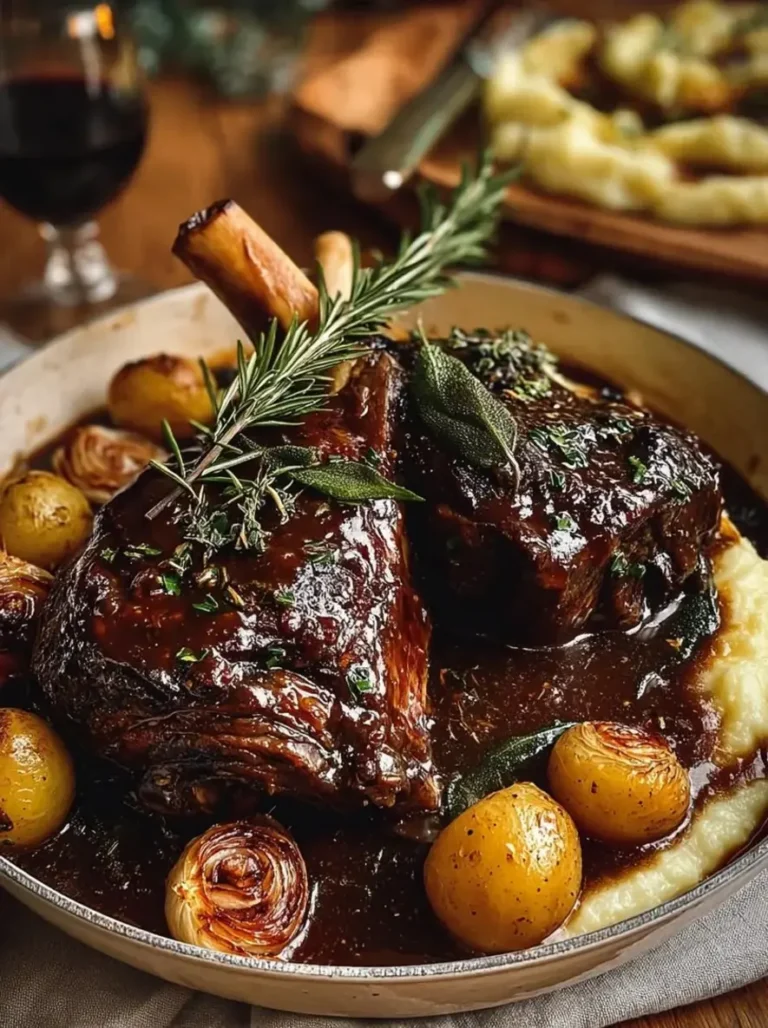
Australian Red Wine Braised Lamb Shanks with Parsnip Mash
Tender lamb shanks braised in Australian red wine with native pepperberry, served over creamy parsnip mash.
- Total Time: 2 hours 50 minutes
- Yield: 4 1x
Ingredients
- For the Lamb Shanks:
- 4 lamb shanks
- 2 tablespoons olive oil
- 1 large onion, diced
- 2 carrots, diced
- 2 celery stalks, diced
- 6 garlic cloves, crushed
- 2 cups dry red wine
- 2 cups beef stock
- 2 tablespoons tomato paste
- 2 sprigs fresh rosemary
- 4 sprigs fresh thyme
- 2 bay leaves
- 1 teaspoon native Australian pepperberry (or cracked black pepper)
- Salt to taste
- For the Parsnip Mash:
- 1½ lbs parsnips, peeled and chopped
- 2 tablespoons butter
- ¼ cup heavy cream
- Salt and white pepper to taste
Instructions
- Preheat oven to 325°F (160°C).
- Season lamb shanks with salt and pepper. Heat olive oil in a large Dutch oven over medium-high heat. Sear lamb shanks on all sides until browned, about 3-4 minutes per side. Remove and set aside.
- In the same pot, add onion, carrots, and celery. Sauté for 5 minutes until softened. Add garlic and cook for 1 minute.
- Pour in red wine, scraping up any brown bits from the bottom. Bring to a simmer and cook for 2-3 minutes.
- Stir in tomato paste, beef stock, rosemary, thyme, bay leaves, and pepperberry. Return lamb shanks to the pot, nestling them into the liquid. Bring to a simmer.
- Cover the pot and transfer to the oven. Braise for 2 to 2½ hours, until the lamb is fork-tender.
- While the lamb cooks, make the parsnip mash: Place parsnips in a large pot and cover with salted water. Bring to a boil and cook until very tender, about 15-20 minutes. Drain well.
- Return parsnips to the pot. Add butter and heavy cream. Mash until smooth. Season with salt and white pepper to taste.
- Serve each lamb shank over a generous portion of parsnip mash, spooning the braising liquid over the top.
- Garnish with fresh herbs if desired.
Notes
For a richer flavor, use a full-bodied Australian Shiraz or Cabernet Sauvignon. Native pepperberry adds a unique spicy, fruity note; substitute with cracked black pepper if unavailable.
- Prep Time: 20 minutes
- Cook Time: 2 hours 30 minutes
- Method: Main Course
- Cuisine: Australian
Nutrition
- Calories: 720
- Sugar: 10 g
- Fat: 38 g
- Carbohydrates: 28 g
- Protein: 48 g
Tried This Recipe? Leave a Comment!
Did you make this recipe? I’d love to hear how it turned out! Please leave a comment and a rating below. Your feedback helps other home cooks and supports cheerychop.com!
For more delicious inspiration, follow me on Pinterest!