Slow-Braised Beef & Lamb Shanks in Rich Red Wine Gravy
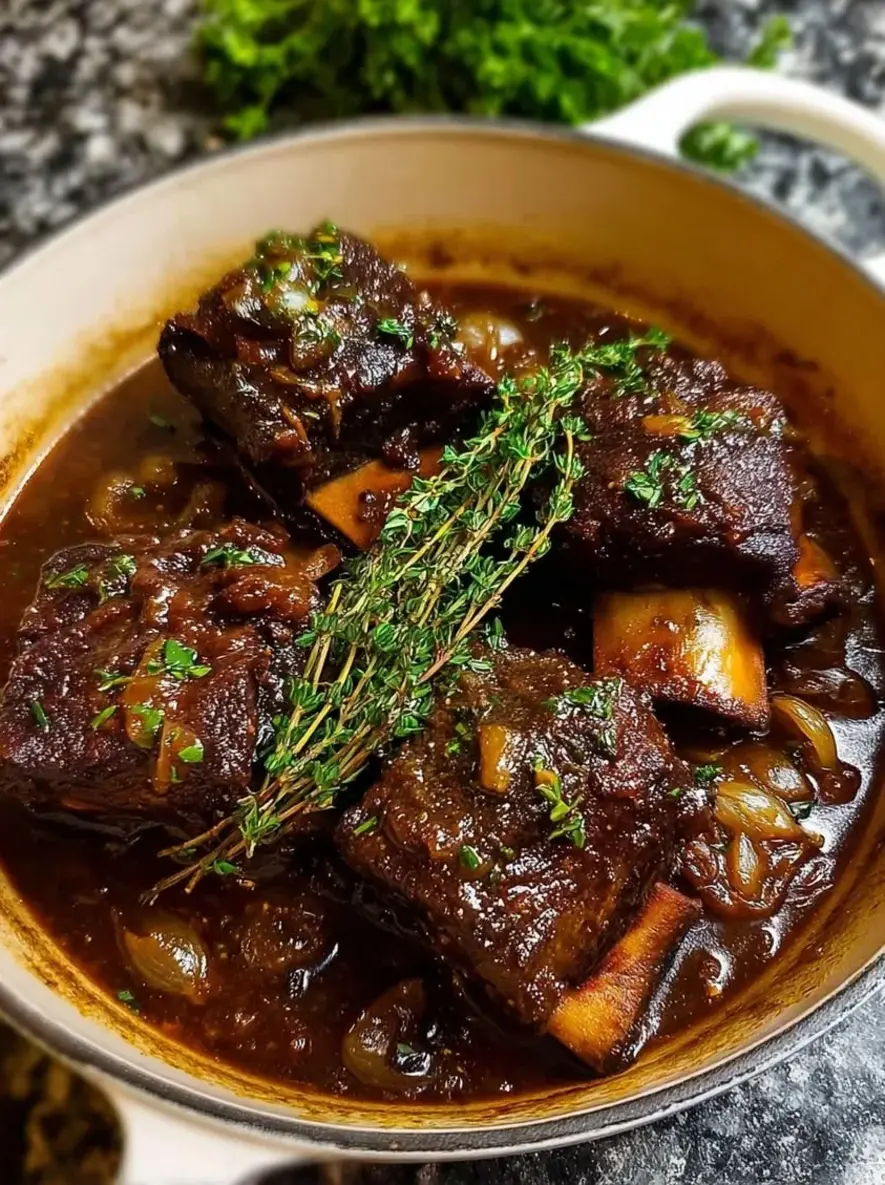
Table of Contents
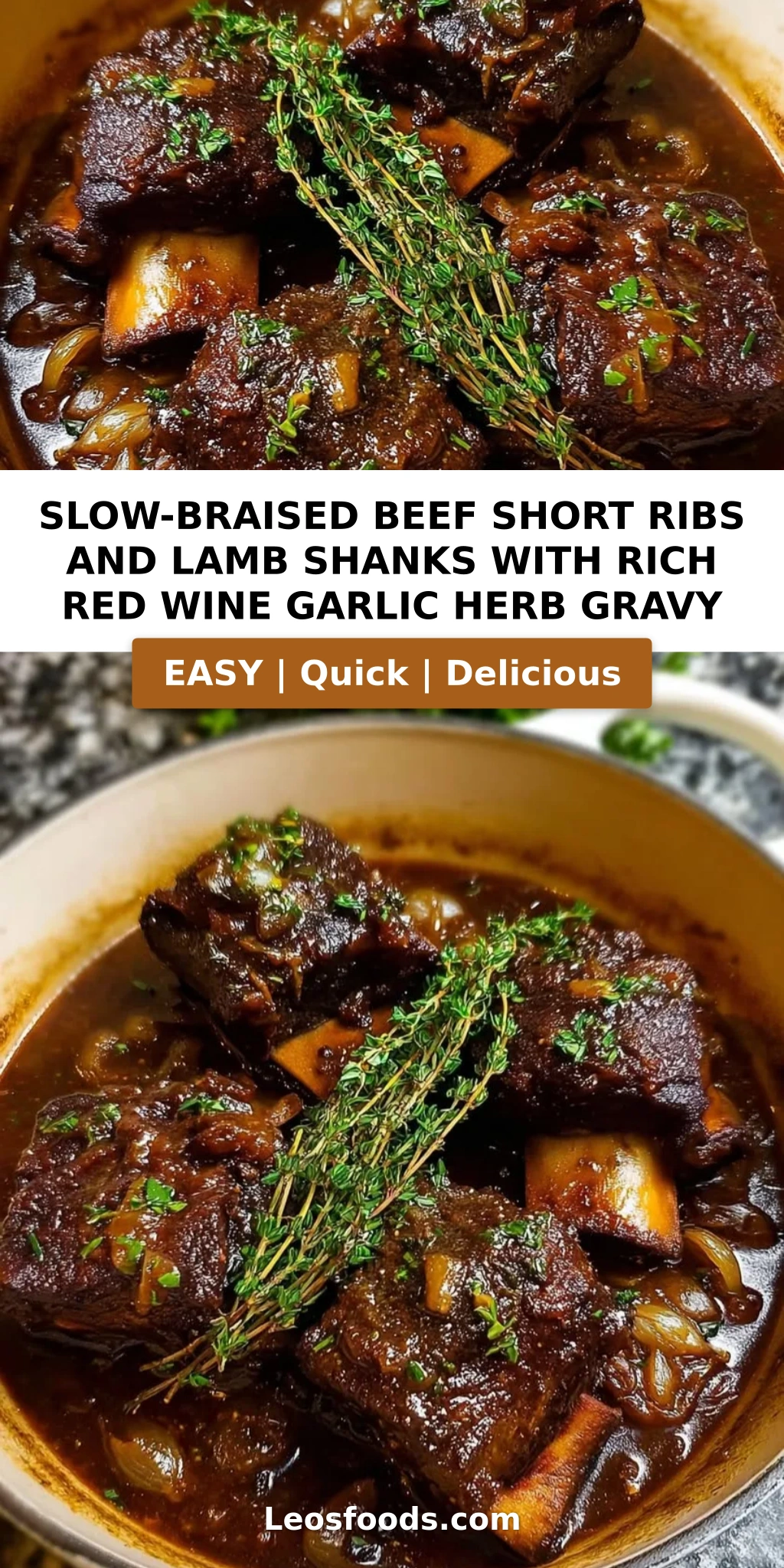
Slow-Braised Beef Short Ribs and Lamb Shanks with Rich Red Wine Garlic Herb Gravy – A Hearty Slow-Cooked Feast for Two Meats
There are some recipes that feel like a warm embrace on a cold day, and this slow braised beef short ribs and lamb shanks with rich red wine garlic herb gravy is exactly that. I first learned the art of braising two meats together in my mother’s kitchen in Morocco, where lamb and beef often shared a tagine, each lending its own deep character to the sauce. Later, during my culinary training in Paris, I refined the technique—learning how to build a red wine garlic herb gravy that is silky, aromatic, and deeply savory. This recipe is the marriage of those two worlds: the soulful, slow-cooked warmth of North Africa and the precise, elegant sauce work of a French kitchen.
Imagine beef short ribs so tender they fall apart at the touch of a fork, and lamb shanks that surrender their rich, gamey sweetness into a gravy thickened with garlic and fresh herbs. The aroma alone—red wine simmering with rosemary, thyme, and caramelized onions—will fill your home with a promise of something extraordinary. Each bite delivers layers of flavor: the robust depth of the beef, the tender richness of the lamb, and a gravy that coats every forkful like velvet. It’s the kind of meal that demands crusty bread, a bold red wine, and a table full of people you love.
What sets this version apart is the way I build the gravy from the braising liquid itself—no canned broths or thickeners that dull the flavor. I’ll show you my chef-trained method for skimming fat, concentrating the sauce, and finishing it with a touch of butter for brilliance. Whether you’re a seasoned cook or trying slow-braised meats for the first time, I’ll guide you through every step, including one common mistake that can turn your gravy bitter, and a pro tip that guarantees fall-off-the-bone tenderness every time. Let’s get started.
Why This Slow-Braised Beef Short Ribs and Lamb Shanks Recipe Is the Best
The Flavor Secret
The real magic here is braising two different meats together. Beef short ribs bring deep, umami-rich flavor and a velvety texture, while lamb shanks add a sweet, slightly gamey depth that infuses the entire pot. When braised low and slow, their juices mingle with the red wine and aromatics, creating a red wine garlic herb gravy that is more complex than anything a single meat could produce. I add a pinch of cinnamon and a touch of honey—a nod to my Moroccan roots—that balances the acidity of the wine and rounds out the herbs.
Perfected Texture
Achieving fall-off-the-bone tenderness requires patience and the right technique. I sear each piece of meat until deeply browned—that fond on the bottom of the pot is pure flavor. Then I braise at a gentle 325°F for three hours, never boiling, so the collagen slowly melts into the sauce. The result is meat that is fork-tender but not mushy, and a gravy that is naturally thick and glossy without any flour slurry. My Parisian training taught me to let the meat rest in the braising liquid for 20 minutes after cooking—this locks in moisture and makes shredding effortless.
Foolproof & Fast
Even though this dish tastes like it came from a restaurant kitchen, the process is surprisingly forgiving. You don’t need any special equipment—just a heavy Dutch oven and an oven. The hands-on time is only about 30 minutes; the oven does the rest. I’ve tested this recipe with home cooks in my NYC cooking classes, and the most common feedback is, “I can’t believe I made something this good.” Whether you’re hosting a dinner party or meal-prepping for the week, this recipe delivers exceptional results with very little fuss.
Slow Braised Beef Short Ribs and Lamb Shanks Ingredients
I pick up my beef short ribs from the Union Square farmers market on Saturday mornings—the grass-fed ones have the best marbling. For the lamb shanks, I head to a halal butcher in Astoria who sources incredible local lamb. The red wine I use is a medium-bodied Cabernet Sauvignon or a Côtes du Rhône—something you’d happily drink. Here is everything you’ll need for this hearty slow cooked beef and lamb dish.
Ingredients List
- 2 bone-in beef short ribs (about 2 lbs total)
- 2 lamb shanks (about 1.5 lbs total)
- 2 tablespoons olive oil
- 1 large onion, chopped
- 4 cloves garlic, minced
- 2 carrots, chopped
- 2 celery stalks, chopped
- 2 tablespoons tomato paste
- 2 cups dry red wine (Cabernet Sauvignon or Côtes du Rhône)
- 2 cups beef broth, low-sodium
- 1 cup chicken broth or water
- 3 sprigs fresh rosemary
- 4 sprigs fresh thyme
- 2 bay leaves
- 1 teaspoon salt, plus more to taste
- ½ teaspoon black pepper
- ½ teaspoon cinnamon (optional, for warmth)
- 1 tablespoon honey or brown sugar
- 2 tablespoons unsalted butter (for finishing the gravy)
Ingredient Spotlight
Beef Short Ribs: These meaty, bone-in ribs are ideal for braising because they have plenty of marbling and connective tissue that breaks down into a luscious, rich gravy. Look for ribs that are at least 1.5 inches thick with good fat distribution. If you can’t find English-cut short ribs, flanken-cut will work too, though they may cook a bit faster.
Lamb Shanks: The shank is a tough, hard-working muscle that becomes incredibly tender when braised. It adds a distinctive, slightly sweet flavor that pairs beautifully with red wine and garlic. Ask your butcher for shanks that are similar in size so they cook evenly. If lamb isn’t your thing, you can use all beef short ribs, but you’ll lose some of the complexity.
Red Wine: The wine is the backbone of the gravy. Use a dry red wine that you enjoy drinking—nothing too oaky or sweet. A Cabernet Sauvignon, Merlot, or Côtes du Rhône works beautifully. The alcohol cooks off, leaving behind concentrated fruit and tannins that deepen the sauce. Never use “cooking wine”—it’s salty and lacks the structure you need.
| Original Ingredient | Best Substitution | Flavor / Texture Impact |
|---|---|---|
| Beef Short Ribs | Beef chuck or brisket, cut into large chunks | Slightly less rich, but still very tender and flavorful |
| Lamb Shanks | Extra beef short ribs or lamb shoulder chops | Loses the distinct lamb sweetness; still delicious but less complex |
| Red Wine | Dry white wine + 1 tbsp balsamic vinegar | Lighter color, brighter acidity; still tasty but not as deep |
| Beef Broth | Chicken broth or vegetable broth + 1 tsp soy sauce | Less beefy depth; soy sauce adds umami to compensate |
How to Make Slow-Braised Beef Short Ribs and Lamb Shanks — Step-by-Step
Follow these steps carefully, and you’ll have a rich red wine garlic herb gravy that is the talk of your table. I’ve broken it down so each step builds on the last.
Step 1: Season and Sear the Meat
Pat the beef short ribs and lamb shanks dry with paper towels. Season generously on all sides with salt and pepper. Heat 1 tablespoon of olive oil in a large Dutch oven over medium-high heat until shimmering. Working in batches, sear the short ribs for 4–5 minutes per side until deeply browned. Transfer to a plate. Add the remaining oil and sear the lamb shanks in the same way. Do not crowd the pot—proper browning is essential for flavor.
💡 Stella’s Pro Tip: Don’t rush the sear. A deep golden-brown crust creates hundreds of flavor compounds that will infuse the entire braise. If the meat sticks to the pot, it’s not ready to flip—let it cook another minute.
Step 2: Sauté the Aromatics
Reduce the heat to medium. Add the chopped onion, carrots, and celery to the pot. Cook for 6–8 minutes, stirring occasionally, until softened and starting to brown. Add the minced garlic and cook for 1 minute more until fragrant. Stir in the tomato paste and cook for 2 minutes, stirring constantly, until it darkens slightly—this removes the raw, tinny flavor.
⚠️ Common Mistake to Avoid: Adding the garlic too early or at high heat will burn it, turning your gravy bitter. Always add garlic after the other vegetables have softened, and keep the heat at medium.
Step 3: Deglaze and Build the Braising Liquid
Pour in the red wine, scraping the bottom of the pot with a wooden spoon to release all the browned bits (fond). Let the wine simmer for 3–4 minutes until reduced by about half. Add the beef broth, chicken broth, rosemary, thyme, bay leaves, cinnamon (if using), and honey. Stir to combine, then return the seared short ribs and lamb shanks to the pot, nestling them into the liquid. The liquid should come about halfway up the sides of the meat—add a splash of water if needed.
💡 Stella’s Pro Tip: The fond on the bottom of the pot is liquid gold. If you don’t scrape it all off during deglazing, you’re leaving behind the most concentrated flavor of the entire dish. Be thorough!
Step 4: Braise Low and Slow
Bring the liquid to a gentle simmer on the stovetop. Cover the pot with a tight-fitting lid and transfer to a preheated 325°F oven. Braise for 2 hours 30 minutes to 3 hours, or until the meat is fork-tender and nearly falling off the bone. Check once halfway through to ensure the liquid is still at a gentle simmer—if it’s boiling, reduce the oven temperature to 300°F.
⚠️ Common Mistake to Avoid: Braising at too high a temperature will toughen the meat instead of tenderizing it. The liquid should be at a gentle simmer (small bubbles), never a rolling boil. Use an oven thermometer if you’re unsure.
Step 5: Shred and Strain
Carefully transfer the cooked short ribs and lamb shanks to a cutting board. Let them rest for 10–15 minutes. Once cool enough to handle, shred or pull the meat from the bones, discarding any excess fat and bones. Cover the meat loosely with foil to keep warm. Strain the braising liquid through a fine-mesh sieve into a large bowl, pressing on the solids to extract every drop. Discard the solids. Let the liquid settle for 5 minutes, then skim off the fat that rises to the top using a spoon or a fat separator.
💡 Stella’s Pro Tip: Reserve a little of the skimmed fat to add back if you want extra richness—but for a clean, elegant red wine garlic herb gravy, remove most of it. A fat separator makes this job effortless.
Step 6: Make the Rich Red Wine Garlic Herb Gravy
Return the strained, skimmed liquid to the pot. Bring to a boil over medium-high heat, then reduce to a brisk simmer. Cook for 12–15 minutes, stirring occasionally, until the gravy has reduced by about one-third and is thick enough to coat the back of a spoon. Whisk in the unsalted butter until melted and glossy. Taste and adjust seasoning with salt and pepper. Return the shredded meat to the pot, stir gently to coat, and warm through for 2–3 minutes. Serve immediately.
⚠️ Common Mistake to Avoid: Skipping the reduction step will leave you with a thin, watery gravy. Be patient—reducing concentrates the flavor and creates that velvety texture you want. If it’s not coating the spoon, it’s not ready.
| Step | Action | Duration | Key Visual Cue |
|---|---|---|---|
| 1 | Sear the Meat | 8–10 min total | Deep golden-brown crust on all sides |
| 2 | Sauté Aromatics | 8–9 min | Onions translucent, garlic fragrant |
| 3 | Deglaze & Build Liquid | 5–7 min | Wine reduces by half, fond released |
| 4 | Braise in Oven | 2.5–3 hours | Meat is fork-tender, nearly off the bone |
| 5 | Shred & Strain | 15–20 min | Clean, fat-skimmed liquid |
| 6 | Make the Gravy | 12–15 min | Gravy coats the back of a spoon |
Serving & Presentation
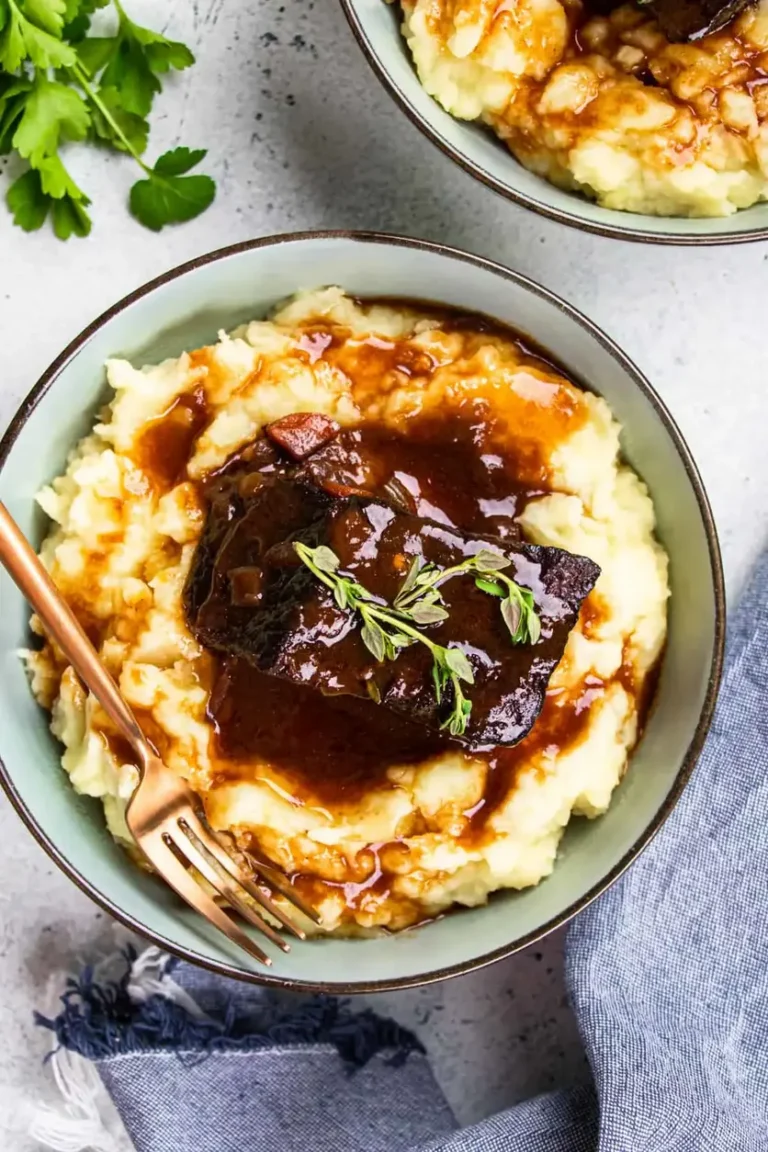
This dish deserves a platter that shows off the gorgeous deep mahogany of the gravy. I like to spoon the shredded short ribs and lamb shanks over a bed of creamy mashed potatoes or soft polenta, then ladle extra gravy over the top. The gravy soaks into the starch, creating a heavenly bite every time. For a touch of freshness, sprinkle with chopped flat-leaf parsley or a few fresh thyme leaves—it brightens the rich flavors and adds a pop of green.
In my NYC kitchen, I often serve this with a side of roasted root vegetables or a simple arugula salad dressed with lemon vinaigrette. The peppery arugula cuts through the richness of the meat and gravy perfectly. And don’t forget the bread—a crusty sourdough or a warm baguette is essential for sopping up every last drop of that red wine garlic herb gravy. Invite friends over, open a bottle of the same wine you used for cooking, and enjoy the kind of meal that lingers long after the plates are cleared.
| Pairing Type | Suggestions | Why It Works |
|---|---|---|
| Side Dish | Creamy mashed potatoes, soft polenta, roasted carrots, crusty sourdough | Starches absorb the rich gravy; roasted roots add sweetness and texture |
| Sauce / Dip | Extra red wine gravy, a dollop of horseradish cream, or garlic yogurt | Horseradish cuts richness; yogurt adds a cool, tangy contrast |
| Beverage | Full-bodied red wine (Cabernet Sauvignon, Syrah, Côtes du Rhône) | The wine echoes the braising liquid and stands up to the hearty meats |
| Garnish | Chopped fresh parsley, fresh thyme leaves, flaky sea salt, lemon zest | Fresh herbs and citrus cut richness and add visual brightness |
Make-Ahead, Storage & Reheating
This recipe is a dream for meal prep—I often make it on a Sunday and enjoy it throughout the week. The flavors actually deepen and meld after a day in the fridge, making the leftovers even better. Whether you’re planning a dinner party or just want to cook once and eat twice, here’s how to store and reheat this hearty slow cooked beef and lamb dish.
| Method | Container | Duration | Reheating Tip |
|---|---|---|---|
| Refrigerator | Airtight container, meat and gravy together | Up to 5 days | Reheat gently in a covered pot over low heat, adding a splash of broth if needed |
| Freezer | Freezer-safe container or zip-top bag, remove as much air as possible | Up to 3 months | Thaw overnight in the fridge, then reheat on the stovetop over medium-low heat |
| Make-Ahead | Prepare through Step 5, cool completely, then refrigerate meat and liquid separately | Up to 2 days in advance | Reheat liquid, reduce for gravy, then add meat and warm through |
When reheating, I always add a small splash of beef broth or water to loosen the gravy, since it thickens as it sits. The best way to reheat is on the stovetop over medium-low heat, stirring occasionally, until the meat is hot and the gravy is bubbling gently. Avoid the microwave if you can—it can make the meat tough and the gravy separate. If you’re in a hurry, a low-power microwave in 30-second bursts works, but stovetop is always superior.
Variations & Easy Swaps
One of the things I love most about this recipe is how adaptable it is. Whether you’re cooking for dietary needs, seasonal cravings, or just using what’s in your pantry, here are some of my favorite variations.
| Variation | Key Change | Best For | Difficulty Impact |
|---|---|---|---|
| Moroccan Spice Blend | Add 1 tsp ras el hanout, ½ tsp turmeric, and a pinch of saffron | Aromatic, warm, and exotic flavor profile | No change — add spices with the tomato paste |
| Gluten-Free Adaptation | Use a gluten-free flour blend (or skip flour entirely, as this recipe naturally thickens) | Celiac or gluten-sensitive guests | No change — the reduction method is naturally gluten-free |
| Dairy-Free Finish | Replace butter with olive oil or a dairy-free butter alternative | Dairy-free or paleo diets | No change — use a high-quality extra-virgin olive oil |
Moroccan Spice Blend Variation
This is my personal favorite—a nod to my mother’s kitchen. Stir in 1 teaspoon of ras el hanout, ½ teaspoon of turmeric, and a pinch of saffron threads along with the tomato paste. The saffron adds a floral, honeyed depth that pairs beautifully with the red wine and lamb. Finish the gravy with a handful of chopped dried apricots for a sweet-tart pop that is pure Moroccan soul food. Serve with couscous instead of potatoes for a complete North African feast.
Gluten-Free and Dairy-Free Adaptation
The beauty of this red wine garlic herb gravy is that it thickens naturally through reduction, so there’s no need for flour. To make it dairy-free, simply omit the butter at the end or replace it with a tablespoon of extra-virgin olive oil. I’ve tested this with a high-quality olive oil from a small producer in Sicily, and the result is just as velvety and rich. All other ingredients are naturally gluten-free, making this an easy win for anyone avoiding gluten or dairy.
Seasonal Root Vegetable Twist
When fall arrives at the NYC farmers markets, I love swapping half the carrots for parsnips and adding a diced turnip or two. The root vegetables add an earthy sweetness that deepens the gravy. I also toss in a handful of fresh fennel fronds or dill at the end for a bright, anise-like note. This variation is perfect for Thanksgiving or any autumn gathering—it feels both rustic and refined.
FAQ
What is the best way to get tender, fall-off-the-bone results for both beef short ribs and lamb shanks in the same pot?
The key is to choose pieces of meat that are similar in size and thickness so they cook at the same rate. Beef short ribs and lamb shanks both benefit from a low, slow braise at around 325°F for 2.5 to 3 hours. Make sure you sear them deeply first—that brown crust adds enormous flavor. I also recommend letting the meat rest in the braising liquid for 15–20 minutes after cooking before shredding. This allows the juices to redistribute and keeps the meat incredibly moist. If one piece is significantly larger, you can give it a head start by searing it first or cutting it to match the others.
Can I use a different type of red wine if I don’t have the one specified in the recipe?
Absolutely. The recipe calls for a dry red wine like Cabernet Sauvignon or Côtes du Rhône, but any dry red wine you enjoy drinking will work. A Merlot, Syrah, or even a Zinfandel can be lovely—just avoid anything labeled “cooking wine,” which is salty and lacks the structure you need. If you prefer a lighter red like Pinot Noir, the gravy will be slightly less robust but still delicious. And if you don’t have red wine at all, you can substitute with a combination of dry white wine and a tablespoon of balsamic vinegar for acidity and color.
How long should I braise the short ribs and lamb shanks to achieve the perfect rich gravy?
For fall-off-the-bone tender meat and a rich, concentrated gravy, braise at 325°F for 2 hours 30 minutes to 3 hours. The meat is ready when it easily pulls away from the bone with a fork and the liquid has reduced and deepened in flavor. After removing the meat, you’ll need to reduce the braising liquid further on the stovetop for 12–15 minutes to achieve that velvety, spoon-coating consistency. The total time from start to finish is about 4 hours, but most of that is hands-off oven time. Patience is your best friend here—rushing the braise or the reduction will compromise the texture of both the meat and the gravy.
What are the best side dishes to serve with slow-braised beef short ribs and lamb shanks in red wine gravy?
This dish is incredibly versatile when it comes to sides. My top recommendation is creamy mashed potatoes or soft polenta—they soak up the red wine garlic herb gravy beautifully. For a lighter option, try roasted root vegetables like carrots, parsnips, and celery root, or a simple arugula salad with lemon vinaigrette to cut through the richness. Crusty sourdough or a warm baguette is non-negotiable for sopping up every last drop. If you want to lean into the Moroccan influence, serve it over couscous with a sprinkle of dried apricots and toasted almonds. And don’t forget a full-bodied red wine to match the depth of the dish.
Can I make this recipe in a slow cooker or Instant Pot instead of the oven?
Yes, you can adapt this recipe for a slow cooker or Instant Pot, though the flavor and texture will be slightly different. For a slow cooker, sear the meat and sauté the aromatics on the stovetop first, then transfer everything to the slow cooker and cook on low for 7–8 hours or on high for 4–5 hours. For the Instant Pot, use the sauté function for searing and cooking aromatics, then pressure cook on high for 50–60 minutes with a natural release. In both cases, you’ll still need to strain and reduce the liquid on the stovetop afterward to achieve the proper gravy consistency. The oven method gives you the deepest flavor because of the even, dry heat that gently concentrates the sauce as it cooks.
How do I prevent the gravy from becoming too greasy or fatty?
The key is to properly skim the fat after braising. Once you’ve strained the liquid, let it settle for 5–10 minutes in a tall container or a fat separator. The fat will rise to the top, and you can easily spoon it off or pour it out from the bottom. I use a small ladle or a bulb baster to remove the fat layer, leaving behind the rich, defatted liquid. If you have time, refrigerating the liquid for a few hours or overnight makes the fat solidify into a hard layer that you can lift off in one piece. This step ensures your gravy is silky and flavorful without being greasy.
Can I use all beef short ribs or all lamb shanks instead of a mix?
Yes, absolutely. If you prefer one meat over the other, you can use 4 beef short ribs or 4 lamb shanks in place of the combination. The cooking time and method remain the same. Keep in mind that using all beef will give you a richer, beefier gravy, while all lamb will be more aromatic and slightly sweeter. If you use all lamb, I recommend adding an extra sprig of rosemary to complement the lamb’s natural flavor. Either way, the red wine garlic herb gravy will be absolutely delicious. The beauty of this recipe is its flexibility—cook what you love or what you can find at the market.
How can I thicken the gravy if it’s too thin after reducing?
If you’ve reduced the gravy for 15 minutes and it’s still thinner than you’d like, there are a few easy fixes. The simplest is to continue reducing—let it simmer for another 5–10 minutes until it reaches your desired consistency. If you’re short on time, you can make a quick slurry by whisking 1 tablespoon of cornstarch with 2 tablespoons of cold water until smooth, then stir it into the simmering gravy and cook for 2–3 minutes until thickened. Alternatively, you can mash a few of the cooked carrots from the braise and stir them back into the gravy—they add body and sweetness naturally. I prefer the reduction method for the cleanest flavor, but any of these options work well in a pinch.
Can I add vegetables like mushrooms or potatoes directly to the braise?
You can definitely add mushrooms—they pair beautifully with red wine and beef. Add thickly sliced cremini or button mushrooms along with the onions and carrots. They will soften and release their juices, enriching the gravy even further. As for potatoes, I recommend serving them on the side rather than braising them in the pot. Potatoes can become waterlogged and mushy during the long cooking time, and they may thicken the sauce too much. If you want potatoes, roast them separately and serve them alongside, or add them during the last 30 minutes of braising if you prefer a softer texture. Root vegetables like parsnips, turnips, and celery root work well for the full duration.
What is the best way to reheat leftovers without drying out the meat?
The gentlest and most effective method is to reheat the meat and gravy together in a covered pot on the stovetop over medium-low heat. Add a splash of beef broth, water, or even a little extra red wine to loosen the gravy, as it will have thickened in the fridge. Stir occasionally and warm for 8–10 minutes until everything is hot and bubbling gently. Avoid high heat or boiling, which can toughen the meat and cause the gravy to separate. If you’re using a microwave, use 50% power in 30-second bursts, stirring between each, and add a splash of liquid. The stovetop method gives you the most control and the best texture—trust me, it’s worth the extra few minutes.
Share Your Version!
I truly hope this slow braised beef short ribs and lamb shanks with rich red wine garlic herb gravy becomes a staple in your home the way it is in mine. There’s something magical about the way the two meats meld together, creating a gravy that is greater than the sum of its parts. Whether you serve it for a cozy Sunday dinner, a holiday gathering, or a special date night, this dish delivers comfort and elegance in every bite.
If you try this recipe, I’d love to hear about it! Leave a star rating and a comment below—tell me which side dish you paired it with, or any creative twists you added. Tag me in your photos on Instagram or Pinterest @leosfoods so I can see your beautiful creations. And if you have a question about braising or gravy-making that I didn’t cover, drop it in the comments—I answer every single one. From my NYC kitchen to yours — I hope this recipe brings as much warmth to your table as it does to mine. — Stella 🧡
Love This Recipe? Save It to Pinterest!
If you enjoyed this Slow-Braised Beef Short Ribs and Lamb Shanks with Rich Red Wine Garlic Herb Gravy recipe, don’t let it get lost in your browser tabs! 😄 Pin it now so you can find it again anytime — and explore hundreds more tried-and-tested recipes waiting for you on my Pinterest boards.
👉 Follow Stella on Pinterest @stellarecipeblog
📌 Pin this recipe · 🔁 Re-pin your favorites · 💬 Tag me when you make it — I love seeing your creations!
💬 What’s your favorite side dish to serve with slow-braised meats? Drop your answer in the comments—I’m always looking for new ideas!
⭐ If you loved this recipe, please give it a 5-star rating below. Your support helps me create more recipes for you!
Slow-Braised Beef Short Ribs and Lamb Shanks with Rich Red Wine Garlic Herb Gravy
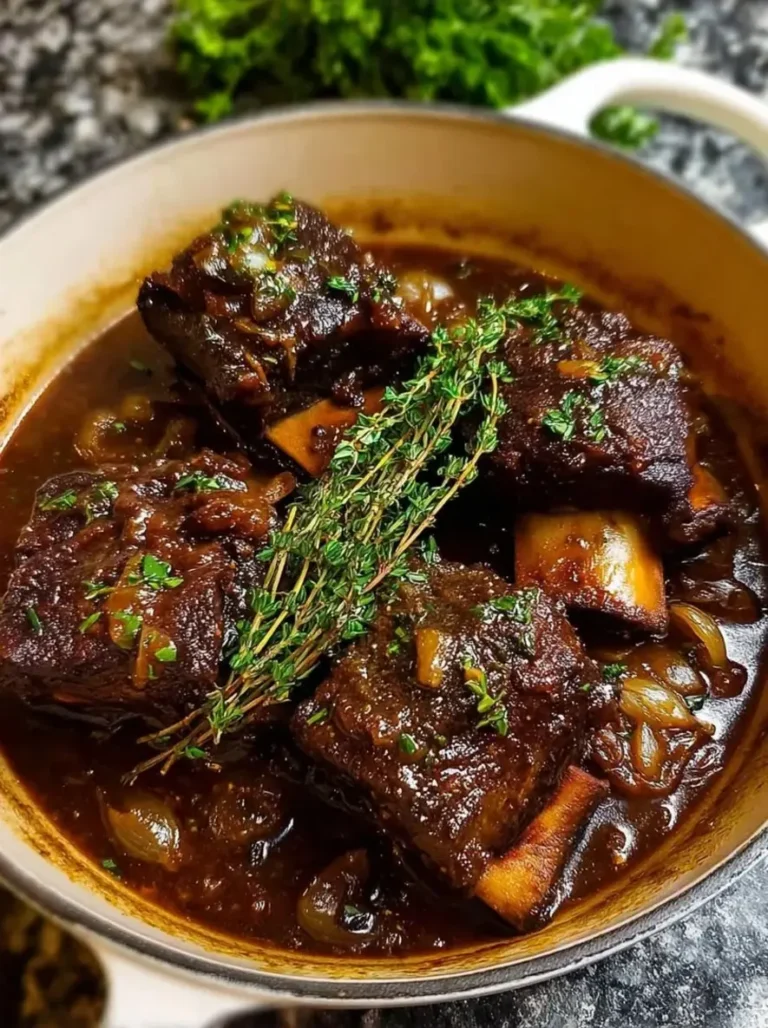
Tender beef short ribs and lamb shanks slow-braised in a rich red wine garlic herb gravy.
Ingredients
- 2 beef short ribs
- 2 lamb shanks
- 2 tablespoons olive oil
- 1 large onion, chopped
- 4 cloves garlic, minced
- 2 carrots, chopped
Instructions
Tried This Recipe? Leave a Comment!
Did you make this recipe? I’d love to hear how it turned out! Please leave a comment and a rating below. Your feedback helps other home cooks and supports cheerychop.com!
For more delicious inspiration, follow me on Pinterest!