Slow-Braised Irish Lamb Stew with Rosemary and Thyme
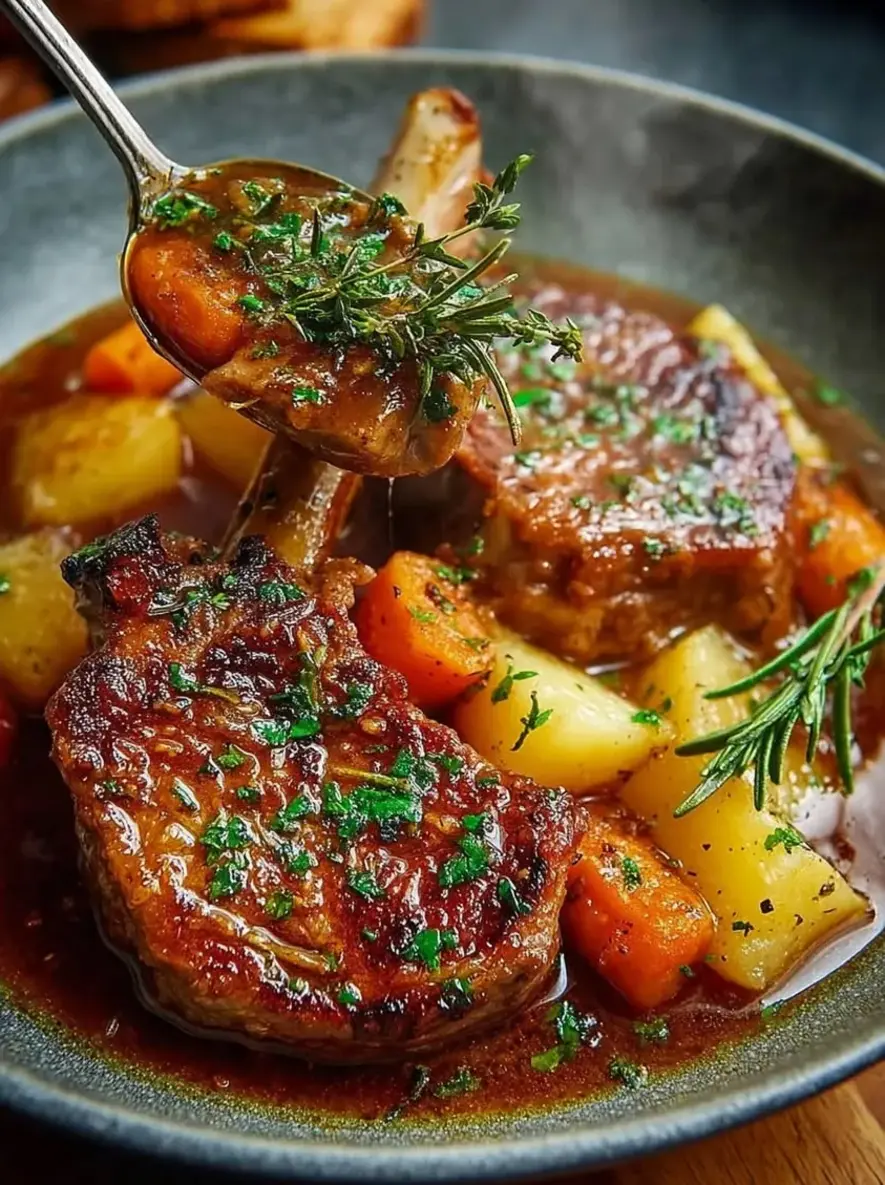
Table of Contents
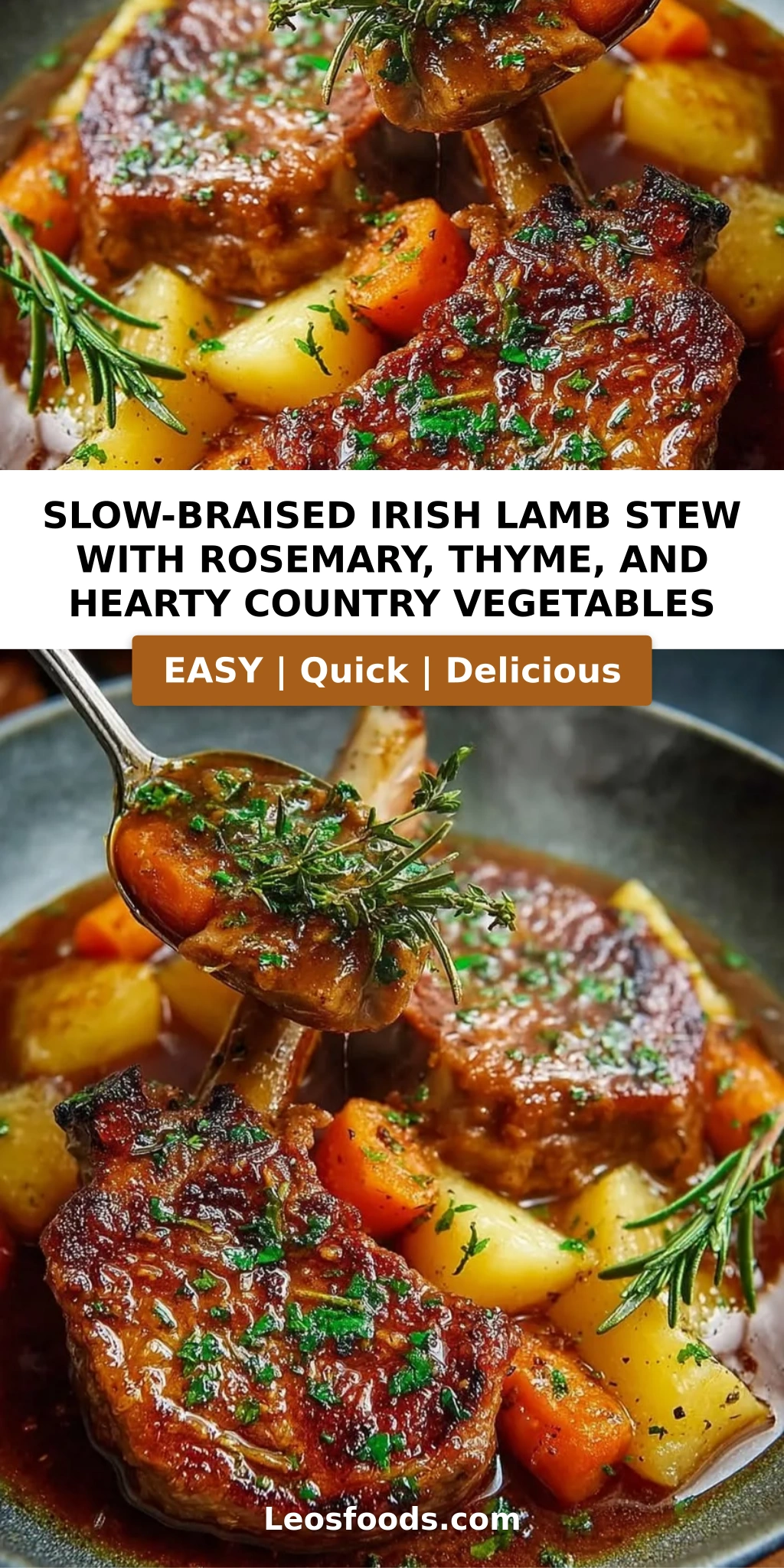
Slow-Braised Irish Lamb Stew with Rosemary, Thyme, and Hearty Country Vegetables – The Ultimate Comfort Stew
Growing up in Morocco, I learned that the best stews are patient ones. My mother would wake before dawn to layer lamb, saffron, and preserved lemons into a tagine, letting the clay pot do its slow, aromatic work. Now, as a professional cook in New York City, I bring that same reverence for time to my kitchen. This Irish lamb stew recipe is my homage to the cross-Atlantic comfort I crave on chilly Manhattan evenings. The unique angle? A touch of French technique – a proper flour roux – gives the broth an silky, velvety body that clings to every piece of lamb and vegetable, elevating a humble one-pot supper into something truly restaurant-worthy.
Close your eyes and imagine: tender, slow-braised lamb shoulder, falling apart at the edge of a spoon. Fragrant rosemary and thyme winding through each mouthful. Potatoes and carrots softened to a buttery state, their natural sweetness mingling with deeply browned meat juices. The aroma that fills your house is pure, unapologetic comfort – a promise of warmth from the inside out. I love how the broth turns into a glossy, almost gravy-like consistency after hours of gentle simmering. That little dusting of flour early on makes all the difference – it thickens without a hint of chalkiness, ensuring every bite is silky.
I’ve tested this hearty lamb and vegetable stew a dozen times in my own NYC kitchen, and I’m proud to say it’s now foolproof. My Paris-trained palate insists on balancing the richness of lamb with a splash of Worcestershire for umami depth, while the herbs remain front and center – no muddled flavors here. Whether you’re a seasoned stew-maker or a first-timer, this recipe walks you through every crucial step, from browning the lamb in batches to the exact moment to add the vegetables. 💡 Stella’s Pro Tip: Don’t skip the browning – that caramelized crust is where the soul of this stew lives.
Why This Ireland-Inspired Lamb Stew Recipe Is the Best
The Flavor Secret – In Morocco, we layer spices; in Paris, I learned to layer technique. Here, I marry the two: a bold sear on the lamb, a slow-sweated onion base, and a French-style flour roux to build a stew that’s rich, nuanced, and deeply satisfying. The Worcestershire sauce adds a subtle tang that echoes traditional Irish stout, enhancing the lamb’s gaminess without overpowering the fresh rosemary and thyme. This traditional Irish stew with rosemary honors the classics while sneaking in a few chef’s flourishes.
Perfected Texture – A common issue with stews is tough meat or mushy vegetables. My solution: braise the lamb alone for one full hour before adding the potatoes and carrots. This staggered timing ensures the meat becomes fork-tender while the vegetables hold their shape. The carrots stay slightly firm, the potatoes melt into the broth just enough to thicken it naturally. It’s a detail I obsess over, and it works every time.
Foolproof & Fast – Despite the slow-braising label, active prep is only 20 minutes. The rest is hands-off simmering. This easy Irish stew is perfect for a busy weeknight (start it before your Zoom call ends) or a lazy Sunday when you want your home to smell like an Irish countryside cottage. I’ve even made it in a slow cooker – instructions in the FAQ.
Traditional Irish Lamb Stew Recipe Ingredients
When I shop for these ingredients in New York markets – the Union Square greenmarket on a brisk morning, or my butcher in the East Village – I think of my mother’s careful selection of lamb at the souk in Marrakech. Quality matters, especially for a dish where every component speaks clearly. Here’s what you’ll need.
Ingredients List
- 2 lbs (900 g) lamb shoulder, cut into 1½-inch cubes
- 2 tablespoons olive oil
- 1 large onion, diced
- 3 cloves garlic, minced
- 3 tablespoons all-purpose flour
- 4 cups beef stock
- 1 tablespoon tomato paste
- 1 teaspoon Worcestershire sauce
- 1 teaspoon fresh thyme leaves
- 1 teaspoon chopped fresh rosemary
- 2 bay leaves
- 4 medium potatoes, peeled and diced
- 3 large carrots, sliced
Ingredient Spotlight
Lamb shoulder is your best friend here. Its marbling renders slowly, basting the stew with rich fat that keeps the meat moist. Look for shoulder chops or a boneless roast from a trusted butcher. If you can only find leg, it’s leaner – still works, but reduce cooking time by 15 minutes and add a tablespoon of butter for richness.
Fresh rosemary and thyme are non-negotiable for an authentic Irish lamb stew recipe. Dried herbs will do in a pinch, but use half the amount and add them earlier to rehydrate. I buy my herbs at the greenmarket or grow them on my NYC windowsill – nothing beats the pop of freshness.
Beef stock is my secret bump in flavor. Traditional Irish stew uses water and relies on the lamb alone, but a good, low-sodium beef stock adds a savory foundation that complements the meat beautifully. If you’re vegetarian-curious, see the swaps below.
| Original Ingredient | Best Substitution | Flavor / Texture Impact |
|---|---|---|
| Lamb shoulder | Beef chuck (chuck roast) | Rich but less gamey; slightly firmer after braising. |
| Beef stock | Vegetable stock + 1 tsp soy sauce | Savory but lighter; soy sauce adds necessary umami. |
| Fresh rosemary & thyme | Dried rosemary (½ tsp) + dried thyme (½ tsp) | More subtle, but still recognizable; add early. |
| All-purpose flour (for roux) | Gluten-free all-purpose flour blend | Slightly thinner broth; works if cooked 2 min longer. |
How to Make Slow-Braised Irish Lamb Stew – Step-by-Step
Don’t rush. Each step builds layers of flavor. I promise the result is worth every minute.
Step 1: Season and Brown the Lamb
Pat the lamb cubes dry with paper towels (moisture is the enemy of browning). Season generously with salt and pepper. Heat olive oil in your heaviest pot or Dutch oven over medium-high heat until it shimmers. Working in batches, sear the lamb for 3–4 minutes per side, until deeply browned. Don’t crowd the pan – steam will prevent the crust. Transfer seared lamb to a plate.
💡 Stella’s Pro Tip: If bits stick to the bottom, that’s flavor gold! Deglaze later with stock. Don’t clean the pot between batches.
Step 2: Sweat the Onion and Garlic
Lower heat to medium. Add the diced onion and cook, stirring occasionally, until softened and translucent – about 5 minutes. Add minced garlic and cook 1 minute more. The smell will make your kitchen smell like a real stew kitchen.
⚠️ Common Mistake to Avoid: Burning the garlic. Keep it moving; garlic can turn bitter in seconds. If you see it browning too fast, add a splash of the beef stock to cool things down.
Step 3: Make the Roux
Sprinkle the flour over the onion mixture and stir constantly for 1–2 minutes. This cooks out the raw flour taste and creates a paste that will thicken your stew. The color should stay pale – we want a blonde roux, not a brown one.
💡 Stella’s Pro Tip: This French technique is the reason my stew has a luscious, silky broth rather than a watery one. It’s worth the extra 2 minutes.
Step 4: Deglaze and Build the Broth
Slowly pour in the beef stock while scraping the bottom of the pot with a wooden spoon – those browned bits are pure concentrate. Stir in the tomato paste, Worcestershire sauce, thyme, rosemary, and bay leaves. Bring to a gentle boil, then immediately reduce to low.
⚠️ Common Mistake to Avoid: Adding stock too quickly. Pour slowly so you can incorporate every savory speck from the pan.
Step 5: Simmer the Lamb Alone
Return the browned lamb to the pot. Cover and simmer over low heat for 1 hour. Check occasionally to ensure it’s gently bubbling – not a rolling boil. This initial long simmer breaks down the connective tissue in the lamb shoulder, making it meltingly tender.
💡 Stella’s Pro Tip: Use a Dutch oven with a tight-fitting lid for minimal evaporation. If your lid is loose, add another half cup of stock now.
Step 6: Add Vegetables and Finish
After an hour, add the diced potatoes and sliced carrots. Stir well, re-cover, and continue simmering for 45 minutes to 1 hour, until the vegetables are tender and the lamb is fork-tender. The broth will have thickened naturally.
⚠️ Common Mistake to Avoid: Adding vegetables too early – they will disintegrate into mush. The timing here gives you perfect bites.
Step 7: Season and Serve
Taste and adjust salt and pepper. Remove the bay leaves before ladling into bowls. The stew should be rich, aromatic, and deeply satisfying.
💡 Stella’s Pro Tip: If the stew thickens too much upon cooling, thin it with a splash of hot stock or water when reheating. It’s normal – one of the joys of real slow braising.
| Step | Action | Duration | Key Visual Cue |
|---|---|---|---|
| 1 | Brown lamb | 3–4 min per batch | Deep mahogany crust |
| 2 | Sweat onion & garlic | 5–6 min | Onion translucent, fragrant |
| 3 | Make roux | 1–2 min | Pale paste, no white flour visible |
| 4 | Deglaze & build broth | 3–4 min | Steam, then smooth liquid |
| 5 | Simmer lamb alone | 1 hour | Meat pulls apart with fork |
| 6 | Add vegetables & finish | 45–60 min | Tender potatoes, gentle bubbling |
| 7 | Season & serve | 2 min | Rich, aromatic broth |
Serving & Presentation
Ladle the stew into wide, shallow bowls – I like to use rustic stoneware that reminds me of the pottery my mother used in Morocco. Garnish each bowl with a small sprig of fresh thyme or rosemary (optional but gorgeous). Serve with crusty sourdough bread – the kind you find at the Orwasher’s bakery in Manhattan – for sopping up every last drop of that luscious broth. A simple green salad with a sharp vinaigrette cuts the richness beautifully.
In my NYC apartment, I often serve this with a side of creamy colcannon (Irish mashed potatoes with kale) for a double-carb celebration. But honestly, the stew is a meal on its own. A glass of bold red wine or a cold Irish stout? Heaven. For a non-alcoholic pairing, try a sparkling water with a squeeze of lemon – it cleanses the palate between forkfuls.
| Pairing Type | Suggestions | Why It Works |
|---|---|---|
| Side Dish | Crusty bread, colcannon, roasted root vegetables | Absorbs broth; earthy flavors complement stew |
| Sauce / Dip | Horseradish cream, whole-grain mustard, malt vinegar | Adds tang and heat; cuts richness |
| Beverage | Guinness stout, Pinot Noir, ginger beer | Malty notes enhance lamb; wine’s acidity balances fat |
| Garnish | Fresh thyme sprigs, flaky sea salt, chopped parsley | Fresh, bright finish; visual appeal |
Make-Ahead, Storage & Reheating
This stew is a gift the next day – the flavors meld and deepen overnight. In my meal-prep routine (because even a professional cook in NYC is a busy woman), I often double the recipe and freeze half for a midweek emergency heat. Here’s how to store it smartly.
| Method | Container | Duration | Reheating Tip |
|---|---|---|---|
| Refrigerator | Airtight container | Up to 5 days | Reheat gently on stovetop, add splash of stock |
| Freezer | Freezer-safe bags or containers | Up to 3 months | Thaw overnight in fridge, then reheat low & slow |
| Make-Ahead | Same pot, tightly covered | Up to 2 days in advance | Cool quickly, refrigerate; reheat with low flame |
When reheating, add a splash of beef stock (or water) to loosen the stew as it will thicken when cold. I find reheating on the stovetop over medium-low heat, stirring occasionally, works best. Avoid the microwave – it heats unevenly and can toughen the lamb. On a busy weeknight, I’ve done it in a pinch, but trust me, stovetop is better.
Variations & Easy Swaps
| Variation | Key Change | Best For | Difficulty Impact |
|---|---|---|---|
| Slow Cooker Version | Brown lamb, then transfer everything to slow cooker; cook low 6–8 hours | Hands-off day | Easier (no watching) |
| Gluten-Free Adaptation | Use gluten-free all-purpose flour for roux; ensure beef stock is gf | GF diets | Minimal change |
| Moroccan Twist | Add 1 tsp ras el hanout, ½ tsp cinnamon, and a handful of dried apricots | Spice lovers | Medium (new spices) |
Slow Cooker Version
For those days when you want the aroma of slow-braised lamb stew without hovering over the stove, brown the lamb and sauté the onions as directed, then transfer everything to your slow cooker. Add the stock, herbs, and Worcestershire, and cook on low for 6–8 hours or high for 4–5 hours. Add the potatoes and carrots during the last 2 hours. The result is just as comforting – and your kitchen still smells incredible when you walk in the door.
Gluten-Free Adaptation
To make this recipe gluten-free, simply swap the all-purpose flour for a good gluten-free blend (I like Bob’s Red Mill 1-to-1). The roux technique remains the same – just cook it a minute longer to ensure the starch is activated. Double-check that your beef stock is certified gluten-free (most are, but some have hidden wheat). The texture will be slightly less thick but still wonderfully silky.
Moroccan Twist
This is my personal tribute to my roots. Stir in 1 teaspoon of ras el hanout (a North African spice blend) and ½ teaspoon of cinnamon along with the tomato paste. Add a handful of dried apricots (chopped) when you add the vegetables. The sweetness of the apricots, the warmth of the spices, and the herbal notes of rosemary create a breathtaking stew that tastes like a different dish entirely – still deeply hearty lamb and vegetable stew, but now with a touch of Marrakech.
FAQ
What is the best cut of lamb to use for a slow-braised Irish stew?
Lamb shoulder is hands down the best choice for a slow-braised Irish stew. It has just the right amount of marbling – those streaks of fat render down during the long cooking time, keeping the meat incredibly tender and adding richness to the broth. Boneless lamb shoulder is easiest, but bone-in shoulder chops also work (just remove bones before serving or serve around them). Leg of lamb is leaner and can become dry if overcooked, so I don’t recommend it for this recipe. If you can only get leg, reduce cook time by about 20 minutes and keep a close eye on tenderness.
Can I substitute beef for lamb in a traditional Irish stew recipe?
Yes, you can absolutely use beef instead of lamb. The most suitable cut is beef chuck (chuck roast), cut into 1½-inch cubes. Beef has a milder, less gamey flavor but still becomes beautifully tender when braised. The stew will taste heartier and more like a classic American beef stew than a traditional Irish one. Keep the cooking times the same – beef chuck usually needs about the same 2+ hours. If you make this swap, you might want to add a bit more Worcestershire sauce or a splash of red wine to compensate for the missing lamb’s intensity.
How long should I braise lamb stew to make the meat tender?
For melt-in-your-mouth tenderness, plan on braising your lamb stew for at least 1 hour 45 minutes to 2 hours total. The key is to simmer the lamb alone for the first hour before adding vegetables. That initial hour breaks down the connective tissue in the shoulder. After adding potatoes and carrots, continue cooking for another 45 to 60 minutes. If you’re using a slow cooker, you’ll need 6–8 hours on low or 4–5 hours on high. Meat that starts to pull apart easily with a fork is your visual cue that it’s done – don’t rush it.
What vegetables are traditionally used in an Irish lamb stew?
Traditional Irish lamb stew is wonderfully simple – it typically includes potatoes, carrots, and onions. That’s the classic trio. Some versions add celery or turnips (especially in Ireland during the fall). The vegetables are cut into hearty chunks so they hold up during the long cooking process. Parsnips are another common addition; their sweetness pairs beautifully with lamb. I keep my recipe classic with potatoes and carrots, but you can absolutely include celery or parsnips – just add them at the same time as the carrots.
Can I make this Irish lamb stew in advance?
Absolutely – in fact, this stew tastes even better the next day! The flavors have time to meld and deepen. Make it up to two days ahead, cool quickly, and store covered in the refrigerator. When ready to serve, reheat gently on the stovetop over medium-low heat, adding a splash of beef stock or water to thin it if needed. You can also freeze the stew for up to three months in airtight containers. Thaw overnight in the fridge before reheating. This make-ahead quality makes it perfect for gatherings or busy weeks.
How do I thicken the stew without flour or cornstarch?
If you prefer a gluten-free or paleo approach, you can thicken the stew by mashing a few of the cooked potatoes directly into the broth. Remove about a cup of the cooked potatoes, mash them with a fork, then stir back into the pot – this releases their natural starch and thickens the liquid naturally. Another method is to let the stew simmer uncovered for the last 15–20 minutes to reduce and concentrate the broth. Both techniques give you a luscious texture without using any flour or cornstarch.
What should I serve with Irish lamb stew for a complete meal?
Irish lamb stew is hearty enough to be a complete meal on its own, but I love serving it with crusty brown bread or soda bread for soaking up the broth. A crisp green salad with a tangy vinaigrette (think lemon, Dijon, and olive oil) cuts through the richness perfectly. For a true Irish feast, add a side of colcannon (mashed potatoes with cabbage or kale) or roasted root vegetables. And don’t forget a pint of stout or a glass of red wine to wash it all down!
Can I cook this stew in a Dutch oven or slow cooker?
Yes to both! A Dutch oven is ideal because it provides even heat distribution and good browning surface. I often use my Le Creuset for this recipe. For a slow cooker, you must still brown the lamb first (don’t skip that) and sauté the onions on the stove, then transfer everything to the slow cooker. Cook on low for 6–8 hours or high for 4–5 hours, adding the potatoes and carrots during the last 2 hours. The result is just as delicious and even more hands-off.
How can I add more flavor to my lamb stew without extra salt?
To boost flavor without adding salt, focus on browning – a deep, dark sear on the lamb is flavor gold. Use homemade beef stock or a good quality low-sodium stock. Adding a tablespoon of tomato paste, a dash of Worcestershire sauce, and fresh herbs like rosemary and thyme builds umami and aromatic complexity. A splash of red wine or balsamic vinegar can also add depth. Finally, sauté the onions until they are soft and lightly caramelized before adding the flour – that extra sweetness enriches the entire stew.
Is this Irish lamb stew recipe freezer-friendly?
Yes, this stew freezes beautifully. I often double the recipe and freeze half for busy nights. Cool the stew completely before transferring to airtight freezer-safe containers or heavy-duty freezer bags. Leave a little headspace (the liquid expands). It will keep for up to three months. To thaw, move it to the refrigerator overnight. Reheat gently on the stovetop – you may need to add a splash of stock to thin it. The texture of the potatoes may soften slightly, but the flavor remains stellar.
Share Your Version!
I’d love to hear how you made this slow-braised lamb stew your own! Did you add a pinch of something special? Serve it with a favorite side? Leave a star rating and a comment below – your feedback helps me improve and inspires other cooks. If you share a photo on Instagram or Pinterest, tag me @stellarecipeblog so I can see your beautiful creation. I read every comment and I’m always here to answer questions.
From my NYC kitchen to yours – I hope this recipe brings as much warmth to your table as it does to mine. — Stella 🧡
Love This Recipe? Save It to Pinterest!
If you enjoyed this Slow-Braised Irish Lamb Stew with Rosemary, Thyme, and Hearty Country Vegetables recipe, don’t let it get lost in your browser tabs! 😄 Pin it now so you can find it again anytime — and explore hundreds more tried-and-tested recipes waiting for you on my Pinterest boards.
👉 Follow Stella on Pinterest @stellarecipeblog
📌 Pin this recipe · 🔁 Re-pin your favorites · 💬 Tag me when you make it — I love seeing your creations!
Did you try this recipe? I’d love to know – drop a comment below or share a photo and tag me @stellarecipeblog! Your feedback makes this community stronger. 💬
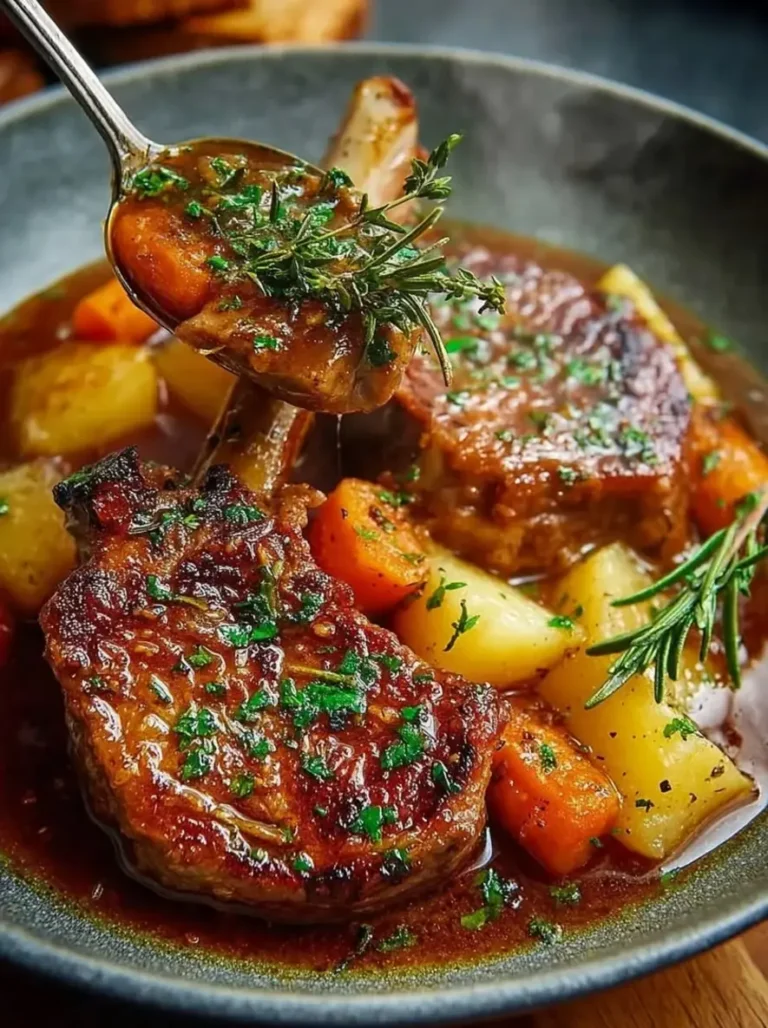
Slow-Braised Irish Lamb Stew with Rosemary, Thyme, and Hearty Country Vegetables
A comforting, slow-braised Irish lamb stew flavored with fresh rosemary and thyme, loaded with hearty potatoes and carrots.
- Total Time: 2 hours 30 minutes
- Yield: 6 1x
Ingredients
- 2 lbs (900 g) lamb shoulder, cut into 1½-inch cubes
- 2 tablespoons olive oil
- 1 large onion, diced
- 3 cloves garlic, minced
- 3 tablespoons all-purpose flour
- 4 cups beef stock
- 1 tablespoon tomato paste
- 1 teaspoon Worcestershire sauce
- 1 teaspoon fresh thyme leaves
- 1 teaspoon chopped fresh rosemary
- 2 bay leaves
- 4 medium potatoes, peeled and diced
- 3 large carrots, sliced
Instructions
- 1. Season the lamb cubes with salt and pepper.
- 2. In a large pot or Dutch oven, heat the olive oil over medium-high heat. Brown the lamb in batches, about 3-4 minutes per side. Remove and set aside.
- 3. In the same pot, add the diced onion and cook until softened, about 5 minutes. Add the minced garlic and cook for 1 minute more.
- 4. Sprinkle the flour over the onion mixture and stir, cooking for 1-2 minutes to remove the raw flour taste.
- 5. Slowly pour in the beef stock, scraping up any browned bits from the bottom. Stir in the tomato paste, Worcestershire sauce, thyme, rosemary, and bay leaves.
- 6. Return the browned lamb to the pot. Bring to a boil, then reduce heat to low. Cover and simmer gently for 1 hour.
- 7. Add the diced potatoes and sliced carrots. Stir well, cover, and continue simmering for another 45 minutes to 1 hour, until the vegetables are tender and the lamb is very tender.
- 8. Taste and adjust seasoning with salt and pepper. Remove bay leaves before serving.
- Prep Time: 20 minutes
- Cook Time: 2 hours 10 minutes
- Method: Main Course
- Cuisine: Irish
Nutrition
- Calories: 552
- Sugar: 7 g
- Fat: 26 g
- Carbohydrates: 36 g
- Protein: 37 g
Tried This Recipe? Leave a Comment!
Did you make this recipe? I’d love to hear how it turned out! Please leave a comment and a rating below. Your feedback helps other home cooks and supports cheerychop.com!
For more delicious inspiration, follow me on Pinterest!