Tender Slow-Braised Lamb Shanks in Red Wine Sauce
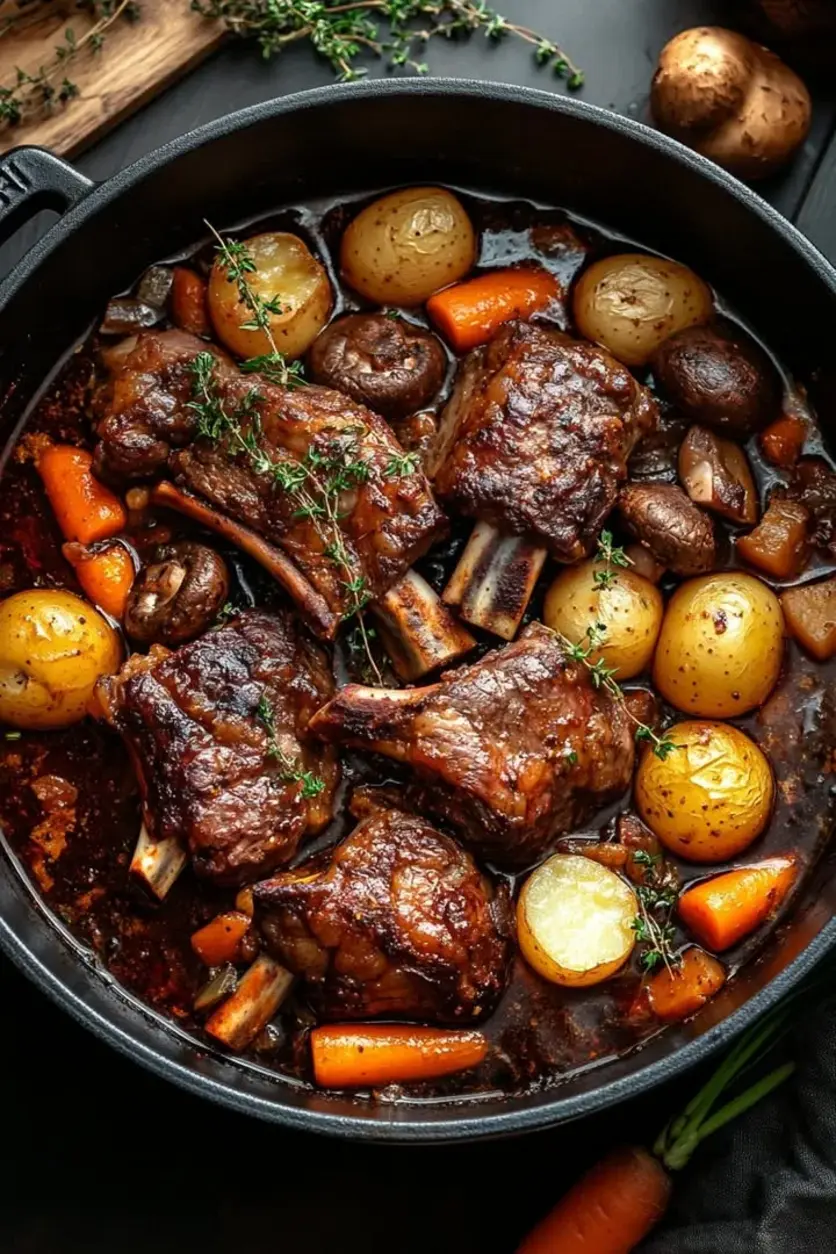
Table of Contents
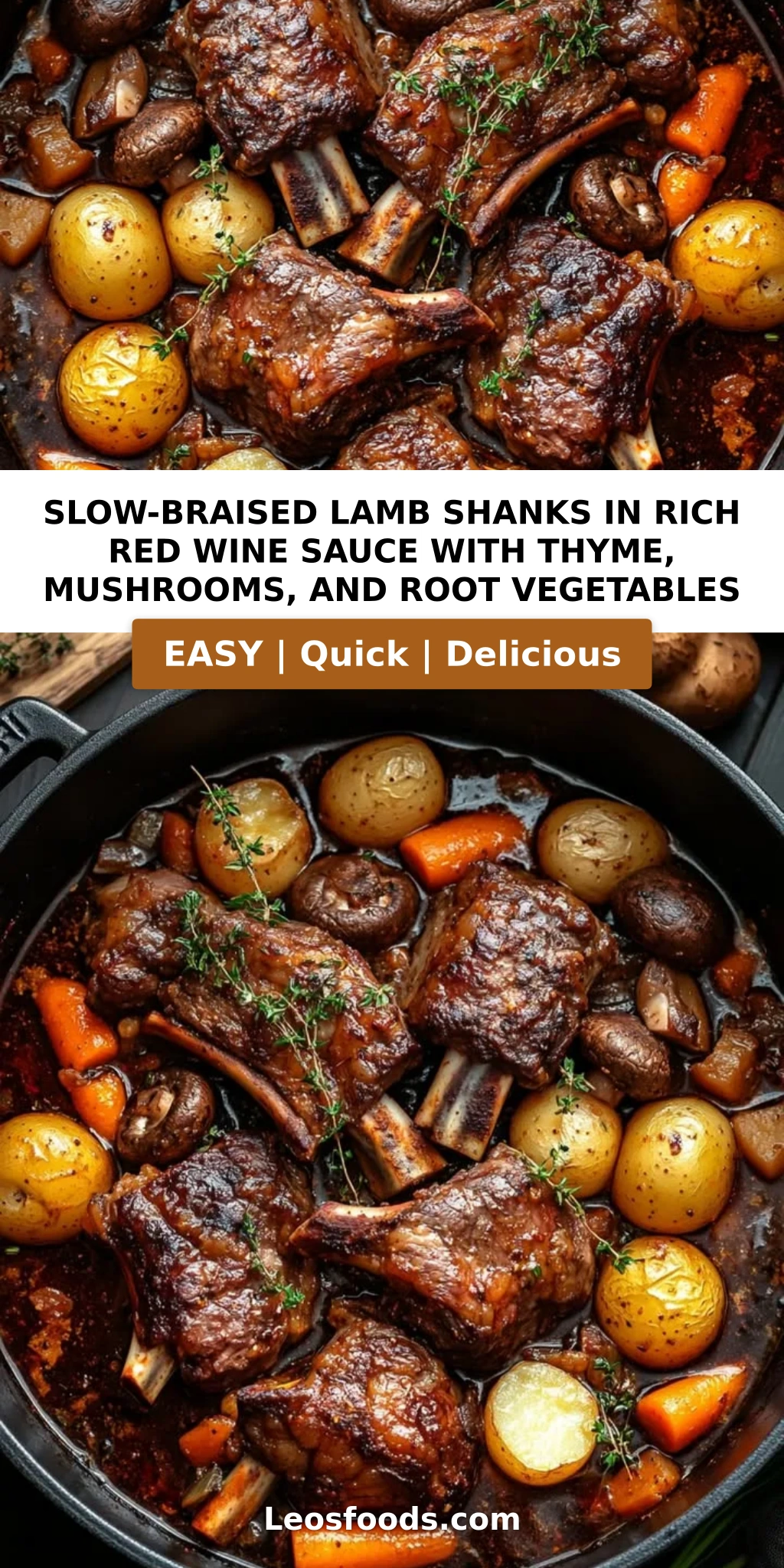
Slow-Braised Lamb Shanks in Rich Red Wine Sauce with Thyme, Mushrooms, and Root Vegetables – Moroccan-French Fusion at Its Finest
I still remember the first time I made braised lamb shanks for my family here in New York City. It was a chilly November evening, the kind where the wind whips down Broadway and you just want something deeply comforting. I had just gotten back from a trip to see my mother in Morocco, where she had been slow-cooking lamb with saffron and preserved lemons. Meanwhile, my culinary training in Paris kept whispering about a classic French fond brun and the magic of a good red wine braise. That night, standing in my tiny NYC kitchen with the windows fogged up, I decided to bring those two worlds together. I reached for smoked paprika—a spice my mother always kept in her pantry—and paired it with a bold Cabernet Sauvignon and fresh thyme. The result? This recipe for slow braised lamb shanks in red wine sauce, infused with earthy mushrooms and sweet root vegetables. It was the first time I truly felt like a New York cook with a Moroccan soul and a French technique. And let me tell you, the silence at the dinner table that night—broken only by the clinking of forks—said everything.
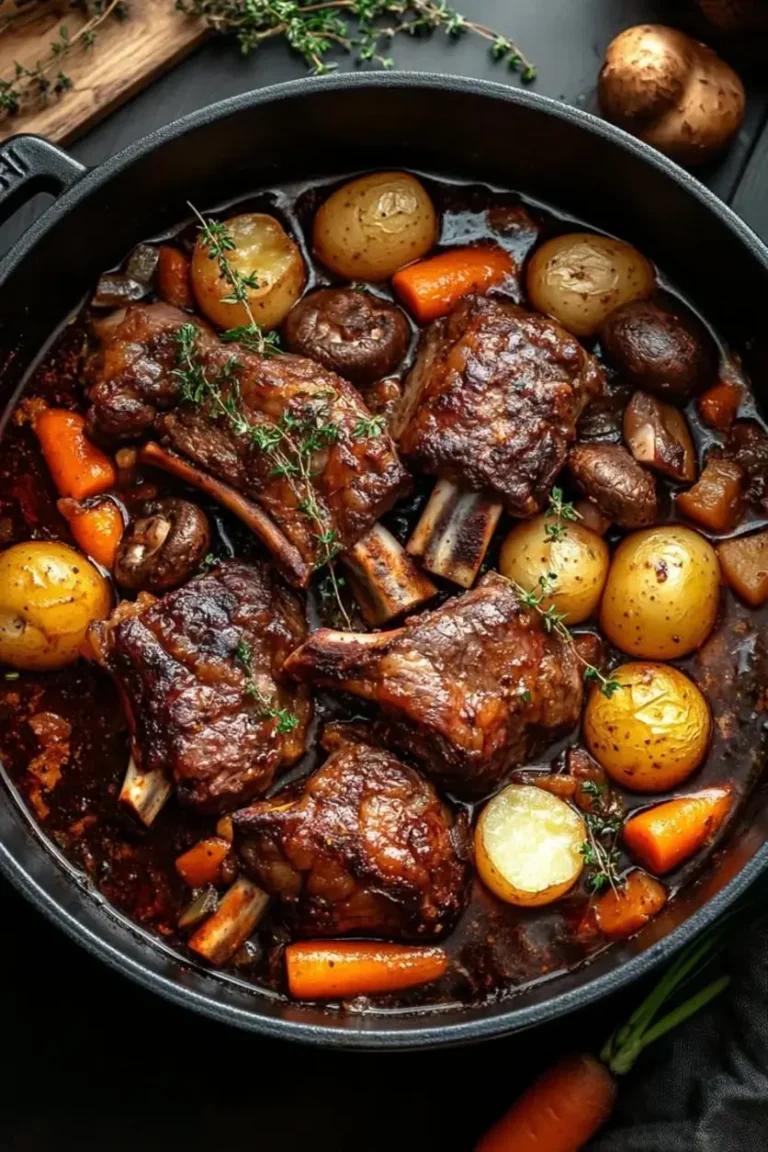
Let me paint you a picture of what happens in that Dutch oven. The lamb shanks, rubbed with sea salt, black pepper, smoked paprika, and onion powder, get seared until their surfaces are a deep mahogany brown. That crust is flavor gold. Then the same pot welcomes a tumble of onions, carrots, baby potatoes, and mushrooms—each one soaking up the fond (those browned bits on the bottom) that will later become the backbone of your sauce. A generous pour of dry red wine goes in first, reducing and concentrating, before beef stock joins the party along with whole sprigs of thyme and rosemary. As the pot simmers low and slow in the oven for three hours, the lamb becomes so tender it practically falls off the bone. The mushrooms absorb the wine and herbs like little flavor sponges, and the potatoes turn buttery and soft. The aroma alone—wine, garlic, thyme, and that whisper of smoked paprika—will fill your entire home and have everyone wandering into the kitchen asking, “What is that?”
What makes my version of these lamb shanks in red wine sauce different from the hundreds of other recipes out there? It’s the subtle North African twist I bring to a French classic. While most recipes stick to straight herbs de Provence or just salt and pepper, I add smoked paprika and onion powder to the rub. It doesn’t scream “Moroccan”—it just whispers it, adding a warmth and depth that makes the red wine sauce taste even more complex. I also insist on using both mushrooms and a mix of root vegetables (carrots and baby potatoes) right in the braise, so you get a complete meal in one pot. And I’ve tested this recipe in a standard NYC apartment oven, on a busy weeknight, with kids asking for homework help. It’s foolproof if you follow the timing. My one 💡 Stella’s Pro Tip: never skip the searing step, and always deglaze with the full amount of wine—that’s where the magic lives. One common mistake I see home cooks make? They rush the braise. Three hours at 325°F is non-negotiable for truly tender meat. Trust me—your patience will be rewarded with the most succulent lamb shanks you’ve ever made.
Why This Slow-Braised Lamb Shanks Recipe Is the Best
The Flavor Secret. The smoked paprika and onion powder rub isn’t just for show. It creates a spice crust that interacts with the red wine during the long braise, producing a sauce that’s simultaneously rich, slightly sweet, and deeply savory. My French training taught me the importance of building layers of flavor: sear, deglaze, reduce, then braise. Every step is intentional. The mushrooms, which I source from the Union Square Greenmarket when they’re in season, add an umami punch that beef stock alone can’t achieve. This isn’t just a lamb shank recipe—it’s a masterclass in layering flavors from two continents.
Perfected Texture. I’ve braised lamb shanks in ovens ranging from a professional French kitchen to my own modest NYC range. The ideal temperature for fork-tender meat without drying out the exterior is 325°F. At this temperature, the collagen in the lamb shanks breaks down gradually into gelatin, enriching the sauce and giving the meat a melt-in-your-mouth texture. The mushrooms and root vegetables cook at the same rate as the lamb, absorbing all those wine-and-herb juices without turning to mush. The potatoes stay intact but become velvety on the inside. It’s texture harmony at its finest.
Foolproof & Fast to Prep. Despite the three-hour cook time, the active work here is only about 30 minutes. You can do all the prep—chopping vegetables, measuring spices, patting the lamb dry—in the time it takes to preheat the oven. Then it’s a hands-off braise while you go about your day. This is one of those recipes that makes you look like a hero with minimal effort. Whether you’re cooking for a Sunday dinner or a holiday gathering, these slow braised lamb shanks deliver restaurant-quality results without the stress.
Braised Lamb Shanks Ingredients
I remember walking through the meat aisle at my local Whole Foods in Chelsea, looking for lamb shanks that were meaty and evenly shaped. I always ask the butcher to trim any excess silver skin but leave the fat cap on—that fat renders during the braise and keeps the meat succulent. My mother would have used a tagine, but here in NYC, a good Dutch oven is my go-to. Every ingredient in this list plays a role in building that deep, complex flavor. Let me walk you through what you’ll need.
Ingredients List
- 4 lamb shanks (about 1 lb each)
- 2 tablespoons olive oil
- 2 teaspoons sea salt
- 1 teaspoon black pepper
- 1 teaspoon smoked paprika
- 1 teaspoon onion powder
- 1 large onion, chopped
- 3 carrots, peeled and cut into chunks
- 1 lb baby potatoes, halved
- 8 oz mushrooms, halved (cremini or baby bella work best)
- 5 garlic cloves, minced
- 2 tablespoons tomato paste
- 2 cups dry red wine (Cabernet Sauvignon, Merlot, or Côtes du Rhône)
- 2 cups beef stock (low-sodium preferred)
- 4 sprigs fresh thyme
- 2 sprigs fresh rosemary
Ingredient Spotlight
Lamb Shanks: The star of the show. Look for shanks that are meaty with a good amount of marbling. The bone adds flavor to the sauce as it braises. If you can, ask your butcher for shanks that are similar in size so they cook evenly. I usually buy mine from a local butcher in the West Village who sources from farms in upstate New York. The quality of the lamb makes a difference—grass-fed lamb has a cleaner, more nuanced flavor.
Smoked Paprika: This is my Moroccan-French bridge ingredient. It adds a subtle smokiness that complements the red wine without overpowering it. Regular paprika won’t give you the same depth, so I really recommend tracking down smoked Spanish paprika (pimentón). You can find it in most well-stocked grocery stores or online. It’s a small investment that pays off in flavor.
Dry Red Wine: The wine is the heart of the sauce. Use something you’d actually enjoy drinking—a dry red with good structure like Cabernet Sauvignon, Merlot, or a Rhône blend. Avoid anything labeled “cooking wine” (it has added salt and preservatives). The wine reduces and concentrates, so quality matters. If you’re in a pinch, a good-quality dealcoholized red wine works too (see the substitution table below).
Mushrooms: Cremini or baby bella mushrooms are my top choice because they hold their shape during the long braise and have a meaty texture that echoes the lamb. White button mushrooms work in a pinch but won’t give you as much flavor. I love how the mushrooms absorb the red wine sauce, becoming these little umami bombs that burst in your mouth.
Fresh Thyme & Rosemary: Fresh herbs are non-negotiable here. Dried herbs won’t hold up over a three-hour braise the same way. Fresh thyme adds a floral, slightly lemony note that cuts through the richness of the lamb and wine. Rosemary brings a piney, savory backbone. I tie them together with kitchen twine for easy removal before serving.
| Original Ingredient | Best Substitution | Flavor / Texture Impact |
|---|---|---|
| Lamb shanks | Beef short ribs or oxtail | Richer, beefier flavor; similar tenderness |
| Smoked paprika | Sweet paprika + 1/4 tsp liquid smoke | Similar smokiness; slightly less depth |
| Dry red wine | Dealcoholized red wine + 1 tsp red wine vinegar | Slightly less intense; still rich and complex |
| Fresh thyme | 1 tsp dried thyme (add in last hour) | Less floral; more earthy; add late to avoid bitterness |
| Baby potatoes | Parsnips or turnips (cut into chunks) | Less starchy; slightly sweeter; hold shape well |
How to Make Slow-Braised Lamb Shanks — Step-by-Step
Trust me, this recipe is much simpler than it looks. Once you’ve got your ingredients prepped and your Dutch oven hot, it’s mostly hands-off. Let me guide you through each step with the exact timing and cues I use in my own kitchen.
Step 1: Prep and Sear the Lamb
Preheat your oven to 325°F. Pat the lamb shanks dry with paper towels—this is crucial for a good sear. In a small bowl, mix the sea salt, black pepper, smoked paprika, and onion powder. Rub this spice mixture all over the lamb shanks, coating every side. Heat 2 tablespoons of olive oil in a large Dutch oven over medium-high heat until it shimmers. Carefully place the lamb shanks in the pot, working in batches if needed to avoid crowding. Sear each shank for 4–5 minutes per side, until a deep brown crust forms. Transfer the seared shanks to a plate and set aside.
💡 Stella’s Pro Tip: Don’t rush the sear! The brown crust is concentrated flavor that will infuse the entire sauce. If the shanks release easily from the pot, they’re ready to flip. If they stick, give them another minute.
Step 2: Sauté the Aromatics
Reduce the heat to medium. Add the chopped onion to the pot and cook for 4–5 minutes, stirring occasionally, until softened and translucent. Add the carrots, baby potatoes, and mushrooms, and cook for another 5 minutes, letting the vegetables get a little color on the edges. Add the minced garlic and cook for 1 minute until fragrant. Stir in the tomato paste and cook for 2 minutes, stirring constantly, until the paste darkens and coats the vegetables.
⚠️ Common Mistake to Avoid: Adding the garlic too early. Garlic burns quickly and turns bitter. Always add it in the last minute of sautéing your vegetables.
Step 3: Deglaze with Wine
Pour in the 2 cups of dry red wine. Use a wooden spoon to scrape up all the browned bits from the bottom of the pot—that’s pure flavor. Let the wine come to a boil and then reduce the heat to a simmer. Allow the wine to reduce by about half, which should take 5–7 minutes. You’ll notice the alcohol smell cooking off and the wine becoming thicker and more concentrated.
💡 Stella’s Pro Tip: The reducing step is where the sauce starts to develop its depth. Don’t skip the visual cue: when the wine has reduced to a syrupy consistency that coats the back of a spoon, you’re ready for the next step.
Step 4: Braise in the Oven
Return the lamb shanks to the pot, nestling them into the vegetables. Pour in the 2 cups of beef stock. Add the fresh thyme sprigs and rosemary sprigs, tucking them into the liquid. Bring the liquid to a gentle simmer on the stovetop, then cover the pot with a tight-fitting lid. Transfer the pot to the preheated oven and braise for 2 hours and 45 minutes to 3 hours. The meat should be fork-tender and pulling away from the bone when done.
⚠️ Common Mistake to Avoid: Peeking too often! Every time you lift the lid, heat escapes and extends the cooking time. Resist the urge—your oven will do the work.
Step 5: Rest and Serve
Carefully remove the pot from the oven. Use tongs to transfer the lamb shanks to a serving platter. Remove and discard the herb sprigs. Using a slotted spoon, lift out the vegetables and arrange them around the lamb. If you’d like a thicker sauce, place the pot over medium-high heat on the stovetop and let the liquid simmer for 5–8 minutes, stirring occasionally, until it reduces to your desired consistency. Spoon the sauce over the lamb and vegetables, and serve immediately.
💡 Stella’s Pro Tip: For an extra-luxurious sauce, whisk in a tablespoon of cold butter off the heat just before serving. It gives the sauce a beautiful glossy finish and rounds out the wine’s acidity.
| Step | Action | Duration | Key Visual Cue |
|---|---|---|---|
| 1 | Sear lamb shanks | 8–10 min total | Deep mahogany brown crust on all sides |
| 2 | Sauté vegetables | 10–12 min | Onions translucent, mushrooms beginning to brown |
| 3 | Deglaze and reduce wine | 5–7 min | Wine reduces by half, becomes syrupy |
| 4 | Braise in oven | 2 hr 45 min – 3 hr | Meat pulls away from bone; fork-tender |
| 5 | Rest and sauce | 5–10 min | Sauce coats spoon; glossy finish |
Serving & Presentation
When I serve these braised lamb shanks, I like to bring the Dutch oven straight to the table—it feels rustic and welcoming, like something my mother would do in her kitchen in Marrakech. But if you’re plating individually, place one lamb shank in the center of a wide, shallow bowl or a rimmed plate. Arrange a generous spoonful of the braised mushrooms, carrots, and potatoes alongside the lamb. Then ladle a few spoonfuls of that gorgeous red wine sauce over the top, letting it pool around the vegetables. A final sprinkle of fresh thyme leaves or a small sprig of rosemary adds a pop of green and a hit of freshness.
In my NYC apartment, I love serving this with a side of crusty sourdough bread from a local bakery in Brooklyn—it’s essential for sopping up every last drop of the sauce. If I’m feeling particularly French, I’ll drape a little persillade (a mix of minced parsley, garlic, and lemon zest) over the top just before serving. It cuts through the richness and brightens the whole dish. A simple green salad with a lemon-Dijon vinaigrette on the side balances the meal beautifully. For a Moroccan touch, I sometimes serve a small bowl of harissa on the side for anyone who wants a spicy kick.
As for wine, I recommend pouring the same red wine you used for the braise. A medium-to-full-bodied red like a Côtes du Rhône, a California Zinfandel, or a Spanish Rioja works wonderfully. The fruity notes in the wine echo the sauce and complement the lamb’s richness. If you’re serving this for a special occasion—and it absolutely deserves to be—a nice Cabernet Sauvignon from Napa or a Bordeaux-style blend will make everyone feel like they’re dining out.
| Pairing Type | Suggestions | Why It Works |
|---|---|---|
| Side Dish | Crusty sourdough, creamy polenta, or mashed potatoes | Absorbs the red wine sauce; adds comforting texture |
| Sauce / Dip | Harissa, chermoula, or a dollop of Greek yogurt | Adds brightness and heat; cuts through richness |
| Beverage | Côtes du Rhône, Zinfandel, Rioja, or Cabernet Sauvignon | Fruity notes echo the sauce; tannins complement lamb |
| Garnish | Fresh thyme leaves, persillade (parsley + garlic + lemon zest) | Adds freshness and color; balances the richness |
Make-Ahead, Storage & Reheating
One of the best things about this recipe is that it tastes even better the next day. As a busy NYC mom and food blogger, I rely on make-ahead meals that actually improve with time. The flavors continue to meld in the fridge, making the braised lamb shanks even more deeply savory on day two. Here’s how I store and reheat mine for maximum deliciousness.
| Method | Container | Duration | Reheating Tip |
|---|---|---|---|
| Refrigerator | Airtight container (lamb + sauce together) | Up to 4 days | Reheat gently in a covered pot at 325°F for 20–25 min |
| Freezer | Freezer-safe container or zip-top bag (remove as much air as possible) | Up to 3 months | Thaw in fridge overnight; reheat covered at 325°F for 30–35 min |
| Make-Ahead | Complete the braise; cool; refrigerate in the Dutch oven | Up to 2 days in advance | Skim solidified fat from surface before reheating; add 1–2 tbsp water if sauce is too thick |
Here’s my favorite trick for reheating: if the sauce has thickened too much in the fridge (which it will, thanks to the collagen from the lamb), I add a splash of beef stock or water when reheating and stir gently. The sauce loosens up beautifully and coats the lamb all over again. Also, don’t stress about the fat layer that solidifies on top—that’s pure flavor. You can either stir it back in for extra richness or skim it off if you prefer a leaner sauce. I usually leave about half of it in because, well, flavor is flavor.
If you’re planning to freeze this, I recommend freezing the lamb and vegetables in the sauce together. Portion them into individual servings so you can pull out exactly what you need. I often make a double batch and freeze half for those crazy busy weeks when I need a warm, comforting meal with zero effort. Just thaw, reheat, and you’re transported to a cozy dinner table in no time.
Variations & Easy Swaps
One of the things I love most about this recipe is how versatile it is. Over the years, I’ve tested dozens of variations in my NYC kitchen, and I’m excited to share the ones that work best. Whether you’re catering to dietary needs or just want to try something new, there’s a version here for you.
| Variation | Key Change | Best For | Difficulty Impact |
|---|---|---|---|
| Moroccan Spice Swirl | Add 1 tsp cumin, 1/2 tsp turmeric, and a pinch of cinnamon to the rub | Lovers of North African flavors | Same — just add spices |
| Gluten-Free / Dairy-Free | Use gluten-free beef stock; skip the butter finish | Gluten-free and dairy-free diets | Same — simple swaps |
| Seasonal Root Veggie Swap | Replace potatoes with parsnips, celery root, or sweet potatoes | Fall and winter produce lovers | Same — just swap |
Moroccan Spice Swirl
This variation is very close to my heart. When I’m missing home, I add 1 teaspoon of ground cumin, 1/2 teaspoon of turmeric, and a pinch of cinnamon to the spice rub. The cumin and turmeric bring an earthy warmth that pairs beautifully with the smoked paprika, while the cinnamon adds a subtle sweetness that the red wine loves. It doesn’t make the dish taste “Moroccan” in an overt way—it just deepens the complexity. I served this version to my Parisian chef instructor once, and he said it was the most interesting lamb shank he’d ever tasted. That’s a win in my book.
Gluten-Free / Dairy-Free Version
This recipe is naturally gluten-free and dairy-free as written—just make sure you’re using a certified gluten-free beef stock (some brands add wheat-based thickeners). The mushrooms and root vegetables provide plenty of body without any flour or cream. Skip the optional butter finish at the end, and you have a fully dairy-free meal that doesn’t compromise on flavor. I’ve tested this version with a gluten-free guest, and she couldn’t believe it was the same recipe. The red wine sauce naturally thickens from the collagen in the lamb shanks, so you don’t lose any of that luxurious texture.
Seasonal Root Veggie Swap
When I’m shopping at the Union Square Greenmarket in the fall, I love swapping the baby potatoes for whatever root vegetables look best. Parsnips add a sweet, almost nutty flavor that’s gorgeous with the red wine sauce. Celery root (celeriac) brings an earthy, subtly herbal note that I adore. And sweet potatoes? They add a touch of sweetness that balances the wine’s acidity beautifully. Just cut whatever root veg you choose into chunks about the same size as the baby potatoes so they cook evenly. If you’re using a harder vegetable like celery root, give it a 10-minute head start before adding the potatoes. This is one of those easy swaps that makes the recipe feel new every time you make it.
What is the best cut of lamb to use for braised lamb shanks?
Lamb shanks are the ideal cut for braising because they come from the lower part of the leg, a well-exercised muscle that’s rich in collagen and connective tissue. When braised low and slow, that collagen breaks down into gelatin, making the meat incredibly tender and flavorful. Look for shanks that are meaty, with a good amount of marbling and the bone still in (the bone adds flavor to the sauce). Each shank should weigh about 1 lb for the best meat-to-bone ratio. If you can’t find lamb shanks, beef short ribs or oxtail make excellent substitutes with a similar tenderness profile.
How long should you braise lamb shanks in red wine sauce for tender meat?
For fall-off-the-bone tenderness, braise lamb shanks for 2 hours and 45 minutes to 3 hours at 325°F. This timeframe allows the collagen to fully break down into gelatin without drying out the meat. I’ve tested this timing extensively in my own oven, and it consistently yields perfectly tender shanks. If you’re using a slow cooker, cook on low for 7–8 hours. The key visual cue is that the meat should be pulling away from the bone and a fork inserted into the thickest part should meet no resistance. Don’t rush this step—a shorter braise will result in chewy, tough meat.
Can I substitute the red wine with something else in this lamb shank recipe?
Yes, you can substitute the red wine, though the flavor profile will change. For a non-alcoholic version, use a good-quality dealcoholized red wine plus 1 teaspoon of red wine vinegar to add acidity. Alternatively, use 2 cups of beef stock mixed with 2 tablespoons of balsamic vinegar and 1 tablespoon of tomato paste for depth. The wine’s role is to provide acidity and complexity, so any substitute should mimic those qualities. If you use extra beef stock alone, the sauce will be less complex and lack the wine’s fruity notes. I always recommend using a wine you’d enjoy drinking—it makes a real difference in the final dish.
What root vegetables work best for braising with lamb shanks?
Carrots and baby potatoes are my go-to root vegetables for braising lamb shanks because they hold their shape well and absorb the red wine sauce beautifully. Carrots add sweetness that balances the wine’s acidity, while potatoes become buttery and tender. Other excellent options include parsnips (sweet and nutty), celery root (earthy and aromatic), and turnips (mildly peppery). Sweet potatoes also work well if you prefer a touch of sweetness. Whatever you choose, cut them into uniform chunks so they cook evenly. Avoid very watery vegetables like zucchini or eggplant, as they’ll break down during the long braise.
Can I cook lamb shanks in a slow cooker instead of the oven?
Absolutely! A slow cooker works beautifully for this recipe. Follow the same steps for searing the lamb shanks and sautéing the vegetables on the stovetop, then transfer everything to the slow cooker. Cook on low for 7–8 hours or on high for 4–5 hours. The low-and-slow method in a slow cooker produces incredibly tender meat. Just be aware that you won’t get the same sauce reduction as in the oven, so you may want to transfer the liquid to a saucepan and simmer it on the stovetop for 10–15 minutes to thicken it before serving. This is a great hands-off option for busy days.
What wine is best for braising lamb shanks?
For braising lamb shanks, choose a dry red wine with good structure and moderate tannins. Cabernet Sauvignon, Merlot, Côtes du Rhône, and Rioja are all excellent choices. The wine should be fruity and full-bodied but not too oaky or tannic. I recommend using a wine you’d happily drink—if it’s pleasant on its own, it will be even better in your braise. Avoid anything labeled “cooking wine,” which contains added salt and preservatives. A wine in the $10–$15 range is perfect; you don’t need to break the bank. My personal favorite is a Cru Beaujolais or a Spanish Garnacha.
How do I know when lamb shanks are done?
Lamb shanks are done when the meat is fork-tender and easily pulls away from the bone. The most reliable test is to insert a fork into the thickest part of the meat: if it slides in with no resistance and the meat begins to separate, it’s ready. The internal temperature should be around 190–200°F, which allows the collagen to break down fully. Visually, you’ll see the meat shrinking away from the bone end, and the sauce should be rich and slightly thickened. If it’s not quite there, give it another 15–20 minutes and check again. Patience is key for that perfect texture.
Can I make this recipe ahead of time?
Yes, this recipe is ideal for making ahead. In fact, the flavors deepen and become even more complex after resting in the refrigerator overnight. Complete the entire braise, let the pot cool, and then refrigerate it (in the Dutch oven or a covered container) for up to 4 days. Before reheating, skim off any solidified fat from the surface. Reheat gently in a 325°F oven for 20–25 minutes, or on the stovetop over medium-low heat until warmed through. You may need to add a splash of beef stock or water if the sauce has thickened too much. This make-ahead quality makes it perfect for entertaining or busy weeknights.
What can I serve with braised lamb shanks besides bread?
Braised lamb shanks pair beautifully with a variety of sides. Creamy polenta is a classic choice—its soft, buttery texture soaks up the red wine sauce perfectly. Mashed potatoes or cauliflower mash are also excellent. For a lighter option, try a simple green salad with a lemon-Dijon vinaigrette, which cuts through the richness. Steamed green beans or roasted asparagus add a fresh, vibrant note. I also love serving this with couscous (a nod to my Moroccan roots) or crusty sourdough for sopping up the sauce. The key is to choose something that can stand up to the bold flavors of the braise.
How do I store leftover lamb shanks in red wine sauce?
Store leftover lamb shanks in an airtight container with the sauce poured over them to keep the meat moist. Refrigerate for up to 4 days. For longer storage, freeze for up to 3 months in a freezer-safe container, removing as much air as possible to prevent freezer burn. I recommend portioning the leftovers into individual servings so you can thaw and reheat only what you need. When reheating, do so gently—either in a 325°F oven covered, or on the stovetop over medium-low heat. Add a splash of beef stock or water if the sauce has thickened. The lamb will taste even better the second time around.
Share Your Version!
I absolutely love hearing how this recipe turns out in your kitchen. Did you add a personal twist? Did the braised lamb shanks come out exactly as you hoped? Leave a star rating and a comment below—I read every single one and I’d love to know what you think. Your feedback helps other home cooks decide if this recipe is right for them, and it truly makes my day to see your photos and read your stories.
If you share a photo on Instagram or Pinterest, tag me @leosfoods so I can see your creation. I’m always inspired by the community that gathers around a good meal. And if you tried the Moroccan-inspired version with the extra spices, I especially want to hear about it. From my NYC kitchen to yours — I hope this recipe brings as much warmth to your table as it does to mine. — Stella 🧡
Love This Recipe? Save It to Pinterest!
If you enjoyed this Slow-Braised Lamb Shanks in Rich Red Wine Sauce recipe, don’t let it get lost in your browser tabs! 😄 Pin it now so you can find it again anytime — and explore hundreds more tried-and-tested recipes waiting for you on my Pinterest boards.
👉 Follow Stella on Pinterest @stellarecipeblog
📌 Pin this recipe · 🔁 Re-pin your favorites · 💬 Tag me when you make it — I love seeing your creations!
Slow-Braised Lamb Shanks in Rich Red Wine Sauce with Thyme, Mushrooms, and Root Vegetables
Ingredients
- 4 lamb shanks
- 2 tablespoons olive oil
- 2 teaspoons sea salt
- 1 teaspoon black pepper
- 1 teaspoon smoked paprika
- 1 teaspoon onion powder
- 1 large onion, chopped
- 3 carrots, peeled and cut into chunks
- 1 lb baby potatoes, halved
- 8 oz mushrooms, halved
- 5 garlic cloves, minced
- 2 tablespoons tomato paste
- 2 cups dry red wine
- 2 cups beef stock
- 4 sprigs fresh thyme
- 2 sprigs fresh rosemary
Instructions
Tried This Recipe? Leave a Comment!
Did you make this recipe? I’d love to hear how it turned out! Please leave a comment and a rating below. Your feedback helps other home cooks and supports cheerychop.com!
For more delicious inspiration, follow me on Pinterest!