Fall-Off-the-Bone Lamb Shank with Creamy Mashed Potatoes
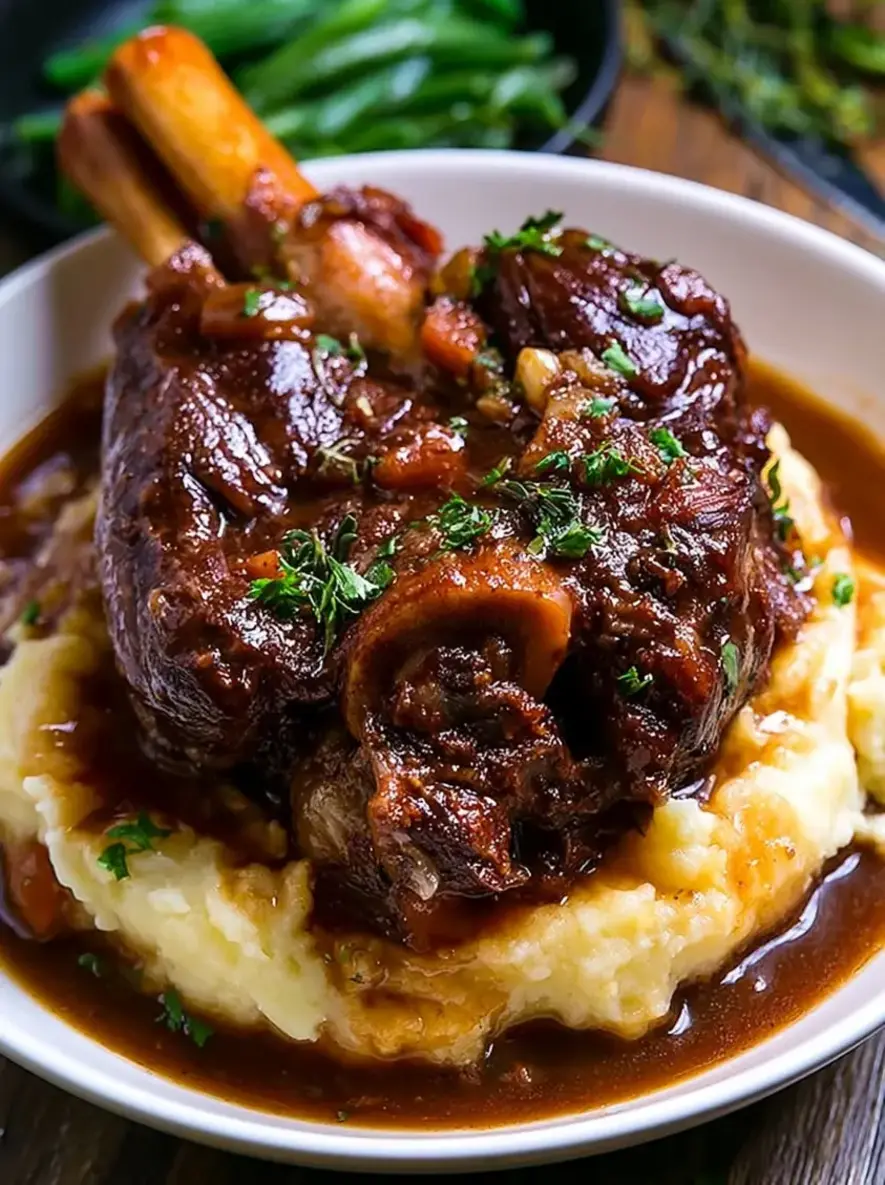
Table of Contents
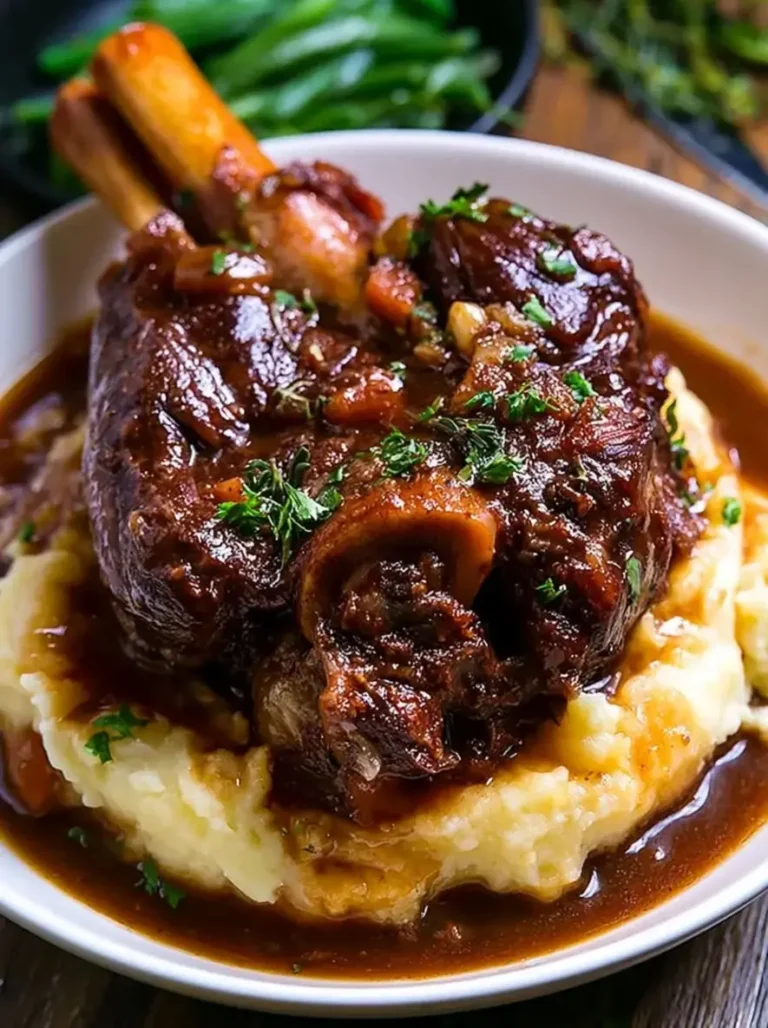
Slow-Cooked Tender Lamb Shank Served with Rich Gravy and Silky Creamy Mashed Potatoes – A Moroccan-French Comfort Classic
I’ll never forget the first time I truly understood the magic of slow-cooking a lamb shank. It was in my mother’s tiny kitchen in Marrakech — she had a way of coaxing tender meat from the humblest cuts, using nothing but patience, aromatic spices, and love. Fast forward to my years at Le Cordon Bleu in Paris, where I learned the precision of French braising techniques, and now, here in my New York City apartment, I’ve blended those two worlds into one unforgettable dish: slow-cooked lamb shank recipe with red wine gravy, served over silky creamy mashed potatoes. This is comfort food elevated — the kind that makes you close your eyes after the first bite.
Imagine this: a lamb shank that has been braised for three hours in a bath of beef stock, red wine, tomato paste, and fresh herbs, until the meat falls off the bone at the slightest touch. The gravy is deeply savory, enriched by the natural gelatin from the shanks and the subtle sweetness of caramelized carrots and onions. And then there are the mashed potatoes — whipped with warm cream and butter until they’re impossibly smooth, the perfect canvas for that luscious gravy. The scent of rosemary and thyme fills your kitchen, and you know something special is about to hit the table.
What sets my version apart? It’s that double influence: the Moroccan instinct to layer flavor with tomato paste and Worcestershire sauce for umami depth, and the French discipline of searing the meat until deeply browned before the long, gentle simmer. I’ll guide you through every step, including a trick I learned from a Parisian chef to get the mashed potatoes extra silky — using a potato ricer and a touch of cream cheese. One common mistake? Not browning the shanks enough. Don’t rush it! That brown crust is pure flavor. Let’s dive in, and I promise you’ll feel like a professional cook by the end.
Why This Slow-Cooked Lamb Shank Recipe Is the Best
The Flavor Secret: This is not your average lamb shank. By searing the meat until a deep mahogany crust forms, you unlock layers of savory complexity that no shortcut can replicate. The red wine and beef stock work together — the wine cuts through the richness, while the stock builds a hearty backbone. I add a splash of Worcestershire sauce (a trick from my mother’s pantry) and a bouquet of fresh rosemary and thyme, which are classic French aromatics but also staple herbs in Moroccan tagines. The result is a gravy that is robust, tangy, and utterly addictive — exactly what you want spooned over creamy mashed potatoes.
Perfected Texture: Achieving fall-off-the-bone tenderness requires the right temperature and time. I braise at 325°F for three hours — low enough to break down collagen without drying out the meat, and long enough for the connective tissue to melt into silkiness. The secret is a tight-fitting lid and a bed of aromatic vegetables that release moisture, creating a steaming environment. And the mashed potatoes? I insist on Yukon Gold potatoes, peeled and riced, then folded with warm heavy cream, melted butter, and a tiny pinch of nutmeg. That’s the French touch — and it makes them cloud-like.
Foolproof & Fast (for Slow Food): Despite the three-hour cook time, this recipe is remarkably easy for home cooks. Most of the work happens in the oven, leaving you free to prepare a salad or open a bottle of wine. I’ve tested it in both a Dutch oven and a slow cooker — the instructions below cover both methods. Even if you’re a beginner, as long as you follow the searing step and don’t peek into the oven during cooking, you’ll get a restaurant-quality result. And the leftovers? They might taste even better the next day.
Slow-Cooked Lamb Shank Ingredients
I pick up my lamb shanks from the Union Square Greenmarket — the meat there is always pasture-raised and well-marbled. The carrots and celery remind me of the souk in Marrakech, where vendors pile vegetables in colorful pyramids. And the red wine? I like a good Côtes du Rhône, but any dry red works. Here’s everything you’ll need.
Ingredients List
- 4 lamb shanks (about 1 lb each)
- 2 tablespoons olive oil
- Salt and black pepper to taste
- 1 large onion, chopped
- 4 cloves garlic, minced
- 2 carrots, chopped
- 2 celery stalks, chopped
- 2 tablespoons tomato paste
- 2 cups beef stock (low sodium recommended)
- 1 cup red wine (like Merlot or Cabernet Sauvignon)
- 2 sprigs fresh rosemary
- 3 sprigs fresh thyme
- 2 bay leaves
- 1 tablespoon Worcestershire sauce
- For the mashed potatoes: 2 lbs Yukon Gold potatoes, peeled and quartered; 1/2 cup heavy cream; 4 tablespoons unsalted butter; salt and white pepper to taste; optional 2 oz cream cheese for extra silkiness
Ingredient Spotlight
Lamb Shanks: These are a relatively inexpensive cut, but they have incredible flavor when slow-cooked. Look for shanks that are plump and have a good amount of connective tissue (that’s where the gelatin comes from). In a pinch, you can substitute beef shanks, but the cooking time will increase by about 30 minutes and the gravy will be less delicate.
Red Wine: The wine adds acidity and depth. Avoid sweet wines; go for a dry, medium-bodied red. If you don’t drink alcohol, you can substitute an equal amount of beef stock plus 2 tablespoons of balsamic vinegar for acidity. The gravy will be slightly different but still delicious.
Tomato Paste: This concentrated umami bomb is non-negotiable. It caramelizes during the searing step and gives the gravy its rich color. Look for double-concentrated tomato paste in a tube — it’s easier to use and more flavorful. No substitute will give you the same depth, but you can use 1/4 cup of tomato sauce (reduce stock by same amount) if you’re in a bind.
Fresh Herbs (Rosemary & Thyme): Dried herbs can be used in a pinch (1 teaspoon dried each), but fresh herbs are far superior here. The rosemary adds a pine-like fragrance that pairs beautifully with lamb, while thyme brings earthy notes. I tie them together with kitchen twine to make a bouquet garni — so easy to remove later.
| Original Ingredient | Best Substitution | Flavor / Texture Impact |
|---|---|---|
| Lamb shanks | Beef shanks | Richer, less delicate; longer cooking |
| Red wine | Beef stock + balsamic vinegar | Slightly less complex, but still good |
| Tomato paste | 1/4 cup tomato sauce (reduce stock) | Less concentrated, need more simmer |
| Fresh herbs | 1 tsp dried rosemary + 1 tsp dried thyme | A bit milder, use slightly less |
How to Make Slow-Cooked Lamb Shank — Step-by-Step
Don’t worry — while the ingredient list looks long, the steps are simple. I’ll walk you through each one, with chef-level tips to guarantee success.
Step 1: Sear the Lamb Shanks
Pat the lamb shanks dry with paper towels — moisture is the enemy of a good sear. Season generously with salt and pepper. Heat 2 tablespoons of olive oil in a large Dutch oven over medium-high heat until it shimmers. Add the shanks in a single layer (work in batches if needed) and cook without moving for 4–5 minutes per side, until deeply browned. The crust should be dark mahogany — that’s flavor! Transfer to a plate and set aside.
💡 Stella’s Pro Tip: Don’t crowd the pan. If the shanks are too close, they’ll steam instead of sear. Cook two at a time if your pot isn’t wide enough.
Step 2: Sauté the Aromatics
Reduce the heat to medium. Add the chopped onion, carrots, and celery to the same pot. Cook, stirring occasionally, for about 6 minutes, until softened and starting to brown. Add the minced garlic and cook for 1 minute more — it should be fragrant but not burnt. Stir in the tomato paste and cook for 2 minutes, scraping up any browned bits from the bottom. This step caramelizes the paste and builds a deep base for the gravy.
⚠️ Common Mistake to Avoid: Burning the tomato paste. It goes from sweet to bitter very quickly. Keep the heat moderate and stir constantly.
Step 3: Deglaze and Simmer
Pour in the red wine, scraping the bottom of the pot with a wooden spoon to release all the flavorful bits (this is called deglazing). Let the wine bubble for 2–3 minutes until slightly reduced. Add the beef stock, Worcestershire sauce, rosemary, thyme, and bay leaves. Return the lamb shanks to the pot, nestling them into the liquid. The liquid should come about halfway up the shanks — if not, add a little more stock or water. Bring to a gentle simmer, then cover the pot and transfer to a preheated 325°F oven.
💡 Stella’s Pro Tip: For extra richness, you can add a split calf’s foot or a packet of unflavored gelatin to the braising liquid. This boosts the body of the gravy without altering the flavor.
Step 4: Braise Until Tender
Cook in the oven for 2½ to 3 hours, checking after 2 hours. The lamb is ready when the meat easily pulls away from the bone with a fork. The internal temperature should be around 190°F — you’re not looking for a specific doneness; you want the connective tissue to break down. When done, carefully transfer the shanks to a plate and tent with foil. Strain the braising liquid through a fine-mesh sieve into a saucepan, pressing on the solids to extract all the goodness. Discard the solids and herbs.
⚠️ Common Mistake to Avoid: Overcooking or undercooking. If the meat isn’t pulling apart easily after 3 hours, give it another 30 minutes. But if the liquid is drying out, add a splash of stock.
Step 5: Make the Rich Gravy
Place the saucepan with the strained liquid over medium-high heat. Bring to a boil, then reduce to a simmer and let it reduce for 10–15 minutes, until it thickens to a silky consistency that coats the back of a spoon. Taste and adjust seasoning with salt and pepper. If you want a richer color, you can swirl in a tablespoon of cold butter at the end (this is called monter au beurre in French). Keep warm.
💡 Stella’s Pro Tip: For an even silkier gravy, whisk in a slurry of 1 tablespoon cornstarch mixed with 2 tablespoons cold water before reducing. This is a cheat I use when friends are coming over and I’m short on time — and no one ever knows the difference.
Step 6: Make the Silky Creamy Mashed Potatoes
While the gravy is reducing, prepare the potatoes. Place the peeled, quartered Yukon Gold potatoes in a large pot and cover with cold salted water. Bring to a boil, then simmer for 15–20 minutes until fork-tender. Drain well, then return to the pot and let steam dry for a minute. Pass the potatoes through a ricer or food mill into a bowl. Meanwhile, heat the cream and butter together in a small saucepan until the butter is melted and the mixture is hot (but not boiling). Pour the hot cream mixture over the riced potatoes and fold gently with a spatula — do not overmix. Season with salt and white pepper. For extra silkiness, stir in 2 ounces of cream cheese (at room temperature) until smooth.
⚠️ Common Mistake to Avoid: Using a food processor or electric mixer. That will make the potatoes gummy. Always rice and fold by hand for a light, fluffy texture.
| Step | Action | Duration | Key Visual Cue |
|---|---|---|---|
| 1 | Sear lamb | 8-10 mins | Deep golden brown crust |
| 2 | Sauté veggies | 6-7 mins | Onions translucent, garlic fragrant |
| 3 | Deglaze & simmer | 5 mins | Wine reduced, liquid bubbling |
| 4 | Braise in oven | 2.5-3 hrs | Meat pulls from bone easily |
| 5 | Reduce gravy | 10-15 mins | Coats the back of a spoon |
| 6 | Make mashed potatoes | 25 mins | Smooth, creamy, no lumps |
Serving & Presentation
This dish is all about comfort, but don’t be afraid to plate it like a pro. Spoon a generous portion of creamy mashed potatoes onto the center of each plate — make a slight well in the middle with the back of the spoon. Place a lamb shank on top, leaning it against the potatoes. Ladle the rich gravy over the meat and around the potatoes, letting it pool on the plate. Finish with a sprinkle of fresh chopped parsley and a few cracks of black pepper.
In my NYC kitchen, I like to serve this with a simple side of steamed green beans tossed with lemon zest and slivered almonds — a bright contrast to the rich lamb. A glass of the same red wine you used for cooking is a must. For a Moroccan twist, you can also serve a small dish of harissa on the side for anyone who wants a kick of heat. I learned that from my mother: always offer a little extra something to customize the plate.
If you’re hosting a dinner party, this dish is your secret weapon. It tastes incredibly luxurious, yet the hands-on time is minimal. Your guests will think you spent all day in the kitchen — and only you’ll know how easy it was.
| Pairing Type | Suggestions | Why It Works |
|---|---|---|
| Side Dish | Steamed green beans with almonds, roasted asparagus, or a fresh arugula salad | Adds brightness and crunch to balance richness |
| Sauce / Dip | Harissa, tzatziki, or a dollop of mint sauce | Cuts through fat and adds freshness |
| Beverage | Full-bodied red wine (Cabernet Sauvignon, Syrah), or a hoppy IPA | Wine complements the gravy; beer cuts richness |
| Garnish | Fresh parsley, microgreens, or a lemon wedge | Adds color and a fresh pop to the plate |
Make-Ahead, Storage & Reheating
I often make this slow-cooked lamb shank on a Sunday and enjoy it throughout the week — it’s a lifesaver for my busy NYC schedule. The gravy and potatoes store separately, so everything reheats beautifully. Here’s how to keep them at their best.
| Method | Container | Duration | Reheating Tip |
|---|---|---|---|
| Refrigerator | Airtight container, gravy separate | Up to 4 days | Reheat lamb and gravy in a covered pot on low, add splash of stock if too thick |
| Freezer | Freezer-safe bag or container, vacuum seal if possible | Up to 3 months | Thaw in fridge overnight, then reheat as above; mashed potatoes freeze well too |
| Make-Ahead | Braised lamb and gravy can be made 2 days ahead; potatoes same day | Up to 2 days advance | Reheat lamb in gravy; make fresh potatoes for best texture |
When reheating mashed potatoes, add a splash of milk or cream and warm them gently in a saucepan over low heat, stirring constantly. If they seem dry, a knob of butter will bring them back to life. I’ve even reheated them in the microwave at 50% power, stopping every minute to stir — but the stovetop method is better for retaining that silky texture.
💡 Stella’s Pro Tip: If you’re freezing the lamb, consider freezing the shanks in the gravy — the gravy acts as a protective layer, preventing freezer burn and keeping the meat moist.
Variations & Easy Swaps
This recipe is forgiving and flexible. Here are three favorite variations I’ve developed over the years — each one brings a different cultural twist to the table.
| Variation | Key Change | Best For | Difficulty Impact |
|---|---|---|---|
| Moroccan Spiced Lamb Shank | Add 1 tsp cumin, 1 tsp coriander, 1/2 tsp cinnamon, 1/2 tsp turmeric to the aromatics | Lovers of North African flavors | Easy (just add spices) |
| Gluten-Free / Dairy-Free | Skip Worcestershire (use coconut aminos); use olive oil instead of butter; dairy-free mashed potatoes with oat milk and vegan butter | Dietary restrictions | Easy (swap ingredients) |
| Red Wine-Free Version | Replace wine with extra beef stock + 2 tbsp balsamic vinegar + 1 tsp sugar | Non-drinkers or kids | Easy (simple swap) |
Moroccan Spiced Lamb Shank
This variation is closest to my heart. Add cumin, coriander, cinnamon, and turmeric when you sauté the aromatics — the spices toast in the oil and release a warm, fragrant aroma that takes me straight back to my mother’s kitchen. The gravy takes on a gorgeous golden hue, and the cinnamon adds a subtle sweetness that pairs beautifully with lamb. Serve with couscous instead of mashed potatoes for a truly Moroccan experience. I often add a handful of dried apricots during the last 30 minutes of braising — they plump up and add bursts of fruity sweetness.
Gluten-Free / Dairy-Free
Many readers ask me how to make this dish work for allergies. The good news: it’s naturally gluten-free if you skip the Worcestershire sauce (which contains malt vinegar) — use coconut aminos instead. For the mashed potatoes, swap butter for a high-quality vegan butter and heavy cream for full-fat oat milk. The texture won’t be quite as rich, but it’s still deliciously creamy. To boost the silky factor, add a tablespoon of olive oil and an extra pinch of salt. I tested this version for a friend with celiac, and she couldn’t stop eating.
Red Wine-Free Version
If you don’t have wine or prefer not to use it, don’t worry. Substitute the wine with an equal amount of beef stock plus 2 tablespoons of balsamic vinegar and 1 teaspoon of brown sugar. The vinegar provides the necessary acidity, and the sugar helps with caramelization. The gravy will be slightly less complex, but still deeply savory. I’ve made this version for family dinners where kids were present, and it was a hit. For an extra umami boost, add a teaspoon of soy sauce or miso paste.
What is the best way to tenderize lamb shanks before slow cooking them?
The single most important step is searing the lamb shanks on all sides until they’re deeply browned — that crust is flavor, but it also helps break down the connective tissue during braising. That said, you can also marinate them overnight in a mixture of olive oil, garlic, rosemary, and a splash of red wine. The acid in the wine helps relax the muscle fibers, making the meat even more tender. However, the true tenderization happens during the long, slow cooking: at 325°F for at least 2½ hours, the collagen melts into gelatin, giving you that fall-off-the-bone texture. Avoid the temptation to boil or cook at high heat — low and slow is the secret.
Can I substitute the red wine in the gravy with something else for the lamb shanks?
Absolutely! The best substitute for red wine is an equal amount of beef stock combined with 2 tablespoons of balsamic vinegar (or red wine vinegar) and 1 teaspoon of brown sugar. The vinegar provides the necessary acidity to balance the richness of the lamb, and the sugar helps with depth. You can also use pomegranate juice for a fruity, tangy twist, or even strong brewed coffee (unsweetened). Coffee adds a deep, earthy richness that pairs surprisingly well with lamb. Whatever you choose, avoid sweet wines or fruit juices that are high in sugar, as they can make the gravy cloying.
How long should I slow cook lamb shanks to get them fall-off-the-bone tender?
For truly fall-off-the-bone lamb shanks, you need to cook them low and slow for at least 2½ to 3 hours at 325°F (160°C) in the oven, or on low in a slow cooker for 7–8 hours. The exact time depends on the size of the shanks — larger ones may need up to 3½ hours. The key indicator is not the clock but the meat: when you insert a fork into the thickest part and twist, the meat should separate easily from the bone. If it resists, give it another 20–30 minutes and check again. Don’t rush this process — the transformation from tough to tender is worth every minute.
What can I add to mashed potatoes to make them extra creamy and silky?
My secret for ultra-silky mashed potatoes is a combination of three things: First, use Yukon Gold potatoes — they have a buttery naturally creamy texture. Second, pass them through a ricer or food mill while they’re still hot — this eliminates every lump without overworking the starch. Third, add warm (not cold) heavy cream and melted butter, and for the final push, stir in 2 ounces of cream cheese at room temperature. The cream cheese adds a subtle tang and an incredible velvety mouthfeel. For an even more decadent version, you can also fold in a tablespoon of crème fraîche. Avoid using a mixer or food processor — that will make them gummy.
Can I make this slow-cooked lamb shank recipe in a slow cooker?
Yes, this recipe works beautifully in a slow cooker. Follow the same searing and sauté steps on the stovetop, then transfer everything to the slow cooker. Cook on low for 7–8 hours or on high for 4–5 hours. The only adjustment is the liquid: you may need a bit less (about ½ cup less stock) because the slow cooker doesn’t evaporate as much. At the end, strain the liquid and reduce it in a saucepan on the stovetop to concentrate the flavor. The mashed potatoes should always be made fresh — they don’t hold up well in a slow cooker.
How do I prevent the gravy from being too thin?
The easiest fix is to simmer the strained braising liquid uncovered after cooking. Let it reduce by about a third — this concentrates the flavor and thickens the gravy naturally. If you’re short on time, whisk in a slurry made from 1 tablespoon cornstarch and 2 tablespoons cold water. Bring the gravy to a boil after adding the slurry, and it will thicken in about 1–2 minutes. For a more classic method, you can make a beurre manié (equal parts butter and flour kneaded together) and whisk it in gradually. But personally, I prefer the pure reduction method for the cleanest flavor.
What is the best cut of lamb for slow cooking?
Lamb shanks are the star for this recipe because they have a high amount of connective tissue and marrow, which breaks down into a rich, gelatinous gravy. Other excellent cuts for slow cooking include lamb shoulder (boneless or bone-in) and lamb neck. Both are well-marbled and become incredibly tender when braised. If you use lamb shoulder, cut it into large chunks and adjust the cooking time to 2½–3 hours. Avoid lean cuts like leg of lamb or chops — they will dry out during long cooking. Shanks are widely available at most grocery stores and butchers, and they’re usually very affordable.
How can I thicken the gravy without flour for a gluten-free option?
There are several excellent gluten-free ways to thicken the gravy. The simplest is to reduce it longer — simmer until it reaches your desired consistency. You can also use cornstarch (as mentioned above) or arrowroot powder. Mix 1 tablespoon of cornstarch or arrowroot with 2 tablespoons cold water, then whisk into the simmering gravy and cook for 1–2 minutes. For a nutty flavor, you can make a slurry with 1 tablespoon of potato starch. Another trick: mash a few of the cooked carrots from the braising liquid and stir them back into the gravy — the natural pectin helps thicken while adding body.
Can I use frozen lamb shanks for this recipe?
Yes, but you need to thaw them completely in the refrigerator (about 24 hours for shanks) before cooking. If you try to sear frozen shanks, they will release too much water and you won’t get a good brown crust. After thawing, pat them bone-dry with paper towels before seasoning and searing. One trick I use: after thawing, I let the shanks sit uncovered in the fridge for an hour — this dries the surface further, ensuring a perfect sear. Otherwise, the recipe proceeds exactly the same. Do not cook from frozen — it will throw off the cooking time and result in uneven tenderness.
What can I serve with lamb shanks besides mashed potatoes?
While mashed potatoes are a classic pairing, there are many delicious alternatives. Creamy polenta is a fantastic choice — it soaks up the gravy beautifully. For a lighter option, try a bed of roasted root vegetables (carrots, parsnips, and turnips) or a simple couscous with raisins and almonds (my Moroccan-inspired go-to). Egg noodles or pappardelle are also wonderful, especially if you want to turn the gravy into a pasta sauce. In the summer, I love serving the lamb shank over a pile of sautéed spinach with garlic and lemon — the acidity cuts through the richness.
Share Your Version!
I absolutely love seeing how you make this slow-cooked lamb shank recipe your own. Have you tried the Moroccan spice variation? Did you add a secret ingredient to your mashed potatoes? Drop a comment below — I read every single one and I’ll do my best to answer your questions. If you’re on Instagram or Pinterest, snap a photo of your plate and tag me @leosfoods. I might even share your creation in my stories! And if you’re feeling generous, leave a star rating — it helps other home cooks find this recipe and know it’s a winner.
Here’s a question for you: What’s the one side dish you always crave with a slow-braised meat like this? I’m always looking for new ideas from this incredible community. From my NYC kitchen to yours — I hope this recipe brings as much warmth to your table as it does to mine. — Stella 🧡
Love This Recipe? Save It to Pinterest!
If you enjoyed this Slow-Cooked Tender Lamb Shank Served with Rich Gravy and Silky Creamy Mashed Potatoes recipe, don’t let it get lost in your browser tabs! 😄 Pin it now so you can find it again anytime — and explore hundreds more tried-and-tested recipes waiting for you on my Pinterest boards.
👉 Follow Stella on Pinterest @stellarecipeblog
📌 Pin this recipe · 🔁 Re-pin your favorites · 💬 Tag me when you make it — I love seeing your creations!
Slow-Cooked Tender Lamb Shank Served with Rich Gravy and Silky Creamy Mashed Potatoes
Ingredients
- 4 lamb shanks
- 2 tablespoons olive oil
- Salt and black pepper to taste
- 1 large onion, chopped
- 4 cloves garlic, minced
- 2 carrots, chopped
- 2 celery stalks, chopped
- 2 tablespoons tomato paste
- 2 cups beef stock
- 1 cup red wine
- 2 sprigs fresh rosemary
- 3 sprigs fresh thyme
- 2 bay leaves
- 1 tablespoon Worcestershire sauce
Instructions
Tried This Recipe? Leave a Comment!
Did you make this recipe? I’d love to hear how it turned out! Please leave a comment and a rating below. Your feedback helps other home cooks and supports cheerychop.com!
For more delicious inspiration, follow me on Pinterest!