Crispy Tropical Mango Coconut Pavlova Nests Recipe
“`html
Table of Contents
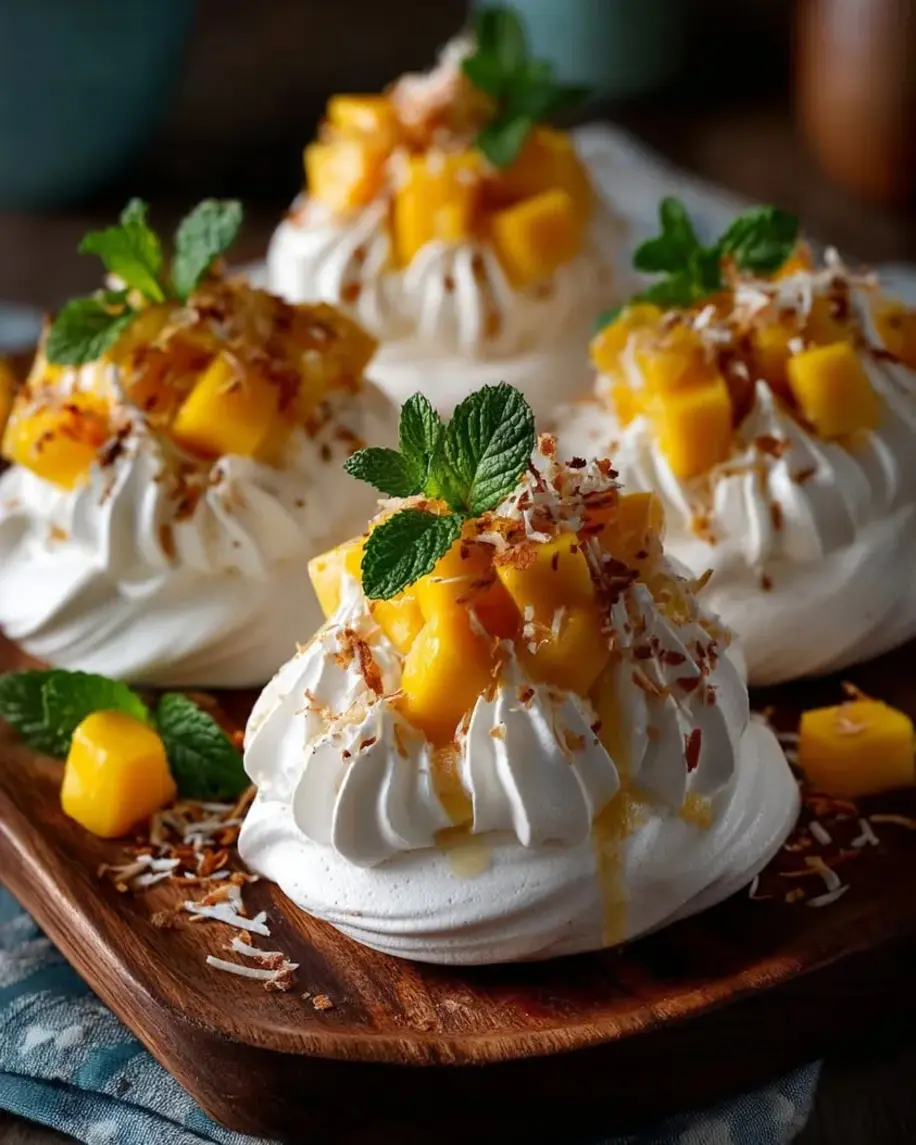
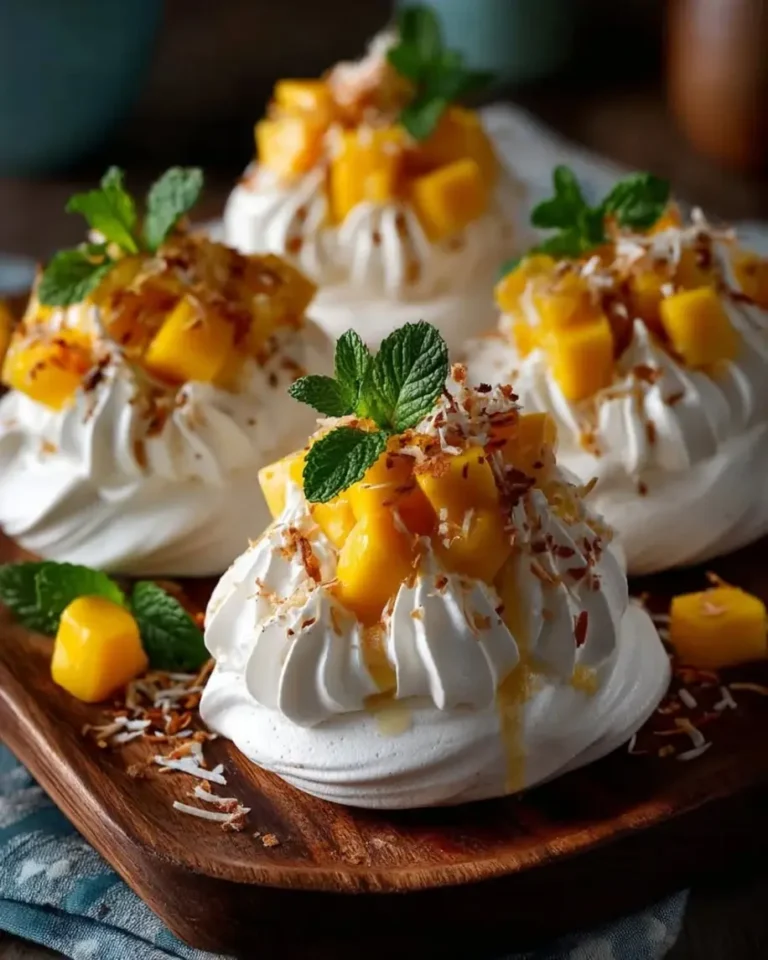
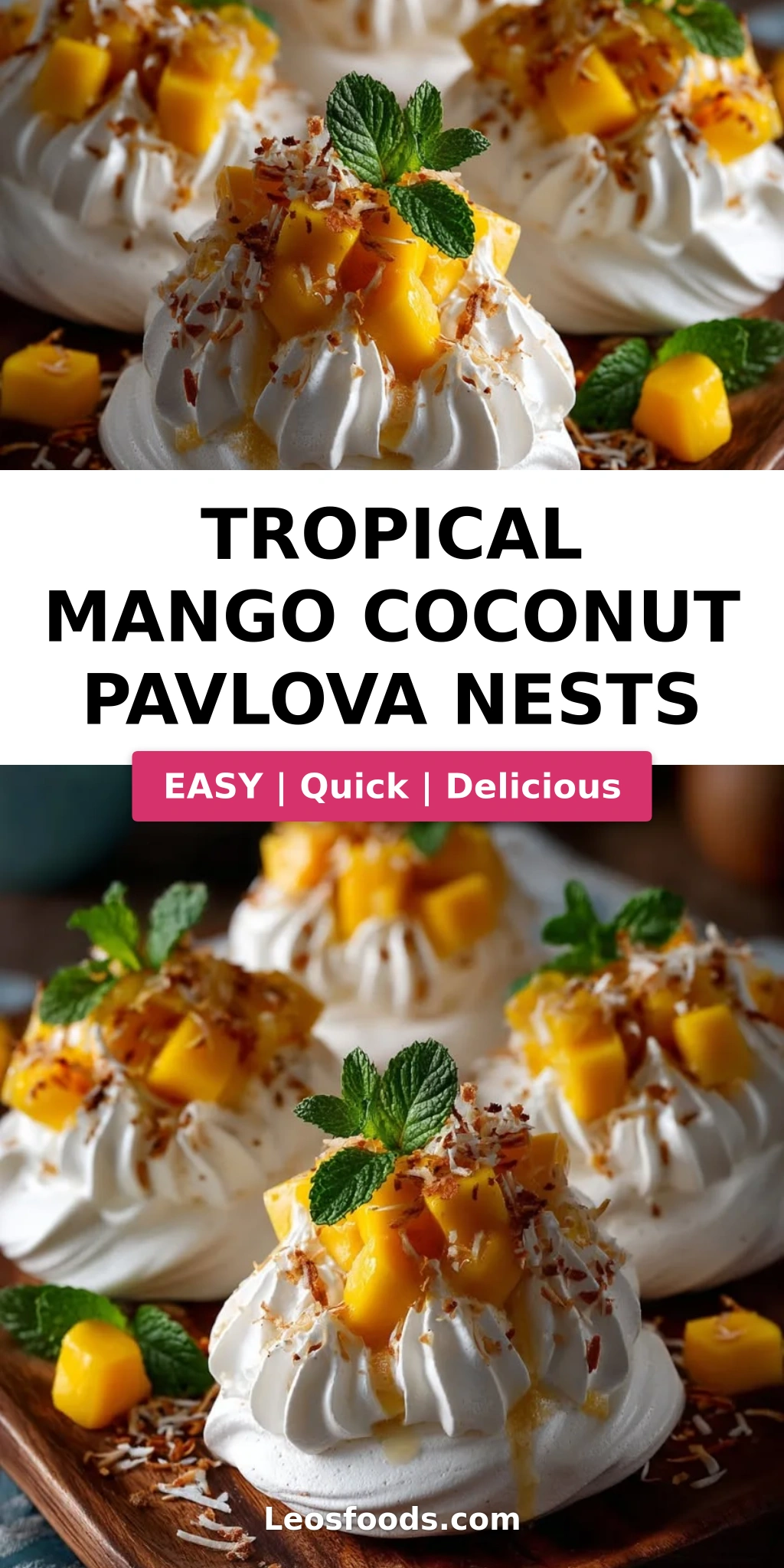
Tropical Mango Coconut Pavlova Nests – Crispy Meringue Shells with a creamy coconut center and ripe mango topping
Let me tell you a little secret: the very first time I made pavlova nests was in a tiny Parisian kitchen during my pastry training, and I completely over-whipped the meringue — it was a glorious, sugary mess. But that experience taught me the kind of patience and technique you can only learn through trial and error. Now, 20 years later, I bring that same French discipline to my New York City kitchen, but I always infuse it with the warmth and generosity I learned in my mother’s kitchen in Morocco. This Tropical Mango Coconut Pavlova Nests recipe is exactly that — a perfect balance of crisp, airy meringue, silky coconut cream, and the sweet-tropical punch of ripe mango. It’s my go-to dessert when I want something that looks absolutely stunning but is secretly simpler than it appears. The combination of mango, coconut, and the light-as-air meringue creates a dessert that’s refreshing, elegant, and deeply satisfying all at once.
When you crack through that delicate, shattery shell with your fork, you’ll find a soft, marshmallowy center that melts on your tongue. The smooth coconut cream adds a luscious, tropical richness, while the fresh mango — macerated with honey and lime zest — brings a bright, sunny sweetness that cuts through all that richness perfectly. I love the way the toasted coconut flakes add a little golden crunch and a nutty aroma that makes the whole thing smell like a vacation on a plate. It’s a dessert that feels special enough for a dinner party, but easy enough to make on a Sunday afternoon just because you’re craving something beautiful.
What sets my Tropical Mango Coconut Pavlova Nests apart is how I handle the meringue. After training in Paris, I learned that the key to a stable, crack-free pavlova — even in New York’s humidity — is to use a little cornstarch and vinegar in the egg whites, and to cool the meringues entirely in the oven with the door slightly open. My mother always said that good things take time, and that slow cooling is the secret weapon against cracks and weeping. I’ll share my best pro tip for achieving that signature crisp shell with a tender interior, plus the most common mistake I see home cooks make (and exactly how to avoid it). Trust me, by the end of this post, you’ll feel confident enough to make these mango pavlova nests for any occasion.
Why This Tropical Mango Coconut Pavlova Nests Recipe Is the Best
The Flavor Secret — The real magic here is the way the creamy coconut cheese mixture meets the bright, tangy mango topping. I use coconut cream (the thick part from a can of full-fat coconut milk) which has a far more intense, tropical flavor than coconut extract. Combined with a touch of lime zest and honey, it brings a brightness that makes each bite pop. My Moroccan roots remind me to always balance sweetness with acid and salt — just a pinch of salt in the meringue and that bright lime finish are what make this recipe unforgettable.
Perfected Texture — Achieving that specific texture — crisp on the outside, soft and marshmallowy just inside — is what separates a good pavlova from a great one. The trick is to bake at a very low temperature (250°F) so the egg whites dry out slowly without browning. I also leave the meringues in the oven to cool completely after baking, which prevents cracking and ensures that the interior stays tender. This French technique combined with my mother’s patience creates the ideal pavlova nest every time.
Foolproof & Fast — While pavlova might sound intimidating, this recipe is actually incredibly accessible. The ingredient list is simple — egg whites, sugar, a little vinegar and cornstarch — and the method is straightforward if you follow my visual cues. I designed this recipe for home cooks who want to impress without the stress. Once you’ve made it once, you’ll wonder why you ever thought pavlova was difficult. Plus, it’s naturally gluten-free, which makes it a crowd-pleaser at any gathering.
Tropical Mango Coconut Pavlova Nests Ingredients
I pick up my mangoes from the Union Square Greenmarket in the summer, or from a reliable Latin grocery store in Brooklyn year-round. The key is to find mangoes that are just ripe — not too soft, with a floral, tropical scent at the stem. The coconut cream I love is from Thai Kitchen or Savoy, and I always keep a few cans in my NYC pantry. When I close my eyes and smell toasted coconut, I’m 10 years old again in Morocco, helping my mother in the kitchen — that golden, nutty aroma is pure comfort for me.
Ingredients List
- For the Pavlova Nests:
- 4 large egg whites, room temperature
- 1 cup granulated sugar
- 1 tsp cornstarch
- 1 tsp white vinegar
- 1/2 tsp vanilla extract
- For the Mango Coconut Filling:
- 1 cup heavy whipping cream, chilled
- 1/4 cup coconut cream
- 2 tbsp powdered sugar
- 1 tsp vanilla extract
- 1 cup ripe mango, diced
- For the Tropical Topping:
- 1/2 cup ripe mango, diced
- 1/4 cup toasted coconut flakes
- 1 tbsp honey
- 1 tsp lime zest
- For Garnish (optional):
- Fresh mint leaves
- Extra toasted coconut flakes
Ingredient Spotlight
Egg Whites — Room temperature egg whites whip to a greater volume than cold ones. Separate your eggs when they’re cold (it’s easier), then let the whites sit on the counter for 20-30 minutes before whipping. If you’re in a rush, put the bowl of egg whites over a bowl of warm water for 5 minutes. Substitution: Use liquid egg whites from a carton, but make sure they’re labeled as pasteurized and allow extra whipping time. The texture will be slightly less stable, so add an extra 1/2 tsp cornstarch.
Granulated Sugar — This isn’t just sweetness — the sugar granules physically help stabilize the egg white foam by dissolving and creating a syrup that holds the protein structure. Use fine, white granulated sugar for the best results. Substitution: Superfine sugar (sometimes called caster sugar) dissolves even faster and creates a glossier meringue. You can make your own by blitzing regular granulated sugar in a food processor for 30 seconds.
Mango — The key to a truly tropical pavlova dessert is a ripe but still-firm mango. If it’s too soft, the diced pieces will turn to mush in the topping. I love Champagne mangoes (also called Ataulfo) for their buttery texture and minimal strings. Substitution: Fresh peaches or nectarines work beautifully in the summer, or use drained canned mangoes in a pinch (pat them dry very well so they don’t make the cream weep).
Coconut Cream — This is the thick, creamy layer that separates in a can of full-fat coconut milk. It adds richness and a deep coconut flavor that coconut milk alone can’t match. Substitution: For a lighter version, use 1/4 cup full-fat coconut milk mixed with 1/2 tsp coconut extract. Or use 1/4 cup heavy cream with 1/2 tsp coconut extract — the texture will be lighter but still delicious.
| Original Ingredient | Best Substitution | Flavor / Texture Impact |
|---|---|---|
| Egg whites (fresh) | Liquid pasteurized egg whites | Slightly less stable foam; add extra cornstarch |
| Granulated sugar | Superfine / caster sugar | More glossy meringue; dissolves faster |
| Coconut cream | Full-fat coconut milk + coconut extract | Less rich but still coconut-forward |
| Fresh mango | Fresh peaches / nectarines | Different but still bright and juicy |
How to Make Tropical Mango Coconut Pavlova Nests — Step-by-Step
Making these coconut pavlova nests is genuinely a joy — the process is meditative and the result is absolutely spectacular. I’ll guide you through each step with the exact visual cues you need, so you can feel confident and proud of what you make.
Step 1: Preheat and Prepare
Preheat your oven to 250°F (120°C) and line a large baking sheet with parchment paper. Use a little dab of meringue under the corners of the parchment to stick it to the pan — that way the paper won’t slide around when you spoon the meringue. For best results, use a baking sheet that’s completely flat (no warped edges) so the heat distributes evenly.
💡 Stella’s Pro Tip: Draw six 3-inch circles on the parchment (using a pencil on the underside) to use as a guide for perfectly even nests. Flip the paper over so the pencil side is down. This tiny prep step makes a surprisingly big difference in the final presentation.
Step 2: Whip the Egg Whites
In a scrupulously clean, dry bowl (glass or metal is best — never use plastic as it can retain grease), beat the 4 room-temperature egg whites on medium speed with a whisk attachment until they become frothy and form soft peaks. When you lift the whisk, the peaks should droop gently over — this is the “soft peak” stage. If you’re not there yet, keep going. A clean bowl is crucial because any trace of fat or yolk will prevent the whites from reaching their full volume.
⚠️ Common Mistake to Avoid: Even a speck of egg yolk in the whites will prevent them from whipping properly. Separate each egg into a small bowl first, then add the white to the main bowl. If you break a yolk, save that egg for another use and start fresh with a clean bowl.
Step 3: Add the Sugar
With the mixer running on medium-high speed, add the granulated sugar one tablespoon at a time, allowing about 15 seconds between each addition. Take your time here — adding the sugar slowly is the secret to a stable, glossy meringue that won’t weep later. After all the sugar is added, continue beating for 3-5 minutes until the meringue is thick, glossy, and holds a stiff peak when you lift the whisk. Rub a tiny bit between your fingers — it should feel silky, not grainy. If it feels grainy, keep beating for another minute or two until the sugar dissolves completely.
💡 Stella’s Pro Tip: For the most stable meringue, make sure your egg whites are truly at room temperature (about 70°F). Cold egg whites don’t whip as well and can lead to a less voluminous pavlova. I take my eggs out of the fridge about 45 minutes before I start.
Step 4: Fold in the Stabilizers
Sprinkle the cornstarch over the meringue, then add the white vinegar and vanilla extract. Use a large rubber spatula to gently fold these in — use just 5 or 6 gentle folds until it’s all combined. Do not overmix or you’ll deflate all that gorgeous volume you just created. The cornstarch and vinegar are your insurance policy against a weeping or cracking pavlova, which is especially important in more humid climates like New York in the summer.
Step 5: Shape the Nests
Spoon the meringue onto the prepared baking sheet, dividing it evenly among your six drawn circles. Use the back of a spoon to shape each portion into a round nest, building the sides up slightly and creating a shallow well in the center. The walls should be about 1 inch high. The more defined the well, the better it will hold the beautiful mango coconut filling later. Don’t worry if they’re not perfect — the charm of a pavlova is in its slightly rustic, cloud-like appearance.
⚠️ Common Mistake to Avoid: Making the wells too deep or the walls too thin can cause the meringue to crack under the weight of the cream. Make the indent gentle — about the depth of your thumb — and keep the walls at least 1 inch thick to ensure they hold their shape during baking.
Step 6: Bake and Cool
Bake the meringue nests on the center rack for 60–70 minutes. They should be crisp on the outside but still a pale ivory color — not browned at all. The surface should feel dry and firm to the touch (the bottom might still feel slightly soft, that’s fine). After baking, turn the oven off and prop the door open with a wooden spoon handle. Let the pavlovas cool completely inside the oven for at least 1 hour, or preferably 2 hours. This slow cooling is absolutely critical — it prevents the sudden temperature change that causes cracking and ensures that the interior stays perfectly tender.
💡 Stella’s Pro Tip: If you’re making the pavlova nests in advance (they keep beautifully for up to 3 days in an airtight container at room temperature), do not add any filling until just before serving. The unfilled nests stay crisp and perfectly crunchy — then you fill them at the last minute for that spectacular moment when you bring them to the table.
Step 7: Make the Coconut Cream Filling
In a large, chilled bowl (put it in the fridge for 15 minutes before you start), combine the chilled heavy whipping cream, coconut cream, powdered sugar, and vanilla extract. Beat on medium-high speed with an electric mixer until soft peaks form — you want the cream to be light, airy, billowy, and just stiff enough to hold its shape when you dollop it. Be careful not to overbeat it or it will turn into butter. The coconut cream adds a dreamy tropical richness that pairs perfectly with the crisp meringue.
⚠️ Common Mistake to Avoid: Over-whipping the cream is the most common error here. Watch closely after about 2-3 minutes. The moment the mixture holds a soft, floppy peak when you lift the whisk, stop immediately. Over-whipped cream becomes grainy and eventually separates into butter and buttermilk, which will ruin the silky texture you’re aiming for.
Step 8: Assemble the Nests
Just before serving, spoon the coconut cream mixture into each cooled pavlova nest, filling the well generously. Top each with the diced mango. Then, in a small bowl, combine the remaining diced mango, toasted coconut flakes, honey, and lime zest. Spoon this tropical topping over the cream-covered nests, letting a little tumble down the sides. Garnish with fresh mint leaves and extra toasted coconut flakes if you’re feeling fancy. Serve immediately while the meringue is still crisp and the cream is cold and fluffy.
💡 Stella’s Pro Tip: For the perfect mango dice, slice the mango cheeks off the pit, then score a crosshatch pattern into the flesh (without cutting through the skin). Push the skin inside out to pop the cubes up, then slice them off. This gives you neat, even pieces that look gorgeous on top of the nests.
| Step | Action | Duration | Key Visual Cue |
|---|---|---|---|
| 1 | Preheat & prep | 5 min | Parchment-lined tray with 6 circles |
| 2 | Whip egg whites to soft peaks | 2–3 min | Frothy, peaks droop gently |
| 3 | Add sugar gradually | 4–6 min | Stiff, glossy peaks; no graininess when rubbed |
| 4 | Fold in cornstarch, vinegar, vanilla | 30 sec | Uniformly combined, still voluminous |
| 5 | Shape nests | 5 min | 6 even nests with shallow well |
| 6 | Bake & slow-cool | 60–70 min bake + 1–2 hr cool | Crisp, pale, dry surface |
| 7 | Whip cream & coconut | 2–3 min | Soft peaks, billowy |
| 8 | Assemble & serve | 5 min | Nests filled, topped, garnished |
Serving & Presentation
These Tropical Mango Coconut Pavlova Nests are best served immediately after assembly, when the meringue is still crisp and the cream is cold and lush. I love to serve them on a large white platter — the contrast between the snowy meringue, the golden coconut, and the bright orange mango is absolutely stunning. A few fresh mint leaves scattered around the platter add a beautiful pop of green and a hint of freshness that ties the whole tropical theme together. For a Moroccan touch, I sometimes sprinkle a few pomegranate arils over the top — they add a jewel-like color and a little burst of tartness.
These are the perfect dessert for a spring brunch, a summer barbecue, or a special occasion like Mother’s Day or a birthday. They’re impressive enough to serve at a dinner party but simple enough that you won’t break a sweat in the kitchen. I often make the meringue nests a day ahead and store them in an airtight container at room temperature, then whip the cream and dice the mango just before serving. It makes entertaining so much easier — you get all the glory of a show-stopping dessert without the last-minute panic.
| Pairing Type | Suggestions | Why It Works |
|---|---|---|
| Side Dish | Grilled pineapple skewers | Smoky caramel notes complement the tropical profile |
| Sauce / Dip | Passion fruit coulis | Tangy acidity cuts through richness of cream |
| Beverage | Prosecco or sparkling rosé | Bubbles refresh the palate between bites of creamy meringue |
| Garnish | Fresh mint leaves, edible flowers | Brightens color and adds fresh aroma |
Make-Ahead, Storage & Reheating
One of the things I love most about this recipe is how well it works for entertaining. As a busy cook in NYC, I’m always looking for ways to get ahead of the game without sacrificing quality. The pavlova nests themselves can be made up to 3 days in advance — simply store them in an airtight container at room temperature with a sheet of parchment between layers. The filling and topping are best prepared fresh, but you can dice the mango and toast the coconut up to 6 hours ahead and keep them at room temperature.
| Method | Container | Duration | Reheating Tip |
|---|---|---|---|
| Refrigerator | Airtight container (unfilled nests) | 3 days | Not needed; serve at room temp |
| Freezer | Freezer-safe container (unfilled nests only) | 1 month | Thaw at room temp 2 hrs; do not microwave |
| Make-Ahead | Separate components | Nests: 3 days; Cream: day of | Assemble just before serving |
Important: Never refrigerate assembled pavlova nests — the moisture from the cream softens the meringue, turning it from crisp to soggy within just a few hours. If you have leftover assembled nests (unlikely, but possible!), they’ll still taste delicious the next day, but the texture will be more like a soft meringue than a crisp one. I still love eating them cold from the fridge — they have a lovely marshmallow-y texture that’s different but equally wonderful. Just don’t try to re-crisp them in the oven once they’ve been filled.
Variations & Easy Swaps
| Variation | Key Change | Best For | Difficulty Impact |
|---|---|---|---|
| Passion Fruit & Coconut | Replace mango topping with passion fruit pulp | More tart, tangy flavor profile | Same |
| Dairy-Free Version | Use full-fat coconut cream (chilled) instead of heavy cream | Dairy-free / vegan dessert | Same |
| Chocolate-Drizzled | Drizzle with melted dark chocolate before serving | Chocolate lovers | Same |
Passion Fruit & Coconut Variation
If you love a tangy, tropical flavor, swap the mango topping for fresh passion fruit pulp. Simply scoop out the pulp from 4-5 passion fruits and spoon it over the cream just before serving. The seeds add a lovely crunch and the tartness of the passion fruit is a beautiful contrast to the sweet meringue and rich coconut cream. This version is incredibly popular in my NYC cooking classes — it’s like a tropical piña colada in dessert form.
Dairy-Free / Vegan Version
For a dairy-free version, skip the heavy cream altogether and use only the thick layer of coconut cream that rises to the top of a chilled can of full-fat coconut milk. Whip it with a tablespoon of powdered sugar and a splash of vanilla extract — it becomes beautifully light and fluffy. This version is perfect for anyone who’s lactose intolerant or following a plant-based diet. The flavor is even more coconut-forward, which pairs wonderfully with the mango and lime. I’ve tested this version multiple times with my vegan friends in Brooklyn, and it never disappoints.
Chocolate-Drizzled Twist
For an extra layer of indulgence, melt 3 oz of dark chocolate (about 70% cacao) with a tablespoon of coconut oil and drizzle it over the finished pavlova nests. The bitterness of the dark chocolate cuts through the sweetness of the meringue and adds a sophisticated note that makes the dessert feel even more special. I learned this trick during my Parisian pastry days — a little dark chocolate makes everything feel like haute cuisine. This variation is particularly popular during the winter holidays when I serve it at my annual NYC Christmas dinner.
Share Your Version!
I absolutely love hearing from you — seeing your photos, reading your comments, and knowing that my recipes are bringing joy to your table. If you make these Tropical Mango Coconut Pavlova Nests, please leave a star rating and a comment below to let me know how it turned out! Did you try any of the variations? Did the nests hold up in your climate? I’m especially curious to know how the recipe works for those of you in more humid areas — that’s a question I get all the time, and I’d love to learn from your experience too.
Tag me on Instagram or Pinterest when you make this recipe — use the hashtag #LeosFoodsMangoPavlova so I can see your beautiful creations. There’s nothing that makes my day like seeing a reader’s photo of a recipe they made with their own hands. And if you have a question that I didn’t answer in the FAQ below, just ask me directly in the comments — I personally read and respond to every single one. From my NYC kitchen to yours — I hope this recipe brings as much warmth to your table as it does to mine. — Stella 🧡
How do you keep pavlova nests from cracking in a humid climate?
Humidity is the number one enemy of perfect pavlova, but there are several tricks you can use to minimize cracking. First, add the cornstarch and white vinegar to the meringue — these stabilizers help absorb excess moisture and reinforce the egg white structure. Second, bake at a very low temperature (250°F) and never open the oven door during baking. Third, and most importantly, let the meringue cool completely in the oven with the door propped open slightly for 1-2 hours after baking. This gradual cooling prevents the sudden temperature shift that causes cracks. If you live in a particularly humid area like New Orleans or coastal Florida, try to make the pavlova nests on a dry day if possible, and store them in an airtight container with a food-safe silica gel packet or a piece of dry bread (the bread absorbs ambient moisture — just don’t let it touch the meringue). I’ve tested this recipe in New York’s summer humidity and the cornstarch-vinegar technique really does make a big difference.
Can I use frozen mango for the topping on Tropical Mango Coconut Pavlova Nests?
Yes, you can definitely use frozen mango in a pinch, but there are a few important considerations for the best results. Frozen mango tends to release more liquid as it thaws, which can make the topping watery and potentially make the meringue or cream soggy. To avoid this, thaw the frozen mango completely in a colander set over a bowl to catch the liquid. Pat the mango pieces very dry with paper towels before dicing and using them. Keep in mind that frozen mango is often softer in texture than fresh, so the diced pieces may not hold their shape as perfectly. I recommend using frozen mango primarily for the coconut cream filling (where the texture is less visible) and reserving fresh mango for the show-stopping topping. If you have no choice but to use frozen for both, make sure it’s very well-drained and consider macerating the topping mango with a little extra honey and lime zest to boost the flavor that can get muted during freezing.
What can I substitute for coconut cream in this pavlova nest recipe?
If you don’t have coconut cream, there are several excellent substitutions that will still give you a delicious result. The best substitute is full-fat coconut milk — chill the can in the refrigerator overnight, then open it and scoop off the thick, creamy layer that rises to the top (this is essentially coconut cream). Use 1/4 cup of this thickened cream in place of the coconut cream. Alternatively, you can use 1/4 cup heavy cream mixed with 1/2 teaspoon of coconut extract — this won’t have the same richness but will still deliver that coconut flavor. For a completely dairy-free option, use only the thickened coconut cream as your whipped topping (whip it with 1 tablespoon of powdered sugar). If you don’t have coconut at all, you can simply skip it and use 1 cup of heavy cream plus 1 tablespoon of powdered sugar for the filling — the flavor will be less tropical but still delicious. The texture will be slightly less rich and coconut-forward, so you might want to add a little extra toasted coconut on top to bring back that element.
How far in advance can I assemble the Tropical Mango Coconut Pavlova Nests?
I strongly recommend assembling the pavlova nests no more than 30 minutes before serving for the best results. The reason is that the moisture from the cream and mango will start to soften the meringue almost immediately, turning that wonderful crisp exterior into a softer, chewier texture. If you need to prepare ahead, here’s the best strategy: bake the meringue nests up to 3 days in advance and store them in an airtight container at room temperature. Prepare the coconut cream mixture up to 6 hours ahead and keep it refrigerated in a sealed container. Dice the mango and make the tropical topping up to 6 hours ahead and store at room temperature. Then, just before serving, simply fill the nests, top them, and garnish. This way you get that spectacular moment of serving a perfectly crisp pavlova without any last-minute stress. If you do have assembled leftovers, they’re still delicious the next day but the texture will be more like a soft, marshmallowy meringue rather than the crisp original.
Can I make a large single pavlova instead of individual nests?
Absolutely! You can easily turn this recipe into one large pavlova instead of 6 individual nests. Simply spread the meringue into a single large circle on the parchment paper (about 8-9 inches in diameter), creating a shallow well in the center just like you would with the individual nests. The baking time will need to be increased to about 75-85 minutes because the larger meringue takes longer to dry out. All other techniques remain the same — low temperature, slow cooling in the oven with the door slightly open. A large pavlova makes a stunning centerpiece for a celebration and is perfect for serving family-style. When you’re ready to serve, pile the coconut cream and mango topping generously in the center, then let everyone break off pieces of the meringue and scoop up some topping. It’s a more communal, sharing-style dessert that feels very warm and generous — the way my mother always served dessert in Morocco.
Why did my meringue weep or release liquid after baking?
Weeping — when little beads of sugary liquid appear on the surface of the meringue — is typically caused by under-baking or by humidity. If the meringue hasn’t baked long enough to dry out completely, the moisture inside will slowly migrate to the surface. This is also why I recommend cooling the pavlovas completely in the oven — the gradual cooling continues the drying process. Another common cause is adding the sugar too quickly or not beating it long enough. If the sugar isn’t fully dissolved (you can feel grittiness when you rub a bit of meringue between your fingers), it can recrystallize and cause weeping. To fix this, make sure you beat the meringue until it’s very thick and glossy, and rub a small amount between your fingers to check for any graininess before folding in the cornstarch and vinegar. If you live in a very humid environment, increase the cornstarch to 1.5 teaspoons and the vinegar to 1.5 teaspoons — these stabilizers are your best defense against moisture-related issues. Also, avoid making pavlova on rainy or extremely humid days if possible.
Can I use a different fruit instead of mango for this pavlova recipe?
Yes, this recipe is very versatile and works beautifully with many other tropical and summer fruits. Fresh pineapple — grilled or raw, diced small — is a fantastic substitute that brings its own sweet-tart flavor. Peaches or nectarines, diced and macerated with a little honey and lemon juice, are wonderful in the summer. Passion fruit pulp is another excellent option that adds a tangy, exotic flavor — just scoop the pulp straight from the fruit and spoon it over the cream. For a more tropical twist, try a combination of kiwi, papaya, and lychee. If you’re making this in the winter, consider using poached pears or a citrus medley of blood oranges and grapefruit. Whatever fruit you choose, the key is to make sure it’s not too watery — pat diced fruit dry with paper towels if needed, and avoid using very soft or overripe fruit that will break down into juice. The goal is to have beautiful, distinct pieces of fruit that sit elegantly on top of the cream without making the meringue soggy.
How do I toast coconut flakes without burning them?
Toasting coconut flakes is quick and easy, but they can go from golden to burnt in seconds if you don’t watch carefully. I recommend toasting them in a dry skillet over medium heat — this method gives you the most control because you can see the color change in real time and toss the flakes constantly for even browning. Spread the 1/4 cup coconut flakes in a single layer in the skillet and stir or toss them every 30 seconds or so. After about 3-5 minutes, they will start to turn golden brown at the edges. The moment you see a warm golden color across most of the flakes, immediately transfer them to a plate or bowl to cool — they will continue to darken from residual heat. You can also toast them in the oven at 325°F for 5-7 minutes, spread in a single layer on a baking sheet, stirring halfway through. Watch closely towards the end either way. Burnt coconut becomes bitter, so it’s better to under-toast slightly than to overdo it. Toasted coconut keeps well in an airtight container for about a week, so you can make it ahead of time.
Can I make this recipe without an electric mixer?
Yes, you can make this recipe by hand, but I want to be honest with you — it takes some serious arm strength! Whisking egg whites to stiff peaks by hand requires about 10-15 minutes of steady, vigorous whisking in a large bowl using a balloon whisk. The key is to use a copper bowl (if you have one) or a glass or metal bowl, and make sure it’s completely clean and free of any grease. You’ll need to whisk in a circular motion, lifting the whisk out of the mixture with each rotation to incorporate as much air as possible. The process is definitely a workout, but there’s something very satisfying about making pavlova the traditional way. If you decide to go the hand-whisking route, expect about 10 minutes for soft peaks and 15-18 minutes for stiff, glossy peaks. Rest your arm when needed — a few short breaks won’t hurt the meringue. For the whipped cream filling, you can also whisk by hand; it will take about 5 minutes of fast whisking to reach soft peaks. I actually love the meditative quality of making meringue by hand sometimes — it connects me to the generations of cooks who didn’t have electric mixers!
Is this pavlova recipe suitable for a gluten-free diet?
Yes, this Tropical Mango Coconut Pavlova Nests recipe is naturally gluten-free — there is no wheat flour or any gluten-containing ingredient in the meringue, the coconut cream filling, or the mango topping. The cornstarch used in the meringue is a gluten-free thickener and stabilizer. However, if you are serving someone with celiac disease or a severe gluten intolerance, always double-check that your specific brands of vanilla extract, powdered sugar, and any other packaged ingredients are labeled gluten-free, as cross-contamination can sometimes occur during processing. Toasted coconut flakes are naturally gluten-free as well, but again, check the label to be sure. This recipe is a fantastic option for gluten-free guests because it feels so decadent and special — no one will feel like they’re missing out on anything. I’ve served this at countless dinner parties in New York where someone in the group needed a gluten-free dessert, and it received rave reviews every time.
Did You Make This Recipe? I’d Love to Know!
Leave a 🌟 star rating and a comment below — your feedback helps me create better recipes for you! Tag me on Instagram @stellarecipeblog with your beautiful pavlova creations. What variation did you try? How did the nests hold up in your kitchen? I read every single comment and I’m always here to help if you have questions. Happy cooking!
Love This Recipe? Save It to Pinterest!
If you enjoyed this Tropical Mango Coconut Pavlova Nests recipe, don’t let it get lost in your browser tabs! 😄 Pin it now so you can find it again anytime — and explore hundreds more tried-and-tested recipes waiting for you on my Pinterest boards.
👉 Follow Stella on Pinterest @stellarecipeblog
📌 Pin this recipe · 🔁 Re-pin your favorites · 💬 Tag me when you make it — I love seeing your creations!
“`
Print
Tropical Mango Coconut Pavlova Nests
- Yield: 6 1x
Ingredients
- For the Pavlova Nests:
- 4 large egg whites, room temperature
- 1 cup granulated sugar
- 1 tsp cornstarch
- 1 tsp white vinegar
- 1/2 tsp vanilla extract
- For the Mango Coconut Filling:
- 1 cup heavy whipping cream, chilled
- 1/4 cup coconut cream
- 2 tbsp powdered sugar
- 1 tsp vanilla extract
- 1 cup ripe mango, diced
- For the Tropical Topping:
- 1/2 cup ripe mango, diced
- 1/4 cup toasted coconut flakes
- 1 tbsp honey
- 1 tsp lime zest
- For Garnish (optional):
- Fresh mint leaves
- Extra toasted coconut flakes
Instructions
- Preheat the oven to 250°F (120°C) and line a baking sheet with parchment paper.
- Beat the egg whites until soft peaks form.
- Gradually add the sugar, beating until stiff, glossy peaks form.
- Fold in the cornstarch, vinegar, and vanilla extract.
- Spoon the meringue into 6 nests on the prepared baking sheet, creating a shallow well in the center of each.
- Bake for 60–70 minutes until crisp on the outside.
- Turn off the oven and allow the pavlovas to cool completely inside with the door slightly open.
- Whip the heavy cream, coconut cream, powdered sugar, and vanilla extract until soft peaks form.
- Fill each cooled pavlova nest with the coconut cream mixture.
- Top with diced mango.
- Combine the remaining mango, toasted coconut flakes, honey, and lime zest.
- Spoon the tropical topping over each nest.
- Garnish with mint leaves and extra toasted coconut flakes if desired.
- Serve immediately.
Nutrition
- Calories: 285
- Sugar: 32 g
- Fat: 15 g
- Carbohydrates: 35 g
- Protein: 3 g
Tried This Recipe? Leave a Comment!
Did you make this recipe? I’d love to hear how it turned out! Please leave a comment and a rating below. Your feedback helps other home cooks and supports cheerychop.com!
For more delicious inspiration, follow me on Pinterest!