Stunning Diamond Dragonfruit Lychee Crystal Pyramids
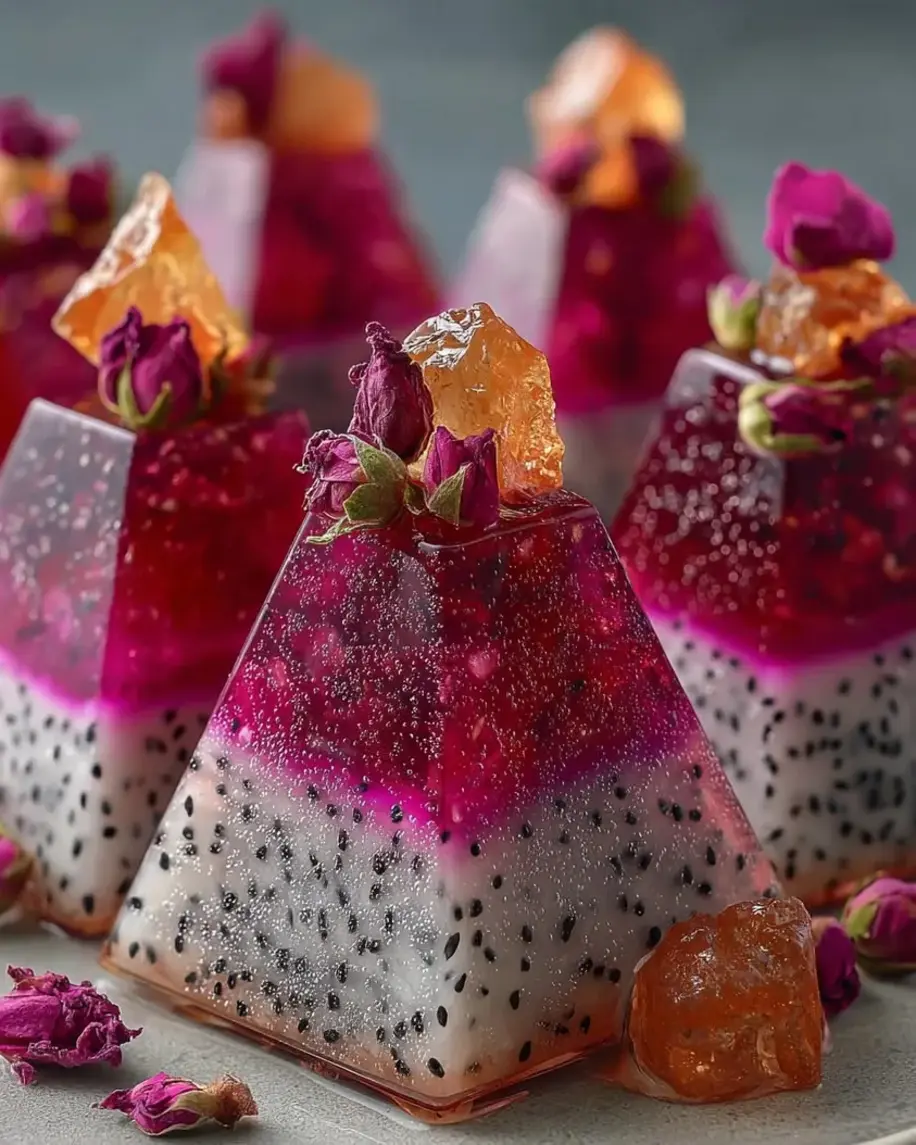
Table of Contents
Diamond Dragonfruit Lychee Crystal Pyramids – A Crystal-Clear Marvel
I still remember the first time I saw a truly transparent jelly dessert—it was in a tiny pâtisserie window in Paris during my culinary school days. The glisten, the way light passed through it like stained glass, the sheer audacity of something so fragile yet so precise. That memory came rushing back last summer when I was wandering through the Union Square Greenmarket in New York City and spotted the most gorgeous magenta dragonfruits piled high next to a basket of fragrant lychees. Right there, standing between a Moroccan spice vendor and a French cheese monger, I knew I had to create my own version: these Diamond Dragonfruit Lychee Crystal Pyramids. This dragonfruit lychee gelatin dessert is the kind of showstopper that looks like it took days of professional training—but I promise, with the right technique, you can absolutely nail it at home. The crystal clear jelly pyramid effect comes from a clever two-step setting process and a glossy, diamond-like finish that makes every bite feel like a celebration.
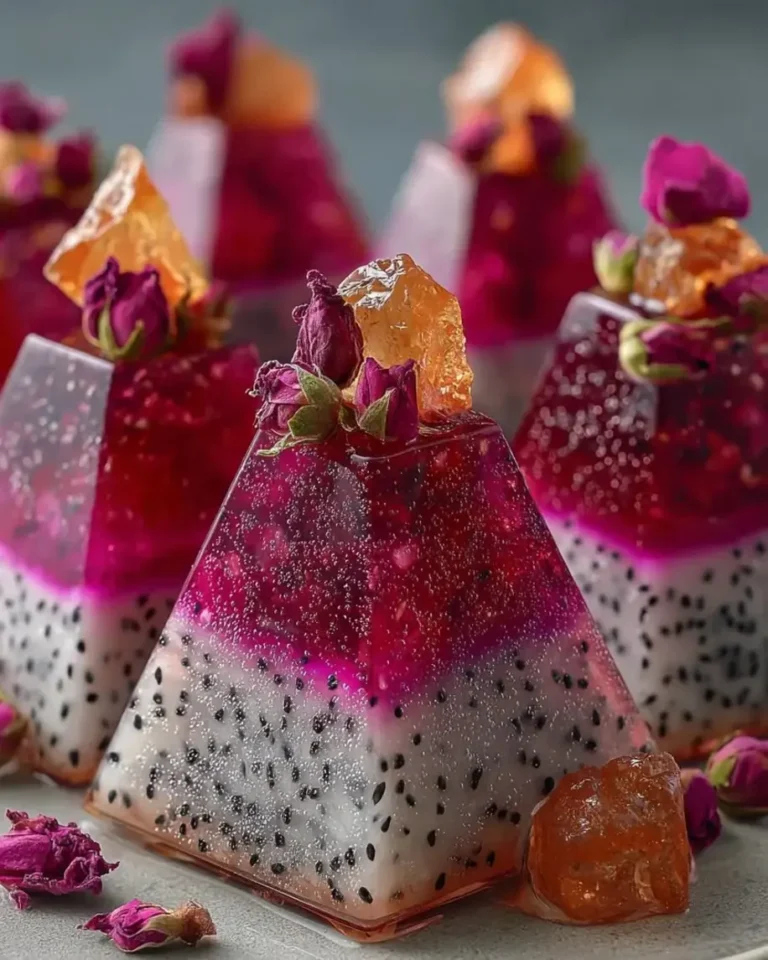
Imagine slicing into a perfect little pyramid and revealing two distinct layers: a vibrant magenta base flecked with tiny seeds, and a soft, almost creamy lychee center that tastes like summer itself. The lychee dragonfruit jelly mold technique I use here ensures that each serving comes out clean and gleaming, with no cloudiness or air bubbles to dull the effect. The dragonfruit lends a gentle sweetness and that stunning natural color, while the lychee brings a floral, almost rose-like note that pairs beautifully with a hint of lime. And then there is the glaze—a crystal-clear white grape juice gel that wraps each pyramid in a mirror-like shell. It is the kind of dessert that makes people stop mid-conversation and just stare for a second before digging in.
I have tested this recipe at least a dozen times in my own NYC kitchen, tweaking the gelatin ratios, the chilling times, and the glaze consistency so that even a home cook can achieve that professional, jewel-like finish. The secret lies in how you bloom the gelatin, how you layer the fillings, and—most importantly—how you handle the temperature of each mixture. One common mistake home cooks make is pouring the gelatin mixture when it is too warm, which melts the partially set layer underneath and muddies the colors. I will walk you through every detail so you can avoid that pitfall and create a dessert that truly sparkles. Whether you are preparing this for a birthday party, a bridal shower, or just a quiet weekend treat, this vegan fruit gelatin dessert alternative (yes, you can easily adapt it) will earn you endless compliments.
Why This Diamond Dragonfruit Lychee Crystal Pyramids Recipe Is the Best
The flavor secret here is something I learned from my mother’s kitchen in Morocco: fruit should never be masked, only enhanced. By keeping the dragonfruit and lychee largely raw and only gently warming a small portion to dissolve the gelatin, you preserve every bit of their fresh, sun-ripened character. The lime juice does not just add brightness—it also helps balance the natural sugars and keeps the gelatin from tasting flat. This is a dessert that tastes as alive as the fruit itself, with no artificial anything getting in the way.
Texture is everything when it comes to gelatin desserts, and my French pastry training taught me that precision is non-negotiable. The two-stage setting process—first a partial set for the base, then a second pour after adding the lychee center—creates a clean, defined layer with no bleeding. The glaze is the crowning achievement: it sets to a firm but tender gel that shatters slightly when you bite into it, like a thin sheet of ice over a warm pool. Getting that balance right took me several tries, but the result is a texture that feels both delicate and satisfying.
What makes this recipe foolproof for beginners is the clear visual cues I have built into every step. You will know exactly when the gelatin is properly bloomed, when the mixture is at the right temperature to pour, and when the pyramids are set enough to unmold. No guesswork, no vague instructions—just honest, kitchen-tested guidance that anyone can follow. Plus, the whole thing can be made a day ahead, which makes it a stress-free choice for entertaining.
Dragonfruit Lychee Gelatin Dessert Ingredients
I sourced these ingredients from my favorite spots around New York City—the dragonfruit and lychee come from a little fruit stand in Chinatown that always has the freshest tropical produce, and the white grape juice is from the organic section at the Union Square farmers market. Every ingredient plays a specific role, and I have tested substitutions for each one so you can adapt based on what is available near you.
Ingredients List
- For the Dragonfruit Lychee Base: 2 cups dragonfruit, finely diced; 1 cup lychee, finely chopped; 2 tbsp honey; 1 tbsp lime juice; 1 tbsp unflavored gelatin powder; 3 tbsp cold water
- For the Lychee Center: 1/2 cup lychee puree; 1 tbsp honey; 1 tsp lime juice
- For the Crystal Glaze: 1 cup white grape juice; 1 tbsp unflavored gelatin powder; 3 tbsp cold water; 1 tsp lime juice
- For Garnish (optional): Small dragonfruit cubes; Edible dried rose petals
Ingredient Spotlight
Dragonfruit: Also called pitaya, this vibrant pink fruit provides the stunning natural color for the base. Look for ones that yield slightly to gentle pressure—like a ripe avocado. The flesh can be white or magenta; either works, but the magenta-fleshed variety gives a deeper color. If you cannot find fresh dragonfruit, frozen dragonfruit chunks (thawed and drained) work surprisingly well, though the color will be slightly less intense.
Lychee: These little floral gems add a delicate sweetness and a subtle rose-like aroma. Fresh lychees are ideal when in season (summer), but canned lychee in juice (not syrup) is a perfectly fine substitute—just drain them well and reduce the honey slightly since canned lychee is already sweet. If you are using frozen lychee, thaw and drain thoroughly before pureeing.
Unflavored Gelatin Powder: This is the structural backbone of the entire dessert. I recommend Knox brand for its reliable setting power. For a vegan fruit gelatin dessert alternative, you can substitute agar agar powder—use 1 tablespoon agar agar for each tablespoon of gelatin, but note that the setting time and temperature sensitivity differ (agar sets at room temperature and holds up better in warm conditions).
White Grape Juice: This creates the crystal-clear glaze that gives the pyramids their diamond-like finish. The juice must be clear and pulp-free for maximum transparency. If you cannot find white grape juice, clarified apple juice works beautifully—just make sure it is 100% juice with no added colors.
| Original Ingredient | Best Substitution | Flavor / Texture Impact |
|---|---|---|
| Fresh Dragonfruit | Frozen dragonfruit (thawed & drained) | Slightly less vibrant color; same texture |
| Fresh Lychee | Canned lychee (drained, in juice) | Sweeter; reduce added honey by half |
| Unflavored Gelatin | Agar agar powder (1:1 by volume) | Firmer set; sets at room temp; vegan-friendly |
| White Grape Juice | Clarified apple juice | Slightly different sweetness; equally clear |
How to Make Diamond Dragonfruit Lychee Crystal Pyramids — Step-by-Step
These steps might look detailed, but I promise each one is straightforward—and the result is absolutely worth the care. Let us walk through it together.
Step 1: Bloom the Gelatin
Sprinkle the 1 tablespoon of unflavored gelatin powder over 3 tablespoons of cold water in a small bowl. Let it sit undisturbed for 5 minutes. It will absorb the water and turn into a firm, jiggly mass—this is called blooming, and it is essential for smooth, lump-free gelatin.
💡 Stella’s Pro Tip: Always use cold water for blooming. Warm water will cause the gelatin to dissolve unevenly and can create a grainy texture. Think of it like giving the gelatin a quiet moment to hydrate before it does its job.
Step 2: Blend the Fruit Base
In a blender, combine 2 cups finely diced dragonfruit, 1 cup chopped lychee, 2 tablespoons honey, and 1 tablespoon lime juice. Pulse until mostly smooth but still retaining a few tiny fruit flecks for texture. You want a vibrant magenta puree.
⚠️ Common Mistake to Avoid: Over-blending can incorporate too many air bubbles, which will make the jelly look cloudy. Pulse gently and scrape down the sides as needed.
Step 3: Dissolve the Gelatin into the Fruit Mixture
Warm about 1/4 cup of the fruit puree in a small saucepan over low heat. Add the bloomed gelatin and stir until completely dissolved—this takes about 2 minutes. Then stir this warm mixture back into the remaining fruit puree in the blender and pulse once or twice to combine evenly.
💡 Stella’s Pro Tip: Warming only a small portion of the fruit mixture preserves the raw, fresh taste of the fruit while still ensuring the gelatin dissolves fully. This is a technique I learned in Paris for fruit gelees—never heat the whole batch.
Step 4: Pour and Partially Set
Pour the dragonfruit-lychee mixture into pyramid molds, filling each about halfway. Place the molds in the refrigerator and chill for about 30 minutes, or until the mixture is partially set—it should be firm enough that a spoonful of the lychee center will not sink to the bottom.
⚠️ Common Mistake to Avoid: If the base is not set enough, the lychee center will bleed into it and you will lose the clean two-layer effect. Check by gently touching the surface—it should feel tacky but not liquid.
Step 5: Prepare the Lychee Center
In a small bowl, stir together 1/2 cup lychee puree, 1 tablespoon honey, and 1 teaspoon lime juice until smooth. This mixture should be thick but pourable. If your puree is too thin, you can simmer it gently for 3–4 minutes to reduce and concentrate the flavor.
💡 Stella’s Pro Tip: For the puree, I like to use canned lychee in juice—just drain and blend—because it gives a very consistent, silky texture. If using fresh lychee, remove the pits and blend until completely smooth.
Step 6: Add the Center and Top Off
Spoon about 1 tablespoon of the lychee mixture into the center of each partially set mold. Gently pour the remaining dragonfruit-lychee mixture over the top, filling the mold to the brim. Return to the refrigerator and chill for at least 3 hours, or until fully firm.
⚠️ Common Mistake to Avoid: Pour the second layer gently over the back of a spoon to avoid disrupting the lychee center. A direct pour can create a crater and ruin the layering effect.
Step 7: Make the Crystal Glaze
Bloom the second tablespoon of gelatin in 3 tablespoons cold water for 5 minutes. Warm 1 cup of white grape juice in a small saucepan until steaming (do not boil). Remove from heat and stir in the bloomed gelatin until fully dissolved. Add 1 teaspoon lime juice. Let the glaze cool to room temperature—it should be slightly thickened but still pourable, like thin honey.
💡 Stella’s Pro Tip: If the glaze cools too much and becomes too thick to pour, gently warm it again over low heat while stirring. Do not microwave it, as uneven heating can create hot spots that weaken the gelatin.
Step 8: Unmold and Glaze
Once the pyramids are fully set, dip each mold briefly in warm water (about 10 seconds) to loosen the edges. Invert onto a wire rack set over a baking sheet. Pour the crystal glaze evenly over each pyramid, letting it coat the sides and drip down. The glaze will set into a shiny, diamond-like shell within about 15 minutes at room temperature.
⚠️ Common Mistake to Avoid: Do not skip the wire rack—if you glaze the pyramids on a solid surface, the glaze will pool underneath and create a sticky mess. A rack allows the excess to drip away cleanly.
Step 9: Garnish and Serve
Before the glaze fully sets (while it is still slightly tacky), press small dragonfruit cubes and edible dried rose petals onto the top and sides of each pyramid. This creates a beautiful, jewel-like presentation. Serve immediately or refrigerate until ready to serve—the glaze will stay shiny for up to 6 hours.
💡 Stella’s Pro Tip: The rose petals add a lovely floral note that echoes the lychee and gives the dessert a Moroccan-French fusion feel—a little nod to my two culinary homes.
| Step | Action | Duration | Key Visual Cue |
|---|---|---|---|
| 1 | Bloom gelatin | 5 min | Gelatin becomes firm, translucent mass |
| 2 | Blend fruit base | 2 min | Smooth magenta puree with tiny flecks |
| 3 | Dissolve gelatin in warmed puree | 2 min | No gelatin grains visible; mixture is glossy |
| 4 | Pour halfway & partially set | 30 min | Surface is tacky, not liquid |
| 5 | Prepare lychee center | 3 min | Smooth, thick pourable puree |
| 6 | Add center & top off | 5 min | Layers remain separate when poured gently |
| 7 | Make crystal glaze | 8 min | Clear, slightly syrupy liquid |
| 8 | Unmold & glaze | 15 min | Glossy, mirror-like coating forms |
| 9 | Garnish & serve | 5 min | Pyramids sparkle with fruit and petals |
Serving & Presentation
These crystal pyramids are designed to be the star of the show. I love serving them on a large white platter with a few extra dragonfruit cubes and a scattering of rose petals around the base—the contrast between the bright magenta and the clean white plate is absolutely stunning. For individual servings, place each pyramid on a small dessert plate with a dollop of coconut cream or a drizzle of honey-lime syrup on the side.
If you are hosting a party, arrange the pyramids on a mirrored tray or a slab of marble for a truly luxe effect. The glaze catches the light beautifully, so make sure your serving area has good ambient lighting. I once served these at a rooftop gathering in Brooklyn, and the way they sparkled in the golden hour light was nothing short of magical—guests actually pulled out their phones before even picking up a fork.
| Pairing Type | Suggestions | Why It Works |
|---|---|---|
| Side Dish | Coconut rice pudding, mango sticky rice | Creamy textures balance the firm jelly |
| Sauce / Dip | Honey-lime syrup, passion fruit coulis | Adds bright acidity and tropical depth |
| Beverage | Sparkling rosé, lychee iced tea, mint limeade | Light, floral drinks echo the dessert’s notes |
| Garnish | Dragonfruit cubes, dried rose petals, mint sprigs | Adds visual height and aromatic freshness |
Make-Ahead, Storage & Reheating
One of the best things about this dessert is how well it works for make-ahead entertaining. In my busy NYC life, I rarely have time to fuss with last-minute plating, so I usually prepare the pyramids fully (including the glaze) the day before a party. They hold up beautifully in the refrigerator overnight, and the glaze stays glossy and intact for up to 24 hours.
| Method | Container | Duration | Reheating Tip |
|---|---|---|---|
| Refrigerator | Airtight container, layered with parchment | Up to 3 days | Serve cold; no reheating needed |
| Freezer | Freezer-safe container, single layer | Up to 1 month | Thaw overnight in fridge; glaze may lose some shine |
| Make-Ahead | In the mold, unglazed | Up to 2 days in advance | Glaze and garnish the day of serving for best shine |
If you are freezing the pyramids, I recommend doing so before adding the glaze. Freeze the unglazed, set pyramids in a single layer on a baking sheet, then transfer to a container. When ready to serve, thaw them in the refrigerator overnight, then prepare the glaze fresh and pour it over the cold pyramids. The glaze will set quickly on the cold surface, so work swiftly for an even coat.
To refresh the shine on refrigerated pyramids, you can brush them with a thin layer of warmed white grape juice mixed with a tiny pinch of gelatin—this restores the gloss without making them overly firm. I do this often when I am photographing recipes for the blog, and it works like a charm.
Variations & Easy Swaps
| Variation | Key Change | Best For | Difficulty Impact |
|---|---|---|---|
| Mango Passion Fruit | Replace dragonfruit with mango, lychee center with passion fruit curd | Summer parties, tropical theme | Same difficulty |
| Vegan Agar Agar | Substitute gelatin with agar agar powder (1:1) | Plant-based diets, kosher/ halal | Slightly easier (sets at room temp) |
| Rosewater & Pomegranate | Add 1 tsp rosewater to base, use pomegranate arils in the center | Middle Eastern-inspired dessert | Same difficulty |
Mango Passion Fruit Version
This is my go-to summer variation when dragonfruit is harder to find. Use ripe, fragrant mangoes in place of the dragonfruit—they puree into a gorgeous golden base with a naturally thick texture that holds the gelatin beautifully. For the center, swap the lychee puree with a spoonful of passion fruit curd (homemade or store-bought). The tart, seedy curd cuts through the sweet mango and creates a stunning contrast. I like to garnish with a few fresh passion fruit seeds on top for an extra pop of texture.
Vegan Agar Agar Version
For a completely plant-based dessert, agar agar powder is your best friend. Use exactly the same amount (1 tablespoon per cup of liquid) but note that agar agar needs to be boiled for 2–3 minutes to activate fully, unlike gelatin which only needs gentle warmth. The setting time is also different—agar agar sets at room temperature in about 30–60 minutes, so you do not need to refrigerate the base layers. The texture is firmer and less tender than gelatin, so the pyramids will have a slightly snappier bite. I have tested this version extensively for my vegan readers, and it works beautifully—just be sure to let the mixture cool slightly before pouring into molds so you do not melt the layers.
Rosewater and Pomegranate Twist
This variation is a love letter to my Moroccan roots. Add 1 teaspoon of high-quality rosewater to the dragonfruit-lychee base—it amplifies the floral notes of the lychee and gives the dessert a subtle, perfumed elegance. For the center, use fresh pomegranate arils mixed with a little honey instead of the lychee puree. The arils create a jewel-like surprise in the middle of each pyramid, and their tartness balances the sweetness of the base beautifully. I found this combination one afternoon at the Grand Army Plaza farmers market in Brooklyn, where a vendor was selling both pomegranates and rosewater—it felt like a sign from my grandmother’s kitchen in Marrakech.
What is the best way to make the diamond-shaped crystal jelly for dragonfruit lychee pyramids?
The key to achieving that perfect diamond-shaped crystal jelly lies in three things: using a clean pyramid mold (silicone works best for easy unmolding), ensuring your gelatin is properly bloomed in cold water before dissolving, and setting the layers in stages. Start by pouring the dragonfruit-lychee base only halfway up the mold, then chill until partially set—about 30 minutes. Add the lychee center, then cover with the remaining base and chill fully for at least 3 hours. The crystal glaze, made from white grape juice and a second round of gelatin, is poured over the unmolded pyramids and sets into a glossy, diamond-like shell. Work quickly when glazing, and use a wire rack so the excess drips away cleanly.
Can I use canned lychee instead of fresh for this recipe?
Absolutely—canned lychee works wonderfully as a substitute for fresh lychee in this recipe. Look for lychee packed in juice (not heavy syrup) to avoid an overly sweet result. Drain the lychees thoroughly before using them, and reduce the honey in the recipe by about half since canned lychee is already sweetened. For the lychee center puree, canned lychee actually gives a smoother, more consistent texture than fresh, which can sometimes be a bit fibrous. If using canned lychee in the base, chop it finely and pat it dry with a paper towel to remove excess moisture that could water down the gelatin mixture.
How long do the crystal pyramids need to set in the refrigerator?
The total setting time is about 3 to 4 hours, broken into two stages. First, the dragonfruit-lychee base needs about 30 minutes in the refrigerator to become partially set—just firm enough that the lychee center will not sink into it. After you add the center and top off the molds with the remaining base, the pyramids need a full 3 hours in the refrigerator to set completely. For best results, I recommend letting them set overnight, especially if you plan to unmold and glaze them the next day. A longer chill time ensures a clean unmold and a firmer structure that holds up well under the glaze.
What is the recommended way to serve diamond dragonfruit lychee crystal pyramids for a party?
For parties, presentation is everything with these pyramids. Arrange them on a large white platter or a mirrored tray, spacing them about an inch apart so the glaze catches the light. Garnish the platter with extra dragonfruit cubes, fresh lychee halves, and a scattering of edible dried rose petals or micro mint leaves. If you want to elevate the experience, serve each pyramid on a small dessert plate with a drizzle of honey-lime syrup or a quenelle of coconut sorbet on the side. For a truly dramatic effect, place the platter on a pedestal cake stand and light it from above—the crystal glaze will sparkle like actual diamonds. These are best served chilled, so keep them in the refrigerator until just before serving.
Can I make this recipe without a pyramid mold?
Yes, you can definitely make this recipe without a pyramid-shaped mold. Any small, individual-sized mold with a wide opening will work—think silicone muffin cups, small ramekins, or even clean yogurt containers. The key is to use a flexible mold so you can easily unmold the set gelatin without breaking it. If you use a rigid mold like ceramic ramekins, line them with plastic wrap with overhang for easy lifting. The final shape will be different, but the layered effect and crystal glaze will still look stunning. For a fun alternative, pour the mixture into a rectangular dish and cut it into cubes or diamonds after setting—then glaze each piece individually.
Why did my gelatin mixture turn cloudy instead of clear?
Cloudy gelatin is usually caused by one of three things: incorporating too many air bubbles when blending or stirring, using gelatin that was not fully dissolved, or pouring the mixture when it is too hot. To prevent cloudiness, blend the fruit mixture gently and avoid over-mixing—pulse just until combined. When dissolving the bloomed gelatin, warm only a small portion of the liquid and stir until every grain is fully dissolved before combining with the rest. Let the mixture cool to room temperature before pouring into molds, as extreme heat can cause the gelatin to become hazy as it sets. The crystal glaze is especially sensitive—use a clear juice like white grape or clarified apple, and do not let it boil.
How do I get the pyramid out of the mold without breaking it?
Unmolding gelatin pyramids is easy once you know the trick. First, dip the bottom of the mold in warm (not hot) water for about 10 to 15 seconds—this loosens the gelatin from the sides of the mold without melting it. Gently press on the bottom of the mold to release the pyramid, then invert it onto a wire rack or a serving plate. If the pyramid sticks, dip it in warm water for another 5 seconds and try again. Silicone molds are the easiest to work with because they flex, but even rigid plastic molds will release cleanly with the warm water method. Be patient and gentle—rushing can cause the pyramid to crack or break.
Can I use honey substitutes like agave or maple syrup in this recipe?
Yes, you can substitute honey with agave nectar, maple syrup, or even brown rice syrup in this recipe. Agave is the closest substitute because it has a mild, neutral sweetness that will not overpower the fruit. Maple syrup adds a subtle woody note that pairs surprisingly well with the dragonfruit—I have tested this and it works nicely. Keep in mind that liquid sweeteners vary in sweetness: agave is slightly sweeter than honey, so use about 1.5 tablespoons instead of 2. Maple syrup is about the same sweetness as honey, so you can use it 1:1. If you use a thicker syrup like brown rice syrup, warm it slightly before mixing to ensure it incorporates evenly into the fruit puree.
Share Your Version!
I absolutely love hearing how my recipes come to life in your kitchens. If you give these Diamond Dragonfruit Lychee Crystal Pyramids a try, I would be so grateful if you left a star rating and a comment below—tell me how they turned out, what substitutions you made, or what occasion you served them for. Your feedback helps me create better recipes and also inspires other home cooks in our community.
Do not forget to snap a photo of your beautiful creation and share it on Instagram or Pinterest—tag me @leosfoods so I can see your work! I always repost my favorites on my stories. And if you have a question about any step, just drop it in the comments. I read every single one and answer within 48 hours. Now go make some edible diamonds—you have got this!
From my NYC kitchen to yours — I hope this recipe brings as much warmth to your table as it does to mine. — Stella 🧡
Love This Recipe? Save It to Pinterest!
If you enjoyed this Diamond Dragonfruit Lychee Crystal Pyramids recipe, don’t let it get lost in your browser tabs! 😄 Pin it now so you can find it again anytime — and explore hundreds more tried-and-tested recipes waiting for you on my Pinterest boards.
👉 Follow Stella on Pinterest @stellarecipeblog
📌 Pin this recipe · 🔁 Re-pin your favorites · 💬 Tag me when you make it — I love seeing your creations!
✨ Made this recipe? I would love to know! Drop a comment below, rate it, and tag a friend who loves beautiful desserts. 🧡
Diamond Dragonfruit Lychee Crystal Pyramids
Stunning crystal-clear gelatin pyramids with dragonfruit and lychee, finished with a diamond-like glaze.
- Yield: 8 1x
Ingredients
- For the Dragonfruit Lychee Base:
- 2 cups dragonfruit, finely diced
- 1 cup lychee, finely chopped
- 2 tbsp honey
- 1 tbsp lime juice
- 1 tbsp unflavored gelatin powder
- 3 tbsp cold water
- For the Lychee Center:
- 1/2 cup lychee puree
- 1 tbsp honey
- 1 tsp lime juice
- For the Crystal Glaze:
- 1 cup white grape juice
- 1 tbsp unflavored gelatin powder
- 3 tbsp cold water
- 1 tsp lime juice
- For Garnish (optional):
- Small dragonfruit cubes
- Edible dried rose petals
Instructions
- 1. Bloom the gelatin in cold water for 5 minutes.
- 2. Blend dragonfruit, lychee, honey, and lime juice until mostly smooth.
- 3. Warm a small portion of the mixture and dissolve the bloomed gelatin into it.
- 4. Stir back into the remaining fruit mixture.
- 5. Pour into pyramid molds halfway and chill until partially set.
- 6. Mix lychee puree with honey and lime juice.
- 7. Add a small spoonful of the lychee mixture to the center of each mold.
- 8. Cover with the remaining dragonfruit mixture and refrigerate until fully set.
- 9. Bloom the gelatin for the glaze in cold water.
- 10. Warm the white grape juice and dissolve the gelatin completely. Stir in lime juice.
- 11. Cool the glaze until slightly thickened but still pourable.
- 12. Unmold the pyramids and place on a wire rack.
- 13. Pour the crystal glaze over each pyramid for a diamond-like finish.
- 14. Garnish with dragonfruit cubes and dried rose petals before serving.
Nutrition
- Calories: 110
- Sugar: 20 g
- Fat: 0 g
- Carbohydrates: 24 g
- Protein: 1 g
Tried This Recipe? Leave a Comment!
Did you make this recipe? I’d love to hear how it turned out! Please leave a comment and a rating below. Your feedback helps other home cooks and supports cheerychop.com!
For more delicious inspiration, follow me on Pinterest!