Honey Balsamic Lamb Shanks with Caramelized Figs
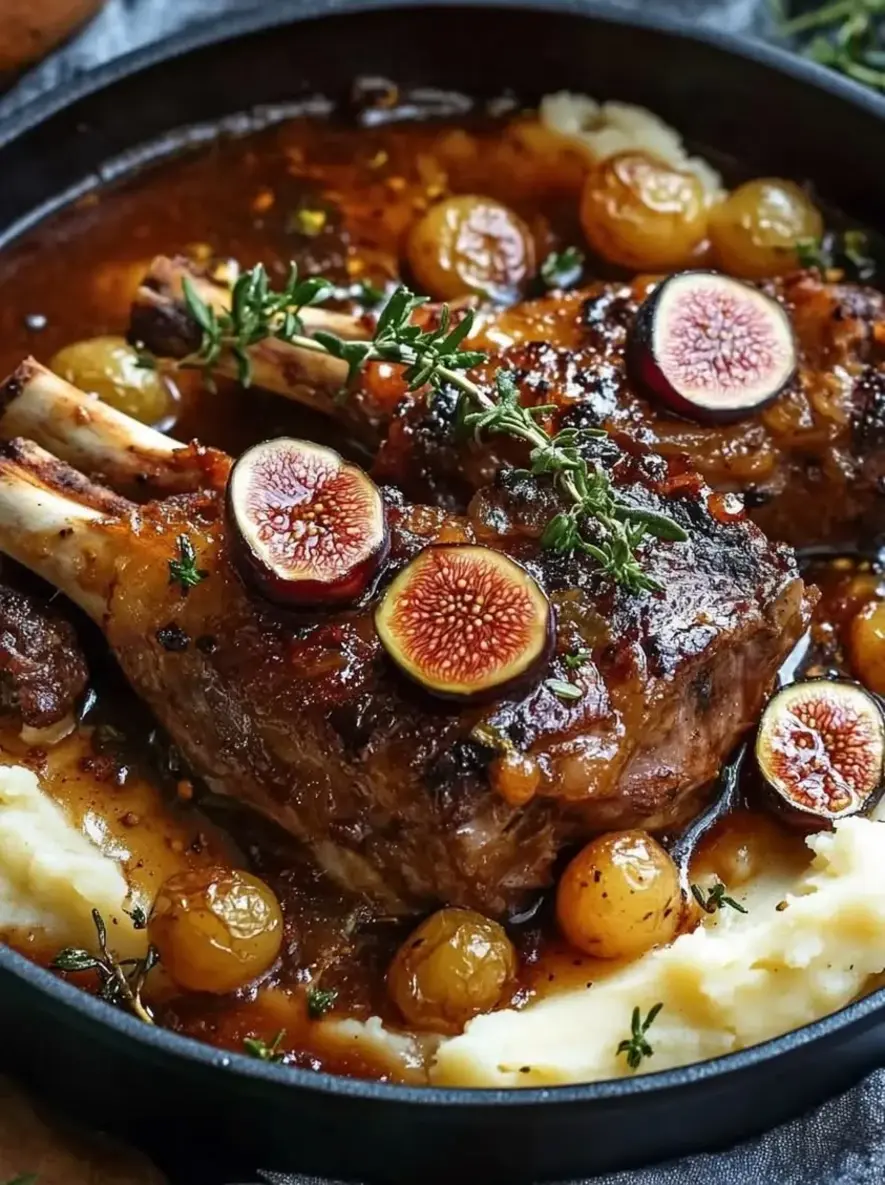
Table of Contents
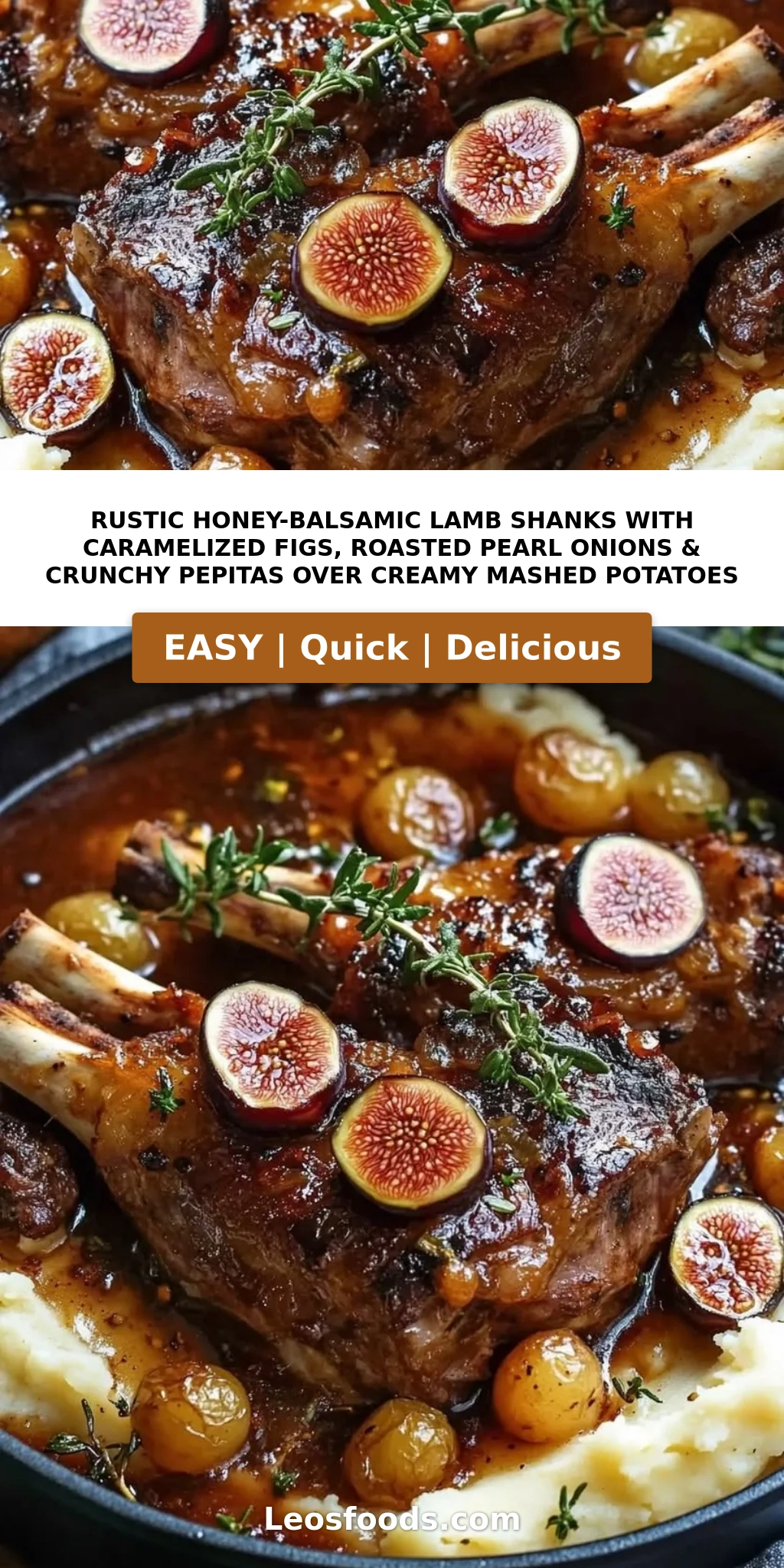
Rustic Honey-Balsamic Lamb Shanks with Caramelized Figs, Roasted Pearl Onions & Crunchy Pepitas Over Creamy Mashed Potatoes – A Fall-Apart Tender Feast
I still remember the first time I made honey balsamic lamb shanks that truly sang. It was a chilly autumn evening in my tiny Paris apartment, and I had just picked up the most gorgeous dried figs from a market near the Bastille. I called my mother in Morocco that night, and she laughed — she said the combination of honey, balsamic, and figs sounded like something straight out of the medina. She wasn’t wrong. This roasted lamb shanks recipe is an embodiment of everything I love: the slow, patient braising I learned in French kitchens, the sweet-tangy depth that Moroccan cooking does so well, and the bold, rustic flavors that make New Yorkers fall in love with a dish on first bite. These lamb shanks with figs are not just a meal — they’re a memory in the making.
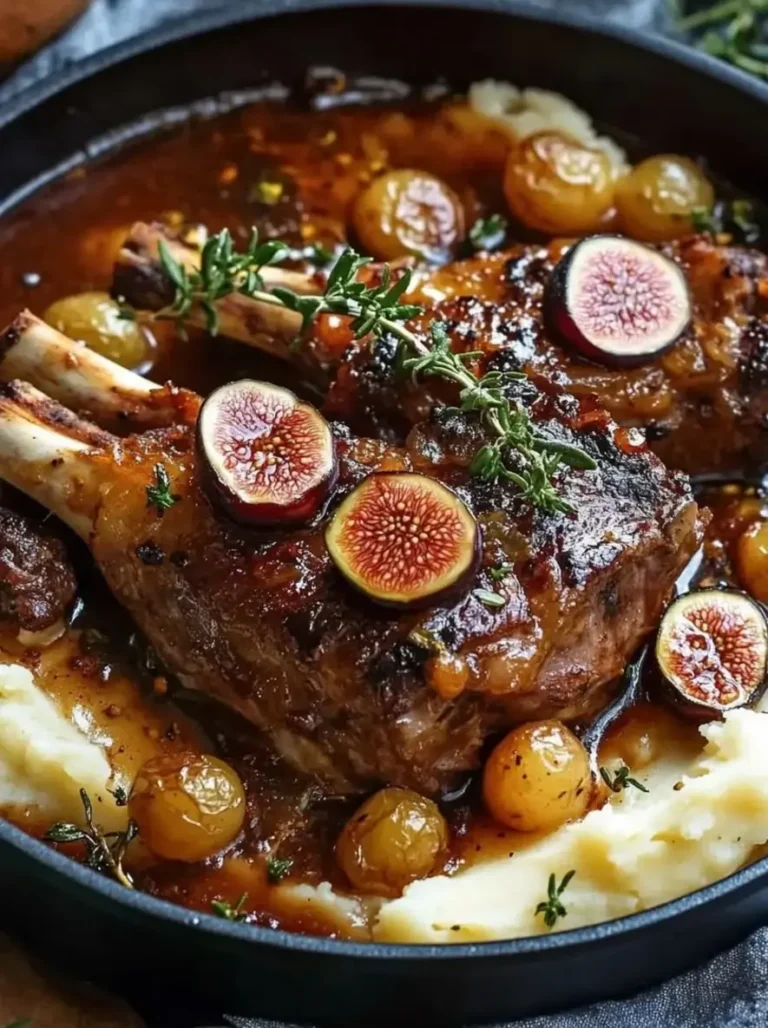
Imagine this: lamb shanks so tender they fall off the bone with the slightest nudge from your fork, bathed in a glossy honey-balsamic glaze that clings to every strand of meat. The figs have caramelized into something almost jammy — their natural sweetness deepened by the balsamic glaze and a hint of brown sugar. Pearl onions, roasted to a golden-brown softness, add little bursts of savory-sweetness. And then there’s the crunch: roasted pepitas scattered on top like tiny treasures, giving you that satisfying pop of texture against the velvet-creamy mashed potatoes underneath. Every single bite is layered — savory, sweet, tangy, crunchy, silky. This is the kind of rustic lamb shanks with mashed potatoes dish that makes you close your eyes and just breathe in the aroma before you even lift your fork.
What sets my version apart? I don’t rush the caramelization. That honey-balsamic glaze needs patience — low heat, gentle stirring, and a watchful eye so the figs soften without burning and the honey doesn’t turn bitter. It’s a lesson I learned the hard way during my pastry training in Paris: patience is the secret ingredient. In this post, I’ll share my 💡 Stella’s Pro Tip for achieving that perfect caramelized fig without a hint of scorch, plus a common mistake that can throw off the entire braising liquid. Whether you’re a seasoned cook or trying roasted lamb shanks for the first time, I promise you can nail this. Let’s cook together.
Why This Honey Balsamic Lamb Shanks Recipe Is the Best
The Flavor Secret. Most lamb shank recipes rely on just wine and stock, but I layer in balsamic glaze, brown sugar, and honey to create a sweet-tangy complexity that beautifully balances the rich, gamey notes of the lamb. The dried figs are not just an afterthought — they’re braised alongside the meat, absorbing the braising liquid and releasing their natural pectin, which helps thicken the sauce without any artificial additives. This technique is something I adapted from a Moroccan tagine method my mother uses with dried apricots and lamb, and it works every single time.
Perfected Texture. The key to truly tender lamb shanks is a low-and-slow braise at 325°F, covered, for at least 2 hours. But I take it a step further: after braising, I remove the lid, increase the heat slightly, and let the sauce reduce for the final 15 minutes as the shanks get a light glaze. This gives you that perfect balance — fall-apart meat with a glossy, clingy sauce. The pepitas add a nutty crunch that contrasts beautifully with the creamy mashed potatoes, and that textural interplay is what makes every forkful exciting.
Foolproof & Fast. Don’t let the ingredient list intimidate you. Once the lamb is seared and the braising liquid is in the pot, the oven does all the work. I’ve simplified this honey balsamic lamb shanks recipe so that a home cook can get restaurant-quality results without a string of fancy techniques. The mashed potatoes can be made ahead, the lamb reheats beautifully, and the whole dish comes together with about 30 minutes of hands-on time. Even if it’s your first time making roasted lamb shanks recipe, you’ve got this.
Honey Balsamic Lamb Shanks Ingredients
I picked up the most beautiful dried figs at the Union Square Greenmarket last weekend, and the shallots from a little farm stand in Brooklyn. Every time I shop for this dish, I think of my mother’s kitchen in Morocco — she would use fresh figs when they were in season, but dried figs work even better here because they hold their shape and concentrate in flavor during the long braise. Let’s gather everything you’ll need.
Ingredients List
- 4 lamb shanks
- 2 tablespoons olive oil
- 1 teaspoon salt
- 1 teaspoon black pepper
- 6 shallots, halved
- 1 cup pearl onions
- 5 cloves garlic, minced
- 1 tablespoon fresh rosemary, chopped
- 1 cup dry red wine
- 2 cups beef stock
- 1/3 cup balsamic glaze
- 3 tablespoons brown sugar
- 10 dried figs, halved
- 2 tablespoons honey
- 1/3 cup roasted pepitas
- 2 tablespoons fresh thyme leaves
Ingredient Spotlight
Lamb Shanks. Look for shanks that are meaty and evenly sized — about 12 to 16 ounces each — so they cook at the same rate. The bone adds immense flavor to the braising liquid, so don’t opt for boneless here. If lamb shanks are unavailable, beef shanks can work, though the cooking time may be slightly shorter. The flavor will be deeper and less sweet, so you may want to add an extra tablespoon of honey.
Dried Figs. Mission or Calmyrna figs both work beautifully. They should be soft and pliable, not hard and brittle. If your figs are very dry, soak them in warm water for 15 minutes before halving. Fresh figs can be used in a pinch, but reduce the braising time by about 20 minutes since fresh figs break down more quickly and can make the sauce too thin.
Balsamic Glaze. This is different from regular balsamic vinegar — it’s thicker, sweeter, and more concentrated. You can buy it premade or make your own by simmering 1 cup of balsamic vinegar with 2 tablespoons of brown sugar until reduced by half. A good balsamic glaze should coat the back of a spoon. It’s the backbone of the sweet-tangy flavor in this dish.
Roasted Pepitas. Pepitas (pumpkin seeds) add that essential crunch. Use roasted and salted pepitas for the best flavor. If you can only find raw pepitas, toast them in a dry skillet over medium heat for 2 to 3 minutes until they start to pop and smell nutty. You can substitute roasted sunflower seeds or pine nuts, but the texture will be slightly different.
| Original Ingredient | Best Substitution | Flavor / Texture Impact |
|---|---|---|
| Lamb Shanks | Beef Shanks | Deeper, less sweet; add 1 tbsp honey |
| Dried Figs | Dried Apricots | More tart, less sweet; still glossy |
| Balsamic Glaze | Red Wine Vinegar + Honey (reduced) | Less thick, brighter acidity |
| Roasted Pepitas | Toasted Pine Nuts or Sunflower Seeds | Similar crunch, pine nuts are buttery |
| Pearl Onions | Cipollini Onions or Shallots | Sweeter, slightly larger; still roast well |
How to Make Rustic Honey-Balsamic Lamb Shanks — Step-by-Step
Trust me when I say this: the hardest part is waiting for the lamb to braise. Everything else is just careful layering of flavors. Follow these steps and you’ll have a dish that tastes like you spent all day in the kitchen — even though most of that time is hands-off.
Step 1: Sear the Lamb Shanks
Pat the lamb shanks dry with paper towels — this is crucial for a good sear. Season generously with salt and pepper. Heat 2 tablespoons olive oil in a large Dutch oven over medium-high heat until it shimmers but doesn’t smoke. Add the lamb shanks in a single layer (you may need to work in batches) and sear for about 4 to 5 minutes per side, until deeply golden brown. Don’t rush this step — the fond (browned bits on the bottom of the pot) is pure flavor for the braising liquid. Transfer the seared shanks to a plate and set aside.
💡 Stella’s Pro Tip: If the shanks stick to the pot when you try to turn them, they’re not ready yet. Let them cook another minute and they’ll release naturally. Forcing them will tear the meat and you’ll lose that beautiful crust.
Step 2: Sauté the Aromatics
Reduce the heat to medium. Add the halved shallots and pearl onions to the same pot, scraping up any browned bits with a wooden spoon. Cook for about 5 minutes, stirring occasionally, until the onions begin to soften and take on some color. Add the minced garlic and chopped rosemary, and cook for another minute until fragrant — the rosemary should smell woodsy and the garlic should be just golden, not burned.
⚠️ Common Mistake to Avoid: Burning the garlic. Garlic can go from fragrant to bitter in seconds. Keep stirring and if the pot seems too hot, add a splash of red wine to cool it down before continuing.
Step 3: Deglaze and Build the Braising Liquid
Pour in 1 cup of dry red wine, scraping up all the browned bits from the bottom of the pot — that’s liquid gold. Let the wine simmer for 2 to 3 minutes, reducing slightly. Then add 2 cups beef stock, 1/3 cup balsamic glaze, 3 tablespoons brown sugar, and 2 tablespoons honey. Stir everything together until the sugar dissolves. The liquid should smell sweet, tangy, and deeply savory all at once.
💡 Stella’s Pro Tip: Use a good-quality dry red wine — something you’d actually drink. The wine reduces and concentrates, so any harsh or overly sweet notes will carry through to the final sauce. I love a medium-bodied Merlot or a Côtes du Rhône for this dish.
Step 4: Braise the Lamb
Return the lamb shanks to the pot, nestling them into the liquid. The liquid should come about halfway up the sides of the shanks — add a little more stock or water if needed. Tuck the dried fig halves into the liquid around the shanks. Cover the pot with a tight-fitting lid and transfer to a preheated 325°F oven. Braise for 2 hours, undisturbed. After 2 hours, flip the shanks gently and add the fresh thyme leaves. Continue braising uncovered for another 30 to 45 minutes, until the lamb is fall-apart tender and the sauce has thickened into a glossy glaze.
⚠️ Common Mistake to Avoid: Overcrowding the pot or using too much liquid. The shanks need room to braise evenly, and too much liquid will yield a thin, watery sauce instead of a rich, clingy glaze. Stick to the measurements and you’ll be golden.
Step 5: Prepare the Mashed Potatoes and Assemble
While the lamb braises, make your favorite creamy mashed potatoes — I like to use Yukon Gold potatoes, butter, heavy cream, and a pinch of nutmeg. When ready to serve, spoon a generous bed of mashed potatoes onto each plate. Place a lamb shank on top, spoon the caramelized figs and pearl onions around it, and drizzle with the remaining braising glaze. Sprinkle with roasted pepitas and a few fresh thyme leaves for color and crunch.
💡 Stella’s Pro Tip: For extra-creamy mashed potatoes, pass them through a ricer or food mill instead of mashing by hand. It makes them silky-smooth with no lumps — the perfect canvas for those rich lamb shanks with figs.
| Step | Action | Duration | Key Visual Cue |
|---|---|---|---|
| 1 | Sear lamb shanks | 8–10 mins total | Deep golden-brown crust |
| 2 | Sauté shallots, onions, garlic, rosemary | 6 mins | Onions translucent, garlic golden |
| 3 | Deglaze & build liquid | 5 mins | Wine reduces slightly, fond incorporated |
| 4 | Braise (covered then uncovered) | 2 hrs 30–45 mins | Meat pulls away from bone, sauce glossy |
| 5 | Mash potatoes & assemble | 20 mins | Potatoes creamy, plated with glaze and pepitas |
Serving & Presentation
This is a dish that commands attention — it’s rustic, yes, but it has a quiet elegance that makes it perfect for both a cozy family Sunday dinner and a holiday table. I like to serve each lamb shank on a generous bed of creamy mashed potatoes, letting the bone rest against the potatoes like a proud centerpiece. Spoon the caramelized figs and roasted pearl onions artfully around the shank, then drizzle the remaining balsamic-honey glaze over everything. The glaze should pool slightly around the potatoes, soaking into the edges — that’s the best part.
For garnish, I use a generous sprinkle of roasted pepitas right at the end so they stay crunchy, and a few fresh thyme leaves for a pop of green. Sometimes I add a tiny pinch of flaky sea salt — like fleur de sel — right before serving. It adds a delicate crunch and brightens all the flavors. In my NYC apartment, I love pairing this with a simple arugula salad dressed with lemon and olive oil to cut through the richness.
This rustic lamb shanks with mashed potatoes dish also pairs beautifully with a medium-bodied red wine — a Pinot Noir or a Grenache-based blend works wonders. If you’re feeling nostalgic for Morocco, serve with warm crusty bread to soak up every last drop of that honey-balsamic glaze. Trust me, you won’t want to leave a single drop behind.
| Pairing Type | Suggestions | Why It Works |
|---|---|---|
| Side Dish | Arugula salad with lemon vinaigrette; roasted haricots verts; crusty sourdough | Bright, acidic greens cut the richness; bread soaks up every drop of glaze |
| Sauce / Dip | Extra balsamic glaze on the side; dollop of labneh or Greek yogurt | Labneh adds creamy tang that balances the sweet glaze beautifully |
| Beverage | Pinot Noir; Grenache blend; Moroccan mint tea (for a non-alcoholic option) | Red wines echo the fruitiness; mint tea cleanses the palate |
| Garnish | Flaky sea salt; fresh thyme; extra pepitas; pomegranate arils (seasonal) | Adds texture, color, and a burst of brightness |
Make-Ahead, Storage & Reheating
One of the best things about this roasted lamb shanks recipe is that it tastes even better the next day. The flavors deepen and meld overnight, making it a fantastic make-ahead meal for busy weeks or special occasions. Here’s how I handle it in my NYC kitchen — where time is always precious and leftovers are a gift.
| Method | Container | Duration | Reheating Tip |
|---|---|---|---|
| Refrigerator | Airtight container, shanks in braising liquid | Up to 4 days | Reheat gently in a covered pot at 325°F for 25–30 mins, or in microwave at 50% power |
| Freezer | Freezer-safe container, shanks submerged in sauce | Up to 3 months | Thaw in fridge overnight, then reheat covered at 325°F for 35–40 mins |
| Make-Ahead | Braise the lamb a day ahead; store in fridge | 1 day in advance | Reheat and make mashed potatoes fresh on serving day for best texture |
When reheating, the key is gentle, even heat so the lamb stays moist and tender. If reheating in the microwave, use 50% power and cover the dish with a damp paper towel. The mashed potatoes are best made fresh — they don’t freeze well in this context because the texture changes. But the lamb itself is a superstar when reheated; I’ve even used leftovers the next day in a warm pita with a dollop of yogurt for an amazing lunch.
Variations & Easy Swaps
This honey balsamic lamb shanks recipe is wonderfully adaptable. Over the years, I’ve tested variations for different seasons, dietary needs, and flavor moods. Here are my favorite ways to switch it up — all tested in my own kitchen.
| Variation | Key Change | Best For | Difficulty Impact |
|---|---|---|---|
| Moroccan Spiced | Add 1 tsp cinnamon, 1/2 tsp cumin, 1/2 tsp ginger to the braising liquid | When you want warm, exotic spice notes | No extra effort; just add spices |
| Dairy-Free Mashed Potatoes | Use unsweetened oat milk and vegan butter for the potatoes | Dairy-free or vegan-ish diets | Same effort, slight flavor difference |
| Autumn Harvest | Replace figs with diced butternut squash and add fresh sage | Fall season, when squash is abundant | Same effort; squash adds natural sweetness |
Moroccan Spiced Lamb Shanks
This variation takes me straight back to my mother’s kitchen in Morocco. Add 1 teaspoon of cinnamon, 1/2 teaspoon of cumin, and 1/2 teaspoon of ground ginger to the braising liquid along with the balsamic glaze and honey. The warm spices meld beautifully with the figs and lamb, creating a dish that’s both exotic and comforting. I like to serve it with couscous instead of mashed potatoes for a truly North African-inspired meal.
Dairy-Free Version
To make this dish dairy-free, swap the butter and heavy cream in the mashed potatoes for unsweetened oat milk and a good-quality vegan butter — I like Miyoko’s or Melt. The potatoes won’t be quite as rich, but they’ll still be creamy and delicious. The lamb shanks themselves are naturally dairy-free, so this is an easy adaptation that doesn’t compromise on flavor.
Autumn Harvest Twist
When figs are out of season, I swap them for diced butternut squash — about 1 1/2 cups, cut into 1/2-inch cubes. Add the squash during the last 30 minutes of braising so it holds its shape. I also add 4 to 5 fresh sage leaves to the pot during the uncovered braising stage. The squash absorbs the honey-balsamic glaze and becomes caramelized and tender, offering a different but equally delicious sweetness. This version is a staple at my fall dinner parties here in NYC.
What is the best way to caramelize figs for lamb shanks without burning the honey-balsamic glaze?
The secret lies in two things: temperature control and timing. First, wait until the lamb has already been braising covered for about 1 hour 45 minutes before adding the fig halves — this prevents them from sitting in high heat too long. When you add the figs, tuck them gently into the liquid so they’re partially submerged. For the final 30 minutes of uncovered braising, keep the oven at 325°F and check the glaze halfway through. If the liquid is reducing too quickly and the figs look like they might scorch, add a splash of beef stock or water to loosen it. Also, use dried figs rather than fresh — dried figs have a lower water content and much higher sugar concentration, so they caramelize beautifully without turning mushy or burning. I always dry the figs well before halving them to remove any sticky surface moisture that could cause uneven caramelization.
Can I substitute pearl onions with regular diced onions for roasted lamb shanks?
Yes, you can, but there are a few trade-offs to keep in mind. Pearl onions have a milder, sweeter flavor and a firmer texture that holds up beautifully during the long braise. Regular diced onions — especially yellow or white onions — will soften much more and can turn mushy after 2+ hours of cooking. If you use diced onions, I recommend adding them halfway through the braise (after the first hour) so they don’t disintegrate completely. For the best substitution, use cipollini onions if you can find them — they’re about the same size as pearl onions but even sweeter and more buttery when roasted. If you’re in a pinch and only have a regular onion, chop it into 1-inch chunks rather than fine dice, and expect a stronger onion flavor in the final dish. The texture will be softer, but the taste will still be delicious.
How long should I braise lamb shanks to make them tender for this rustic recipe?
For fall-apart tender lamb shanks, plan on a total braising time of 2 hours and 30 minutes to 3 hours at 325°F. Here’s how I break it down: first, sear the shanks well to develop a deep brown crust. Then braise covered for 2 full hours — this is where the connective tissue breaks down and the meat becomes tender. After 2 hours, remove the lid, add the figs and fresh thyme, and continue braising uncovered for another 30 to 45 minutes. This uncovered phase allows the sauce to reduce and thicken into a glossy glaze while the shanks get that beautiful caramelized exterior. The key visual cue is when the meat starts to pull away from the bone effortlessly — that’s how you know it’s ready. If your shanks are larger (over 1 pound each), you may need an extra 15 to 20 minutes. Remember to let them rest for 5 minutes before serving so the juices redistribute.
What can I use instead of pepitas to add crunch over creamy mashed potatoes?
There are several wonderful alternatives that will give you that satisfying crunch. Toasted pine nuts are my top choice — they have a buttery, slightly sweet flavor that pairs beautifully with the honey-balsamic glaze. Toasted sunflower seeds are another great option; they’re more affordable and have a nutty, earthy taste. If you want something a little more substantial, try crushed roasted hazelnuts or slivered almonds, toasted until golden. For a savory twist, use crispy fried shallots or crispy chickpeas (roasted with a little salt and smoked paprika). If you’re looking for a seed-based alternative that behaves very similar to pepitas, try roasted hemp seeds or toasted sesame seeds — both add a delicate crunch and nutty flavor. Just make sure whatever you choose is toasted or roasted first for maximum crunch, and add them right before serving so they stay crisp.
Can I make this recipe in a slow cooker or Instant Pot?
Absolutely, with a few adjustments. For a slow cooker: sear the lamb shanks in a skillet, then transfer them to the slow cooker along with the sautéed aromatics, deglazed wine, stock, balsamic glaze, brown sugar, and honey. Cook on low for 7 to 8 hours or on high for 4 to 5 hours. Add the figs during the last 1 hour of cooking. For the Instant Pot: use the sauté function to sear the shanks and cook the aromatics. Add all braising liquids, then pressure cook on high for 45 minutes with a natural release (about 15 to 20 minutes). Remove the lid, add the figs, and use the sauté function again to reduce the sauce for 10 to 15 minutes until it thickens and glazes the shanks. Note that the flavor won’t be quite as deep as the oven method because there’s less reduction during cooking, but it’s still wonderfully delicious and much faster.
What wine pairs best with honey balsamic lamb shanks and caramelized figs?
This dish calls for a wine with enough fruit and structure to complement the sweet-tangy glaze and rich lamb. A medium-bodied Pinot Noir is my first choice — its bright cherry and earthy notes echo the figs and rosemary without overwhelming the dish. A Grenache-based blend (like a Côtes du Rhône) also works beautifully, offering ripe berry fruit and a hint of spice that plays well with the honey and balsamic. If you prefer white wine, a full-bodied oaked Chardonnay can work — the oak and butteriness mirror the richness of the mashed potatoes. For a non-alcoholic option, I love serving this dish with a pot of Moroccan mint tea; the fresh mint and light sweetness cut through the richness beautifully and feel like a nod to my heritage. Whatever you choose, serve it slightly below room temperature — about 60°F — so the flavors can truly open up.
How do I prevent the mashed potatoes from becoming gluey when serving with braised lamb shanks?
Gluey mashed potatoes are usually the result of overworking the potatoes or using the wrong variety. Start with Yukon Gold potatoes — they have a naturally buttery texture and lower starch content than Russets, which makes them less likely to become gummy. Cook the potatoes in salted water until fork-tender but not falling apart. Drain well and let them steam dry in the pot for a minute to remove excess moisture. Use a ricer or food mill rather than a hand masher or electric mixer — the latter overworks the starch and creates a gluey texture. Warm your butter, cream, and any milk before adding them so they incorporate smoothly without shocking the potatoes. Fold everything together gently with a spatula, just until combined. If you’re serving the lamb shanks over the potatoes, keep the potatoes covered and warm, and don’t stir them again before plating. These small steps make a huge difference in achieving that silky, creamy texture we all love.
Can I use fresh figs instead of dried figs for lamb shanks with figs?
You can use fresh figs, but there are some important differences to be aware of. Fresh figs have a much higher water content and lower sugar concentration than dried figs, so they will break down more quickly during the braise and won’t hold their shape as well. If you use fresh figs, wait to add them until the final 15 to 20 minutes of cooking — just enough time for them to warm through and soften slightly without turning into mush. You’ll also need to reduce the braising liquid by about 10 to 15 percent before adding them, since fresh figs will release additional liquid into the sauce. For the best texture, choose fresh figs that are just ripe — still firm but yielding to gentle pressure. Mission figs are ideal because they’re sweeter and hold their shape slightly better than other varieties. Keep in mind that fresh figs won’t give you the same intense, jammy sweetness that dried figs provide, so you may want to add an extra tablespoon of honey to compensate.
What is the best cut of lamb for this roasted lamb shanks recipe?
Lamb shanks are the star of this recipe, and they’re truly the best cut for this preparation. The shank is a tough, muscular cut that’s full of connective tissue and collagen, which breaks down during the long, slow braise to create incredibly tender, flavorful meat and a rich, unctuous sauce. I recommend choosing shanks that are roughly the same size — about 12 to 16 ounces each — so they cook evenly. If you can’t find lamb shanks, you can use lamb shoulder chops or even a boneless lamb shoulder roast cut into large chunks. The cooking time for shoulder will be slightly shorter (about 1 hour 45 minutes covered, then 20 minutes uncovered), so keep an eye on it. For a truly special occasion, you can also use lamb osso buco (cross-cut shanks with marrow bone), which will add even more richness to the sauce. Whichever cut you choose, always sear it well first for maximum flavor.
How do I thicken the honey-balsamic glaze if it’s too thin after braising?
If your glaze is thinner than you’d like after the braise is complete, don’t worry — there are a few easy fixes. The simplest method is to transfer the braising liquid to a wide skillet or saucepan and simmer it over medium-high heat for 5 to 10 minutes, stirring occasionally, until it reduces and thickens. The wider surface area speeds up evaporation. If you’re short on time, you can make a cornstarch slurry: whisk 1 tablespoon of cornstarch with 2 tablespoons of cold water until smooth, then stir it into the simmering liquid and cook for 1 to 2 minutes until thickened. Another option is to remove the lamb shanks and figs from the pot, then puree a few of the softened figs with a splash of the braising liquid and stir it back into the pot — the natural pectin in the figs acts as a thickener and adds even more flavor. Whichever method you choose, keep in mind that the glaze will continue to thicken slightly as it cools, so aim for a consistency that’s slightly thinner than what you ultimately want.
Share Your Version!
Now it’s your turn to bring these rustic honey-balsamic lamb shanks with caramelized figs, roasted pearl onions & crunchy pepitas over creamy mashed potatoes to life in your own kitchen. I’d love to hear how it goes! Leave a star rating and a comment below — tell me which variation you tried, or if you discovered a substitution that worked beautifully. Did you go with the Moroccan spices? Add butternut squash for fall? Or maybe you served it over creamy polenta instead of mashed potatoes? Every version tells a story, and I’d be honored to hear yours.
Snap a photo of your creation and tag me on Instagram or Pinterest @stellarecipeblog — seeing your beautiful plates makes my day every single time. And if you have a question about a specific step or ingredient, drop it in the comments and I’ll answer personally. From my NYC kitchen to yours — I hope this recipe brings as much warmth to your table as it does to mine. — Stella 🧡
Love This Recipe? Save It to Pinterest!
If you enjoyed this Rustic Honey-Balsamic Lamb Shanks with Caramelized Figs, Roasted Pearl Onions & Crunchy Pepitas Over Creamy Mashed Potatoes recipe, don’t let it get lost in your browser tabs! 😄 Pin it now so you can find it again anytime — and explore hundreds more tried-and-tested recipes waiting for you on my Pinterest boards.
👉 Follow Stella on Pinterest @stellarecipeblog
📌 Pin this recipe · 🔁 Re-pin your favorites · 💬 Tag me when you make it — I love seeing your creations!
Rustic Honey-Balsamic Lamb Shanks with Caramelized Figs, Roasted Pearl Onions & Crunchy Pepitas Over Creamy Mashed Potatoes
Ingredients
- 4 lamb shanks
- 2 tablespoons olive oil
- 1 teaspoon salt
- 1 teaspoon black pepper
- 6 shallots, halved
- 1 cup pearl onions
- 5 cloves garlic, minced
- 1 tablespoon fresh rosemary, chopped
- 1 cup dry red wine
- 2 cups beef stock
- 1/3 cup balsamic glaze
- 3 tablespoons brown sugar
- 10 dried figs, halved
- 2 tablespoons honey
- 1/3 cup roasted pepitas
- 2 tablespoons fresh thyme leaves
Instructions
Tried This Recipe? Leave a Comment!
Did you make this recipe? I’d love to hear how it turned out! Please leave a comment and a rating below. Your feedback helps other home cooks and supports cheerychop.com!
For more delicious inspiration, follow me on Pinterest!